
Dental crowns represent one of the most essential restorations in modern dentistry, combining function and aesthetics to rehabilitate teeth that have been weakened, fractured, or extensively decayed. By fully encasing the visible portion of a tooth, crowns restore natural form, improve occlusal balance, and provide long-term protection against further damage.
Advancements in dental materials have expanded crown options to include porcelain, zirconia, metal-ceramic, and lithium disilicate (E-max), each offering specific advantages in terms of strength, translucency, and biocompatibility. The clinical process involves diagnosis, tooth preparation, impression or digital scanning, and final cementation, all executed with precision to ensure optimal fit and integration with adjacent teeth.
A comprehensive understanding of how crowns function, their indications, material choices, and procedural steps provides valuable insight into their role in both restorative and cosmetic dentistry. This article explores the principles behind dental crowns, the factors influencing their longevity, and the innovations shaping their modern application, presenting an evidence-based overview of one of the most widely performed treatments for preserving dental structure and aesthetics.
What Is a Dental Crown?
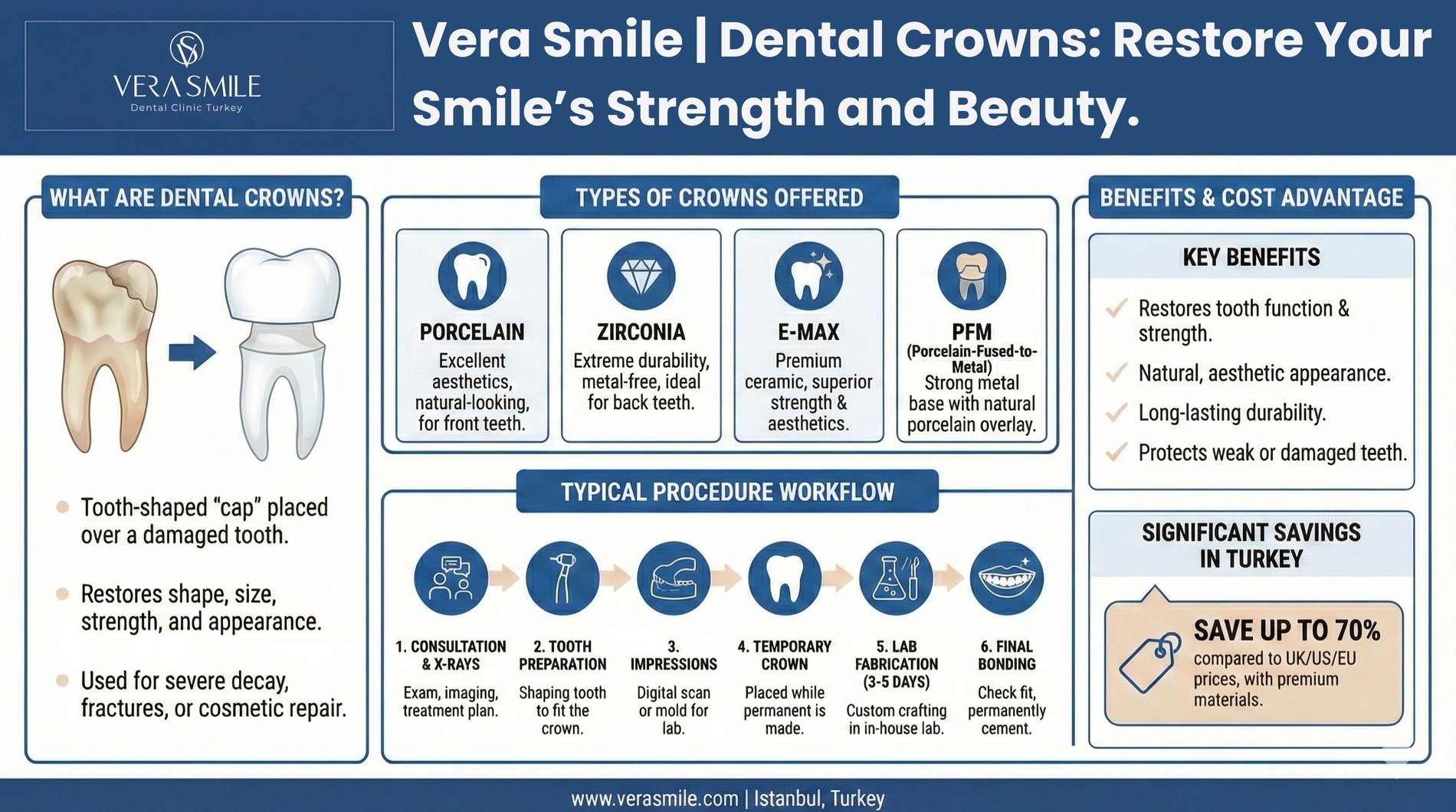
A dental crown is a custom-made cover placed over the entire visible portion of a tooth. It restores strength, shape, and appearance, ensuring the tooth functions like a natural one. Unlike a filling that repairs only part of the tooth, a crown provides complete protection.
Dr. Mümin Manassra, DDS, explains why do I need a dental crown in situations where a tooth cannot survive on its own. This includes severe decay, fractures, weakened teeth after root canal treatment, or missing teeth replaced with implants or bridges. Crowns are frequently recommended to improve aesthetics as well, correcting tooth discoloration or irregular shape.
A properly placed crown preserves natural teeth, supports healthy chewing, and maintains long-term oral stability.
How Do Dental Crowns Work?
A crown covers the entire visible surface of the tooth, forming a strong outer layer that shields it from decay, cracks, and wear. Once bonded with dental cement, the crown becomes a permanent part of the tooth and functions like natural enamel.
The purpose of dental crowns is twofold: protection and restoration. By reinforcing weak or broken teeth, crowns prevent further damage and allow patients to chew with full strength. They also restore the natural look of the tooth, making them valuable for both oral health and appearance. In cases of dental implants or bridges, crowns provide the visible replacement tooth, completing the restoration.
What Are the Types of Dental Crowns?
Different types of dental crowns are designed to meet specific needs, ranging from natural appearance to maximum durability. A frequent comparison is porcelain vs metal crowns, since one prioritizes aesthetics and the other long-term strength.
Porcelain and lithium disilicate crowns offer the most natural appearance by mimicking enamel translucency, with lithium disilicate also being the most premium and costly option. Porcelain-fused-to-metal (PFM) and zirconia crowns provide exceptional strength and durability, though PFM may show a gray line near the gum if not crafted properly. Metal crowns, such as gold or alloys, are less natural in appearance but extremely long-lasting, while resin crowns are affordable yet more prone to discoloration. Temporary crowns, on the other hand, serve as short-term solutions until the permanent crowns are fitted.
| Type | Strength | Aesthetics | Prep Required | Cost (Relative) |
| Porcelain | Moderate | Excellent | Moderate | Medium |
| PFM (Porcelain-Fused-to-Metal) | High | Good | Moderate | Medium |
| Zirconia | Very High | Good–Very Good | Moderate | Medium–High |
| Lithium Disilicate (E-max) | High | Excellent | More Prep | High |
| Metal (Gold/Alloys) | Very High | Poor | Minimal | Medium–High |
| Resin | Low | Fair | Minimal | Low |
| Temporary | Low | Fair | Minimal | Very Low |
Porcelain Crowns
Natural-looking restorations play a vital role when treating front teeth, where appearance defines the smile. These restorations replicate the translucency of enamel and blend seamlessly with surrounding teeth. Dr. Mümin Manassra notes that this option is widely chosen for visible areas because of its unmatched cosmetic quality. However, porcelain crowns provide less resistance against heavy biting forces, making them less ideal for molars exposed to constant chewing pressure.
Porcelain-Fused-to-Metal (PFM) Crowns
Some cases demand both strong support and a tooth-colored surface. This balance is achieved when a metal framework is layered with porcelain, allowing the crown to withstand biting forces while preserving a natural look. Dentists frequently recommend PFM crowns for patients who want reliable durability without sacrificing visible aesthetics. The drawback is a possible gray line near the gum over time, but careful design and gum health maintenance reduce this concern.
Zirconia Crowns
Back teeth endure high pressure during daily chewing and require maximum strength. A zirconia base delivers this durability, while modern translucent zirconia improves cosmetic results compared with older opaque models. Many dental clinics rely on zirconia crowns for molars because they handle functional demands without chipping, making them one of the most stable long-term solutions.
Lithium Disilicate Crowns
Cosmetic dentistry requires restorations that reflect light in the same way as natural enamel. Lithium disilicate crowns (E-max) achieve this effect while providing enough strength for visible teeth. Patients seeking Hollywood-style smile makeovers often choose this material because of its ability to create uniform, bright, and lifelike results. Dentists emphasize, however, that lithium disilicate is best placed in areas with less biting stress compared with molars.
Metal Crowns (Gold, Alloys)
Certain clinical situations demand restorations that endure for decades without breaking. Gold and alloy-based crowns deliver this strength, resisting cracks, chips, and erosion over time. Their metallic color makes them unsuitable for front teeth, yet they remain a trusted solution for hidden molars. In fact, studies show gold crowns last more than 20 years with proper care. Patients who prioritize function above cosmetics still regard them as a gold standard.
Resin Crowns
Affordability sometimes drives treatment decisions, and resin-based crowns provide a cost-effective alternative. These crowns are easier to fabricate and replace, making them suitable for temporary or budget-sensitive cases. However, resin wears down faster than stronger materials and is prone to discoloration, which means they are rarely recommended as a long-term choice. Dentists generally view them as an entry-level solution for patients awaiting a permanent crown.
Temporary Crowns
Once a tooth is reshaped and prepared, it must remain protected until the permanent restoration is ready. Temporary crowns safeguard the exposed structure from sensitivity, shifting, or infection. These coverings allow patients to eat and speak comfortably while waiting for the final placement. Though short-term in nature, their role is essential for maintaining oral health during the treatment process.
What Is the Procedure for Dental Crowns?
The dental crown procedure follows a series of structured steps that restore a tooth’s function and appearance. Knowing the exact dental crown procedure steps helps patients understand how crowns are done and what to expect at each stage. The process usually takes two visits, though same-day crowns are possible in clinics with digital technology.
- Initial Consultation & Diagnosis: The first stage begins with a detailed evaluation. Dentists use X-rays or 3D scans to check the tooth’s roots, surrounding bone, and gum health. Patients leave this step with a clear treatment plan and a choice of crown material based on their needs.
- Tooth Reshaping & Preparation for the Crown: To make space for the new restoration, the dentist carefully reshapes the tooth. This usually involves removing a small portion of enamel and, in some cases, reinforcing the structure with a buildup material if the tooth is too weak. The exact reduction depends on the crown chosen.
- Taking Impressions (Digital vs Manual): Once reshaping is complete, an impression records the exact dimensions of the prepared tooth. The impression is then transferred to the dental laboratory for crown fabrication, or to an in-office milling machine in practices offering same-day crowns.
- Temporary Crown Placement: Before the permanent crown is ready, a temporary version protects the prepared tooth. This provisional restoration shields against sensitivity, maintains chewing ability, and prevents teeth from shifting out of alignment. Temporary crowns are made of acrylic or resin and are secured with a weaker adhesive, which allows easy removal at the next appointment. Patients follow specific dietary instructions during this period to ensure the temporary crown remains stable.
- Final Crown Placement and Bonding: The last stage of the dental crown procedure focuses on securely attaching the restoration to the tooth. The dentist first checks the permanent crown for shade accuracy, bite alignment, and comfort. Once verified, the bonding process begins.
Why Are Temporary Crowns Needed?
Temporary crowns play a crucial role in protecting your tooth between the preparation and final crown placement stages. After your dentist reshapes the tooth, it becomes more vulnerable to sensitivity, bacterial exposure, and physical damage. A temporary crown acts as a protective shield, preventing pain, keeping the gum tissue stable, and maintaining proper bite alignment.
Can You Eat Normally with Temporary Crowns?
Temporary crowns are designed for short-term protection, not long-term performance. They help you eat and speak comfortably while waiting for your permanent restoration, but they are not as strong or durable as the final crown.
It’s best to avoid hard, crunchy, or sticky foods that can loosen, crack, or dislodge the temporary crown, examples include nuts, caramel, and tough meats. Soft foods like pasta, rice, soups, and steamed vegetables are safer choices.
How Long Can You Have a Temporary Crown?
Most patients wear temporary crowns for one to three weeks, but this period can vary depending on how long the final crown takes to be fabricated. Because these restorations use weaker dental adhesives, they can come off more easily if not handled carefully.
Practicing good oral hygiene and avoiding unnecessary pressure on the temporary crown ensures that the final fitting goes smoothly and the surrounding gums stay healthy.
What Is the Difference Between Manuel Impression vs Digital Impression?
Manual impressions use dental putty to capture the bite. Digital impressions employ an intraoral scanner to create a highly accurate 3D model. Digital systems deliver superior precision and eliminate the risk of distorted molds.
How Are the Dental Crowns Placed Using Adhesives?
The crown is fixed using a dental adhesive for crowns designed to hold under daily chewing forces. Selecting the best cement for dental crowns depends on the crown material and patient needs Resin-based cement provides the highest bond strength and is preferred for ceramic and zirconia crowns. Glass ionomer cement works reliably for metal crowns and adds protection through fluoride release. During the bonding process, both the inner surface of the crown and the prepared tooth are treated to maximize retention. The adhesive layer is applied, the crown is placed with firm pressure, and excess cement is carefully removed. A curing light hardens resin-based materials, locking the crown in place for long-term stability
Are Dental Adhesives (Dental Cement) Bad for Health?
No, dental adhesives are not bad for health. Dental adhesives are specifically formulated materials used to securely attach crowns to the prepared tooth structure. These substances have been extensively tested for biocompatibility, safety, and long-term stability before being approved for clinical use.
What Technology Is Used During Dental Crown Procedures?
Modern dental crown procedures leverage advanced technologies to improve accuracy, comfort, and efficiency. These tools help dentists create restorations that fit precisely, function optimally, and look natural.
- Digital Impressions and Intraoral Scanners: Instead of traditional putty impressions, dentists use intraoral scanners to capture a highly accurate 3D model of the tooth and surrounding structures. This enhances precision, reduces patient discomfort, and speeds up the design process.
- CAD/CAM Technology (Computer-Aided Design/Manufacturing): CAD/CAM systems allow dentists and dental labs to design and fabricate crowns digitally. Some clinics even offer same-day crowns, where the restoration is milled in-office and placed during a single visit.
- 3D Printing and Milling Machines: High-precision 3D printers and milling machines create crowns from durable materials like zirconia or ceramic, ensuring a perfect fit and optimal aesthetics.
- Shade Matching Devices: Digital shade-matching tools help select the ideal crown color, taking into account lighting and surrounding teeth for a natural appearance.
- Laser and Imaging Technology: Lasers and advanced imaging tools assist in gum contouring, tissue management, and evaluating the bite, making the crown fit both functional and aesthetic requirements.
When Is a Dental Crown Recommended?
Dental crowns are recommended when a tooth has lost its strength, structure, or natural protection and needs full coverage to restore both function and aesthetics. In dentistry, this treatment bridges the gap between restorative and cosmetic goals, protecting what remains of the natural tooth while enhancing its appearance.
- For fractured or severely decayed teeth: When a filling or bonding is not enough to rebuild the structure, a full crown restores biting strength.
- To replace large fillings: Repeated restorations weaken the enamel walls over time, making crowns the more durable long-term solution.
- For worn or eroded teeth: Bruxism (teeth grinding) and acid erosion thin the enamel; a crown restores both height and protection.
- In cosmetic dentistry: Discolored, misshapen, or uneven teeth can be reshaped with crowns for a balanced smile design.
- For dental implants or bridges: Crowns serve as the visible part of an implant or as anchors for bridgework.
What Problems Can Dental Crowns Fix?
Dental Crowns are not only aesthetic but also problem-solving treatments.
- Cracked Tooth: A fractured tooth causes pain when chewing and risks breaking further under daily pressure. To prevent that, dentists place a dental crown for cracked tooth treatment, which stabilizes the structure and restores function.
- After Root Canal: Teeth that have undergone endodontic therapy are left brittle and vulnerable to fractures. Placing a crown after root canal reinforces the tooth, allowing it to handle normal biting forces again. See how we restore teeth after a root canal procedure.
- Large Filling: When a filling covers most of the tooth, the surrounding enamel weakens and risks collapse. A large filling crown offers complete coverage, sealing the tooth and preventing further decay or fracture.
- Chipped Tooth: Even a small break affects both appearance and strength. Dentists recommend chipped tooth restoration with a crown because it blends with natural teeth while withstanding everyday use far better than bonding.
What Are the Benefits of Dental Crowns?
Dental restorations are expected to do more than just fill gaps; they should bring back strength, comfort, and a confident smile. Protection: Reinforces weakened or damaged teeth, preventing further deterioration.
- Restoration of Function: Restores chewing efficiency and proper bite alignment.
- Aesthetic Improvement: Enhances tooth shape, size, and color for a natural, uniform smile.
- Durability: Long-lasting solution (15-20 years) when made from high-quality materials like zirconia or porcelain.
- Stability for Other Treatments: Supports bridges and stabilizes adjacent teeth in restorative procedures.
- Oral health: Support long-term oral health by preventing fractures and sealing the tooth against bacteria.
What Are the Risks of Dental Crowns?
Every dental treatment has trade-offs, and crowns are no exception. While they restore function and appearance, there are problems with dental crowns that patients need to understand before making a decision.
- Tooth Sensitivity: Temporary sensitivity to temperature or pressure may occur after placement.
- Material Wear: Crowns, particularly porcelain, may chip or wear over time.
- Gum Irritation: Poor fit or hygiene can lead to mild gum inflammation around the crown.
- Cement Issues: Rare allergic reactions or irritation may occur due to bonding agents.
- Replacement Needs: Crowns may eventually require repair or replacement due to normal wear or decay at the margins.
How Much Does A Dental Crown Cost?
The price of treatment varies widely depending on location, material, and dentist expertise.
| Country | Porcelain Crown | Zirconia Crown | Metal Crown | PFM Crown | Resin Crown |
| Turkey | €100 – €280 | €190 – €370 | €110 – €230 | €165 – €325 | €90 – €185 |
| USA | €920 – €1,380 | €1,100 – €2,300 | €830 – €1,290 | €920 – €1,470 | €735 – €920 |
| UK | €700 – €1,050 | €815 – €1,395 | €585 – €935 | €700 – €1,100 | €465 – €700 |
| Australia | €720 – €1,080 | €840 – €1,500 | €600 – €960 | €720 – €1,200 | €540 – €720 |
| India | €85 – €160 | €115 – €230 | €80 – €140 | €100 – €185 | €55 – €90 |
| Mexico | €275 – €550 | €365 – €730 | €230 – €460 | €320 – €640 | €180 – €365 |
Patients compare dental crown cost in Turkey with prices in other countries, since Turkey is known for lower treatment expenses while maintaining international standards. In contrast, crown price US and crown cost UK are generally higher due to overheads and insurance systems. Australia, India, and Mexico fall in between, offering varying balances of affordability and accessibility.
How Much Does A Crown Cost With Insurance?
Many patients wonder, are crowns covered by insurance, since treatment is not always optional but medically required. In most cases, dental insurance for crowns applies when the procedure restores function, such as after a fracture, a root canal, or severe decay, rather than for purely cosmetic reasons.
Coverage usually reimburses 40–60% of the total crown cost, depending on the policy and provider. Some insurers cap the yearly dental benefit at a fixed amount, which means part of the treatment may still require out-of-pocket payment. For example, in the UK and the US, policies often set a limit between €1,000 and €1,500 per year, which does not fully cover higher-end materials like zirconia.
Are There Any Financing Options for Dental Crowns?
Dental crowns are considered restorative or cosmetic treatments, and patients often explore financing solutions to manage the cost. In countries like the USA, UK, and Australia, several options are commonly available:
- Dental Payment Plans: Many dental clinics offer in-house or third-party installment plans, allowing patients to spread the cost of a single crown or multiple crowns over several months.
- Healthcare Credit Cards: Specialized medical or dental credit cards (e.g., CareCredit in the USA) provide flexible repayment schedules for both single crowns and full-mouth restorations.
- Personal Loans: Patients may use personal loans from banks or credit institutions to finance extensive dental work, including full-mouth crown restorations.
- Insurance Coverage: While coverage varies by country and plan, some dental insurance policies contribute partially toward crowns, particularly when considered restorative rather than purely cosmetic.
Payment plans are another solution offered by clinics, especially if you want to get dental crowns in Turkey, Mexico, and India, clinics provide affordable treatments to international patients. These plans break down costs into manageable monthly installments without interest, allowing patients to access treatment without financial strain.
How Does Financing Differ Between Single and Full-Mouth Crown Restorations?
Financing is typically more straightforward for a single crown, often covered with smaller monthly payments. Full-mouth crown restorations involve a larger investment, so clinics frequently offer structured payment plans or bundled financing programs to make extensive treatments more manageable. Patients can combine in-house plans, credit options, or personal loans depending on their needs and local availability.
Who Are a Good Candidates for Dental Crowns?
Not everyone requires the same restorative treatment, and understanding who qualifies for a dental crown helps patients make an informed decision. Dentists evaluate several factors before recommending this solution.
- Age and Growth Stage: Dental crowns are suitable for adults once permanent teeth have fully developed. Children usually receive different treatments unless a baby tooth must be protected after severe decay.
- Oral Health Status: Healthy gums and adequate bone support are essential for crown stability. Patients struggling with untreated gum disease or active infection need to address those issues first to avoid complications.
- Extent of Tooth Damage: Teeth with large cavities, fractures, or structural weakness benefit from crowns when regular fillings are not enough. This is especially relevant after procedures such as root canal treatment, where additional reinforcement is required.
- Tooth Shaving and Preparation: A crown requires reshaping of the natural tooth. Dentists reduce the outer structure to make room for the restoration. This step is critical for proper fit and long-term success. Patients must understand that this process is irreversible.
- Alternative Treatments: Some individuals prefer dental veneers when only minimal cosmetic correction is needed. Veneers cover the front surface of the tooth, while crowns provide full coverage and stronger protection.
What Do Dental Crowns Look Like Before and After Treatment?
The transformation achieved with dental crowns is best appreciated through before and after results. Before treatment, teeth often appear cracked, worn down, discolored, or irregularly shaped, and in many cases large fillings or root canal–treated teeth look fragile and unstable. Patients sometimes feel embarrassed to smile widely due to visible damage or fear of further breakage.
After dental crown placement, the difference is striking. Crowns restore the full shape, symmetry, and natural color of teeth, blending seamlessly with the surrounding dentition. Biting and chewing become stable again, and the smile gains a renewed harmony as crowns correct irregularities, cover deep stains, and create a balanced appearance. Interactive before-and-after photo sliders on clinic websites further highlight these improvements, showing how broken molars, stained teeth, or chipped incisors can be transformed into strong, natural-looking restorations that enhance both function and aesthetics.
What Should You Know Before Getting a Dental Crown?
Before a dental crown is placed, several key factors influence the success, longevity, and overall satisfaction of the restoration. Understanding these considerations ensures informed decisions and realistic expectations.
- Tooth Condition and Preparation: The existing tooth must have sufficient structure to support a crown. In most cases, patients receiving a crown have significant decay, large fillings, fractures, or other structural damage, which means the tooth often needs to be shaved down extensively to create enough space for the crown to fit properly.
- Material Selection: Dental crowns come in multiple materials (porcelain, zirconia, porcelain-fused-to-metal, and gold alloys) each offering unique advantages in strength, aesthetics, and wear resistance. Material choice affects not only the appearance but also longevity, cost, and compatibility with surrounding teeth.
- Bite and Occlusion Considerations: Proper alignment of the crown with opposing teeth is essential to prevent discomfort, uneven wear, or jaw issues. Pre-procedure evaluation ensures that the new crown restores both function and bite balance.
- Recovery and Temporary Crowns: Patients should be aware that temporary crowns may be used while the permanent crown is fabricated. These require care to prevent loosening or damage during the interim period.
- Oral Health Status: Healthy gums and surrounding teeth are critical. Conditions like gum disease, infection, or untreated cavities must be addressed before crown placement to avoid complications.
Can You Choose the Shape and Shade of Your Crown?
Yes, dental crowns can be customized to match the shape, size, and color of your natural teeth or desired smile aesthetics. Modern cosmetic dentistry allows for precise selection of shade, translucency, and contour, ensuring the crown blends seamlessly with surrounding teeth.
- Shape and size considerations: Dentists evaluate the tooth’s original anatomy, bite alignment, and overall smile harmony before shaping the crown. Minor adjustments can enhance symmetry, correct spacing, or improve the tooth’s proportion relative to neighboring teeth.
- Shade and color matching: Crowns are available in porcelain, zirconia, and ceramic options, each offering a different range of shades and translucency levels. Shade selection is guided by natural tooth color, lighting conditions, and the patient’s cosmetic preferences. Some clinics use digital shade-matching devices to ensure precise color reproduction.
- Material influence: The material choice affects how light passes through the crown. For example, zirconia crowns are extremely strong but slightly less translucent than porcelain, while all-ceramic crowns offer superior aesthetic blending for highly visible teeth.
By carefully considering shape and shade, dentists can create crowns that are not only functional but virtually indistinguishable from natural teeth, enhancing both oral function and overall smile appearance.
Is Excessive Shaving a Sign of Bad Dentistry?
Excessive tooth reduction for a crown can raise concerns, but it is not inherently a sign of poor dentistry. The amount of tooth structure removed depends primarily on the severity of decay, fractures, or previous restorations. Severely damaged teeth often require more aggressive preparation to ensure the crown fits securely, restores function, and maintains long-term durability.
How to Care for a Dental Crown
Proper maintenance directly influences how long crowns last. While high-quality restorations remain durable for many years, their success depends on daily care and healthy habits. Here’s a simple guide on how to take care of crowns:
- Brushing & flossing keep the crown clean and the gums healthy. Use a soft-bristled toothbrush with fluoride toothpaste twice daily, and rely on floss threaders or interdental brushes to reach tricky spots without disturbing the crown.
- Dental check-ups every six months allow the dentist to check crown margins, detect early decay, and monitor gum health before small problems turn into costly repairs.
- Use of night guards protects crowns from grinding pressure. A custom-made guard reduces surface wear and prevents tiny fractures caused by clenching.
- Oral health products such as antibacterial rinses and high-fluoride gels strengthen enamel and protect the natural tooth under the crown against recurrent decay.
What to Avoid Immediately After Crown Placement (Food and Habits)
DentIn the initial recovery period, the crown and surrounding tissues are still adjusting, so extra care is needed to prevent irritation or displacement.
- Temperature extremes: Very hot or cold foods may increase temporary sensitivity after the procedure.
- Hard or sticky foods: Avoid chewing gum, hard candy, nuts, or ice for the first 24–48 hours to prevent loosening or damaging the crown.
- Excessive pressure: Refrain from biting directly into hard foods with the crowned tooth until fully settled.
What to Avoid for Long-Term Oral Health and Crown Longevity
Once the crown has fully adapted, long-term maintenance habits become key to preserving both the restoration and the surrounding natural teeth.
- Poor oral hygiene: Skipping brushing or flossing can lead to decay at the crown margins and gum disease.
- Teeth grinding (bruxism): Habitual clenching or grinding can wear down or fracture crowns. Consider a night guard if recommended.
- Chewing on non-food items: Avoid using teeth to open packages or bite pens, which can damage crowns.
- Neglecting regular dental visits: Routine check-ups and professional cleaning help maintain crown integrity and detect early issues.
What Reactions Are Normal After Getting a Crown?
After a dental crown is placed, certain temporary reactions are expected as the tooth and surrounding tissues adapt. Understanding these reactions helps distinguish normal healing from complications that require attention.
- Sensitivity to Temperature and Pressure
- Minor Discomfort or Gum Irritation
- Bite Adjustment Period
- Temporary Changes in Tooth Appearance
How Long Do Dental Crowns Last?
Dental crowns last on average 10 to 15 years, depending on the material used, oral hygiene, and lifestyle habits. High-quality options such as zirconia or porcelain-fused-to-metal frequently extend beyond 20 years when properly maintained.
How to Make Dental Crowns Last Longer
Several daily habits and preventive measures can significantly extend the lifespan of dental crowns:
- Maintain consistent oral hygiene: Brush twice daily and floss carefully to prevent decay where the crown meets the gumline.
- Schedule professional cleanings: Regular visits help remove buildup and ensure early detection of potential problems.
- Avoid harmful habits: Refrain from chewing on hard foods, ice, or non-food items that can chip or loosen crowns.
- Protect against teeth grinding: Use a night guard if bruxism is present to minimize wear and stress on crowns.
- Choose durable materials: Opting for high-quality crowns such as zirconia or porcelain-fused-to-metal enhances long-term performance.
Is There a Need to Replace a Dental Crown?
Yes, dental crowns are durable, but they do not last forever. Depending on the material, dental crowns can last 15-20 years. Over time, crowns may need replacement due to normal wear, changes in oral health, or damage. Understanding the signs that indicate replacement helps maintain function, aesthetics, and oral health.
What Are the Alternatives to Dental Crowns?
Not every damaged tooth requires a full crown. Depending on the level of decay, fracture, or cosmetic concern, there are several alternatives to dental crowns that preserve more of the natural tooth structure.
- Inlays & Onlays: When a cavity or fracture is too large for a simple filling but does not require complete coverage, the solution is often an inlay or onlay. These restorations are produced in a dental lab from ceramic, porcelain, or resin and then bonded securely to the tooth. Inlays fit within the chewing surface, while onlays extend over one or more cusps for extra reinforcement.
- Dental Veneers: Improving the appearance of front teeth without covering the entire structure is possible with thin shells placed only on the visible surface. Known as dental veneers, they are ideal for discoloration, slight misalignment, or chipped enamel while requiring minimal tooth shaving.
- Composite Bonding: A quick and conservative way to repair minor chips or close small gaps involves applying a tooth-colored resin directly to the enamel. This method, called composite bonding, restores aesthetics in a single visit but provides less longevity than crowns.
- Large Fillings: In some cases, replacing lost structure with a filling remains sufficient. Modern composite or amalgam materials restore function effectively, although they do not provide the same long-term protection against cracks as a crown.
What Is the Difference Between Dental Crowns vs Veneers vs Fillings?
Different dental treatments are designed to solve specific problems. Some focus on strength, others on appearance, and some on preserving as much natural tooth as possible. Understanding the differences between crown vs veneer and crown vs filling helps patients decide which solution best fits their needs.
| Feature | Dental Crowns | Dental Veneers | Dental Fillings |
| Indication | Severe decay, cracked teeth, after root canal, large restorations | Cosmetic improvements (color, shape, alignment) | Small-to-moderate cavities or minor damage |
| Durability | 10–15 years on average, longer with good care | 7–15 years depending on material | 5–10 years depending on size and material |
| Invasiveness | High – requires tooth reshaping | Moderate – minimal shaving of enamel | Low – preserves most of the tooth |
| Cost (Europe avg.) | €140 – €370 depending on material | €250 – €450 per tooth | €70 – €150 per tooth |