
Dental veneers represent one of the most refined advancements in cosmetic dentistry, offering a reliable solution for correcting tooth imperfections such as discoloration, chipping, uneven shape, and minor misalignment. These thin, custom-made shells are designed to enhance both the aesthetic appearance and structural harmony of the teeth, creating a balanced and natural smile.
In contemporary dentistry, veneers are available in several materials, including porcelain, composite resin, and zirconia. Each has distinct characteristics in terms of durability, translucency, and maintenance. The procedure involves a detailed evaluation, precise enamel preparation, and adhesive bonding that ensures long-lasting integration with the natural tooth surface.
Understanding how veneers function, their differences from other cosmetic procedures, and the factors that influence their longevity helps patients make informed decisions about aesthetic restoration. This comprehensive overview explores the purpose, materials, process, benefits, and considerations associated with dental veneers, presenting an evidence-based look into one of the most frequently performed aesthetic treatments in modern dentistry.
What Are Dental Veneers?
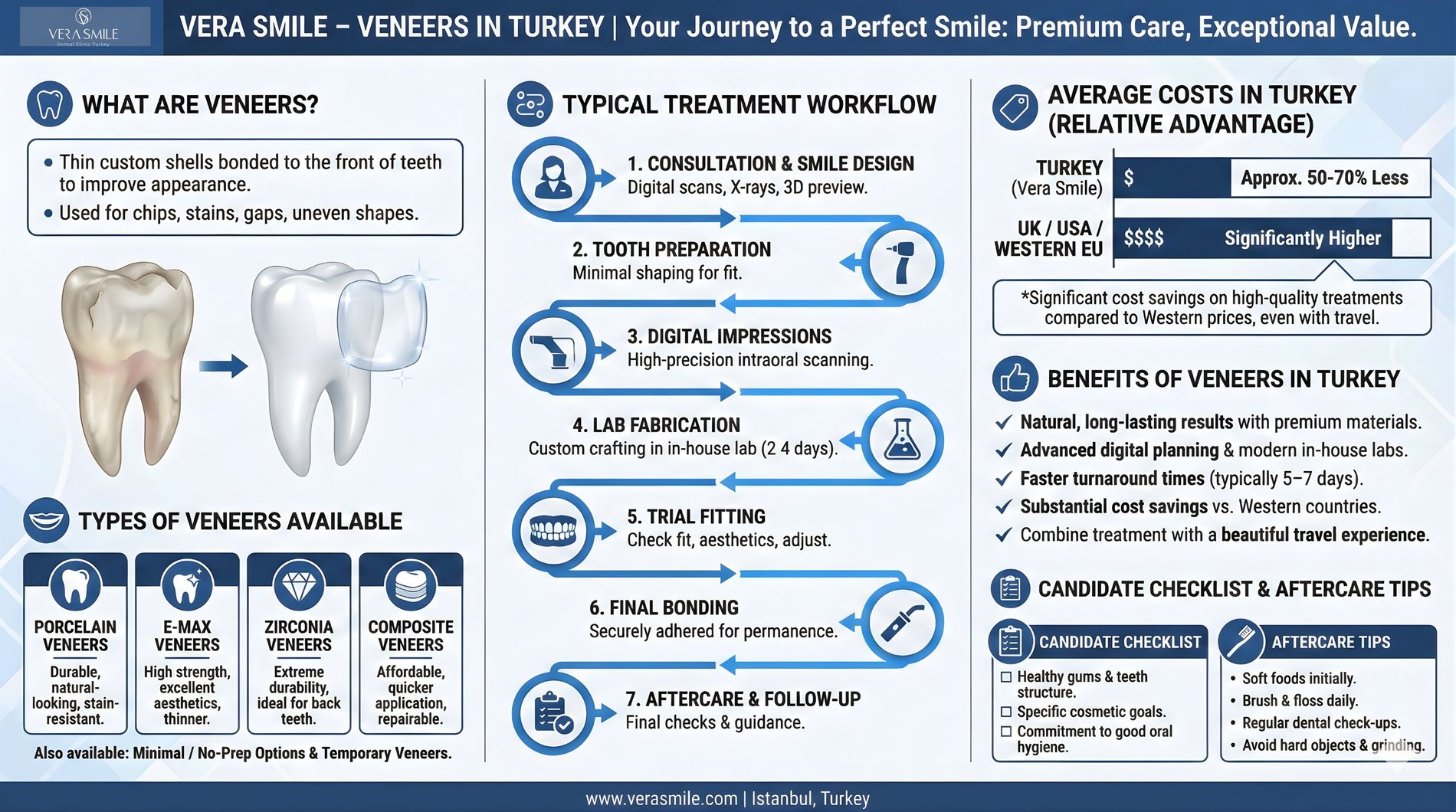
Dental veneers are wafer-thin shells made from durable materials such as porcelain, composite resin, or zirconia. They are bonded to the front surface of teeth to improve aesthetics and restore function. Veneers address issues like severe discoloration, uneven shape, gaps, and minor misalignment, problems that do not respond to whitening or orthodontics alone.
How Do Veneers Work?
Dental veneers work by creating a new, flawless surface over the visible part of a tooth. Once a thin layer of enamel is prepared, the veneer, custom-made to match the exact shade, shape, and size needed, is bonded using a high-strength dental adhesive. This bond forms a permanent seal, making the veneer function as a natural extension of the tooth.
The outer porcelain or resin layer mimics the light-reflecting qualities of enamel, while the underlying tooth structure provides support and stability. By reshaping the tooth’s front surface, veneers correct imperfections such as discoloration, chips, gaps, and minor misalignment without altering the overall position of the tooth in the jaw.
What Types of Dental Veneers Exist?
Veneers come in a variety of materials and designs, each tailored to different aesthetic goals, durability needs, and budget ranges. From ultra-thin, no-prep options to advanced zirconia restorations, understanding the differences helps in choosing the right solution for your smile.
Different types of veneers are available to suit various dental needs, aesthetic goals, and budgets. Each material and design offers unique advantages, from the natural translucency of porcelain to the cost-effectiveness of composite. Understanding the distinctions, especially in the porcelain vs composite veneers debate, helps patients make an informed decision.
Porcelain and feldspathic porcelain veneers closely mimic natural enamel, offering exceptional aesthetics and stain resistance, lasting 10–20 years with proper care. Lithium disilicate (e.max) and zirconia veneers combine high strength with natural-looking results, making them suitable for patients with heavy bite forces or demanding functional needs. Hybrid and composite veneers provide a cost-effective alternative with easier repair options, though their durability is lower (4–8 years) and they are more prone to staining. No-prep and minimal-prep veneers minimize enamel removal while still enhancing appearance, ideal for well-aligned teeth. Temporary veneers allow patients to preview shape and fit, while palatal veneers protect worn inner surfaces from bruxism or erosion.
| Veneer Type | Durability (Average Lifespan) | Aesthetics | Cost (Per Tooth, €) | Prep Time (Per Tooth) |
| Porcelain (Laminate) | 10–20 years | ★★★★★ Highly natural | €200–€2,300 | 2–3 weeks (lab) |
| Feldspathic Porcelain | 10–15 years | ★★★★★ Exceptional detail | €300–€2,300 | 2–3 weeks (lab) |
| Lithium Disilicate | 12–20 years | ★★★★★ Strong & aesthetic | €250–€2,200 | 2–3 weeks (lab) |
| Composite | 4–8 years | ★★★★☆ Good | €90–€1,380 | 1 day or lab |
| Zirconia | 15–20 years | ★★★★☆ Slightly opaque | €200–€2,200 | 2–3 weeks (lab) |
| Temporary | Weeks to months | ★★★☆☆ Moderate | €50–€150 | Same day |
| No-Prep | 8–12 years | ★★★★☆ Very natural | €200–€2,000 | 1–2 visits |
| Minimal Prep | 10–15 years | ★★★★☆ Natural | €200–€2,100 | 1–2 visits |
| Hybrid | 6–10 years | ★★★★☆ Good blend | €150–€1,800 | 1–2 weeks |
| Palatal | 10–15 years | ★★★★☆ Functional focus | €200–€2,000 | 1–2 weeks |
Porcelain Veneers (Laminate Veneers)
Porcelain veneers are medical-grade ceramic restorations that replicate enamel translucency and color. They are highly resistant to stains, durable, and provide a lifelike finish. Studies show they can last 10–20 years with proper oral hygiene and maintenance. They are ideal for correcting discoloration, minor misalignment, and shape imperfections.
Zirconia Veneers
Zirconia veneers are extremely strong and fracture-resistant, making them suitable for patients with severe tooth wear or strong bite forces. Their slightly more opaque appearance compared to porcelain provides excellent durability while maintaining good aesthetics. They are particularly recommended for posterior teeth or areas under heavy functional load.
Feldspathic Porcelain Veneers
Feldspathic porcelain veneers are hand-layered to achieve high translucency and fine detail, allowing for a customized natural appearance. They are often preferred for front teeth where appearance is paramount. Their technique-sensitive application requires skilled ceramists but delivers superior aesthetic outcomes.
Lithium Disilicate (e.max) Veneers
Lithium disilicate veneers are made from a high-strength glass-ceramic material, offering an excellent balance of durability and aesthetics. They can be used for both anterior and posterior teeth where strength is essential. They bond well to enamel, providing predictable longevity and natural translucency.
Hybrid Veneers
Hybrid veneers combine porcelain aesthetics with composite resin repairability. This balance allows for moderate cost, decent durability, and easy on-site repair. They are suitable for patients who prioritize appearance but may require future adjustments.
No-Prep Veneers
No-prep veneers (e.g., Lumineers) require little to no enamel removal, making them minimally invasive. They are ideal for patients with healthy, well-aligned teeth but are limited in addressing severe discoloration or significant shape corrections
Minimal-Prep Veneers
Minimal-prep veneers involve light enamel reshaping for improved fit and bonding. They provide a compromise between enamel preservation and aesthetic results, often lasting longer than no-prep veneers while maintaining a natural look.
Composite Veneers
Composite veneers are applied directly to the teeth or fabricated in a lab from tooth-colored resin. They are more affordable and easy to repair, though they have a shorter lifespan (4–8 years) and are more prone to staining.
Temporary Veneers
Temporary veneers are placed while waiting for the final restorations. They allow patients to preview the appearance, shape, and bite of their future veneers, providing a functional and aesthetic trial period.
Palatal Veneers
Palatal veneers restore the inner surfaces of upper front teeth damaged by bruxism or erosion. They protect tooth structure while maintaining a natural outward appearance, often preventing further wear or sensitivity.
What Is the Procedure for Getting Dental Veneers?
Different types of veneers are available to suit various dental needs, aesthetic goals, and budgets. Each material and design offers unique advantages, from the natural translucency of porcelain to the cost-effectiveness of composite. Knowing the differences, and understanding the veneer procedure steps and how veneers are done, helps you choose the right option for your smile. Whether you’re deciding between porcelain vs composite veneers or exploring other materials, the right choice will depend on your lifestyle, expectations, and long-term goals.
- Consultation & Diagnosis: The dentist examines your teeth, gums, and bite, often taking photographs, X-rays, or digital scans. This step includes discussing your smile goals, choosing the veneer material, and reviewing design options.
- Tooth Preparation: A thin layer of enamel, about 0.3–0.7 mm, is removed from the tooth’s surface to make room for the veneer. Local anesthesia is usually given to ensure comfort, and the preparation is kept as minimal as possible.
- Taking Impressions: Once the teeth are prepared, precise measurements are taken using either digital scanning or traditional molds. These impressions guide the lab in creating veneers that fit perfectly.
- Veneer Fabrication: Skilled technicians craft the veneers in a dental laboratory or in-office using CAD/CAM technology. They match the color, translucency, and shape to blend seamlessly with your natural teeth. Lab work typically takes 1–3 weeks; digital systems allow same-day creation.
- Initial Fitting Session: The veneers are placed temporarily to check their fit, bite alignment, and shade. Adjustments are made at this stage to ensure optimal comfort and aesthetics.
- Final Bonding & Adjustment: The inner surface of the veneer and the tooth are prepared for bonding. Dental adhesive is applied, the veneer is positioned, and a curing light secures it in place. Final bite checks and polishing complete the process.
How Long Does the Veneer Procedure Take?
The veneer process usually takes two to three weeks from start to finish. Most patients require two main appointments after the initial consultation. The first visit involves tooth preparation, taking impressions, and placing temporary veneers. The second visit is for trial fitting and final bonding of the permanent veneers. Each appointment lasts around one to two hours, depending on how many teeth are being treated. In clinics equipped with CAD/CAM or CEREC technology, veneers can be designed, milled, and placed in a single day, significantly reducing treatment time.
What Happens During the Tooth Preparation Stage?
Tooth preparation involves reshaping the outer enamel to create space for the veneer. Using fine diamond burs or advanced laser tools, the dentist removes about 0.3–0.7 mm from the tooth’s front surface. This allows the veneer to sit flush with surrounding teeth, preventing a bulky appearance and ensuring a natural look. Local anesthesia is used to keep the process comfortable. The aim is to preserve as much healthy enamel as possible while creating an ideal surface for strong, long-lasting bonding.
How Should You Choose the Right Veneer Shade for a Natural Look?
Before veneers are bonded, patients are often invited to select their preferred tooth shade. While this allows for personalization, choosing a color that is too bright or mismatched with your skin tone can make the teeth appear overly white, flat, or artificial under natural light.
To avoid this, always consult your dentist during shade selection. Using digital smile design or temporary trial veneers, your dentist can preview different shades and determine which tone best complements your facial features, lip color, and overall complexion.
Even if you prefer a Hollywood-white smile, remember that the most attractive results come from balance and harmony, not just brightness. The right shade enhances your smile naturally and blends seamlessly with your facial aesthetics.
How Are Veneers Bonded to the Teeth?
Bonding veneers to the teeth is a multi-step process that creates a permanent and secure attachment. First, the dentist cleans and polishes the tooth surface to remove any debris. The enamel is then etched with a mild acidic gel, creating a slightly rough texture that helps the adhesive grip. A bonding agent is applied to the prepared tooth, followed by a thin layer of resin cement on the veneer’s inner surface. The veneer is carefully positioned and pressed into place, then hardened with a curing light for 20–60 seconds. Finally, any excess cement is removed, the bite is checked, and the veneer is polished to achieve a smooth, natural finish.
How Many Visits Are Needed for Veneers?
Most veneer treatments require two to three dental visits. The first covers consultation and digital planning, the second includes tooth preparation and impressions, and the third is for final bonding. Digital clinics with in-house CAD/CAM systems can complete all steps within a single day.
What Should You Expect After Veneer Placement?
After bonding, slight gum tenderness or bite awareness can occur for 24–48 hours. Dentists advise avoiding hard foods initially and scheduling a follow-up visit to fine-tune alignment and polish the new smile.
What Dental Issues Can Veneers Fix?
Veneers are a versatile cosmetic dentistry solution that can address multiple smile concerns, from stubborn stains to visible damage, while delivering natural-looking and long-lasting results.
- Discoloration: Veneers effectively cover deep stains and discoloration that whitening treatments cannot remove, including those caused by medications, excessive fluoride, or old dental work. This makes them a popular choice for patients seeking a consistently bright smile without repeated bleaching.
- Worn-Down Teeth: Teeth shortened or flattened due to grinding, acid erosion, or natural wear regain their original length and contour with veneers, improving both function and appearance.
- Veneers for Chipped Teeth or Broken Teeth: Thin porcelain or composite shells hide chips, cracks, and rough edges while adding strength to the damaged tooth. This provides an immediate cosmetic improvement and helps prevent further wear.
- Veneers for Misalignment or Uneven Teeth: By masking minor rotations, irregular shapes, or uneven edges, veneers create the appearance of straighter teeth without the need for braces or aligners.
- Gaps Between Teeth: Small spaces, such as diastemas, can be closed with veneers to create a more uniform and harmonious smile, offering a faster alternative to orthodontic treatment.
What Are the Benefits of Dental Veneers?
Dental veneers stand out as one of the most versatile and effective treatments for transforming a smile. They not only improve the look of teeth but offer long-lasting functional and aesthetic benefits. From achieving a natural, enamel-like appearance to providing durability, stain resistance, and a conservative approach compared to other restorative options, veneers address both cosmetic concerns and patient comfort. Below are some of the key benefits that make veneers a popular choice among individuals seeking a confident, radiant smile.
- Natural Appearance: Veneers are designed to mimic the light reflection, texture, and translucency of natural enamel. Skilled shade matching ensures they blend seamlessly with surrounding teeth, creating a smile that looks authentic rather than artificial.
- Long-lasting Results: High-quality porcelain veneers typically last 10–20 years with proper care, while composite veneers last around 4–8 years. Their durability makes them a strong investment for maintaining an attractive smile over time.
- Stain Resistance: Porcelain is highly resistant to staining from coffee, tea, wine, and smoking, keeping the smile brighter for longer. This makes veneers an excellent option for those who want low-maintenance aesthetics.
- Conservative Treatment: Unlike crowns, veneers require minimal removal of natural tooth enamel, making them a more conservative solution while still achieving dramatic cosmetic improvements.
Do Veneers Look Natural?
Yes. Veneers are engineered to replicate the texture, translucency, and gloss of natural enamel. When properly shade-matched, they blend seamlessly with surrounding teeth, creating a lifelike smile that doesn’t appear artificial under natural or studio lighting.
Are Veneers Resistant to Stains?
Porcelain veneers are highly resistant to discoloration caused by coffee, tea, red wine, and smoking. This helps preserve their brightness far longer than natural teeth or composite restorations.
Why Are Veneers Considered Conservative Treatment?
Unlike crowns, veneers require minimal enamel removal, preserving more of the natural tooth structure. Despite this conservative approach, they deliver dramatic cosmetic results with less intervention.
Are There Any Side Effects or Risks to Getting Veneers?
While veneers are considered a safe and effective cosmetic treatment, they do involve some potential side effects and risks. Tooth sensitivity is common in the first days or weeks after placement, especially when consuming hot or cold foods and drinks. Because a thin layer of enamel is removed during preparation, the process is irreversible for most veneer types. In rare cases, veneers chip, crack, or detach if exposed to excessive force, such as biting hard objects or teeth grinding without protection. Poorly fitted veneers irritate the gums, leading to inflammation or recession over time. Choosing an experienced dentist and following proper aftercare greatly reduces these risks.
Is Tooth Sensitivity Normal After Veneer Placement?
Yes. Mild sensitivity to temperature changes is common immediately after veneer bonding due to slight enamel reduction. It usually subsides within one to two weeks as the teeth adjust.
Can Veneers Chip or Crack?
Although durable, veneers can chip or fracture if exposed to strong biting forces, bruxism, or trauma. Wearing a nightguard and avoiding hard foods (like ice or nutshells) helps prevent damage.
Can Poorly Fitted Veneers Affect Gum Health?
Yes. Ill-fitting veneers can trap plaque and irritate gum tissue, causing redness or recession. Precise bonding and follow-up care ensure the veneers align naturally with the gumline.
How Many Veneers Do You Need?
Most patients need 6 to 10 veneers, because that is the number of upper teeth visible in an average smile line. Six covers the two central incisors, two lateral incisors, and two canines. Eight or ten extend the plan to the first and second premolars, while a full upper and lower makeover uses 16 to 20 veneers. The number is decided at the smile design stage, based on which teeth appear when you speak, smile widely, and laugh. Seven factors move the count up or down.
- Smile Line Width: Wide smiles expose the premolars, which raises the count from 6 to 8 or 10 and prevents a visible shade break at the corners of the mouth.
- Shade Break Risk: Veneers cannot be whitened after bonding, so any untreated tooth that stays visible beside a veneer must already match the selected shade or it is added to the plan.
- Symmetry Requirement: Veneers are placed in matched pairs across the midline, which is why plans move in even numbers such as 4, 6, 8, and 10.
- Existing Restorations: Old crowns, composite fillings, and discoloured bonding inside the smile zone are included in the same plan, since they age at a different rate than new porcelain.
- Tooth Position: Rotated or crowded teeth need neighbouring teeth veneered as well, because the illusion of alignment depends on a continuous surface rather than one corrected tooth.
- Lower Arch Visibility: Lower teeth appear during speech and laughter, so treating the upper arch alone leaves a mismatch when the lower teeth are dark or worn.
- Single Tooth Damage: One chipped or discoloured tooth is treated with a single veneer when the neighbouring teeth already match in shade and shape.
Fewer veneers is not automatically the more conservative choice. A plan that stops at the canines while the premolars stay dark produces a visible colour step, and correcting it later means a second preparation and bonding appointment. Because veneers are priced per tooth, the count also sets the total, so two quotes are only comparable when they cover the same number of teeth.
How Much Do Veneers Cost?
The cost of veneers varies significantly depending on the country, the type of veneer, and the dentist’s expertise. Most dental insurance plans do not cover veneers, as they are considered a cosmetic procedure, though some policies contribute if veneers are part of a restorative treatment.
| Country | Porcelain Veneers | Composite Veneers | Zirconia Veneers |
| Turkey | 250€ | 175€ | 250€ |
| USA | 950€ | 450€ | 1,100€ |
| UK | 800€ | 350€ | 850€ |
| Mexico | 400€ | 200€ | 400€ |
| Philippines | 300€ | 150€ | 350€ |
| India | 250€ | 150€ | 300€ |
| Australia | 900€ | 400€ | 950€ |
| Thailand | 350€ | 150€ | 350€ |
| Ireland | 800€ | 350€ | 900€ |
| Dubai | 650€ | 300€ | 700€ |
While dental veneer cost Turkey is known for being more affordable without compromising quality, prices in countries like the USA and Australia are generally higher due to overhead and labor costs.
What Financing Options Are Available for Veneers?
Patients who wish to spread out the cost of veneers can take advantage of flexible financing plans offered by many clinics. These include:
- Monthly payment plans: Divide the total treatment fee into smaller installments spread over several months.
- In-house financing: Some clinics offer internal credit options or staged payment systems, especially for larger smile makeover cases.
- Dental tourism packages: In destinations such as Turkey, patients often benefit from all-inclusive offers covering veneers, hotel accommodation, and airport transfers at transparent prices.
These solutions make veneer treatments financially manageable while maintaining the same standard of care and materials used in top-tier cosmetic dentistry. The most common option is to get veneers in Turkey for the high quality and affordability ratio.
Does Insurance Cover Veneers?
Most dental insurance plans do not cover veneers because they are classified as a cosmetic procedure rather than a medically necessary treatment. This means patients usually pay the full cost out of pocket. In rare cases, such as when veneers are part of a restorative treatment after injury or severe tooth damage, insurance for veneers may partially reimburse the expense.
To make the procedure more accessible, many dental clinics offer financing options such as monthly payment plans, in-house installment programs, or third-party medical credit services. In countries like the USA, Australia, and the UK, 0% interest financing for cosmetic dentistry is often available. In dental tourism hubs such as Turkey, clinics may also bundle veneer costs with travel and accommodation packages, making the overall investment more affordable.
Are You a Good Candidate for Dental Veneers?
The ideal candidate for dental veneers is someone with healthy teeth and gums, no active decay, and a desire to improve their smile’s appearance. Good oral hygiene habits and realistic expectations are essential, as veneers enhance the look of teeth but do not correct underlying oral health issues. Sufficient enamel is needed for proper bonding, and patients should be free of severe bruxism unless willing to use a night guard.
Are Veneers Suitable for Teenagers or Older Adults?
Veneers are best suited for patients whose teeth and jawbones have fully developed. For teenagers, this typically means waiting until the later adolescent years, when tooth position and gum line are stable.
For older adults, including those exploring veneers for seniors, treatment can be just as successful, provided the teeth and gums are healthy. Factors such as gum recession, worn enamel, or existing restorations may influence the approach but do not necessarily prevent veneer placement. In both younger and older patients, a comprehensive dental evaluation is essential to confirm suitability and plan the most effective treatment.
Are Veneers Suitable for Teenagers or Older Adults?
Veneers are generally recommended for patients whose teeth and jaws have fully developed. For teenagers, this usually means waiting until later adolescence to ensure stability in tooth position and gum line. In older adults, veneers can be just as effective provided the teeth and gums are healthy. Gum recession, worn enamel, or existing restorations are factors that may influence treatment planning but do not automatically rule out veneers. In both age groups, a thorough dental examination is key to determining suitability.
Are You Suitable if You Have Small Teeth?
Yes. Veneers is an excellent solution for patients with naturally small teeth or teeth that appear short due to wear. They can add length, improve proportion, and create a fuller, more balanced smile without extensive orthodontic treatment. The key is precise design, custom veneers are crafted to match your facial features and bite, ensuring a natural and harmonious result.
Are You Suitable if You Have a Gummy Smile?
Yes, veneers enhance a gummy smile, but they are combined with other treatments for the best outcome. In many cases, gum contouring or laser gum reshaping is performed first to expose more tooth surface, after which veneers are placed to refine shape, color, and symmetry. This combination helps achieve a balanced gum-to-tooth ratio while delivering a brighter, more proportionate smile.
How Veneer Materials Differ from Each Other?
Veneers are a versatile solution for improving the appearance, shape, and function of teeth, but not all veneers are created equal. Differences in material, durability, aesthetics, and cost can significantly affect both the short-term appearance and long-term performance of your smile.
Porcelain offers aesthetic appereance with a long-term lifespan. Composite veneers are most pocket-friendly but easy to repair. Lithium discilate offers offers both aesthetic apperance and durability. Zirconia offers more resistancy.
What’s the Difference Between Porcelain vs Composite Veneers?
Porcelain and composite veneers are the two most common options for improving a smile, but they differ significantly in durability, appearance, and cost.
When choosing between porcelain vs composite veneers, the main differences come down to durability, aesthetics, cost, and maintenance. Porcelain veneers are crafted from high-quality ceramic materials that closely mimic natural enamel’s translucency and shine. They are more resistant to staining and can last 10–15 years or longer with proper care. Composite veneers, on the other hand, are made from tooth-colored resin that is sculpted directly onto the teeth or fabricated in a lab. While they are more affordable and easier to repair, they generally last 4–8 years and are more prone to discoloration over time.
| Feature | Porcelain Veneers | Composite Veneers |
| Lifespan | 10–20 years | 4–8 years |
| Aesthetics | Highly natural and translucent | Good, but less translucent |
| Stain Resistance | Excellent | Moderate |
| Durability | Strong and chip-resistant | More prone to chips and wear |
| Cost | Higher (€200–€2,300 per tooth depending on country) | Lower (€90–€1,380 per tooth depending on country) |
| Repairability | Needs replacement if damaged | Easy to repair chairside |
What’s the Difference Between Lithium Discilate vs Zirconia Veneers?
Lithium disilicate (also known as e.max) and zirconia veneers are both high-strength ceramic options, but they serve slightly different purposes. Lithium disilicate veneers are prized for their combination of excellent aesthetics and strong durability. Zirconia veneers, on the other hand, offer superior fracture resistance and long-term strength.
Lithium discilate’s translucency closely mimics natural enamel, making them ideal for front teeth or areas where a highly lifelike appearance is important. Zirconia’s resistancy makes them particularly suitable for patients with heavy bite forces or for posterior teeth where durability is critical. making them particularly suitable for patients with heavy bite forces or for posterior teeth where durability is critical.
Both lithium discilate and zirconia bond well to enamel and can last 10–15 years with proper care.
| Feature | Lithium Disilicate (e.max) Veneers | Zirconia Veneers |
|---|---|---|
| Lifespan | 10–15 years | 10–15 years |
| Aesthetics | Highly natural, translucent | Natural, slightly more opaque |
| Stain Resistance | Excellent | Excellent |
| Durability | Strong, chip-resistant | Very high, fracture-resistant |
| Cost | High | High |
| Repairability | Limited, usually replacement needed | Limited, usually replacement needed |
| Ideal Use | Front teeth, cosmetic cases | Posterior teeth, heavy bite forces |
How Is Veneer Aftercare and Maintenance Like?
Long-term veneer maintenance is essential for keeping both porcelain and composite veneers looking flawless and functioning well for years. Even the most natural-looking veneers can lose their brilliance if not properly cared for. By following a consistent aftercare routine, covering daily cleaning, diet choices, and protective habits, you will extend their lifespan and protect your investment.
- Maintain Excellent Oral Hygiene: Brush twice a day with a soft-bristled toothbrush and non-abrasive fluoride toothpaste. Floss daily to remove plaque between teeth and around the veneer edges. Opt for alcohol-free mouthwash to protect the bonding adhesive.
- Watch Your Diet: Limit hard foods like ice, nuts, or hard candy that can chip veneers. Avoid sticky items such as caramel and toffee, and reduce staining drinks like coffee, tea, and red wine, especially if you have composite veneers.
- Avoid Harmful Habits: Don’t bite nails, open packages with your teeth, or chew on pens. If you grind or clench your teeth, wear a custom night guard to prevent cracks or chips.
- Schedule Regular Dental Visits: See your dentist every six months for professional cleaning and veneer checkups. Request non-abrasive polishing to preserve their smooth finish and shine.
- Address Problems Early: If a veneer feels loose, cracks, or causes discomfort, visit your dentist immediately to prevent further issues and ensure proper bonding is maintained.
How Long Do Dental Veneers Last?
The lifespan of dental veneers depends on the material, oral hygiene, and lifestyle habits. Porcelain veneers typically last between 10 and 20 years, thanks to their strength and resistance to staining. Composite veneers have a shorter lifespan of about 4 to 8 years, as the resin material is more prone to chipping and discoloration.
The permanency of your veneers is influenced by habits such as grinding or clenching your teeth, biting hard objects, or neglecting oral hygiene. Regular dental visits, meticulous home care, and avoiding harmful behaviors can significantly extend the life of both porcelain and composite veneers, ensuring your smile stays radiant for as long as possible.
Are Veneers Reversible?
In most cases, porcelain veneers are not reversible because they require removal of a thin layer of enamel during preparation. Once this enamel is removed, it cannot regenerate, meaning the tooth will always need some form of restoration. No-prep or minimal-prep veneers are the exception, as they involve little to no enamel removal and can sometimes be reversed.
Can Veneers Be Replaced or Repaired?
Yes. Veneers can be replaced if they chip, crack, or show signs of wear over time. Porcelain veneers require full replacement rather than repair, while composite veneers can often be repaired directly in the dental chair. Regular dental checkups help identify early damage, making it easier to maintain your smile without full replacement.
Can Veneers Be Whitened?
No, veneers themselves cannot be whitened with traditional bleaching treatments, whether they are porcelain or composite. If discoloration occurs, the solution is usually professional polishing for surface stains or replacing the veneer entirely. However, whitening the natural teeth around your veneers can help maintain a uniform shade across your smile.
What Are the Alternatives to Dental Veneers?
While veneers offer dramatic transformations, they’re not the only option for improving your smile. Depending on your dental needs, budget, and long-term goals, several alternatives to veneers deliver equally satisfying results, sometimes with less preparation or cost. Here’s a breakdown of the most common choices.
- Dental Crowns: Crowns fully cover the tooth, offering both aesthetic and structural restoration. They’re ideal for teeth with extensive decay, fractures, or severe wear, situations where veneers may not provide enough protection. Dental crowns are made from porcelain, zirconia, or metal alloys and are more invasive than veneers, but they offer greater durability and strength.
- Teeth Whitening: For discoloration limited to the surface or caused by staining foods and drinks, professional teeth whitening is a cost-effective alternative. It’s less invasive than veneers and works well if you’re satisfied with your teeth’s shape and alignment but want a brighter smile. Teeth whitening cannot correct deep intrinsic stains or change tooth shape.
- Orthodontic Treatments: If misalignment or gaps are your main concern, orthodontic solutions like braces or clear aligners can straighten teeth without altering enamel. This option takes longer than veneers but preserves natural tooth structure and can correct bite issues; veneers can only camouflage.
- Dental Bonding: Bonding vs veneers is a common comparison. Bonding uses tooth-colored composite resin applied directly to teeth to fix chips, gaps, and minor discoloration. It’s quicker and less costly than veneers, but dental bonding is more prone to staining and has a shorter lifespan.
- Enamel Microabrasion: This minimally invasive technique removes a thin layer of enamel to eliminate superficial stains and minor surface irregularities. It’s a good option for patients with mild discoloration or enamel defects, but it won’t address structural issues, deep stains, or significant shape changes.
What Are the Key Differences Between Veneers vs Crowns vs Bonding?
When it comes to enhancing your smile, veneers, crowns, and dental bonding are three of the most common restorative and cosmetic options. Each serves a slightly different purpose, varies in durability, and requires a different level of tooth preparation. Here’s how they compare side by side:
| Feature | Veneers | Crowns | Bonding |
| Coverage | Front surface of the tooth only | Entire tooth | Small areas or portions of tooth surface |
| Material Options | Porcelain, composite, zirconia | Porcelain-fused-to-metal, zirconia, all-porcelain, metal alloys | Composite resin |
| Best For | Discoloration, minor misalignment, chips, shape changes | Severely damaged, decayed, or worn teeth | Minor chips, gaps, small discolorations |
| Durability | Porcelain: 10–20 years; Composite: 4–8 years | 10–15+ years | 3–7 years |
| Invasiveness | Moderate (enamel removal) | High (significant tooth reshaping) | Minimal (no major tooth reshaping) |
| Aesthetics | Highly natural-looking | Very natural-looking | Good, but less stain-resistant |
| Cost (Approx.) | €200–€800 per tooth | €300–€1,200 per tooth | €80–€300 per tooth |
| Repair/Replacement | Porcelain: replace; Composite: repairable | Must replace if damaged | Easily repairable |
What Is the History and Evolution of Dental Veneers?
Dental veneers have come a long way from their humble, temporary beginnings to the highly durable, natural-looking restorations we know today.
The concept was first introduced in 1928 by Dr. Charles Pincus, a Hollywood dentist who created thin acrylic shells to temporarily enhance actors’ smiles for film shoots. These early veneers were purely cosmetic and attached with removable adhesive, lasting only for the duration of filming.
By the 1950s and 1960s, advancements in dental bonding techniques, particularly the introduction of etching methods, improved adhesion to enamel. However, early materials were still limited in aesthetics and longevity.
The 1980s marked a breakthrough with the development of porcelain laminates and strong bonding resins. These innovations allowed veneers to adhere permanently to teeth, providing both beauty and function. Porcelain became the gold standard for its lifelike translucency and resistance to staining.
In recent decades, digital dentistry has transformed the veneer process. Technologies like Digital Smile Design (DSD), CAD/CAM milling, and 3D printing enable precise customization, faster turnaround, and ultra-thin veneers requiring minimal or no tooth preparation. Material science has also advanced, with high-strength ceramics like lithium disilicate and zirconia offering enhanced durability without sacrificing aesthetics.
Today, veneers are not just a cosmetic luxury, they are a predictable, long-lasting dental solution blending art, science, and technology to create smiles tailored to each patient’s facial features and personality.