
Pediatric dentists manage a wide range of oral health issues that commonly occur during childhood and adolescence. These include tooth decay, early childhood caries, and gum problems caused by plaque buildup or poor oral hygiene. They also address developmental concerns such as delayed tooth eruption, premature loss of baby teeth, and enamel defects that make teeth more prone to cavities.
Pediatric dentists are trained to treat dental trauma from falls or sports injuries, including chipped, fractured, or knocked-out teeth. They evaluate and manage orthodontic concerns like crowding, spacing, or bite irregularities, as well as oral habits such as thumb sucking, pacifier use, and tongue thrusting that can influence jaw development.
They help with teething discomfort, airway-related issues like mouth breathing, and provide essential preventive care through fluoride treatments, sealants, and regular cleanings. Their expertise also extends to managing dental anxiety and behavioral challenges, ensuring that young patients receive safe, comfortable, and developmentally appropriate care.
What Is Pediatric Dentistry?
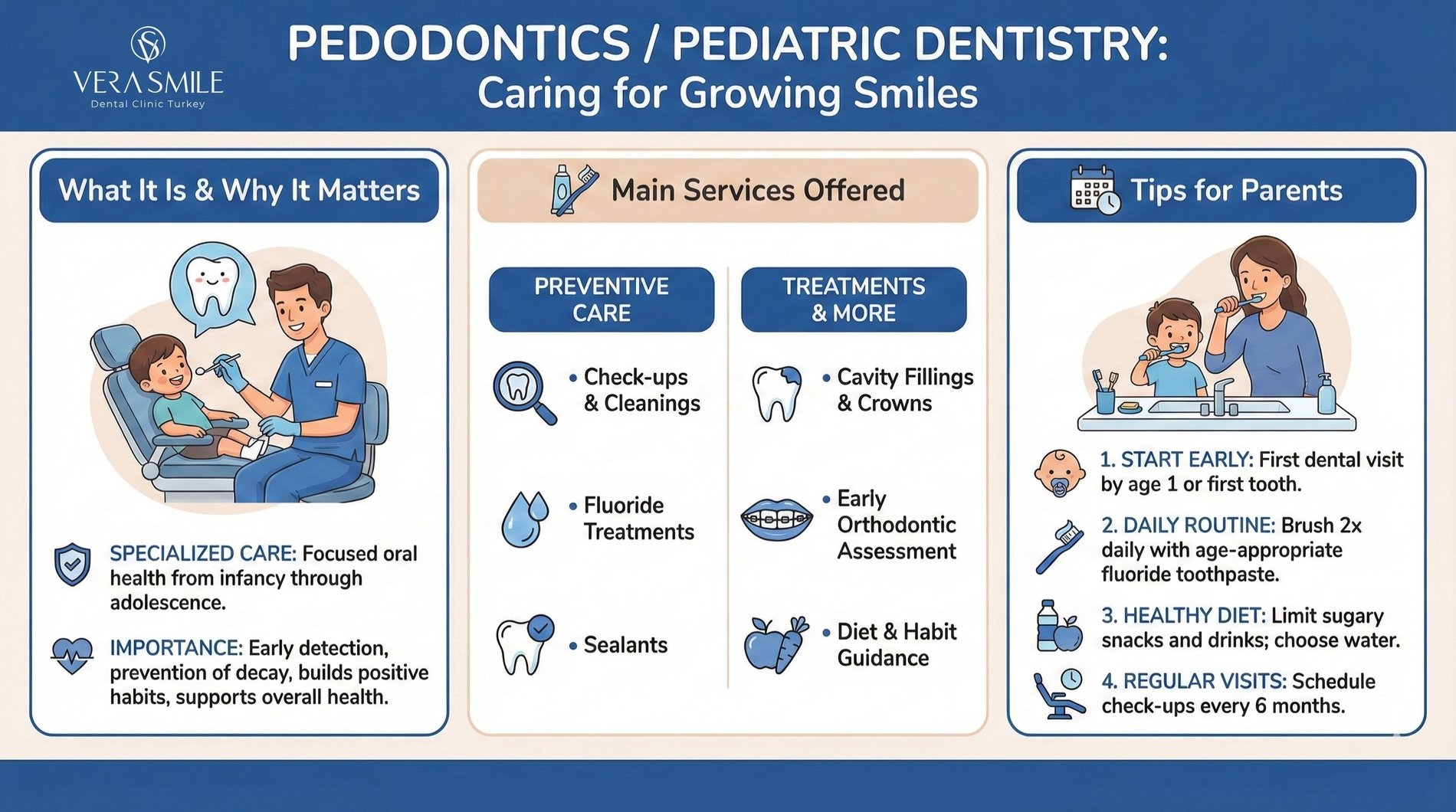
Pediatric dentistry differs from general dentistry because it focuses exclusively on the oral health of growing patients, from infancy through adolescence. While general dentists treat adults with fully developed teeth and jaws, pediatric dentists manage age-specific challenges such as teething, early childhood cavities, developmental anomalies, and guidance of erupting permanent teeth.
Treatment approaches vary depending on the stage of growth. For infants and young children, the emphasis is on managing baby teeth, applying preventive measures like fluoride and sealants, and addressing early cavities. For adolescents, care shifts toward permanent teeth, orthodontic monitoring, and preventive interventions that reduce the risk of long-term complications.
What Age Is Pediatric Dentistry For?
Pediatric dentistry serves patients from the eruption of the first tooth in infancy, usually around six months, until adolescence in the early teenage years. This period covers primary dentition, mixed dentition, and the transition to a full set of permanent teeth. During these stages, pediatric dentists provide treatments tailored to the child’s developmental needs, including preventive care, cavity management, growth monitoring, and orthodontic guidance.
The American Academy of Pediatric Dentistry recommends that the first dental visit should take place by the child’s first birthday (AAPD, “Guideline on Infant Oral Health Care”). Early introduction establishes trust between the child and dentist, supports parental education, and allows timely detection of oral health issues.
When Should You First Take Your Child to a Dentist?
The ideal time for a child’s first dental visit is within six months after the eruption of the first tooth, and no later than the first birthday. Early visits create the foundation for lifelong oral health by allowing the dentist to evaluate tooth development, check for early signs of decay, and guide parents on proper oral hygiene practices. Establishing this routine reduces the risk of childhood cavities and builds familiarity with the dental setting, lowering anxiety during future treatments.Children who visit the dentist before age one experience fewer cavities and require less restorative treatment later in life (AAPD, “Policy on Early Childhood Caries”).
Children who visit the dentist before age one experience fewer cavities and require less restorative treatment later in life (AAPD, “Policy on Early Childhood Caries”).
Why Is Pediatric Dentistry Important?
Pediatric dentistry holds a crucial role in safeguarding both the oral and overall health of children. Early care establishes a strong foundation for the future, reducing the risk of common issues such as cavities, gum disease, and malocclusion. When preventive treatments and monitoring begin in infancy, dental complications that would require invasive procedures later in life are minimized.
The psychological impact is equally significant. Children who are introduced to a supportive, child-focused dental environment develop positive associations with oral care. This early conditioning helps them adopt habits such as daily brushing, flossing, and routine check-ups, turning dental visits into a normal part of life rather than a source of fear.
Pediatric dentistry intersects with broader healthcare. Collaboration between pediatric dentists and pediatricians ensures that oral health concerns are considered in the context of overall child development. Conditions like nutritional deficiencies, speech difficulties, or systemic illnesses often reveal signs in the mouth first, making dental visits a vital part of comprehensive pediatric care (Casamassimo, “Beyond the Dental Chair: Integrating Pediatric Oral Health into Overall Health,” Journal of Pediatric Dentistry).
What Is the Difference Between a Pediatric Dentist and a General Dentist?
A pediatric dentist specializes in the oral health of infants, children, and adolescents, while a general dentist provides care for adults with fully developed teeth and jaws. The main difference lies in training and approach. Pediatric dentists complete additional years of education focused on child psychology, growth and development, and treatment methods suitable for young patients.
General dentists treat cavities, gum disease, and restorations in adults, but pediatric dentists adapt these procedures to children. They use smaller instruments, child-friendly behavioral management techniques, and preventive strategies tailored to developing teeth. Pediatric dentists are also trained to work with children who have special healthcare needs, ensuring safe and effective treatment.
What Is the Difference Between Pediatric Dentistry and Adult Dentistry?
Pediatric dentistry focuses on guiding the oral health of growing patients, while adult dentistry manages fully developed teeth and jaws. The distinction is not only about age but about treatment philosophy and techniques.
| Feature | Pediatric Dentistry | Adult Dentistry |
| Patient Group | Infants, children, adolescents | Adults with permanent dentition |
| Focus | Growth, prevention, habit management | Restoration, maintenance, replacement |
| Treatments | Fluoride, sealants, crowns on baby teeth, space maintainers | Fillings, crowns, bridges, implants, dentures |
| Environment | Child-friendly, anxiety-reducing | Standard clinical setting |
| Collaboration | Works with pediatricians and child specialists | Works with physicians treating chronic disease |
What Are the Common Pediatric Dental Issues?
Children experience a distinct set of dental challenges that require specialized management. Addressing these issues early ensures proper oral development and prevents long-term complications.
- Early Childhood Caries (Baby Bottle Tooth Decay): Prolonged exposure to sugary liquids such as milk, juice, or sweetened drinks often leads to cavities in toddlers. This is one of the most common chronic diseases of childhood, affecting speech, nutrition, and quality of life (Tinanoff, “Early Childhood Caries: A Preventable Disease,” Pediatric Dentistry Journal).
- Malocclusion and Misaligned Teeth: Thumb sucking, pacifier use beyond infancy, or genetic factors may cause bite problems and misaligned teeth. Early interceptive orthodontics helps guide jaw growth and prevent more complex treatment in adolescence.
- Gum Disease in Children: Although less severe than in adults, gingivitis and gum inflammation occur frequently in school-aged children. Poor brushing habits and plaque buildup are the main triggers. If untreated, gum health during childhood influences future periodontal stability.
- Dental Trauma: Falls, sports injuries, and accidents are leading causes of chipped, fractured, or knocked-out teeth. Immediate care is essential to preserve function and prevent infection.
- Developmental Anomalies: Some children present with congenitally missing teeth, enamel hypoplasia, or delayed eruption. These conditions demand close monitoring and customized treatment to protect oral development.
Tooth Decay and Cavities in Children
Tooth decay is the most common dental issue in childhood, caused by the interaction of bacteria, sugars, and insufficient oral hygiene. The first signs often appear as white spots on the enamel, progressing into cavities if left untreated. Decay in primary teeth is not harmless, pain, infection, and premature loss of baby teeth directly affect chewing, speech, and the alignment of permanent teeth.More than 530 million children worldwide suffer from untreated dental caries in primary teeth (WHO, “Oral Health Fact Sheet”). Parents searching for treatments such as children’s tooth decay prevention often benefit from pediatric services like fluoride varnish, sealants, and early dental education. These measures not only protect teeth but establish habits that reduce the likelihood of future cavities.
What Is Dental Trauma in Children and How Is It Treated?
Dental trauma is a frequent concern in childhood, often caused by falls, sports injuries, or accidents during play. The most common forms include chipped enamel, fractured teeth, and avulsion (complete loss of a tooth). Quick intervention is essential because untreated trauma may lead to infection, pulp damage, or misalignment of developing permanent teeth.
Nearly one-third of children experience some form of dental injury before adulthood (IADT, “Guidelines for the Management of Traumatic Dental Injuries in Primary Teeth”). Pediatric dentists are trained to manage these cases with specialized protocols, such as replanting knocked-out permanent teeth, protecting fractured enamel with bonding or crowns, and monitoring the long-term health of traumatized teeth.
Parents are advised to seek immediate care when an accident occurs, as early treatment improves prognosis and helps preserve function and aesthetics.
What Is Malocclusion in Children?
Malocclusion refers to misalignment between the upper and lower teeth, often visible as crowding, spacing, overbite, or crossbite. In malocclusion in children, these problems frequently develop due to habits such as thumb sucking, prolonged pacifier use, or mouth breathing. Genetics and jaw growth discrepancies also contribute to improper alignment.
Early identification is critical because untreated malocclusion interferes with chewing, speech, and oral hygiene, which in turn increases the risk of tooth decay and gum disease. Pediatric dentists use interceptive orthodontics to guide jaw growth, correct bite issues, and reduce the need for extensive orthodontic treatment in adolescence.
What Are the Common Reasons for Dental Problems?
Children’s dental problems often arise from a combination of biological, behavioral, and environmental factors. Understanding these causes helps parents and dentists take proactive steps to protect oral health. Several daily habits directly contribute to dental issues in children:
- Frequent Snacking on Sugary Foods and Drinks: Promotes bacterial activity that leads to cavities.
- Prolonged Bottle Feeding or Sippy Cup Use at Night: Causes early childhood caries, often called “baby bottle tooth decay.”
- Thumb Sucking or Pacifier Use Beyond Age Three: Increases the risk of malocclusion and misaligned teeth.
- Poor Brushing Routines: Inadequate plaque removal leads to gum inflammation and decay.
- Mouth Breathing: Contributes to dry mouth, improper jaw growth, and higher risk of misalignment.
What Are the Dental Treatments in Pediatrics?
Pediatric dentistry provides a wide selection of treatments aimed at preserving oral health, repairing affected teeth, and supporting the natural development of the jaws and permanent teeth. All procedures are adapted to a child’s age, growth stage, and individual dental requirements.
- Preventive Pediatric Dentistry: Preventive care in pediatric dentistry helps avoid problems before they start. Regular cleanings remove plaque and tartar, fluoride strengthens enamel, sealants protect molars, and children are taught proper brushing, flossing, and healthy eating habits.
- Restorative Pediatric Dentistry: Restorative care repairs damaged or decayed teeth. This includes fillings, stainless steel crowns for severely decayed teeth, and pulp therapy to save infected baby teeth.
- Pediatric Space Management: Space management involves using space maintainers to keep gaps open when baby teeth are lost early, preventing neighboring teeth from drifting.
- Interceptive Orthodontics: Interceptive orthodontics uses early appliances or braces to guide jaw growth and correct developing bite problems.
- Dental Trauma Management: Treatment for chipped, displaced, or avulsed (knocked-out) teeth resulting from accidents or injuries.
- Habit Management: Counseling and appliances designed to help children overcome habits like thumb sucking, prolonged pacifier use, or teeth grinding.
Specialized pediatric care ensures that each child receives age-appropriate, growth-conscious treatments that minimize future complications and promote long-term oral health.
Preventive Pediatric Dentistry
Preventive pediatric dentistry focuses on protecting children’s teeth before problems occur. The goal is to establish healthy oral habits early and reduce the need for complex treatments in the future. Preventive care includes professional cleanings, fluoride applications, and fissure sealants that shield the chewing surfaces of molars from decay. Regular check-ups allow pediatric dentists to monitor growth, guide erupting teeth, and identify any risks at an early stage. Parents receive education on diet, oral hygiene techniques, and the importance of routine dental visits to reinforce healthy development.
Restorative Pediatric Dentistry
Restorative pediatric dentistry addresses damage or decay in children’s teeth to restore function, comfort, and aesthetics. Primary teeth play a critical role in speech, nutrition, and guiding the eruption of permanent teeth, so timely restoration is essential. Treatments include tooth-colored fillings for cavities, stainless steel or zirconia crowns for heavily damaged teeth, and pulp therapy (baby root canal) when decay reaches the inner tissues. Space maintainers are placed if a tooth is lost early, ensuring proper alignment for permanent teeth. These interventions protect oral health, prevent pain, and support normal jaw and tooth development.
Do Children Need Crowns on Baby Teeth?
Crowns on baby teeth are essential when decay or damage is too extensive for a filling. Primary teeth are not “temporary placeholders” without importance; they maintain spacing for permanent teeth, support proper speech, and allow normal chewing. If left untreated, a severely decayed baby tooth leads to pain, infection, and misalignment of permanent teeth.
Crowns offer a reliable solution for preserving these teeth until their natural exfoliation. Stainless steel crowns provide strength and durability, while tooth-colored zirconia crowns meet higher aesthetic expectations. Full-coverage restorations in pediatric dentistry result in better long-term outcomes compared with large fillings (Randall, “Preformed Metal and Zirconia Crowns for Primary Teeth,” Journal of the American Dental Association).
Why Stainless Steel Crowns in Pediatric Dentistry?
Stainless steel crowns are widely used in pediatric dentistry because they provide durable and cost-effective protection for severely decayed or damaged primary teeth. Unlike fillings, which suit smaller cavities, stainless steel crowns cover the entire tooth surface, restoring both strength and function. They are particularly valuable for children with multiple cavities, teeth that have undergone pulp therapy, or cases where long-lasting coverage is required until the natural tooth falls out. Studies report higher survival rates of restored primary molars when stainless steel crowns are used compared with large fillings (Seale, “The Use of Stainless Steel Crowns in Pediatric Dentistry,” Pediatric Dentistry Journal).
Pediatric Space Management
Space management in pediatric dentistry is essential for maintaining proper dental alignment when baby teeth are lost earlier than expected. Premature loss of primary teeth can cause neighboring teeth to drift into the empty space, potentially crowding or misaligning the permanent teeth that are yet to erupt. To prevent this, pediatric dentists use space maintainers, custom-made devices that hold the gap open until the permanent tooth emerges. Proper space management not only supports correct bite development but also reduces the likelihood of needing complex orthodontic treatment later in life. Regular monitoring ensures that the maintainers are functioning effectively and adjusted as the child grows.
Interceptive Orthodontics
Interceptive orthodontics focuses on early intervention to guide the growth and development of the jaws and teeth. By identifying bite problems, overcrowding, or jaw discrepancies at a young age, pediatric dentists can use appliances or early braces to correct these issues before they become more severe. This proactive approach can prevent complicated orthodontic procedures in adolescence and improve facial symmetry, oral function, and overall dental health. Early guidance also supports proper speech development and chewing efficiency, making it an essential component of comprehensive pediatric care.
Dental Trauma Management
Dental trauma management is a critical aspect of pediatric dentistry, addressing injuries such as chipped, fractured, displaced, or completely knocked-out (avulsed) teeth. Children are particularly prone to accidents during play, sports, or falls, which can affect both primary and permanent teeth. Immediate evaluation and treatment by a pediatric dentist are vital to preserve tooth structure, prevent infection, and restore function and appearance. Treatment may involve repositioning teeth, bonding fractures, splinting, or in some cases, root canal treatment. Follow-up care ensures that the affected teeth and surrounding tissues heal properly and that long-term complications are minimized.
Habit Management
Habit management in pediatric dentistry addresses behaviors that can negatively impact oral health and dental development. Common habits include thumb sucking, prolonged pacifier use, tongue thrusting, and teeth grinding (bruxism). While some habits are natural in early childhood, persistent behaviors can lead to misaligned teeth, bite problems, and changes in jaw structure.
Pediatric dentists provide guidance, counseling, and sometimes specialized appliances to help children gradually stop these habits. Early intervention ensures healthy dental growth, reduces the need for future orthodontic correction, and promotes proper oral function and aesthetics. Mouth guards for grinding teeth is the most common treatment style on the dentistry side.