
Composite bonding, known as dental bonding or cosmetic bonding, is a popular, minimally invasive dental procedure used to restore, repair, and enhance the appearance of teeth. It’s a key component of modern smile makeovers, allowing dentists to correct minor cosmetic flaws like chips, cracks, discoloration, and gaps.
Composite bonding technique involves the application of a tooth-colored composite resin material that is shaped and polished to create a natural and aesthetically pleasing result. Unlike veneers or crowns, which require significant enamel removal, bonding preserves the majority of the natural tooth structure, making it a conservative and patient-friendly option.
What Is Composite Bonding in Dentistry?
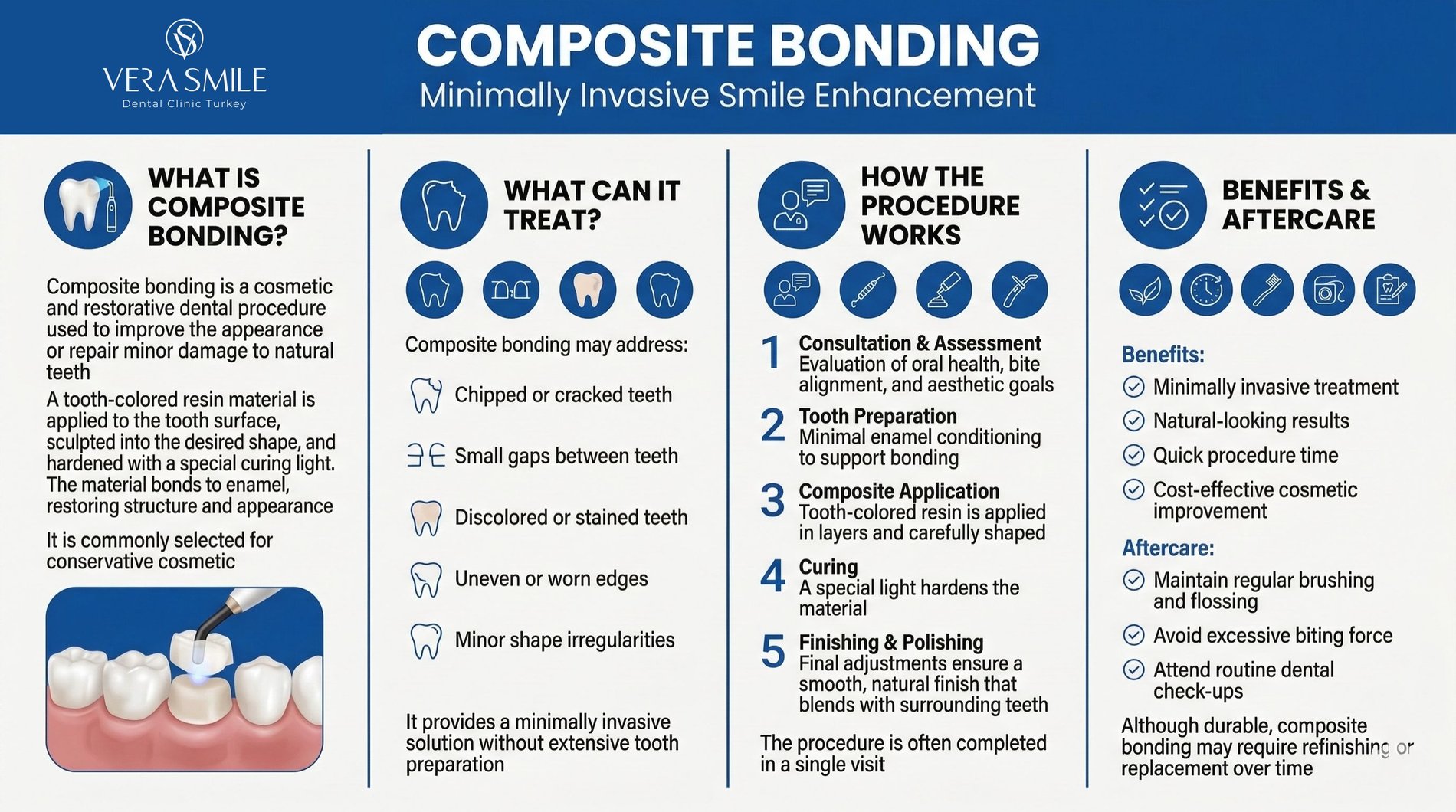
Composite bonding is a cosmetic and restorative dental treatment that reshapes or rebuilds teeth using a tooth-coloured resin material. The procedure relies on a high-performance composite resin that adheres directly to the natural enamel through a micromechanical bond, creating a seamless extension of the tooth structure. Unlike full-coverage restorations such as crowns or veneers, bonding preserves the majority of natural enamel, making it a conservative yet transformative solution.
In clinical practice, composite bonding addresses chipped edges, small gaps, discoloration, or minor misalignments. It restores symmetry and function while enhancing overall smile aesthetics. In the context of smile makeovers, dentists often integrate bonding with Digital Smile Design, 3D shade analysis, and professional whitening to deliver an immediate improvement that aligns with facial harmony. This versatility positions composite bonding as an essential procedure for patients seeking both cosmetic treatment and structural repair without extensive tooth reduction.
How Does Composite Bonding Material Work at a Microscopic Level?
At its core, composite bonding relies on the intricate science of dental materials. The composite material itself is composed of two main parts: a resin matrix and nanohybrid fillers. The resin matrix is a polymer base, often a mixture of monomers such as Bis-GMA, UDMA, or TEGDMA, which provides the material’s structural integrity. Dispersed within this matrix are tiny glass, silica, or ceramic particles known as nanohybrid fillers. These fillers are crucial for several reasons: they increase strength, enhance wear resistance, and improve aesthetics by mimicking the light-reflecting properties of natural enamel.
The process of adhesion is a critical step. After the tooth surface is prepared, a special bonding agent is applied. This agent creates a microscopic, porous layer on the enamel and dentin, allowing the composite resin to mechanically lock into place. The dentist then applies the composite material in layers, carefully sculpting it to the desired shape. Each layer is cured with a special blue light, which activates a photoinitiator within the resin, causing it to harden and form a strong, durable bond with the tooth.
What Do Scientific Studies Reveal About Composite Bonding Longevity?
Valuable insights into the long-term performance of composite restorations. While not as durable as porcelain veneers or crowns, modern composites offer a respectable lifespan. The survival rates of composite restorations in the front teeth are high, often lasting 5–10 years or more with proper care, according to the review “Longevity of Direct Composite Restorations in the Anterior Dentition” published in the Journal of Dentistry. Longevity is influenced by factors such as patient habits (e.g., teeth grinding), diet, and oral hygiene.
Nanohybrid composites, with their smaller filler particles, demonstrate superior wear resistance and polish retention compared to older microhybrid materials. This was shown in the study “Nanohybrid vs Microhybrid Composites” published in Clinical Oral Investigations. Modern composites with advanced filler technology show improved resistance to staining from common foods and beverages, though some discoloration over time remains a limitation that is managed with professional polishing. This was highlighted in the article “Color Stability of Resin-Based Restoratives” published in the Journal of Esthetic and Restorative Dentistry.
How Does Digital Dentistry Transform Composite Bonding Results?
Digital dentistry has revolutionized cosmetic procedures, including composite bonding, by enhancing precision, predictability, and patient communication. Dentists now use shade-matching software to digitally analyze the patient’s natural tooth color, ensuring the composite material is a perfect match. AI-driven smile analysis tools provide a virtual preview of the final result, allowing patients to see their potential new smile before the procedure even begins. Furthermore, 3D mock-ups are created to plan the new tooth shape and size, which serves as a guide for the dentist during the bonding process. This digital workflow ensures a more predictable and aesthetically pleasing outcome.
What Are the Step-by-Step Stages of the Composite Bonding Procedure?
The composite bonding procedure is more than just applying a resin to the tooth. It is a carefully planned sequence of clinical and artistic steps that ensures the result looks natural, functions correctly, and lasts for years. Each stage, from the first consultation to the final polish, plays a vital role in the overall outcome.
- Consultation & Diagnosis: The journey begins with a comprehensive dental examination. Dentists evaluate the condition of the teeth, gums, and bite alignment. High-resolution photos, intraoral scans, and a detailed shade analysis help define treatment goals. This stage allows the patient to discuss their expectations, such as closing gaps, repairing chips, or enhancing their smile for cosmetic reasons.
- Shade Selection & Design Preview: Once the plan is set, the dentist selects the ideal shade of composite resin. Using shade guides and advanced tools like Digital Smile Design (DSD), the chosen colour is matched precisely to surrounding teeth. In some cases, a mock-up preview is created, giving patients a visual idea of how the final smile will appear.
- Isolation & Surface Preparation: Proper isolation ensures that moisture does not interfere with the bond. A rubber dam or cotton rolls are used to keep the tooth dry. The surface is then cleaned, etched, and primed, creating a micro-roughened texture that enhances adhesion between enamel, dentin, and composite.
- Adhesive Application: A thin layer of bonding agent is applied to the prepared surface. The agent penetrates the micro-pores created by etching and, once light-cured, forms a hybrid layer that secures the composite resin to the tooth. This microscopic bond is essential for long-term durability.
- Incremental Layering & Sculpting: The composite resin is applied in thin layers, each carefully sculpted to replicate the natural anatomy of the tooth. Dentists pay attention to fine details such as line angles, translucency, and surface texture. This layering technique not only creates a lifelike appearance but reduces shrinkage, improving the bond’s longevity.
- Light Curing: After each increment is placed, a blue LED curing light is used to activate photoinitiators in the resin. This triggers polymerization, turning the soft material into a strong, hardened layer. Step-by-step curing ensures the composite achieves maximum strength and stability.
- Finishing: Once the tooth is fully built up, dentists refine its shape using fine burs and abrasive discs. This step ensures proper contours, smooth transitions with adjacent teeth, and accurate bite alignment. Finishing corrects any irregularities that might trap plaque or stain over time.
- Polishing: Polishing is what transforms a functional restoration into an aesthetically pleasing one. Using silicone polishers, spiral wheels, and diamond pastes, the dentist achieves a high-gloss surface that mirrors the sheen of natural enamel. A smooth surface is not only attractive but more resistant to plaque buildup and staining.
- Occlusion Check: The dentist checks the bite alignment in static and dynamic movements. Ensuring proper occlusion prevents premature wear and discomfort. Adjustments are made so the bonded tooth integrates seamlessly with the patient’s bite pattern.
- Aftercare Patients receive instructions on oral hygiene and dietary precautions. Recommendations include using non-abrasive toothpaste, limiting strongly pigmented foods like coffee and red wine, and scheduling regular polishing sessions. Following aftercare guidelines significantly extends the life of the composite bonding.
Why Do Patients Choose Composite Bonding Over Veneers or Crowns?
Patients prefer composite bonding over veneers or crowns because it delivers immediate results in a single visit without the need for extensive preparation. The treatment comes at a lower cost than porcelain alternatives while remaining minimally invasive, preserving most of the natural enamel. Unlike crowns or veneers, bonding is a reversible option, since the material is removed or adjusted without significant drilling. With proper care and maintenance, composite restorations achieve survival rates of 5–10 years, offering both affordability and long-lasting aesthetic improvement.
What Limitations and Challenges Should Patients Know About?
While composite bonding offers excellent cosmetic results and minimal invasiveness, it does come with certain limitations that patients should understand before committing to treatment. Knowing these challenges helps set realistic expectations and highlights the importance of proper care.
- Color Stability: Composite resin is more prone to staining from coffee, tea, red wine, and smoking compared to porcelain restorations.
- Longevity in Molars: In back teeth, where chewing forces are higher, composite has reduced wear resistance, making it less durable than in the front teeth.
- Maintenance: Professional polishing and refinishing are recommended every few years to restore shine and remove surface stains.
- Statistical Survival: Research shows an average survival rate of 5–7 years, although anterior restorations often last longer when maintained properly.
How Much Does Composite Bonding Cost Around the World?
The cost of composite bonding varies significantly depending on the country, the dentist’s expertise, and the clinic’s technology. Patients travelling abroad for a smile makeover often compare prices between regions to balance affordability with quality. Turkey is widely recognised as one of the most cost-effective destinations, offering premium care at lower prices than the UK, USA, or Europe. Below is a breakdown of average composite bonding costs per tooth in euros (€) across popular dental tourism locations.
| Country | Cost (€) | Notes |
| Turkey | 120–180 | Affordable, high quality, experienced clinicians |
| UK | 250–400 | Private practices, higher overhead |
| USA | 300–600 | Wide range depending on state and clinic |
| India | 90–150 | Cost-effective, variable material quality |
| Mexico | 100–200 | Popular for dental tourism |
Can Composite Bonding Be Combined With Other Dental Treatments?
Composite bonding is often part of a broader, personalized treatment plan rather than a standalone cosmetic procedure. At Vera Smile, smile design is approached holistically, meaning both oral health and aesthetics are evaluated before any cosmetic work begins.
In some cases, underlying issues such as infection or deep decay must first be addressed with treatments like root canal therapy to ensure the tooth structure is healthy and stable. Similarly, professional teeth scaling and polishing may be recommended prior to bonding to create a clean, plaque-free surface and support long-term gum health.
Composite bonding itself falls under the scope of general dentistry, but it also plays a key role in cosmetic dentistry, as it improves tooth shape, color, and symmetry with minimally invasive techniques. By combining preventive, restorative, and aesthetic principles, this integrated approach ensures that cosmetic improvements are built on a strong and healthy foundation.
Rather than focusing only on appearance, holistic treatment planning supports long-term durability, balanced bite function, and natural-looking results tailored to each patient.
What Are the Latest Innovations in Composite Bonding?
Advancements in dental materials science are transforming the way composite bonding functions and performs. Modern research focuses on not only improving aesthetics but enhancing the biological interaction between resin and tooth structure. These innovations extend the lifespan of restorations, reduce maintenance needs, and provide additional protection for natural teeth.
- Smart composites are engineered to release fluoride or calcium ions over time. This feature strengthens adjacent enamel and dentin, helping to prevent secondary caries and demineralisation around the bonded area. Such materials make restorations more protective as well as cosmetic.
- Bioactive composites go a step further by actively interacting with tooth tissue. Instead of being inert fillers, they encourage remineralisation of enamel, promote healthier tooth structure, and create a more stable bond at the tooth–resin interface.
- Through nanotechnology, filler particles have become significantly smaller and more uniform. This advancement results in smoother surfaces, higher translucency, and improved light reflection, giving the composite a more natural enamel-like appearance. Enhanced polish retention further improves long-term aesthetics.
- A promising innovation is the development of self-healing resins. These materials contain microcapsules that release restorative agents when micro-cracks occur in the composite. By repairing themselves, they extend the functional lifespan of the restoration and reduce the need for replacement.
These innovations are outlined in “Bioactive Dental Composites: Future Perspectives” published in the Dental Materials Journal, highlighting the direction of composite bonding towards longer-lasting, biologically integrated, and aesthetically superior outcomes.
What Is Life Like After Composite Bonding Treatment?
Life after composite bonding is rewarding, as patients experience an immediate improvement in aesthetics and restored confidence in their smile. The restoration blends seamlessly with natural teeth, but maintaining results requires conscious care and lifestyle adjustments. With the right habits, composite bonding remains attractive and functional for many years.
- Avoiding Staining Foods and Drinks: Composite resin is more vulnerable to staining agents than porcelain. Beverages such as coffee, tea, and red wine, along with habits like smoking, accelerate discoloration. Patients are advised to limit or rinse after consuming these products to keep the bonded surfaces bright.
- Gentle Oral Hygiene: Daily brushing with a non-abrasive toothpaste and using a soft-bristle toothbrush protects the polished surface of the composite. Harsh pastes or stiff bristles create microscopic scratches, leading to dullness and quicker staining. Professional dental hygiene visits every six months help maintain both bonded and natural teeth.
- Regular Polishing Sessions: To extend the longevity of the treatment, patients benefit from professional polishing sessions every 12 to 24 months. These appointments refresh the glossy finish, remove minor surface stains, and restore the enamel-like appearance of the composite resin.
Why Is Vera Smile in Turkey the Best Choice for Composite Bonding?
Choosing the right clinic is as important as the procedure itself, and Vera Smile in Istanbul has established itself as one of the most trusted destinations for composite bonding.
- Accredited by the American Academy of Cosmetic Dentistry (AACD): This recognition places Vera Smile among a select group of clinics worldwide that meet rigorous standards for cosmetic dentistry.
- Member of the Slow Dentistry Global Network: Patients benefit from a patient-focused approach where treatments are performed with precision, comfort, and safety in mind.
- Use of Premium Materials: Only nanohybrid composite resins and advanced bonding systems from leading manufacturers are used, ensuring natural appearance and long-lasting performance.
- Transparent Pricing: Unlike many dental tourism packages, Vera Smile offers a clear per-tooth pricing model, allowing patients to understand their investment upfront with no hidden costs.
Get a Free Consultation
As a leading dental clinic in Turkey, Vera Smile combines international recognition with advanced dental technologies to deliver results that balance aesthetic excellence, safety, and long-term durability.