
Gum Contouring is a specialized cosmetic gum surgery that reshapes and sculpts the gingival line to create greater balance between teeth and gums. Often performed within cosmetic dentistry or periodontics, the treatment enhances symmetry and harmony in smiles by correcting uneven gum levels and addressing gingival aesthetics.
Through techniques such as laser gum contouring, gum reshaping, or gum sculpting, dentists refine excess or irregular tissue to achieve a more proportionate look. This procedure is widely chosen as part of gummy smile treatment, smile contouring, or combined with veneers and crowns in Digital Smile Design (DSD) workflows. Depending on the case, gum contouring involves gingivoplasty, gum reduction surgery, or crown lengthening to expose more of the natural tooth structure.
By harmonizing the relationship between teeth and gums, the delicate balance of pink vs white aesthetics, gum contouring transforms the overall smile, making it more attractive, healthy-looking, and long-lasting.
What Is Gum Contouring?
Gum Contouring is a cosmetic gum surgery designed to improve the proportions of the smile by reshaping the gum line. In many patients, an excess of gum tissue hides parts of the teeth, creating what is known as a gummy smile. Through procedures such as gum reshaping, gum sculpting, or gingival contouring, specialists remove or adjust tissue to reveal more of the natural tooth surface.
Modern techniques often involve laser gum contouring, a minimally invasive method within laser dentistry that allows for precise cuts, reduced discomfort, and faster recovery. In other cases, treatments like gingivoplasty or crown lengthening are performed to refine gum height and expose the correct amount of tooth structure.
The ultimate goal of gum contouring is to achieve symmetry and harmony in smiles, balancing pink vs white aesthetics so the teeth and gums complement each other. It is frequently integrated into Digital Smile Design (DSD) workflows or combined with veneers, crowns, and orthodontic treatments for comprehensive smile makeovers.
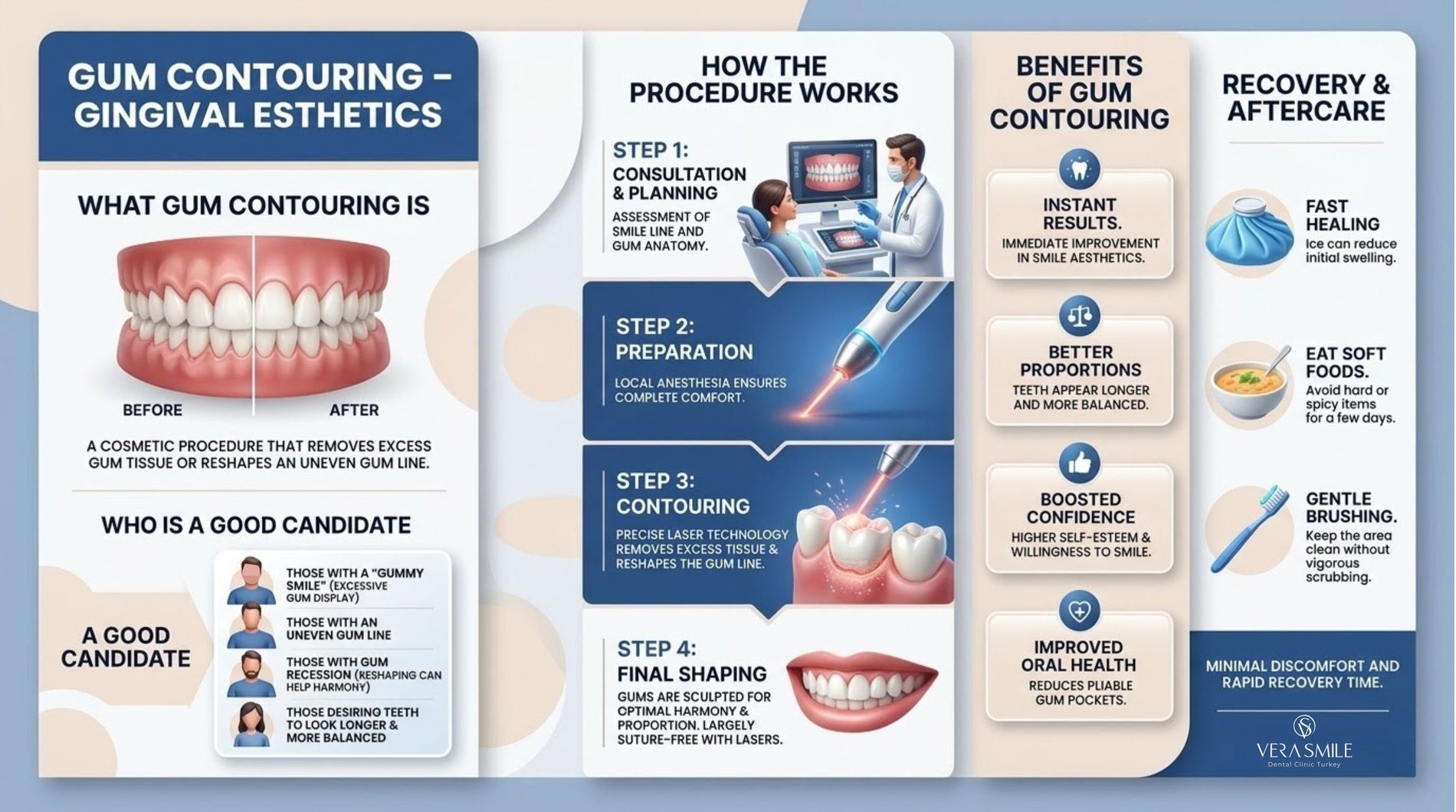
How Does Gum Contouring Improve Your Smile?
Gum Contouring enhances the smile by correcting irregularities in the gum line that disrupt balance and proportion. When excess gum tissue covers too much of the teeth, the smile often appears shorter or uneven. Through gum reshaping and gum sculpting, dentists create a more refined gingival outline, exposing the right amount of tooth structure for a natural and attractive result.
Procedures such as laser gum contouring or gingivoplasty allow for precise adjustments that highlight the teeth while maintaining healthy tissue. In cases requiring crown lengthening or gum reduction surgery, the treatment not only improves gingival aesthetics but establishes proper ratios between gums and teeth.
By aligning the principles of smile contouring, pink vs white aesthetics, and symmetry & harmony in smiles, gum contouring transforms the overall dental appearance. Integrated into Digital Smile Design (DSD), it ensures that gums, teeth, and lips complement one another, creating a confident and balanced smile that looks both healthy and aesthetically pleasing.
How is Gum Contouring Step by Step Done?
Gum contouring is a detailed aesthetic and functional procedure designed to sculpt the gum line for ideal balance and symmetry. The process combines digital planning, precision techniques, and meticulous finishing to create harmonious proportions between the gums and teeth. Each stage, from digital smile mapping to final verification, is guided by advanced tools such as Digital Smile Design (DSD), ensuring that every contour follows the planned gingival architecture. The step-by-step sequence below outlines how dentists achieve accurate, natural-looking, and stable results in modern gingival aesthetics.
- Consultation & Smile Mapping: Comprehensive exam, photos, and scans establish baseline gum levels. Goals are aligned using Digital Smile Design (DSD) to preview the balance of pink vs white aesthetics and overall symmetry & harmony in smiles.
- Treatment Planning: The periodontist or cosmetic dentist selects the approach: laser gum contouring (within laser dentistry) for precise soft-tissue work, or surgical methods such as gingivoplasty. Cases with hidden tooth structure or altered eruption receive crown lengthening or limited gum reduction surgery. A guide or stent defines ideal gingival contouring points.
- Anesthesia & Isolation: Local anesthetic numbs the area. Cheek retractors and suction isolate tissues; protective eyewear is used for laser procedures.
- Tissue Marking: The clinician marks gingival zeniths and scallop heights to frame each tooth correctly, supporting natural smile contouring.
- Reshaping / Sculpting: Precise gum reshaping or gum sculpting removes excess tissue and refines papillae. The gingival margin is contoured tooth by tooth to achieve planned proportions.
- Hemostasis & Finishing: Laser coagulation or gentle pressure achieves hemostasis. Edges are smoothed, and the field is rinsed for a clean, uniform margin.
- Verification of Aesthetics: Lengths and symmetry are re-measured; proportions are checked against the DSD plan to ensure harmonious gingival aesthetics.
- Adjunctive Steps (when required): If biologic width or bone position limits the result, crown lengthening with minor osseous recontouring is completed. Sutures or tissue dressings are placed for surgical cases.
- Post-Procedure Guidance & Follow-up: Written instructions cover hygiene, diet, and activity. A review visit confirms healing and final contour; restorative steps such as veneers or crowns proceed once the tissue stabilizes.
Is Gum Contouring Painful?
No, gum contouring is performed under local anesthesia, which numbs the treatment area completely, so patients do not feel pain during the procedure. What most experience is a sense of pressure or mild vibration while the dentist works. With laser gum contouring, discomfort is usually minimal since the laser cauterizes tissue instantly, reducing swelling and eliminating the need for sutures.
In traditional scalpel-based techniques, tenderness is slightly greater because incisions and stitches are sometimes required. Still, modern approaches in cosmetic dentistry and periodontics keep discomfort well managed with effective anesthetics and careful surgical planning.
After treatment, it is normal to feel mild sensitivity or soreness in the gums as healing begins. Over-the-counter pain relief, soft foods, and gentle oral hygiene keep recovery smooth. Most patients find the sensation more like irritation than pain, and healing progresses quickly, especially with laser dentistry methods.
What Are the Types of Gum Contouring?
Gum contouring, known as gum reshaping or gingival sculpting, is a cosmetic and functional procedure designed to correct uneven or excessive gum tissue for a more balanced and symmetrical smile. It helps address concerns such as a gummy smile, asymmetrical gum lines, or irregular tooth exposure, all of which can affect both appearance and oral health.
Modern dentistry offers several methods for gum contouring, ranging from minimally invasive laser techniques to traditional surgical approaches, each chosen based on the patient’s anatomy, aesthetic goals, and clinical needs. Below are the main types of gum contouring procedures performed in professional dental clinics:
- Laser Gum Contouring (Minimally Invasive): Laser gum contouring uses advanced dental lasers to precisely remove and reshape excess gum tissue. This method seals blood vessels as it works, minimizing bleeding, swelling, and discomfort. It’s ideal for treating gummy smiles or uneven gum lines and offers fast recovery with little to no need for sutures. When combined with Digital Smile Design (DSD), it ensures precise and harmonious gum symmetry around each tooth.
- Traditional Gum Contouring (Scalpel-Based): Traditional gum contouring relies on a scalpel and microsurgical tools to reshape the gum line. This approach is typically chosen when significant tissue removal is required or when gum contouring is part of broader periodontal or crown lengthening surgery. Although it involves a longer healing period compared to laser methods, it provides reliable results and is suitable for complex or medically indicated cases.
- Electrosurgery Gum Contouring: Electrosurgery uses a controlled electric current to remove and sculpt gum tissue. It offers greater precision than scalpels but is less common than laser contouring due to increased heat generation, which can require longer healing time. This technique is still used for specific cases where enhanced tissue control is necessary, such as during crown lengthening or pocket reduction surgery.
- Regenerative or Reconstructive Gum Contouring: In cases where the gum line needs to be rebuilt (e.g., due to gum recession), regenerative gum contouring involves grafting tissue from the palate or donor source to restore symmetry and protect exposed tooth roots. This technique combines aesthetic and functional goals, improving both the smile’s appearance and periodontal health.
What is the difference between Gum Contouring and Gum Reshaping?
Gum Contouring and gum reshaping are used as if they mean the same thing, but they highlight slightly different aspects of treatment. Gum contouring refers to the broader cosmetic gum surgery approach of adjusting the gum line to enhance gingival aesthetics and overall balance.
Gum reshaping describes the technical step of removing or sculpting excess gum tissue where it extends too far over the teeth. This adjustment is achieved through laser gum contouring or surgical techniques such as gingivoplasty and gum reduction surgery. While gum reshaping defines the physical correction, gum contouring reflects the aesthetic outcome: a smile with improved proportion and visual appeal.
In today’s cosmetic dentistry, supported by Digital Smile Design (DSD), the two terms work hand in hand. The reshaping process delivers the technical changes, and contouring ensures that the final smile looks natural, refined, and well-balanced.
What’s the Difference Between Gum Contouring vs Gum Reduction Surgery?
Gum contouring and gum reduction surgery both reshape the gum line but differ in purpose, scope, and clinical depth. Gum contouring is a cosmetic procedure that refines minor irregularities in the gum line, usually using laser or gingivoplasty techniques, to achieve balanced proportions between teeth and gums for an aesthetically pleasing smile. It’s minimally invasive, ideal for patients with mild unevenness or a slightly gummy appearance, and often part of Digital Smile Design (DSD) or smile makeover treatments.
Gum reduction surgery is a more extensive functional and aesthetic procedure that removes larger amounts of gum tissue, and sometimes bone, to correct severe gummy smiles, medication-related gum overgrowth, or periodontal issues that hinder oral health. It is frequently performed when more tooth structure must be exposed for crowns or restorations. In short, gum contouring enhances appearance through precise sculpting, while gum reduction surgery restores both function and aesthetics through deeper tissue and structural modification.
What Are the Benefits of Gum Contouring?
Gum contouring is more than just a cosmetic enhancement, it’s a transformative procedure that improves both the appearance and health of your smile. By reshaping the gum line, dentists can correct excess or uneven tissue, reveal more of the natural tooth structure, and create balanced proportions between the teeth and gums. Whether performed with advanced laser technology or traditional microsurgical methods, gum contouring helps achieve a more symmetrical, confident smile while supporting long-term oral health and restorative dental treatments.
- Improves Smile Balance: Creates visual harmony between teeth and gums, achieving ideal smile proportions.
- Corrects Gummy Smiles: Removes excess gum tissue with precision to expose more of the natural tooth surface.
- Enhances Gingival Aesthetics: Restores natural pink-to-white balance for a healthy, attractive appearance.
- Refines Uneven Gum Lines: Smooths irregular contours and helps teeth appear longer and more symmetrical.
- Boosts Confidence: Delivers a balanced, natural-looking smile that enhances overall self-esteem.
- Supports Restorative Treatments: Aligns gum levels for veneers, crowns, or Digital Smile Design (DSD) plans.
- Minimally Invasive with Lasers: Ensures gentle tissue sculpting, minimal bleeding, and fast recovery.
- Provides Long-Lasting Results: Offers durable improvements in both gum health and smile aesthetics when performed by skilled specialists.
Are There Risks or Side Effects of Gum Contouring?
Gum contouring is a safe and predictable procedure when performed by qualified dental specialists, but like any minor surgery, it can involve some temporary side effects. Most are mild, short-lived, and easily managed with proper aftercare.
- Mild Discomfort and Swelling: Common during the first few days after treatment as tissues heal.
- Temporary Gum Sensitivity: Gums may react to hot, cold, or pressure during the early healing phase.
- Minor Bleeding: Occurs immediately after surgery, especially with traditional scalpel-based techniques.
- Risk of Infection: Rare, but possible if oral hygiene or aftercare instructions are not followed correctly.
- Uneven Healing or Tissue Regrowth: Occurs after extensive gum reduction but is typically corrected during follow-up visits.
- Longer Recovery Time: More likely with sutured or traditional surgical methods compared to laser contouring.
- Allergic Reactions: Rare sensitivity to anesthesia or medication can occur but is easily managed by the clinical team.
How Much Does Gum Contouring Cost?
The cost of gum contouring varies based on several key factors, including the number of teeth treated, whether laser or traditional methods are used, the clinic’s location and reputation, and whether additional procedures such as bone reshaping or crown lengthening are required. Below is an overview of approximate pricing to help you compare options in Istanbul and other major regions worldwide:
| Country / Region | Cost per Tooth (€) | Cost for Multiple Teeth / Smile Line (€) | Notes |
| Turkey (Istanbul) | €15 – €90 | €180 – €720 | Competitive prices with experienced cosmetic dentistry clinics |
| United States | €50 – €320 | €950 – €2,800 | Higher due to operating costs, insurance, and advanced sedation options |
| Europe | €60 – €300 | €1,000 – €2,500 | Prices depend on city and specialist; Western Europe is at the higher end |
| India | €18 – €50 | €80 – €300 | Affordable rates, with metro clinics charging more for laser dentistry |
The lowest price doesn’t always guarantee quality. To ensure lasting, safe, and aesthetic results, it’s essential to research your clinic’s credentials, materials, and technology.
What Are Factors that Influence Pricing?
Several variables determine the total cost of gum contouring, ranging from the technique used to the clinic’s expertise and technology level. Understanding these factors helps patients compare quotes more accurately and make informed decisions.
- Technique Used: Laser gum contouring generally costs more than traditional scalpel-based methods because it offers higher precision, minimal bleeding, and faster recovery.
- Specialist Expertise: Experienced periodontists and cosmetic dentists often charge higher fees due to their advanced training and proven track record in achieving symmetrical, natural-looking results.
- Clinic Reputation & Location: Prices vary between countries and cities; clinics in Istanbul or major European centers may differ from those in smaller towns or developing regions.
- Additional Procedures: Treatments such as gingivoplasty, crown lengthening, or bone reshaping can increase overall cost since they require more clinical time and expertise.
- Technology Used: The inclusion of dental lasers, digital scanners, CAD/CAM systems, or surgical guides enhances precision and aesthetic outcomes but adds to the treatment fee.
Is Gum Contouring Covered by Insurance?
Gum contouring is generally not covered by dental insurance because it is considered an elective cosmetic procedure. Since the primary goal is to enhance gingival aesthetics and improve smile symmetry rather than treat a medical condition, most insurance providers classify it as non-essential.
There are exceptions where partial coverage apply, particularly if the procedure serves a functional or restorative purpose, such as gum reduction to access decay below the gum line, crown lengthening to support a restoration, or treatment of gum overgrowth caused by medication or periodontal disease.
Coverage policies vary between providers, so patients are advised to verify their individual plans before undergoing treatment. Even when insurance does not apply, choosing gum contouring in Turkey offers significant savings, often 60–80% lower than in the United States or Western Europe, while maintaining European-level clinical standards and advanced technology.
Why Gum Contouring in Turkey Is More Affordable?
Gum contouring in Turkey offers the same high-quality standards found in Western clinics but at significantly lower prices, making it a preferred destination for patients seeking cosmetic and periodontal treatments. Several key factors explain this affordability:
- Lower Operational Costs: Dental clinics in Istanbul and other major Turkish cities benefit from reduced overhead expenses, including rent, staff salaries, and laboratory costs. This allows them to maintain competitive pricing without compromising quality or materials.
- Economic Differences: Favorable currency exchange rates and a lower cost of living in Turkey translate into more affordable treatment fees when converted to euros, pounds, or dollars. As a result, even advanced procedures like laser gum contouring or Digital Smile Design (DSD) are available at a fraction of Western prices.
- High Patient Volume: As one of the world’s leading destinations for dental tourism, Turkey’s clinics treat large numbers of international patients year-round. This volume enables them to streamline operations, offer transparent pricing, and continuously invest in modern dental technologies.
- Government and Sector Support: Turkey actively supports its medical and dental tourism industry, ensuring internationally accredited clinics adhere to strict quality standards.
Who Should Consider Gum Contouring?
Gum contouring is recommended for patients whose smiles are affected by uneven or excessive gum tissue. Individuals with a gummy smile, where too much of the gum is visible when smiling, often benefit from this treatment. It is suitable for those with irregular gum lines that disrupt symmetry and harmony in smiles, making teeth appear shorter, uneven, or poorly aligned.
People undergoing restorative or aesthetic treatments such as veneers, crowns, or full Digital Smile Design (DSD) workflows require gum contouring as part of the preparation process. By refining the gingival margins, the procedure ensures that final restorations blend naturally with the gums. In some cases, contouring is paired with crown lengthening or gingivoplasty to expose more tooth surface and enhance overall gingival aesthetics.
Can Gum Contouring Treat a Gummy Smile?
Yes, gum contouring can effectively correct a gummy smile by precisely removing and reshaping excess gum tissue to reveal more of the natural tooth surface. This procedure creates a balanced ratio between teeth and gums, transforming an overly gummy appearance into a more harmonious and attractive smile. Depending on the individual case, treatment may involve laser gum contouring for minimally invasive reshaping or surgical techniques such as gingivoplasty or gum reduction surgery when deeper adjustment is needed. Both methods refine the gingival line, enhance smile symmetry, and contribute to long-lasting aesthetic results.
Is Gum Contouring suitable for uneven gum lines?
Yes, it is suitable, gum contouring is a highly effective treatment for correcting uneven gum lines, where some teeth appear longer or shorter because of irregular gingival margins. By precisely sculpting the gum tissue, dentists create a smooth, symmetrical gum line that enhances the overall balance and beauty of the smile. This procedure can be performed using laser dentistry techniques, such as laser gum contouring, or through minor surgical methods like gingivoplasty. In many cases, gum contouring is integrated into comprehensive cosmetic treatment plans involving veneers, crowns, or orthodontics to ensure perfect harmony between the teeth and gums.
What is the Recovery Process After Gum Contouring?
The recovery process after gum contouring is straightforward and depends largely on whether a laser or scalpel-based technique is used. With proper aftercare, patients enjoy a smooth healing experience and long-lasting results.
- Laser Gum Contouring Recovery: Healing is faster because the laser seals tissue during treatment, minimizing bleeding, swelling, and the need for sutures.
- Traditional (Scalpel-Based) Contouring Recovery: Involves sutures and slightly longer healing, but delivers stable results when aftercare instructions are followed.
- Initial Days (0–3 Days): Mild tenderness or sensitivity may occur. Patients are advised to eat soft foods, apply cool compresses, and use prescribed rinses to reduce irritation and promote healing.
- First Week (3–7 Days): Swelling gradually decreases, and the new gum contours begin to settle into place. Gentle brushing with a soft-bristled toothbrush helps maintain hygiene without disturbing healing tissue.
- One to Two Weeks: Most visible healing is complete. The gum line appears smoother and more natural, enhancing smile balance and gingival aesthetics.
- After Two Weeks and Beyond: For patients combining gum contouring with veneers, crowns, or Digital Smile Design (DSD), final restorative steps are scheduled once gum tissues stabilize.
- Follow-Up Visits: Regular check-ups ensure proper healing, confirm that the new gum shape supports both pink and white aesthetics, and secure predictable, long-term results.
How Long Does it Take to Heal After Gum Contouring?
Healing after gum contouring is typically quick and comfortable, depending on the method used and individual healing response. With laser gum contouring, most patients recover noticeably within a few days, achieving near-complete healing in about one week. The laser’s precision minimizes bleeding, swelling, and discomfort, allowing for a smooth recovery.In contrast, traditional scalpel-based contouring may require a slightly longer healing period. Mild soreness and swelling usually subside within a few days, while stitches are removed after 1–2 weeks if used. Complete tissue adaptation and natural gum contour blending generally occur over several weeks, resulting in stable and refined aesthetic outcomes.
How Is Discomfort Managed After Gum Contouring?
Discomfort after gum contouring is mild and short-lived, and most patients recover comfortably with simple at-home care. Dentists recommend over-the-counter pain relievers to ease tenderness during the first few days, along with a soft-food diet to avoid pressure on the treated area. Applying cool compresses can further reduce swelling and promote faster healing.
Maintaining gentle oral hygiene is essential, using a soft-bristled toothbrush and antiseptic mouth rinses keeps the gums clean without irritating the reshaped tissue. For scalpel-based procedures, sutures may be placed, and the dentist will provide tailored instructions to protect the surgical site. With laser gum contouring, however, the laser seals the tissue during treatment, minimizing bleeding and significantly reducing post-procedure discomfort, allowing for a faster and smoother recovery.
How Long Do Gum Contouring Results Last?
Gum contouring results typically last 10 years or more, and in most cases, the reshaped gum line remains permanent when performed correctly. Once excess tissue is removed and the new contour is established through laser gum contouring, gingivoplasty, or surgical reshaping, the gums usually do not grow back.Longevity depends on oral hygiene, lifestyle habits, and gum health. Patients who maintain consistent brushing, flossing, and regular dental check-ups can expect decade-long or lifelong improvements in smile symmetry and gingival aesthetics. In rare cases, gum tissue regrowth may occur due to factors such as medication use, genetics, or uncontrolled periodontal conditions, but this can be easily managed with minor touch-up procedures.
Can Gum Tissue Grow Back After Reshaping?
Gum tissue does not grow back after gum contouring, because the excess tissue removed is permanently eliminated. When the procedure is performed with precision through laser gum contouring or gingivoplasty, the new gum line remains stable and continues to support balanced gingival aesthetics.There are certain situations where limited regrowth is possible. Patients with ongoing periodontal problems, genetic tendencies toward thick gum tissue, or those taking medications that cause gingival overgrowth experience tissue return over time. In such cases, a follow-up adjustment or additional gum reduction surgery might be required to maintain the desired proportions.
What Is the Aftercare Routine After Gum Contouring?
Proper aftercare is essential for smooth healing and long-lasting results after gum contouring. The gums are in a delicate state during the first days following treatment, whether performed with a laser or traditional scalpel. By following a tailored aftercare plan, patients support recovery, protect tissue health, and maintain refined gingival aesthetics.
- Pain relief: Mild discomfort is managed with over-the-counter medication as recommended by the dentist.
- Diet adjustments: Soft, cool foods are preferred in the first days; hot, spicy, or crunchy items should be avoided until the gum line stabilizes.
- Oral hygiene: Brushing should be gentle with a soft-bristled toothbrush, avoiding direct pressure on the treated gums. Antiseptic rinses or saltwater solutions keep the area clean without irritation.
- Avoid harmful habits: Smoking, excessive alcohol, and aggressive chewing delay healing and should be avoided.
- Follow-up visits: Check-ups allow the dentist to monitor healing and confirm that the new contour is settling into balanced symmetry and harmony in smiles.
What Foods and Habits Should You Avoid?
Hard, crunchy, or sharp foods, such as nuts, chips, or raw vegetables, should be avoided because they irritate the gum line and delay healing. Very hot or spicy meals risk increasing sensitivity, while sticky or chewy items create strain on the gums and make cleaning difficult. Instead, soft, cool, and easy-to-chew foods support comfort and stability.
Beyond diet, certain habits interfere with proper healing. Smoking slows blood flow to the gums, increasing the risk of infection and complications. Excessive alcohol consumption irritates soft tissue and dries the mouth, both of which hinder recovery. Aggressive brushing or flossing near the treated area should be avoided until the dentist advises resuming a normal routine.
Can Gum Contouring Be Combined with Other Dental Treatments?
Yes, it can, gum contouring is often combined with other cosmetic and restorative dental treatments to achieve a complete and balanced smile transformation. By reshaping the gum line first, dentists establish the ideal foundation for procedures such as veneers, crowns, and Digital Smile Design (DSD) plans, ensuring that restorations align perfectly with the gingival margin for superior fit, durability, and aesthetics.
When performed before veneer or crown placement, gum contouring exposes the proper amount of tooth surface, giving the final restorations a natural and proportionate appearance. It is also commonly integrated into orthodontic treatments, where minor gum reshaping at the end of tooth alignment helps refine the overall smile contour.
For patients undergoing gummy smile correction, gum contouring is frequently combined with crown lengthening or gingivoplasty to achieve lasting harmony between teeth and gums. Through these multidisciplinary combinations, cosmetic dentists and periodontists create smiles that are not only visually flawless but also functionally balanced and healthy.
Why Choose Turkey for Gum Contouring?
Turkey has become one of the world’s leading destinations for cosmetic and dental procedures, including gum contouring, thanks to its exceptional combination of affordability, quality, and international expertise. Patients receive European-standard care at prices that are typically 60–80% lower than those in the United States or Western Europe. Clinics in Turkey benefit from reduced operational costs and favorable exchange rates, enabling them to offer premium treatments without compromising on materials or clinical standards. Many dentists are internationally trained or certified by organizations such as the American Academy of Cosmetic Dentistry (AACD) and the Slow Dentistry Global Network, ensuring world-class precision and patient safety.
Advanced technologies such as laser dentistry, Digital Smile Design (DSD), and CAD/CAM digital imaging are widely used, allowing for minimally invasive, highly accurate results. Most clinics also provide transparent, all-inclusive packages that cover consultation, treatment, post-care, and VIP services like airport transfers, hotel coordination, and translator assistance. Supported by the Turkish government’s robust medical tourism framework, these internationally accredited clinics uphold strict hygiene and quality standards. Choosing Turkey for gum contouring means gaining access to premium-level dentistry, modern technology, and expert specialists, all at transparent and affordable prices.