
Immediate dental implants are a tooth replacement method in which the implant fixture is placed directly into the extraction socket at the same appointment. Instead of waiting months for healing, the procedure combines extraction and implant placement in a single visit.
As a solution for tooth loss, this approach allows patients to leave the clinic with a functional and aesthetically pleasing temporary restoration on the same day. Immediate placement helps preserve jawbone structure, maintain natural gum contours, and reduce bone resorption. With fewer surgical visits and a significantly shorter treatment timeline, patients regain chewing function, speech, and confidence more quickly while supporting long-term oral health.
What Are Immediate Dental Implants?
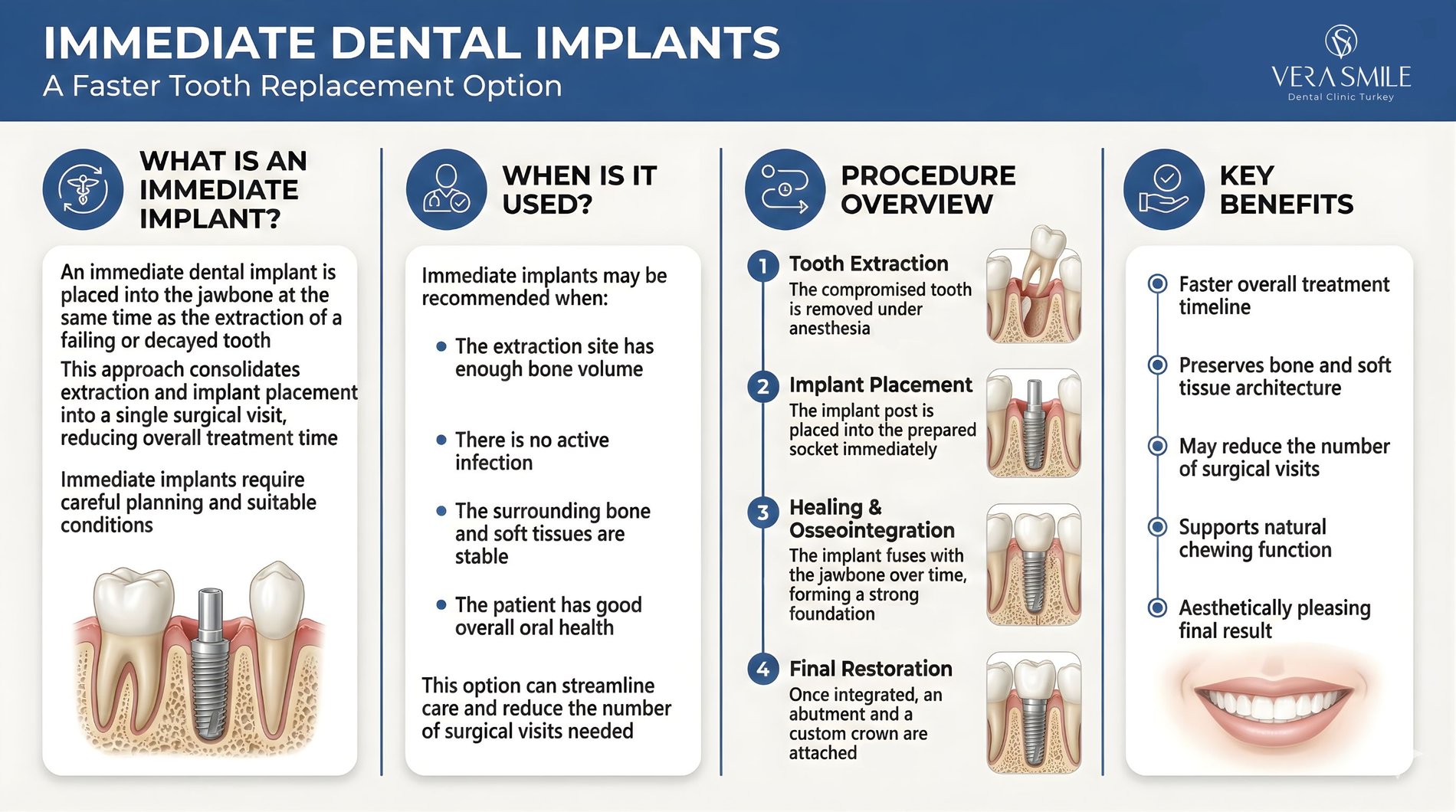
Immediate dental implants, also called same-day implanst, are placed directly into the fresh extraction socket during the same surgical session. By combining tooth removal and implant placement into one procedure, the treatment shortens the overall timeline while helping preserve bone volume and natural gum contours. Because the implant is positioned immediately, primary stability and surgeon expertise play a critical role in achieving predictable aesthetic and functional outcomes.
How Is the Immediate Implant Procedure Performed?
The workflow for immediate dental implants compresses what is usually a months-long process into a coordinated treatment sequence. The steps involve tooth extraction, insertion of the implant fixture, connection of the abutment, placement of a temporary crown, and finally, the delivery of the permanent prosthesis once healing and osseointegration are complete.
Can Immediate Implants Be Placed Immediately After Extraction?
Yes, immediate implants can be placed right after tooth extraction in suitable cases. This can reduce overall treatment time and help preserve bone structure and gum contour. However, success depends on implant stability, bone density, and the skill of the dental surgeon. If infection, bone loss, or gum disease is present, additional procedures such as bone grafting or a sinus lift may be needed before the implant can be placed.
How Do Immediate Implants Work After Tooth Extraction?
After the damaged tooth is removed, the implant fixture is placed directly into the fresh socket. This immediate placement helps preserve bone structure and maintain the natural shape of the gums. To protect aesthetics and function, a temporary crown is attached on the same day, allowing the patient to smile and eat with confidence while the implant undergoes osseointegration in the following months. Once stability is achieved, the final prosthesis is fitted for a long-term result.
How Long Do Immediate Implants Last?
With proper care, immediate dental implants offer long-lasting results similar to traditional implants. Clinical evidence shows that they remain stable and functional for an average of 10 to 15 years or more, provided that patients maintain good oral hygiene, attend regular check-ups, and avoid risk factors such as smoking or uncontrolled systemic conditions.
Long-term success relies on achieving strong implant stability at placement and preserving surrounding bone and gum structure over time. When osseointegration is successful in the early stages, immediate implants deliver predictable outcomes well beyond a decade. This is supported by A systematic review on survival and success rates of implants placed immediately into fresh extraction sockets after at least 1 year (Lang et al., 2012).
How Successful Are Immediate Dental Implants?
In modern implantology, immediate dental implants are considered a predictable treatment option with outcomes very close to traditional methods. Evidence indicates survival rates in the range of 93–98%, as shown in the Cochrane review “Interventions for replacing missing teeth: different times for loading dental implants” (Esposito et al., 2009). Implants which achieve stability in the first year frequently remain functional for more than a decade, supported by findings from “A systematic review on survival and success rates of implants placed immediately into fresh extraction sockets after at least 1 year” (Lang et al., 2012).
Success depends strongly on factors such as bone density, primary stability, and the experience of the surgeon, highlighted in “Clinical and esthetic outcomes of implants placed in postextraction sites” (Chen & Buser, 2009). Together, these results demonstrate that immediate placement offers both reduced treatment time and lasting oral health benefits when applied in the right clinical situations.
What Are the Advantages of Immediate Implants?
Choosing immediate dental implants means more than just replacing a missing tooth quickly. This treatment approach combines efficiency, preservation of oral anatomy, and a strong aesthetic outcome. By placing the implant fixture directly after tooth extraction, patients experience both short-term and long-term benefits for their oral health.
- Reduced Treatment Time: The most visible advantage is speed. Extraction and implant placement are performed in a single session, which eliminates the need for months of waiting between stages. For patients who want a same-day solution, this represents a major improvement over traditional methods.
- Aesthetic Preservation: Immediate placement maintains the natural shape of the gums and bone. Especially in the front teeth zone, this helps avoid the “sunken” look that often occurs after healing without an implant. The result is a more natural, harmonious smile design.
- Restored Function: A temporary crown is fitted the same day, allowing patients to continue speaking and chewing comfortably. This functional continuity supports confidence in daily life while the implant undergoes osseointegration.
- Preserve Bone Structure: Filling the socket immediately helps stimulate bone tissue and prevents resorption. Maintaining bone density not only supports the stability of the implant but preserves the natural architecture of the jaw for future oral health.
- Enhanced Oral Health Outcomes: By reducing the number of surgical sessions, immediate placement lowers cumulative trauma to the tissues. With proper implant stability and surgeon expertise, this approach leads to predictable long-term success in the field of implantology.
What Are the Risks or Limitations of Immediate Implants?
While immediate dental implants provide speed and preservation benefits, they are not suitable for every case. The success of the procedure depends on bone density, the condition of surrounding tissues, and achieving strong implant stability immediately after extraction. Patients must be carefully selected by an experienced surgeon, as rushing treatment in unsuitable cases increases the chance of dental implant complications.
- Implant Failure Risk: Immediate placement requires excellent primary stability; if integration does not occur, the implant loosen or fail.
- Stricter Case Selection: Not recommended for patients with active infection, poor bone quality, or uncontrolled health conditions.
- Bone and Gum Healing Variations: Healing responses differ; some patients still require grafting or additional procedures.
- Aesthetic Complications: Inadequate planning leads to gum recession or visible implant margins, especially in the front teeth zone.
- Surgical Complexity: Success relies heavily on the skill of the dental surgeon, making clinic choice critical.
How Much Do Immediate Implants Cost?
Dental implant prices vary significantly worldwide, depending on regional costs, clinic standards, and treatment complexity.
| Procedure Type | United States Approx. (€)* | Europe Avg (€)* | India Approx. (€)* | Turkey Approx. (€)* |
| Single Immediate Implant | €2,300 – €6,000 | €1,200 – €2,800 | €600 – €700 (same-day with crown) | €400 – €550 (implant + crown) |
| All-on-4 (per jaw) | €18,000 – €32,000 | €11,000 – €16,000 | €4,000 – €6,000 | €2,000 – €3,250 |
n countries like the United States or across Europe, costs are generally higher, while dental implant cost in Turkey offers significant savings with the same certified implant systems and advanced techniques.These dental implant cost advantages stem from lower overhead, competitive clinics, and favorable currency rates, while still using trusted implant systems and advanced techniques.
Are Immediate Implants More Expensive Than Traditional Ones?
Immediate dental implants are generally similar in price to, or slightly more expensive than, traditional delayed implants. The difference reflects the need for precise surgical planning, advanced imaging, and strong primary stability at the time of extraction. Premium implant brands, restorative materials such as zirconia crowns, and the surgeon’s experience can influence the final cost. In countries like Turkey, however, patients often pay the same per implant as delayed methods while benefiting from fewer appointments and a shorter overall treatment period, which improves overall value.
Who Is a Good Candidate for Immediate Dental Implants?
Not every patient qualifies for immediate dental implants, as long-term success depends on careful clinical evaluation and proper case selection. Strong bone support, healthy gums, and stable systemic health are essential to achieve primary stability and predictable osseointegration. Good candidates include:
- Patients with adequate bone density to support immediate implant stability
- Individuals without active gum disease or extraction-site infection
- Patients with controlled systemic conditions (e.g., well-managed diabetes)
- Non-smokers or light smokers with good healing capacity
- Individuals committed to strict oral hygiene and regular follow-ups
When these criteria are met, immediate placement offers reduced treatment time, preserved bone structure, and long-lasting functional results.
Who Should Avoid Same-Day Implants?
While immediate dental implants offer many advantages, they are not recommended for every patient. Certain health conditions and oral factors reduce the chance of success and increase the likelihood of complications. In such cases, a traditional staged approach or preparatory treatments like bone grafting provide safer and more predictable outcomes.
- Smokers: Reduced blood supply, delayed healing, and a higher risk of implant failure make same-day implants less predictable for smokers.
- Uncontrolled Diabetics: Impaired immune response and poor osseointegration increase the likelihood of complications in patients with uncontrolled diabetes.
- Patients with Insufficient Bone Density: Immediate implants require adequate bone to achieve stability, so patients with low bone density may need grafting or staged procedures.
- Individuals with Active Oral Infections: Gum disease or extraction-site infections must be treated before implant placement to avoid failure.
- Patients with Compromised Systemic Health: Autoimmune disorders, recent chemotherapy, or other systemic conditions can slow healing and elevate the risk of complications.
What Is the Recovery Process for Immediate Dental Implants?
Healing after immediate dental implants requires careful attention in the first days to protect implant stability and ensure long-term success. Following professional guidelines helps reduce the risk of dental implant complications and supports proper osseointegration.
- In the first 24 hours patients should rest, avoid heavy activity, apply cold compresses to reduce swelling, and leave the surgical site undisturbed.
- Dietary guidance includes eating soft foods such as soups, yogurt, eggs, and smoothies while avoiding hot, crunchy, or sticky items that place stress on the implant.
- Oral hygiene requires gentle cleaning with a soft-bristle toothbrush, the use of antiseptic rinses, and implant-safe tools such as interdental brushes or water flossers instead of traditional floss.
- Follow-ups begin within the first week, continue at three and six months, and should then be maintained with annual check-ups to protect gum and bone health.
What Are the Diet, Hygiene, and Activity Recommendations After Immediate Implants?
Proper care after immediate dental implants supports healing and reduces the risk of complications. Following simple do’s and don’ts makes recovery smoother and protects implant stability.
Do’s:
- Eat soft foods during the first week (soups, yogurt, eggs, smoothies)
- Brush gently with a soft-bristle toothbrush
- Use antiseptic mouth rinses as recommended
- Clean around the implant with interdental brushes or a water flosser
- Rest during the first 24 hours and follow all scheduled check-ups
Don’ts:
- Avoid very hot, crunchy, or sticky foods
- Do not smoke, as it delays healing and increases failure risk
- Refrain from heavy exercise in the first few days
- Do not touch or probe the surgical area with your tongue or fingers
- Do not skip follow-up appointments
What Are the Advantages of Getting Immediate Implants in Turkey?
Choosing immediate dental implants in Turkey combines advanced implantology with the benefits of medical tourism. Patients receive internationally certified implant systems and treatment at accredited clinics while benefiting from significantly lower costs compared to the US or Western Europe.
- Affordable Pricing: Single implants typically range between €400 and €550, while full-arch All-on-4 solutions average €2,000 to €3,250 per jaw.
- International Standards: Clinics use premium brands such as Straumann and Nobel Biocare, supported by CAD/CAM systems, 3D imaging, and digital planning.
- Experienced Surgeons: Implantologists experienced in immediate-load protocols ensure strong primary stability and predictable outcomes.
- Comprehensive Services: Treatment packages often include airport transfers, hotel accommodation, and translation support.
- Medical Tourism Experience: Cities such as Istanbul, Antalya, and Izmir combine modern dental care with comfortable recovery environments.
By combining cost efficiency, clinical expertise, and advanced technology, Turkey has become a leading destination for patients seeking dental implants in Turkey with predictable long-term results.