
Dental braces are orthodontic devices designed to correct misaligned teeth and jaws, improving both function and appearance. They work by applying continuous pressure over time, gradually shifting teeth into their ideal positions. Braces are not only used for aesthetic improvement but are fundamental in correcting bite problems, preventing uneven tooth wear, and supporting long-term oral health. Modern orthodontics offer a wide range of options, including traditional metal braces, ceramic braces, lingual braces, and clear aligners, allowing treatments to be tailored to individual needs and lifestyles.
What Are Dental Braces?
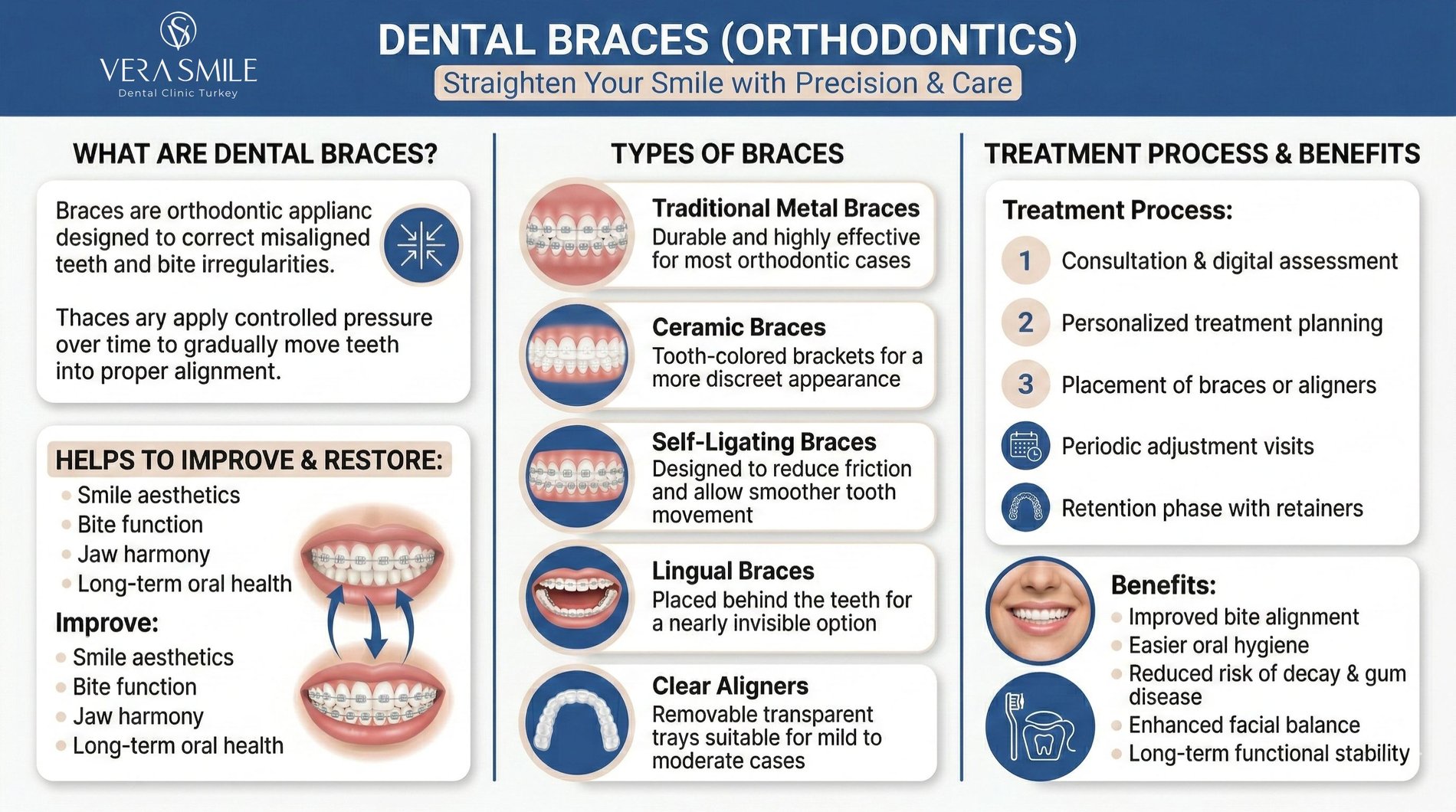
Dental braces are orthodontic appliances used to align teeth and correct bite irregularities. They consist of brackets, wires, and elastic components that work together to apply controlled pressure, guiding teeth into better positions over time. Braces fall under the broader category of orthodontic appliances, which include both fixed and removable devices designed to improve dental alignment and jaw function.
By repositioning the teeth, braces help resolve crowding, spacing, overbite, underbite, and crossbite problems. Orthodontic treatment with braces enhances dental aesthetics and supports long-term oral health by improving occlusion and reducing risks such as abnormal tooth wear and temporomandibular joint problems, highlighted in the American Journal of Orthodontics and Dentofacial Orthopedics.
How Do Braces Work?
Braces function by applying continuous, gentle pressure to the teeth and jaws, gradually shifting them into proper alignment. The brackets bonded to each tooth act as anchors, while the archwire connecting them delivers controlled force. Over time, this pressure stimulates bone remodeling: new bone forms in the direction of movement while old bone is resorbed, allowing teeth to stabilize in their new positions.
Correct tooth alignment leads to improved bite function. A properly aligned bite distributes chewing forces evenly, reducing strain on teeth, gums, and jaw joints. This balance prevents excessive wear, gum recession, and temporomandibular joint disorders. Improved bite mechanics directly enhance oral health by making brushing and flossing more effective, lowering the risk of cavities and periodontal disease. The cause-and-effect relationship between alignment, bite correction, and oral health highlights the essential role of braces in preventive dentistry. This is explained in Seminars in Orthodontics.
What Are Dental Braces Used for?
Dental braces are used to correct malocclusion, which is the misalignment between the upper and lower teeth. They treat problems such as crowding, spacing, overbite, underbite, and crossbite. By repositioning the teeth, braces improve the appearance of the smile while supporting chewing efficiency, speech clarity, and oral hygiene. Straight teeth are easier to maintain, lowering the risk of tooth decay and gum disease.
Orthodontic treatment with braces provides both functional and aesthetic improvements, as highlighted in the Journal of Orthodontics. Braces are recommended for individuals with malocclusion, crowding, or bite irregularities. Children and teenagers often undergo treatment during growth years when teeth and jaws respond more effectively to orthodontic forces. Without correction, misalignment leads to uneven wear, jaw strain, and higher susceptibility to periodontal complications.
Adults benefit from braces, and modern options such as ceramic systems and clear aligners offer more discreet alternatives suited to professional and social environments. Adult orthodontic treatment remains highly successful, although treatment duration is generally longer than in adolescents due to slower bone metabolism. This is explained in Progress in Orthodontics.
What Age is Best for Braces?
The best age for braces depends on the stage of dental and skeletal development. Orthodontists often recommend beginning treatment in late childhood or early adolescence, typically between ages 10 and 14, when most permanent teeth have erupted but the jaw is still growing. Early intervention at this stage allows teeth and jaws to be guided more efficiently into proper alignment. Initiating treatment during adolescence improves outcomes and reduces the need for complex procedures later. This is explained in the American Journal of Orthodontics and Dentofacial Orthopedics.
Adults are not excluded from orthodontic treatment. Braces are effective at any age, and modern systems such as clear aligners and ceramic braces provide discreet options. While adult treatment usually takes longer due to slower bone remodeling, the results are equally predictable and transformative.
How Effective Are Dental Braces for Severe Malocclusion?
Dental braces are highly effective for correcting severe malocclusion, including issues such as deep overbites, underbites, crossbites, and significant crowding. By applying controlled, continuous pressure, braces gradually reposition teeth and align the jaws over time. Severe cases may require additional appliances, such as elastics, expanders, or even jaw surgery in combination with braces, to achieve optimal functional and aesthetic results.
Treatment duration is longer for severe malocclusion, but modern orthodontic techniques ensure predictable outcomes when the patient adheres to follow-up visits and oral hygiene protocols. Comprehensive orthodontic care with braces successfully resolves complex malocclusion in both adolescents and adults according to the Journal of Clinical Orthodontics.
What Are the Types of Dental Braces?
Braces come in several forms, each designed to meet different orthodontic needs and lifestyle preferences. While all types share the goal of aligning teeth and correcting bite issues, their materials, appearance, and mechanisms vary. Some focus on strength and efficiency, while others prioritize aesthetics and comfort. Understanding the main types helps patients choose the system that best fits their goals.
- Metal Braces: Metal braces are the most traditional and widely used orthodontic system. They consist of stainless steel brackets bonded to the teeth and connected with an archwire. Their strength makes them particularly effective for treating severe crowding, complex malocclusion, and bite correction. Modern designs are smaller and more comfortable than earlier versions, making them a reliable option for long-term treatment.
- Clear Braces: Clear braces use transparent or tooth-colored materials that blend with the natural enamel. They function like traditional metal braces but are less visible, which makes them appealing for patients seeking a more aesthetic solution. Clear braces are recommended for teenagers and adults who want discreet treatment without losing effectiveness.
- Ceramic Braces: Ceramic braces are similar to clear braces but use ceramic brackets instead of composite materials. Their color closely matches natural teeth, creating a subtle look. Ceramic braces provide comparable efficiency to metal systems but with a reduced visual impact, although they are slightly more fragile and require more careful maintenance according to The Angle Orthodontist.
- Lingual Braces: Lingual braces are placed on the inside (lingual surface) of the teeth, making them invisible from the outside. They deliver the same corrective power as traditional braces but remain hidden, which makes them ideal for patients in professional or social environments who prioritize aesthetics. Treatment with lingual braces requires greater expertise and customization.
- Self-Ligating Braces: Self-ligating braces use brackets with built-in clips to hold the archwire, eliminating the need for elastic ties. This design reduces friction, allows teeth to move more freely, and shortens adjustment visits. Self-ligating systems improve patient comfort and reduce overall treatment time compared with conventional braces according to the Journal of Clinical Orthodontics.
What Is the Difference Between Clear Braces and Clear Aligners?
Clear braces and clear aligners differ significantly in design and usage. Clear braces are fixed to the teeth, working continuously without patient intervention. Clear aligners are removable trays that fit snugly over the teeth and are replaced every one to two weeks. Aligners offer greater flexibility for eating and oral hygiene, while clear braces deliver constant pressure and achieve faster results in complex cases. Both options provide aesthetic benefits, but aligners generally suit patients seeking maximum discretion and convenience.
What Do Dental Braces Consist Of?
Braces are made up of several interconnected components that work together to gradually reposition the teeth and align the bite. Each part has a distinct role, and their combined function ensures steady and controlled movement throughout the course of treatment.
- Brackets (Meronym / Holonym Relation): Brackets are the small attachments bonded to each tooth. They serve as anchors that hold the archwire in place and transfer pressure to the teeth. Brackets can be made of stainless steel, ceramic, or composite materials, depending on the chosen type of braces.
- Archwires: Archwires are thin metal wires that connect the brackets and provide the guiding force needed to move the teeth. As treatment progresses, orthodontists adjust the archwires to apply the right level of pressure for alignment.
- Elastic Ligatures: Elastic ligatures, called rubber bands, secure the archwire into the brackets. They come in a variety of colors, allowing patients, especially children and teenagers, to personalize their braces. In self-ligating systems, clips built into the brackets replace traditional elastic ligatures.
- Other Orthodontic Appliances Used With Braces: In some cases, additional appliances are combined with braces to address specific alignment needs. These include palatal expanders to widen the upper jaw, headgear to correct severe bite discrepancies, or interarch elastics to fine-tune jaw positioning. Each appliance works alongside the main braces system to optimize treatment outcomes.
What Is the Dental Braces Procedure Like?
The dental braces procedure is a structured, step-by-step process designed to safely and effectively move teeth into better alignment. From the initial orthodontic evaluation to regular adjustment appointments, each stage plays a key role in ensuring predictable progress and long-term stability. Understanding what happens during the procedure helps patients feel more prepared, confident, and informed before beginning treatment.
- Orthodontic Evaluation: The orthodontist examines the teeth, jaws, and bite using X-rays, photographs, and digital scans to create a detailed treatment plan.
- Treatment Planning: A personalized plan is finalized based on alignment needs, bite correction goals, and expected treatment duration.
- Teeth Preparation: The teeth are cleaned, dried, and conditioned with a bonding agent to ensure secure bracket placement.
- Bracket Bonding: Brackets are attached to each tooth with dental adhesive, and their positioning is carefully adjusted for accuracy.
- Archwire Placement: The archwire is inserted through the brackets and secured with elastic ligatures or self-ligating clips.
- Initial Activation: Gentle pressure is applied through the wire to begin tooth movement, causing mild tightness or discomfort initially.
- Patient Instructions: The orthodontist provides guidance on oral hygiene, dietary rules, managing irritation, and using orthodontic wax.
- Follow-Up Adjustments: Regular visits every few weeks allow the orthodontist to tighten or change wires and monitor alignment progress.
When Will You Start Seeing Results From Braces?
Most patients begin noticing visible changes within 4 to 6 weeks after braces are applied. Minor tooth movements often occur earlier, but significant alignment improvements usually appear by the second or third month of treatment. The exact timeline depends on factors such as the severity of malocclusion, age, bone density, and how consistently appointments are attended. Steady progress continues throughout treatment, with major changes becoming clear by the 3–6 month mark for most cases.
How to Prepare for Dental Braces Application
Preparation for braces begins with a comprehensive dental check-up. Any underlying issues such as cavities, gum disease, or impacted teeth must be treated before orthodontic appliances are placed to ensure a healthy foundation. A professional dental cleaning is recommended to remove plaque and tartar, reducing the risk of complications once the brackets are bonded.
Patients should discuss their treatment goals and expectations with the orthodontist, who will take X-rays, impressions, or digital scans to design a personalized plan. Dietary adjustments are encouraged before the procedure, such as becoming familiar with softer foods that will be easier to eat in the first days after application.
It is important to prepare for the lifestyle changes that braces require. Stocking up on orthodontic wax, soft-bristled toothbrushes, and flossing tools helps patients manage discomfort and maintain oral hygiene from the very beginning. Proper preparation before braces significantly improves early adaptation and overall treatment experience. This is explained in The Angle Orthodontist.
How Should the Aftercare Be After Dental Braces?
Patients must follow a strict oral hygiene routine, brushing after every meal with a soft-bristled toothbrush and using interdental brushes or floss threaders to remove food particles around brackets and wires. Regular use of fluoride toothpaste strengthens enamel and reduces the risk of cavities.
A braces-friendly diet helps prevent damage to the appliance. Hard, sticky, and chewy foods should be avoided because they loosen brackets or bend wires. Softer foods such as yogurt, pasta, or steamed vegetables are better options, in the first days after adjustments.
Orthodontic wax is used to reduce irritation caused by brackets and wires rubbing against the cheeks and lips. Discomfort or soreness is normal in the first days after fittings or adjustments, and over-the-counter pain relievers are sometimes recommended.Patients must attend scheduled orthodontic appointments for wire adjustments and progress checks, as skipping visits prolongs treatment and reduces effectiveness. Consistent aftercare ensures that braces function correctly and helps maintain gum and tooth health throughout treatment. This is highlighted in the American Journal of Orthodontics and Dentofacial Orthopedics.
How Is Oral Hygiene Maintained After Dental Braces?
Maintaining oral hygiene after getting braces is critical for both dental health and treatment success. Food particles and plaque easily accumulate around brackets and wires, increasing the risk of cavities, gum inflammation, and enamel stains. Patients are advised to brush after every meal with a fluoride toothpaste and a soft-bristled brush angled toward the brackets. Using interdental brushes and floss threaders allows effective cleaning between teeth and under the archwire, where a standard toothbrush cannot reach.
A fluoride mouthwash provides added protection against demineralization and white spot lesions, which are common in orthodontic patients. Regular professional dental cleanings are strongly recommended throughout treatment, as they help prevent plaque buildup in areas that are difficult to clean at home.
What to Eat After Getting Dental Braces
Diet plays a key role in adjusting to braces and protecting them from damage. The first few days after application are the most sensitive, so choosing the right foods helps reduce discomfort and supports proper oral care.
First Few Days: During the initial adjustment period, teeth are tender due to the pressure of the braces. Soft foods such as yogurt, mashed potatoes, soups, scrambled eggs, smoothies, and oatmeal are recommended. These options minimize chewing strain while providing balanced nutrition.
First Week: As sensitivity decreases, patients expand their diet with slightly firmer foods that remain gentle on the teeth. Options include pasta, rice, steamed vegetables, soft fruits like bananas or peaches, and tender fish or chicken. Avoid sticky or hard foods that could dislodge brackets or bend wires.Long-Term Diet: Throughout the entire treatment, it is important to maintain a braces-friendly diet. Hard foods (nuts, popcorn, hard candies), sticky items (chewing gum, caramel), and tough foods (bagels, raw carrots) should be avoided. Softer choices such as cooked grains, dairy products, soft fruits, and lean proteins should form the base of daily meals. Adherence to dietary recommendations during orthodontic treatment reduces appliance breakage and contributes to smoother progress. This is explained in the Journal of Clinical Orthodontics.
What Are the Common Issues After Getting Dental Braces?
After braces are placed, patients encounter several common issues as the mouth adjusts. Discomfort and soreness are among the first concerns, leading many to ask, Do braces hurt? Mild pain or pressure is normal in the first few days after application or during adjustments, as teeth begin to move. This discomfort subsides as the mouth adapts.
Irritation of the cheeks, lips, and tongue is another frequent issue, caused by brackets and wires rubbing against soft tissues. Orthodontic wax is used to reduce friction and improve comfort. Loose brackets or wires sometimes occur due to eating hard or sticky foods or applying excessive force while brushing, and these require professional repair to avoid treatment delays.
Maintaining oral hygiene is more challenging with braces, since food particles and plaque easily collect around brackets and wires, increasing the risk of cavities and gum inflammation if not carefully managed. Some patients also notice minor speech changes or difficulty chewing during the initial adjustment period.
How Long Do Retainers Need to Be Worn?
After braces are removed, retainers play a crucial role in keeping teeth stable in their new positions. Teeth tend to shift back toward their original alignment if retention is not maintained, a process known as relapse. Retainers prevent this by holding the teeth in place while the surrounding bone and soft tissues adapt.
Most patients are instructed to wear retainers full-time for the first several months after braces are removed, gradually transitioning to nighttime wear as stability increases. In many cases, orthodontists recommend wearing retainers at night for life to ensure long-term results. Long-term retainer use is essential to preserve orthodontic treatment outcomes and minimize the risk of relapse. This is explained in the Journal of Clinical Orthodontics.
How Can You Maintain Results After Dental Braces?
Keeping teeth aligned after braces requires a consistent retention strategy and proper oral care. Wearing retainers as prescribed is the most important step, since they hold teeth in position while bone and gum tissues stabilize around them. Skipping retainer use leads to gradual relapse, undoing the progress achieved during orthodontic treatment.
Equally important is maintaining excellent oral hygiene. Regular brushing, flossing, and professional cleanings prevent gum disease and tooth decay, which could compromise alignment. Patients are encouraged to schedule routine orthodontic check-ups so that retainers and alignment can be monitored over time.
How Much Do Dental Braces Cost?
The cost of dental braces depends on the type of system chosen, the complexity of the case, and the country where treatment is performed. In Europe and the USA, orthodontic treatment is more expensive due to higher overhead and insurance structures, while countries like Turkey offer more affordable solutions with internationally recognized standards. Patients choose between metal braces, ceramic or clear systems, lingual braces, and clear aligners, each with its own price range and advantages.
| Type of Braces | Average Cost (Europe/UK) | Average Cost (USA) | Average Cost (Turkey) |
| Metal Braces | €3,000 – €6,500 | €2,800 – €9,500 | €550 – €1,800 |
| Ceramic / Clear Braces | €4,000 – €7,500 | €3,700 – €10,000 | €1,200 – €2,000 |
| Lingual Braces | €7,500 – €11,000 | €7,500 – €15,500 | €2,500 – €4,000 |
| Clear Aligners (Invisalign etc.) | €3,500 – €7,000 | €3,300 – €9,500 | €1,500 – €3,000 |
Does Insurance Cover Dental Braces?
Insurance coverage for dental braces depends on the policy, the patient’s age, and the reason for treatment. In many European countries, public health systems cover orthodontic treatment for children and teenagers if the case is considered medically necessary, such as severe bite problems or jaw misalignment. Coverage for adults is far more limited, and most adult patients finance treatment privately.
In the USA, many dental insurance plans provide partial coverage for braces, especially for patients under 18. Coverage for adults is restricted or excluded, although some plans contribute to orthodontic costs regardless of age. Patients pay the remaining balance through monthly payment plans offered by orthodontic clinics.
In Turkey, orthodontic treatment is generally not covered by state insurance for adults, but private insurance policies sometimes include partial reimbursement depending on the plan. Due to lower treatment costs, many international patients find braces abroad more affordable even without insurance.
Insurance coverage has a direct impact on patient access to orthodontic care, with public funding increasing uptake among children while adults rely more heavily on out-of-pocket expenses. This is explained in the European Journal of Orthodontics.
Are Dental Braces Free When Pregnant?
Braces are not automatically free during pregnancy. Orthodontic treatment is generally considered elective and cosmetic unless linked to significant functional problems, such as severe bite issues that affect chewing or speech. Public health systems in many European countries limit coverage to children and adolescents, and pregnancy does not change eligibility.
In private systems, including the USA and Turkey, insurance policies rarely provide full coverage for orthodontics during pregnancy. Some plans cover part of the cost if braces are deemed medically necessary, but most expenses are paid out of pocket.
When Were Dental Braces Invented?
The concept of aligning teeth dates back thousands of years. Archaeological findings show that ancient Egyptians used crude metal bands wrapped around teeth, suggesting an early attempt at orthodontics. The foundation of modern braces, however, was laid in the 18th century, when French dentist Pierre Fauchard, called the “father of modern dentistry,” described a device called the Bandeau in 1728, designed to expand the dental arch.
In the 19th century, orthodontics advanced further with Christophe-François Delabarre introducing wire crib appliances in 1819. The term orthodontia was first used in 1841 by Joachim Lafoulon. By the early 20th century, Edward H. Angle, regarded as the father of modern orthodontics, standardized classification of malocclusions and developed bracket systems that became the blueprint for today’s braces.
These historical milestones shaped orthodontics into a scientific discipline, transforming braces from rudimentary tools into precise appliances used worldwide today. This is highlighted in the American Journal of Orthodontics and Dentofacial Orthopedics.