
Digital Smile Design (DSD) is a groundbreaking approach in modern dentistry that blends technology, artistry, and precision to create customized smile makeovers. Using advanced digital tools, dentists analyze facial proportions, simulate treatment outcomes, and design smiles that harmonize with each patient’s unique features. Unlike traditional methods, dependent on manual impressions and subjective guesswork, DSD provides a visual roadmap, allowing patients to preview their new smile before treatment begins. This process enhances accuracy, predictability, and patient confidence, ensuring every makeover supports both aesthetics and long-term oral health.
What is Digital Smile Design?
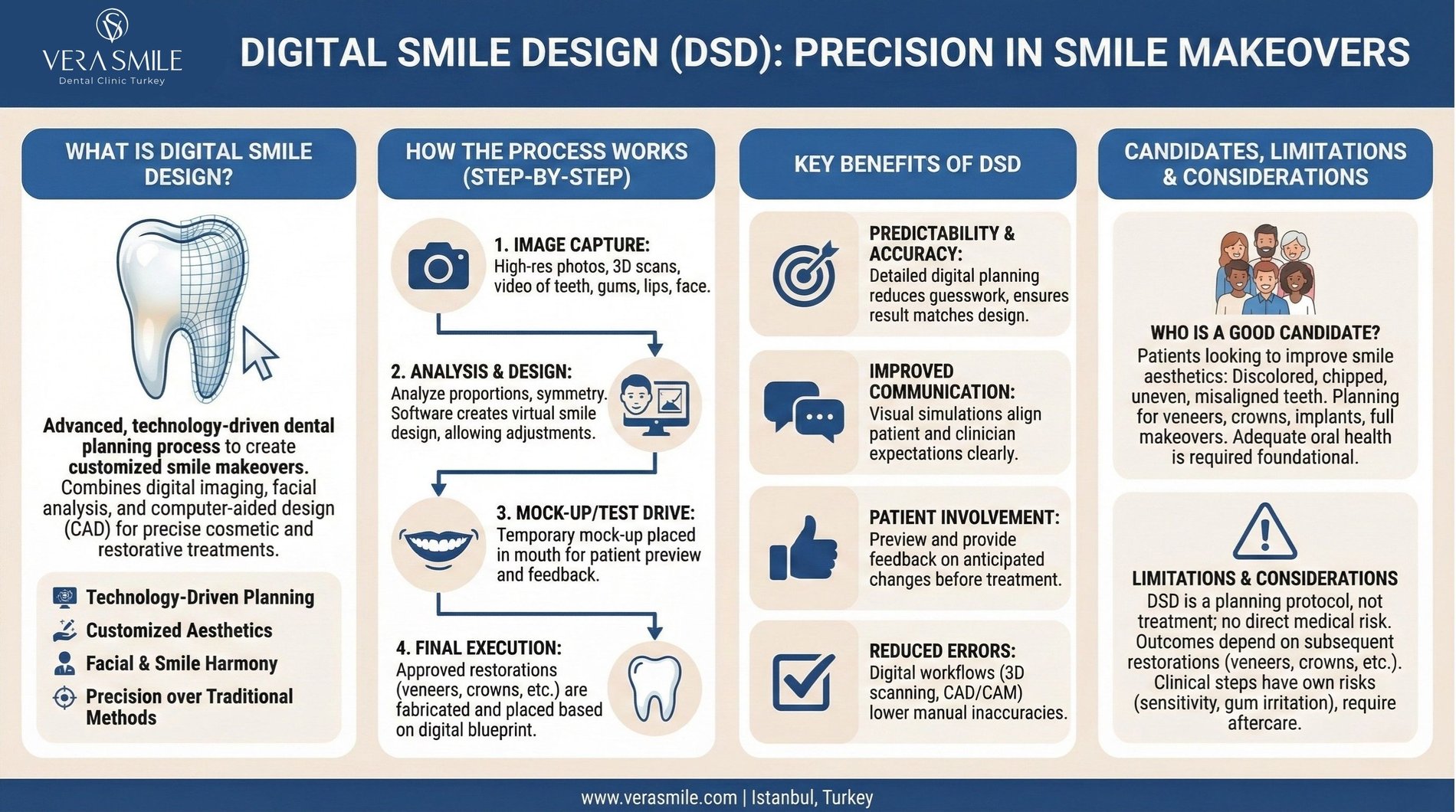
Digital Smile Design (DSD) is an advanced dental planning protocol that combines photography, video, 3D scanning, and computer-aided design to create a personalized blueprint for your new smile. The concept was developed to move beyond traditional trial-and-error dentistry, offering patients a scientific yet artistic approach to smile makeovers.
With DSD, your dentist captures detailed images and videos of your teeth, gums, lips, and facial expressions. These digital records are then analyzed with specialized software to evaluate proportions, symmetry, and overall harmony. The result is a highly accurate visual simulation of your future smile that is adjusted and perfected before any actual treatment begins.
Unlike conventional methods, DSD allows patients to become active participants in the design process. You preview different shapes, lengths, and shades of teeth, ensuring that the final outcome not only looks natural but reflects your personality and aesthetic preferences.
What Makes DSD Different From Traditional Smile Makeovers?
Digital Smile Design stands apart from traditional smile makeovers because it replaces manual impressions and subjective estimations with a fully digital planning system. Instead of relying on wax models or verbal explanations, DSD uses photographs, video analysis, and 3D simulations to design a smile that aligns with facial proportions and natural expressions. Patients preview the expected outcome before treatment begins, turning what was once a guess-based process into a precise, collaborative, and visually guided experience.
How Does Digital Smile Design Work?
The Digital Smile Design (DSD) process follows a carefully structured workflow that blends digital precision with artistic vision. Each step is designed to ensure your final smile not only looks beautiful but feels natural and functions properly.
- Image Capture: High-resolution photographs, intraoral scans, and sometimes short videos are taken to record your teeth, gums, lips, and facial movements. This provides the foundation for analyzing your smile in motion, not just in a static pose.
- Facial and Smile Analysis: Your dentist evaluates the proportions of your teeth in relation to your lips, gums, and overall facial structure. Smile lines, symmetry, and balance are assessed to identify areas that need improvement for both function and aesthetics.
- Digital Design and CAD/CAM: Specialized software is used to create a virtual design of your new smile. The proposed changes, such as tooth length, shape, and alignment, are digitally mapped and refined until the ideal result is achieved. CAD/CAM technology ensures these designs are highly precise and ready for fabrication.
- Mock-Up and Test Drive: A temporary mock-up is placed over your natural teeth, allowing you to “test drive” your new smile before committing to treatment. This step gives you the chance to see and feel how your teeth will look in real life and provide valuable feedback.
- Final Execution: Once the design is approved, the final restorations, veneers, crowns, implants, or other treatments, are fabricated and placed. Because the entire plan has been digitally pre-visualized, the final result matches the agreed design with maximum accuracy.
What Is a Mock-Up Smile Preview in Digital Smile Design?
One of the most exciting parts of DSD is the mock-up stage, where patients get to “test drive” their future smile. Using 3D printing and temporary materials, a realistic prototype is placed directly over the natural teeth. This allows patients to see and feel how their new smile will look in everyday life, from speaking and laughing to eating. The preview stage is interactive, if adjustments are desired, they are made before the final restorations are crafted. This step gives patients peace of mind and emotional confidence, turning a once-uncertain process into a fully transparent and collaborative experience.
What Technologies Are Used in Digital Smile Design?
Digital Smile Design (DSD) relies on a combination of cutting-edge dental technologies that work together to create a precise and personalized treatment plan. These tools transform traditional guesswork into a predictable, patient-centered process.
- 2D & 3D Imaging Tools: High-resolution photographs and 3D facial scans are used to capture every detail of your teeth, gums, lips, and facial expressions. This combination allows dentists to evaluate how your smile looks both in motion and at rest, ensuring a natural fit with your overall appearance.
- Intraoral Scanners: Instead of traditional molds, intraoral scanners create a highly accurate digital map of your teeth and bite. This painless process forms the foundation for the digital design and helps avoid errors associated with manual impressions.
- 3D Printing for Mock-Ups: Once the design is finalized, 3D printers produce mock-ups and temporary restorations that you “test drive.” This step gives you a real-life preview of your new smile and allows for any necessary refinements before the final treatment.
- AI-Assisted Smile Design (Emerging Technology): Artificial intelligence is increasingly being integrated into DSD workflows, offering automated analysis of facial proportions and smile harmony. AI-assisted tools speed up the design process and provide even more accurate simulations, making the future of smile makeovers more precise and accessible.
In Which Areas Is Digital Smile Design Used?
Digital Smile Design (DSD) plays a defining role in planning a Hollywood Smile by transforming it from a standard veneer procedure into a fully customized aesthetic project. Instead of preparing teeth based on fixed templates, the dentist first analyzes facial proportions, lip dynamics, gum symmetry, and smile line harmony through digital tools. The ideal tooth width, length, curvature, and shade are mapped virtually before any clinical work begins. Patients preview the transformation through simulations and temporary mock-ups, allowing refinements prior to final fabrication. By designing the smile before performing the treatment, DSD ensures that a Hollywood Smile looks balanced, natural, and proportionate to the individual’s facial features rather than artificial or overly uniform.
How Is Digital Smile Design Different from Basic Digital Imaging?
Basic digital imaging in dentistry is limited to simple photographs or X-rays that provide a static view of the teeth. These images are enhanced or edited to show potential cosmetic changes, but they don’t account for facial balance, lip movement, or bite function. At best, they serve as a visual reference rather than a complete treatment roadmap.
Digital Smile Design (DSD), goes far beyond these basic tools. It is a comprehensive protocol that combines 2D and 3D imaging, intraoral scanning, video analysis, CAD/CAM design, and even 3D printing to create a fully customized treatment plan. Instead of just showing how your teeth might look, DSD simulates how your entire smile will appear in harmony with your face during real expressions.
Where basic imaging provides a static preview, DSD offers an interactive process. Patients preview, adjust, and even “test drive” their new smile with temporary mock-ups before committing to treatment. This makes outcomes more predictable, more natural-looking, and closely aligned with both function and aesthetics.
What Are the Benefits of Digital Smile Design?
Digital Smile Design (DSD) offers more than just a glimpse of your future smile, it transforms the entire treatment journey into a precise, collaborative, and confidence-building experience.
- Predictability and Accuracy: Because every step is digitally mapped, the risk of surprises is greatly reduced. Patients know exactly what to expect, and dentists execute treatments with maximum precision, ensuring that the final outcome matches the agreed design.
- Better Communication: DSD creates a visual language that bridges the gap between dentist and patient. Instead of relying on technical explanations, you see realistic previews and actively share feedback, making it easier to align expectations with results.
- Emotional Confidence: Being able to preview and “test drive” a new smile before treatment provides powerful reassurance. Many patients feel more relaxed, motivated, and excited about their transformation when they visualize the end result in advance.
- Reduced Treatment Errors: The digital workflow minimizes guesswork and human error. From intraoral scanning to CAD/CAM fabrication, each stage is carefully controlled, reducing the likelihood of adjustments, remakes, or disappointing outcomes.
Who Is a Good Candidate for Digital Smile Design?
Digital Smile Design (DSD) is suitable for patients who want predictable, personalized smile outcomes supported by digital planning and facial analysis. It is particularly beneficial for:
- Patients with discolored, uneven, chipped, or misaligned teeth
- Individuals planning veneers, crowns, dental implants, or orthodontic treatment
- Patients considering a full smile makeover
- Those with a “gummy smile,” gum recession, or disproportionate tooth dimensions
- International dental tourism patients who want to preview results before traveling
- Individuals who want to actively participate in the smile design process
To begin DSD, oral health must be stable. Any untreated gum disease, active decay, or infection should be managed before starting the digital planning phase to ensure long-term success.
Who May Not Be a Good Candidate for Digital Smile Design?
Digital Smile Design (DSD) is a versatile and advanced approach to cosmetic dentistry, but it may not be suitable for everyone. Achieving the best results requires a combination of healthy teeth and gums, realistic expectations, and a commitment to oral care. Understanding who may need extra preparation or alternative treatments helps ensure a safe, effective, and beautiful smile transformation.
- Untreated Oral Health Issues: Patients with gum disease, severe tooth decay, or active oral infections need to address these conditions first.
- Unrealistic Expectations: Individuals expecting results beyond what is safely achievable in dentistry may not be suitable candidates, as DSD focuses on natural harmony.
- Limited Bone Support: Some patients may require additional procedures to strengthen or stabilize bone structure before DSD.
- Uncontrolled Medical Conditions: Conditions like uncontrolled diabetes can affect healing and treatment outcomes.
- Poor Oral Hygiene Habits: Maintaining good oral care is essential for the success and longevity of DSD results.
- Lack of Commitment: Best results occur with patients who are willing to collaborate closely with their dentist and follow professional guidance.
How Long Does the Digital Smile Design Process Take?
The Digital Smile Design (DSD) process can take anywhere from a few days to several months, depending on the complexity of the case. Simple treatments like veneers or whitening often take a few weeks from planning to completion, while more complex cases involving implants, orthodontics, or full-mouth restorations may take several months.
Are Digital Smile Design Results Permanent?
No, digital Smile Design (DSD) results are long-lasting but not strictly permanent. The durability depends on the restorations used, porcelain veneers or zirconia crowns can last 10–15 years or more, while dental implants can last a lifetime with proper care. Regular oral hygiene and check-ups are essential to maintain the results.
Can Digital Smile Design Be Combined with Veneers, Implants, and Crowns?
Yes. Digital Smile Design (DSD) can be combined with veneers, implants, and crowns. It allows dentists to plan the shape, size, color, and position of each restoration with precision, ensuring a natural-looking and harmonious smile. By integrating these treatments into a single digital workflow, DSD helps coordinate complex smile makeovers with greater predictability, functionality, and aesthetic results than traditional planning methods.
What Are the Potential Risks or Side Effects?
Digital Smile Design (DSD) itself is a non-invasive planning protocol, so it carries no direct medical risks. The technology is used to visualize and design your future smile, meaning there are no physical side effects from the digital process alone. Potential risks arise from the treatments carried out after the design phase, such as veneers, crowns, implants, or gum reshaping, since these are clinical procedures. Some possible considerations include:
- Tooth Sensitivity or Discomfort: Temporary sensitivity may occur after procedures like veneers or whitening.
- Gum Irritation: Minor swelling or soreness is possible after gum contouring or implant placement.
- Adjustment Period: Patients sometimes need time to adapt to new restorations, especially if bite alignment has been corrected.
- Restoration Longevity: Veneers, crowns, or implants may eventually require maintenance, replacement, or repair over time.
- Expectation vs. Reality: Although DSD minimizes surprises, patients must remember that final outcomes depend on oral health, treatment type, and proper aftercare.
When performed in an accredited clinic with experienced specialists, these risks are minimized, and DSD ensures the process is as safe, predictable, and transparent as possible.
What Is the Aftercare for Digital Smile Design?
After completing the Digital Smile Design process, patients transition into the treatment and healing phase with a clear understanding of their final results. Because the smile has been digitally planned in detail, the aftercare focuses on maintaining the health of the teeth, gums, and any new restorations to ensure long-lasting, natural-looking outcomes. Proper care helps protect the investment in your new smile and supports the durability of veneers, crowns, implants, or other cosmetic procedures.
- Follow the Treatment Plan: The approved design acts as a guide for each restorative step, ensuring predictable results.
- Maintain Excellent Oral Hygiene: Consistent brushing, flossing, and the use of recommended mouthwashes keep restorations and gums healthy.
- Attend Follow-Up Appointments: Regular visits allow the dentist to monitor healing, adjust restorations, and confirm proper fit.
- Use Protective Appliances if Needed: Wearing a night guard protects veneers or crowns from grinding or clenching.
- Avoid Staining Foods and Habits: Limiting coffee, tea, smoking, and strongly pigmented foods helps maintain the brightness of your smile.
- Follow Dietary Recommendations: Soft foods may be advised initially to protect new restorations and support healing.
What Is the Average Cost of Digital Smile Design?
The cost of Digital Smile Design (DSD) varies depending on several factors, including the extent of design and planning required (such as 2D versus 3D designs, mock-ups, and the number of teeth involved), the complexity of the case (veneers, implants, crowns, or gum work), the materials used (types of veneers or implant systems), and the clinic’s location, reputation, and technology level.
| Region | Typical Cost Range (EUR) | Notes |
| USA | €9,500 – €19,000+ | Full smile makeover with veneers, crowns, DSD planning; simple cases may start from €950 |
| UK & Europe | €8,000 – €20,000+ | Veneers €1,150–€2,000 per tooth; comprehensive smile design packages quickly reach higher totals |
| Australia | €9,000 – €18,000+ | Limited published data, but costs generally comparable to or higher than UK/USA for full smile design |
| Turkey | €2,100 – €5,800+ | Veneers €180–€420 per tooth; Hollywood Smile packages with DSD planning much more affordable |
While prices differ worldwide, Turkey offers highly competitive rates due to lower operating costs and a strong focus on dental tourism, making advanced DSD treatments more affordable without compromising quality.
What to Expect During and After a Digital Smile Design Consultation?
During a Digital Smile Design (DSD) consultation, your dentist will take high-resolution photos, intraoral scans, and sometimes short videos to capture how your teeth and smile look in motion. These records are analyzed with specialized software to assess proportions, balance, and harmony with your facial features, allowing you to preview different design options and visualize your potential results. In some cases, a temporary mock-up can be created the same day, giving you the chance to “test drive” your new smile.
After the consultation, the dentist finalizes the digital plan and shares a personalized treatment roadmap, which you can review and adjust if needed. Once approved, the treatment phase begins, whether veneers, crowns, implants, or other restorative work, ensuring that the final outcome closely matches the agreed design.
How Does Digital Smile Design Look Like Before and After?
One of the most powerful aspects of Digital Smile Design is the ability to compare the transformation from start to finish. By capturing images, scans, and videos before treatment and then overlaying the digital design, patients clearly see how their smile will evolve. This process removes guesswork and builds confidence, as the preview and final result closely align.
Before DSD, smile makeovers often relied on manual impressions, wax models, or a dentist’s verbal explanation of the expected results. Patients had little to no opportunity to visualize changes ahead of time, which sometimes led to misunderstandings or disappointment. Traditional methods lacked accuracy, and outcomes could feel unpredictable or less personalized.
With DSD, patients enjoy a completely different experience. They preview their smile digitally on a screen, test it in real life with a 3D-printed mock-up, and make adjustments before treatment begins. The “after” result is a smile that looks natural, complements facial features, and reflects the patient’s personality, all achieved with accuracy and confidence. The entire journey feels collaborative, empowering patients to take an active role in designing their dream smile.
What Is the History and Evolution of Digital Smile Design?
Digital Smile Design (DSD) was first introduced in the early 2000s by Dr. Christian Coachman, a Brazilian dentist and dental technician who combined his expertise in cosmetic dentistry with advanced digital tools. His goal was to create a system that moved beyond traditional trial-and-error approaches and gave patients greater control over their smile transformations.
In its early stages, DSD relied mainly on 2D photography and basic software to simulate treatment outcomes. While innovative at the time, these early designs were limited in accuracy and interactivity. As digital dentistry advanced, DSD rapidly evolved to integrate 3D intraoral scanning, CAD/CAM systems, and 3D printing, which allowed dentists to produce highly precise mock-ups and restorations.
Today, the DSD protocol has expanded worldwide and is used in leading dental clinics to ensure predictable results, better communication, and patient-centered care. New technologies such as artificial intelligence, virtual reality, and digital facial mapping are shaping the future of DSD, making the process faster, more accurate, and even more immersive. What started as a simple visualization tool has now become a global standard for planning smile makeovers with scientific precision and artistic detail.
Why Choose Vera Smile for Digital Smile Design?
When considering a smile makeover, the clinic you choose matters just as much as the technology. Vera Smile offers several key advantages that make it an excellent choice for anyone interested in Digital Smile Design:
- European-Standard Safety & Materials: Vera Smile uses medical-grade, internationally certified materials (e.g. zirconia, E.max, titanium) and follows strict sterilization and safety protocols.
- Advanced Digital Technology: The clinic is equipped with state-of-the-art tools including CAD/CAM design software, 3D intraoral scanning, digital smile planning, mock-ups, etc., ensuring precision and predictability.
- Experienced, Accredited Dentists: Vera Smile is part of international/higher‐standard professional networks (such as the Slow Dentistry Global Network) and has dentists trained in both cosmetic and restorative specialties.
- Transparent, Patient-Centred Care: Patients receive clear treatment plans (including mock-ups, previews, images), multilingual support, and honest cost estimates. Vera Smile handles logistical details like accommodation, transport, and aftercare for international patients, making the process much smoother.
- Reputation & Trust: It has strong reviews and visibility (Trustpilot, ProvenExpert, etc.), a large gallery of before & after cases, and is positioned as a clinic that balances high quality with affordability.
- Focus on Comfort & Safety: Vera Smile is part of the Slow Dentistry network, which emphasizes patient comfort, conservative approach, and long-lasting results rather than rushed, aggressive treatments.
- All-Inclusive Patient Support: For patients coming from abroad, Vera Smile handles many of the practical details: free consultation, treatment planning remotely, hotel & transport arrangements, clear aftercare instructions. This helps reduce stress and ensures continuity of care.
By combining advanced digital dentistry, international safety standards, and transparent patient care, Vera Smile stands out as a trusted dental clinic in Turkey for patients seeking predictable, aesthetically driven smile transformations with long-term functional success.