
Tooth extraction is one of the most common yet essential procedures in dentistry, performed when a tooth is damaged beyond repair, infected, or poses risks to overall oral health. While the idea of losing a tooth seems intimidating, modern digital dentistry, anesthesia protocols, and minimally invasive techniques have made the process safe, predictable, and far less uncomfortable than many expect. Understanding the reasons for extraction, the steps involved, potential side effects, and detailed tooth extraction aftercare instructions helps patients feel informed, confident, and prepared for treatment.
What Is a Tooth Extraction?
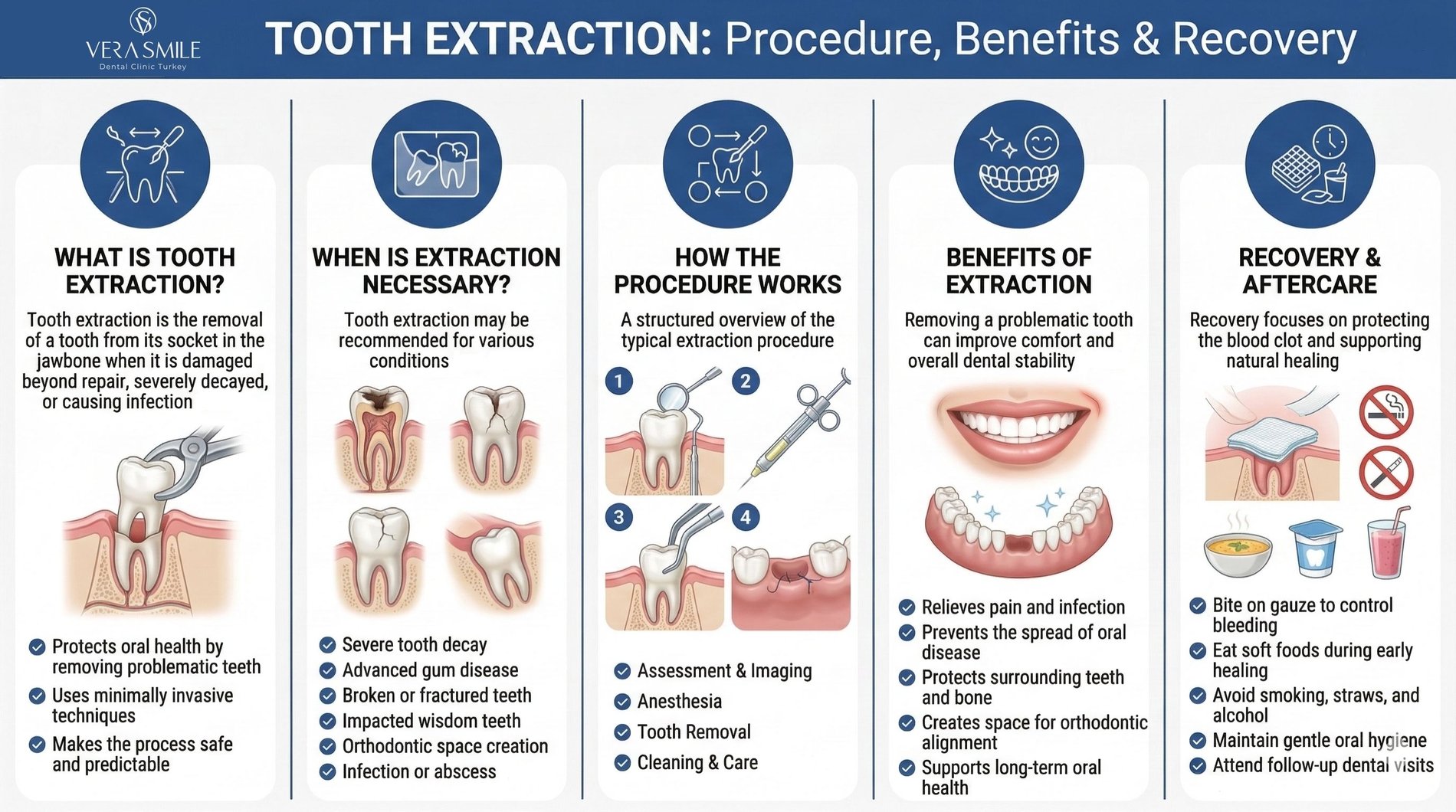
Tooth extraction is the removal of a tooth from its socket in the alveolar bone, performed when a tooth is damaged beyond repair, severely decayed, or poses a risk to oral health. The procedure is divided into two main types: simple extraction, where a visible tooth is loosened and removed with forceps under local anesthesia, and surgical extraction, which is necessary for impacted or fractured teeth, including complex cases such as wisdom teeth removal that may require gum incisions or bone removal.
Extractions are evidence-based treatments that prevent infection, relieve pain, and protect long-term oral stability, making them a cornerstone of modern dentistry, according to the American Dental Association and peer-reviewed studies in the Journal of the American Dental Association (JADA).
When Is a Tooth Extraction Necessary?
Tooth removal becomes necessary when a tooth threatens overall oral health or function and cannot be saved through restorative treatments. Common indications include severe tooth decay that acnnot be fix with a root canal treatment and has destroyed too much structure for a filling or crown to restore, advanced periodontal disease that weakens bone support, or tooth fractures extending below the gumline.
Extractions are also recommended for impacted teeth, especially wisdom teeth that remain trapped in the jaw or cause recurrent infections, as well as for orthodontic reasons, where selective removal creates space to properly align the bite. Timely extractions prevent complications such as abscesses, spreading infection, misalignment, and jaw pain, making the procedure a critical intervention for preserving both oral and systemic health, as confirmed by clinical evidence published in the Journal of Oral and Maxillofacial Surgery.
What Are the Different Types of Tooth Extraction?
There are several types of tooth extraction, and the choice of method depends on the tooth’s position, health, and the complexity of the case. While some procedures involve straightforward removal of a visible tooth, others require surgical precision to address impacted or multiple teeth. Understanding these options helps patients know what to expect and highlights the differences between simple vs surgical tooth extraction.
- Simple Extraction: Performed on teeth visible above the gumline, where the dentist uses elevators and forceps to loosen and remove the tooth with minimal trauma.
- Surgical Extraction: Required for teeth that are broken, not fully erupted, or embedded in bone or gum tissue. This method involves small incisions, and in some cases, removal of surrounding bone.
- Wisdom Tooth Extraction: A specialized form of surgical extraction targeting third molars that are impacted, partially erupted, or causing crowding and pain.
- Complex or Multiple Extractions: Indicated when several teeth must be removed at once, for orthodontic correction, full-mouth rehabilitation, or preparation for prosthetics such as dentures or implants.
How Painful Is a Tooth Extraction? Which Anesthesia or Sedation Is Used?
Tooth extraction pain is effectively managed with modern anesthetic and sedation methods, making the procedure far less uncomfortable than most patients anticipate. For routine cases, local anesthesia numbs the extraction site completely, ensuring the patient feels only pressure but no sharp pain. In situations involving high anxiety or multiple extractions, conscious sedation (oral or intravenous) provides deeper relaxation while maintaining responsiveness.
For complex cases such as impacted wisdom teeth or surgical extractions, general anesthesia may be used, particularly in hospital or surgical settings. Advances in minimally invasive techniques, including the use of periotomes, piezosurgery, and digital imaging guidance, further reduce trauma and accelerate recovery.
How Does a Tooth Extraction Procedure Work Step by Step?
The tooth extraction procedure is carried out in a structured sequence that prioritizes patient comfort, safety, and preservation of surrounding tissues.
- Pre-operative assessment and imaging: The process begins with a detailed medical and dental history, clinical examination, and radiographic evaluation using periapical or panoramic X-rays. In complex cases, CBCT scans are used to assess root shape, bone density, and anatomical structures. Modern Digital Dentistry & 3D Imaging ensures precision planning, reduces complications, and guides minimally invasive approaches.
- Anesthesia: Local anesthesia is administered to fully numb the extraction site. For patients with high dental anxiety, multiple extractions, or surgical procedures, conscious sedation (oral or IV) may be used. General anesthesia is reserved for complex or hospital-based cases such as impacted wisdom teeth.
- Tooth luxation and elevation: Specialized instruments such as elevators or periotomes are used to sever the periodontal ligament and gently expand the socket. This step minimizes trauma to bone and soft tissues.
- Forceps delivery or surgical access: In simple cases, the tooth is carefully delivered with dental forceps once loosened. In surgical cases, such as impacted or fractured teeth, a gum flap may be raised, and small amounts of bone removed. The tooth may also be sectioned to ease removal while preserving surrounding bone.
- Debridement and irrigation: Once the tooth is removed, the socket is thoroughly cleaned to eliminate granulation tissue or infection. The area is irrigated with sterile saline, and sharp bony edges are smoothed. Socket preservation techniques, such as grafting or platelet-rich fibrin (PRF), may be applied when planning future implants.
- Suturing: If incisions were made, resorbable or non-resorbable sutures are placed to close the wound and promote faster healing.
- Hemostasis: Gauze compression, hemostatic agents, and clear aftercare instructions are given to the patient. Cold compresses, pain management, and hygiene guidelines ensure proper clot formation and reduce the risk of complications such as dry socket.
How Long Does a Tooth Extraction Take?
The duration of a tooth extraction depends on the complexity of the case and the type of procedure performed. On average, a simple extraction of a visible tooth takes about 20–40 minutes, including anesthesia and preparation. More complex cases, such as surgical extractions or wisdom tooth removal, generally last 45–90 minutes, as they may require gum incisions, bone removal, or tooth sectioning.
Additional time is sometimes needed for multiple extractions or when socket preservation techniques (such as bone grafting) are included. Understanding how long tooth extraction procedures take helps patients plan their visit and reduces anxiety by setting realistic expectations.
What Happens During Wisdom Tooth Surgery?
Wisdom tooth extraction is a minor oral surgery that follows a structured clinical process to safely remove impacted or problematic third molars. After local anesthesia or sedation is administered, the procedure begins with a small incision in the gum tissue to access the tooth. If the tooth is partially or fully trapped in the bone, the dentist or oral surgeon performs bone removal to create space.
In some cases, the tooth is too large or angled for single removal, so sectioning the tooth into smaller pieces makes extraction easier and less traumatic for surrounding tissues. Once all fragments are removed, the site is carefully cleaned, and sutures are placed to protect the area and support healing. This stepwise approach ensures that wisdom tooth extraction is both efficient and minimally invasive, reducing the risk of complications and promoting faster recovery.
What Are the Benefits of Removing a Problem Tooth?
The benefits of tooth extraction extend beyond simply taking out a damaged or infected tooth. This procedure often restores comfort, prevents complications, and supports long-term oral health. Key advantages include:
- Relief of Pain and Infection: Removing the affected tooth eliminates the source of discomfort and stops bacterial spread.
- Prevents Spread of Disease: Extraction reduces the risk of infection moving into neighboring teeth, gums, or bone.
- Creates Space for Orthodontic Correction: In cases of overcrowding, extraction allows teeth to align properly during orthodontic treatment.
- Protects Jawbone and Alignment: By removing problematic teeth, extraction prevents shifting and preserves the natural bite balance.
Together, these benefits of tooth extraction make the procedure an important step in safeguarding both oral health and overall wellbeing.
Who Is a Good Candidate and Who Isn’t for a Tooth Extraction?
Tooth extraction candidates are evaluated carefully to ensure the procedure is both safe and effective. Good candidates include patients with advanced decay that cannot be restored, teeth affected by severe infection or abscess, impacted wisdom teeth that cause pain or crowding, and individuals who require extractions to create space for orthodontic treatment.
On the other hand, some patients are not ideal candidates for tooth extraction, such as those with uncontrolled diabetes that delays healing, individuals with clotting disorders or who are on blood-thinning medication without medical clearance, women in the first trimester of pregnancy unless facing an emergency, and people with severe systemic illness that makes surgery unsafe. Proper medical evaluation and coordination with healthcare providers help determine suitability and reduce risks.
Which Option Fits You Better? Tooth Extraction vs. Root Canal vs. Crown Lengthening
When facing a severely damaged or decayed tooth, patients often consider several treatment paths. Understanding the differences between tooth extraction alternatives helps in selecting the most suitable option for long-term oral health.
| Condition | Tooth Extraction | Root Canal | Crown Lengthening |
| Severe decay or non-restorable tooth | Removes the tooth completely, eliminates infection, requires replacement with implant, bridge, or denture. | Preserves the natural tooth by cleaning and sealing the root canals; crown often placed afterward. | Not suitable if decay extends too deep; may be combined with other treatments. |
| Infection or abscess | Extraction eliminates infection source but sacrifices the tooth. | Root canal disinfects and saves the tooth while maintaining function. | Only supportive if restoration margins need adjustment; not used for infection control. |
| Fractured or broken tooth | Extraction removes severely fractured teeth that cannot be rebuilt. | Root canal with a crown restores teeth with internal damage but intact roots. | Reshapes gum and bone to allow crown placement on teeth fractured at or near the gumline. |
| Short clinical crown / gum overgrowth | Not recommended, as extraction is unnecessary unless tooth is non-restorable. | Not indicated. | Best option to expose more tooth structure for crown retention and aesthetics. |
What Are the Risks and Complications of Tooth Extraction?
Tooth extraction is generally a safe and routine dental procedure, but it still involves certain risks that patients should understand before treatment. Knowing these potential complications helps set realistic expectations and highlights the importance of proper planning and aftercare. When dentists use advanced imaging, follow sterile techniques, and provide clear postoperative guidance, the likelihood of serious issues remains low.
- Infection: Bacterial contamination at the extraction site may lead to swelling, pain, or discharge, especially if oral hygiene is inadequate.
- Dry Socket (Alveolar Osteitis):Premature loss of the blood clot exposes the bone, causing intense pain and delayed healing.
- Nerve Injury: Lower wisdom tooth extractions irritate or compress nearby nerves, occasionally leading to temporary or, very rarely, permanent numbness in the lip, chin, or tongue.
- Sinus Exposure: Upper molar roots sit close to the sinus membrane, and extraction can sometimes create a small opening into the sinus cavity.
- Prolonged Bleeding: Patients with blood-thinning medications or clotting disorders may experience extended bleeding after the procedure.
- Swelling and Bruising: Soft-tissue swelling or facial bruising occur but resolves within a few days.
- Jaw Stiffness: Temporary difficulty opening the mouth can follow complex extractions.
How to Prevent Dry Socket After Tooth Extraction?
Effective dry socket prevention is one of the most important parts of recovery after a tooth extraction, because this complication occurs when the protective blood clot at the surgical site is lost too early. Without the clot, bone and nerves remain exposed, leading to severe pain, delayed healing, and an increased risk of infection. Patients greatly reduce the likelihood of developing dry socket by carefully following their dentist’s instructions and adopting protective habits during the first week of recovery.
- Avoid smoking, spitting, and drinking through straws: Suction and negative pressure inside the mouth dislodge the fragile clot. Chemicals from tobacco smoke further impair healing, making smokers much more likely to develop dry socket.
- Use antiseptic rinses and gentle saltwater solutions: These keep the area clean without creating turbulence that could wash the clot away. Patients should start rinsing 24 hours after surgery and avoid vigorous swishing.
- Take prescribed medications: Antibiotics, when given, help prevent infection, and anti-inflammatory drugs control swelling and pain, both of which contribute to a smoother recovery. Medication must always be taken exactly as prescribed.
- Follow professional aftercare advice: Dentists recommend a soft diet, rest, and avoiding strenuous physical activity in the first days after extraction. Carefully adhering to these instructions reduces stress on the healing site.
- Maintain oral hygiene without disturbing the socket: Brushing should continue on other teeth, but the extraction site itself must be avoided until cleared by the dentist.
What Does Recovery and Aftercare Involve?
Proper tooth extraction aftercare is essential for smooth healing, pain control, and prevention of complications such as infection or dry socket. Dentists provide detailed post-operative instructions, and following them closely makes the difference between delayed recovery and a quick return to normal function. Key aspects of aftercare include:
- Pain management: Non-steroidal anti-inflammatory drugs (NSAIDs) such as ibuprofen help control swelling and discomfort. If prescribed, antibiotics must be taken on schedule to eliminate bacterial risks and support proper healing.
- Diet adjustments: Patients should eat soft foods like soups, yogurt, mashed potatoes, and smoothies during the first days. Staying hydrated is vital, but straws must be avoided to protect the blood clot at the extraction site.
- Oral hygiene: Gentle rinsing with saltwater or antiseptic solutions begins 24 hours after surgery to keep the area clean. Brushing should continue on other teeth, but direct brushing of the socket must be avoided until advised by the dentist.
- Follow-up visits: Regular check-ups allow the dentist to monitor healing, remove sutures if necessary, and detect early signs of complications such as infection, swelling, or delayed clot formation.
What Foods and Drinks Are Safe After Extraction?
Knowing what to eat after extraction is a key part of recovery, since diet directly affects clot stability, comfort, and healing speed.
Safe choices include:
- Yogurt’s smooth texture and cooling effect reduce irritation.
- Smoothies provide nutrition without chewing (avoid straws to protect the clot).
- Mashed potatoes are soft, filling, and easy to swallow without stressing the socket.
- Soups warm (not hot) broths deliver hydration and nourishment during early healing.
Foods and drinks to avoid:
- Hot items that dissolve the blood clot and increase bleeding.
- Spicy meals that irritate the healing tissue.
- Carbonated drinks that disturb clot formation.
- Alcohol which delays healing and interacts with prescribed medications.
Following these dietary guidelines reduces discomfort, lowers the risk of dry socket, and helps the surgical site heal more quickly.
Is Smoking, Vaping, or Alcohol Allowed After Extraction?
The clear answer is no, patients should avoid smoking, vaping, or drinking alcohol for at least 48–72 hours after tooth extraction. Engaging in these activities too soon greatly increases the risk of dry socket, a painful complication where the blood clot protecting the extraction site is dislodged or dissolves prematurely. Nicotine from cigarettes or e-cigarettes reduces blood flow and oxygen delivery to healing tissues, while alcohol interferes with clot formation and irritates the surgical site.
Both nicotine and alcohol delay healing, increase infection risk, and prolong recovery, as demonstrated by clinical studies in oral surgery journals. For optimal outcomes, patients are advised to refrain from these habits until their dentist or oral surgeon confirms that initial healing is stable. Following this guidance is essential for preventing setbacks and ensuring successful recovery after smoking after tooth extraction.
Which Painkillers and Antibiotics Are Used After Extraction?
The standard medications after tooth extraction include a combination of pain relievers and, when necessary, antibiotics to prevent or manage infection. For pain control, ibuprofen is widely prescribed due to its anti-inflammatory properties, combined with acetaminophen for enhanced effect. In cases of severe pain, short-term use of prescription opioids may be considered, though guidelines recommend limiting them due to dependency risks.
Antibiotics are not routinely given after every extraction but are prescribed when there is a high risk of infection, compromised immunity, or existing oral infection. The most common choices are amoxicillin, and for patients with penicillin allergies, clindamycin is often used. Evidence-based protocols endorsed by oral surgery literature emphasize tailoring medication plans to each patient’s health profile, ensuring effective pain relief and safe healing.
How Soon After Extraction Is a Dental Implant Possible?
An implant after tooth extraction is placed either immediately or after a delayed healing period, depending on bone quality and clinical conditions. In an immediate implant approach, the dental implant is inserted directly into the socket at the same appointment as the extraction, preserving bone volume and reducing treatment time.
If there is infection, insufficient bone density, or compromised soft tissue, dentists recommend dental bone grafting and delayed dental implant placement after a healing phase of about 3–6 months, which allows bone and gum tissue to stabilize before implant surgery. Both methods achieve high success rates when guided by careful case selection, digital imaging, and evidence-based protocols, as confirmed by studies in implant dentistry. Patients considering this treatment explore more details in our dedicated guide on dental implants.
What Is the Average Cost of Tooth Extraction?
The tooth extraction cost varies worldwide based on the complexity of the procedure, the type of anesthesia used, and the clinic’s expertise and reputation. In Turkey, extractions are highly affordable, ranging from €50–150, making it a popular destination for dental tourism. In the UK, patients pay £120–300 in private practices.
In the USA, fees are higher: around $150–450 for a simple extraction and $300–800 for surgical or wisdom tooth removal. In Australia, the cost falls between AU$200–400, depending on the case and setting. Beyond geography, final pricing is influenced by whether the extraction is simple or surgical, the level of sedation required, and whether additional treatments (such as socket preservation) are performed.
| Country | Cost Range (€) | Notes |
| Turkey | €50 – €150 | Affordable pricing, high-quality care, popular for dental tourism |
| UK | €140 – €350 | Private dental practices, higher overhead costs |
| USA | €140 – €420 (simple) €280 – €750 (surgical/wisdom) | Wide variation depending on complexity and state |
| Australia | €120 – €250 | Costs vary with clinic setting and anesthesia used |
What Potential Side Effects Can Occur After Extraction?
Although tooth extraction is considered a safe and routine dental procedure, patients experience certain short-term reactions as the body heals. These tooth extraction side effects vary depending on whether the procedure was simple or surgical, the patient’s general health, and how well aftercare instructions are followed.
- Swelling: Inflammation of the surrounding gum tissue and cheek is one of the most common side effects. Swelling typically peaks within the first 48 hours and subsides with the use of cold compresses and anti-inflammatory medication.
- Bruising: Some patients notice discoloration around the extraction site, jaw, or even the neck. Bruising is more frequent after surgical or wisdom tooth removal and is harmless, fading within a week.
- Bleeding: Light bleeding or oozing for several hours after extraction is normal, as the socket forms a protective blood clot. Excessive or prolonged bleeding, however, indicate that the clot has been disturbed and should be evaluated by a dentist.
- Infection: Although rare, infection occurs if bacteria enter the socket, particularly when oral hygiene is poor or the immune system is compromised. Warning signs include persistent swelling, pus, fever, or foul taste, and antibiotics are prescribed when necessary.
- Dry socket (alveolar osteitis): The most notable complication, dry socket occurs when the protective blood clot is dislodged or fails to form, leaving the underlying bone exposed. It causes intense throbbing pain, delayed healing, and often requires in-office treatment with medicated dressings.
While these side effects are possible, most resolve quickly with proper aftercare, including good oral hygiene, avoiding smoking or alcohol, and following professional guidance. Recognizing these reactions early ensures that healing progresses smoothly and complications are minimized.
What Are the Do’s and Don’ts After a Tooth Extraction?
Following proper tooth extraction aftercare instructions is essential to support healing, prevent complications, and ensure comfort. Below is a clear guide in table format:
| Do’s | Don’ts |
| Apply a cold compress during the first 24 hours to minimize swelling | Smoke or vape for at least 48–72 hours, it increases dry socket risk |
| Bite on the gauze pad for the first 30–60 minutes to help stop bleeding | Use straws the suction dislodge the blood clot |
| Eat soft, cool foods (yogurt, smoothies, mashed potatoes) for the first 1–2 days | Consume alcohol or carbonated drinks, these irritate the wound and slow healing |
| Take prescribed painkillers and antibiotics exactly as instructed | Do strenuous exercise in the first 24–48 hours — it raises blood pressure and bleeding risk |
| Rinse gently with warm saltwater after 24 hours to keep the area clean | Spit forcefully or rinse aggressively within the first 24 hours, this may dislodge the clot |
| Keep the head slightly elevated when resting to reduce swelling | Touch the extraction site with tongue, fingers, or objects, introduces bacteria |
| Attend scheduled follow-up visits for monitoring and suture removal (if needed) | Skip oral hygiene, neglecting gentle brushing around the area increases infection risk |
Why Is Turkey Considered a Top Destination for Tooth Extraction?
Turkey has become a preferred destination for tooth extraction due to its combination of skilled dental professionals, modern clinics, and affordable treatment options. Experienced dentists use advanced techniques to ensure safe and precise extractions, minimizing pain and recovery time.
Patients benefit from high-quality care at a fraction of the cost compared to many Western countries, without compromising safety or outcomes. Turkish clinics also prioritize hygiene, patient comfort, and personalized treatment plans, making the tooth extraction process smoother and more predictable.
Many international patients choose Turkey for dental care because treatments can be conveniently combined with travel, allowing a comfortable and efficient experience.