
Gum reduction surgery, sometimes called gum pocket reduction surgery, is a cosmetic and functional dental procedure designed to reshape and contour the gum line for a healthier, more balanced smile. It is recommended for patients with a gummy smile, uneven gum levels, or excessive gum tissue that hides the natural length of the teeth.
By carefully removing and sculpting the soft tissue, dentists improve both gingival aesthetics and oral health, creating a smile that looks harmonious and feels comfortable. This treatment is performed with advanced methods such as laser gum surgery or microsurgical tools, ensuring precision, minimal discomfort, and a fast recovery through a minimally invasive dentistry approach.
What Is Gum Reduction Surgery?
Gum reduction surgery is a dental procedure that reshapes or removes excess gum tissue to create a balanced and aesthetically pleasing smile. It is most often recommended for individuals with a gummy smile, uneven gum levels, or gums that cover too much of the teeth, making them appear shorter than their natural length.
By precisely contouring the gum line, the treatment enhances dental symmetry and supports better oral hygiene by eliminating areas where plaque and bacteria accumulate. In some cases, this procedure overlaps with crown lengthening or gum reshaping surgery, especially when restorations such as crowns or veneers are planned. Advanced techniques like laser gum surgery and Digital Smile Design (DSD) allow for accurate planning, high precision, and immediate improvement in appearance.
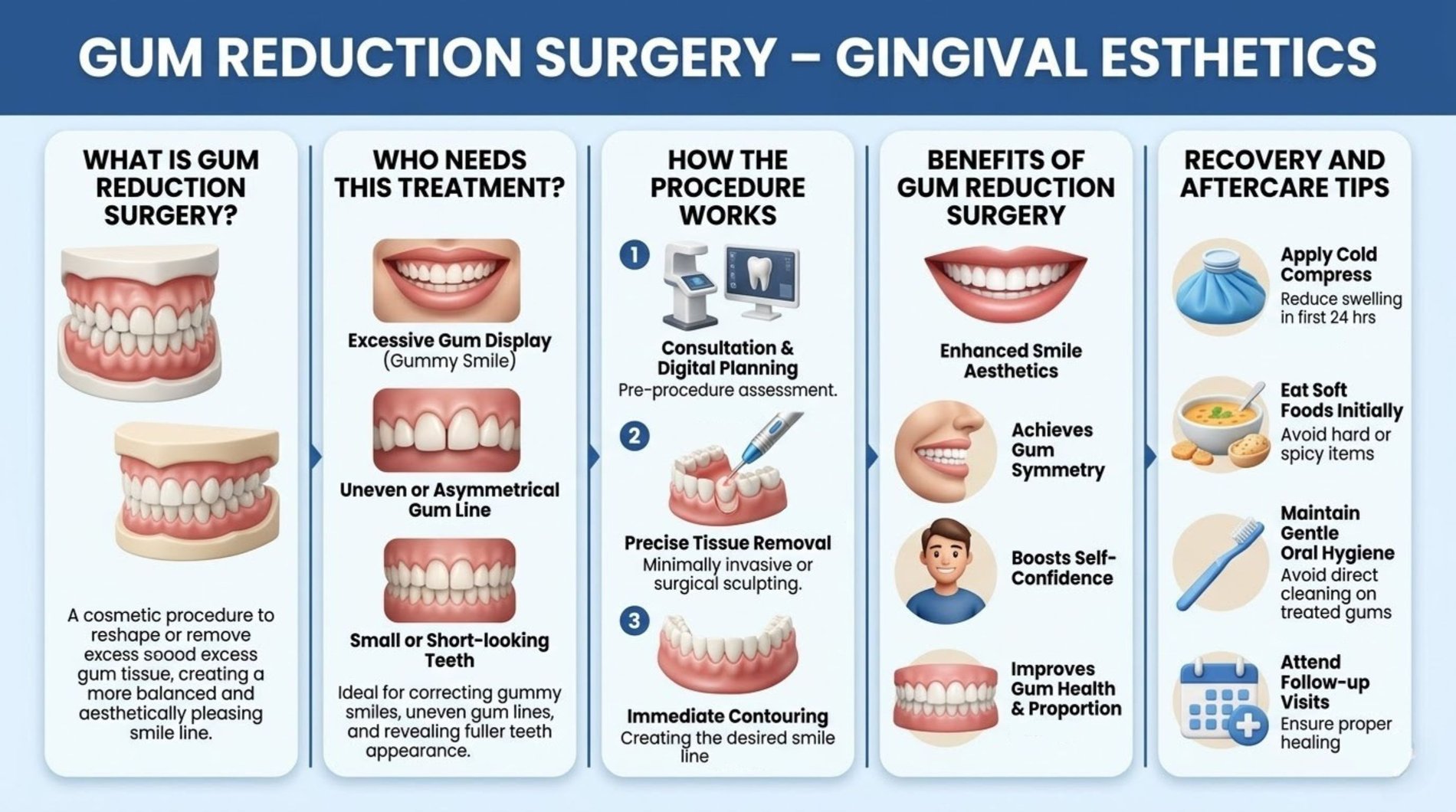
Why Is Gum Reduction Surgery Called Gummy Smile Surgery?
Gum reduction surgery is often referred to as gummy smile surgery because it directly addresses the condition where too much gum tissue shows when smiling. A gummy smile creates the impression of short or hidden teeth, which affects overall facial aesthetics and pink and white aesthetics. By carefully reshaping the gum line through a gum lift procedure, the treatment reveals more of the natural tooth surface, transforming the proportions of the smile. This link between the surgery and the correction of a gummy smile explains why the term gummy smile correction is widely used as an alternative name for gum reduction surgery.
How Is Gum Reduction Surgery Performed?
Gum reduction surgery is performed with precision to reshape the gum line and restore balance between teeth and gums. The process involves several key stages:
- Consultation and Digital Planning: The dentist evaluates smile proportions, gum health, and treatment goals using Digital Smile Design (DSD) to plan the ideal gingival line and ensure precise results.
- Anesthesia and Comfort: Local anesthesia is applied to keep the procedure completely pain-free and ensure patient comfort throughout treatment.
- Tissue Reshaping: Excess gum tissue is removed or sculpted to reveal natural tooth length and restore correct proportions between teeth and gums.
- Laser or Microsurgical Techniques: Depending on the case, the dentist performs the procedure using laser technology for a minimally invasive approach or traditional microsurgical instruments for complex tissue correction.
- Crown Lengthening (if needed): In patients preparing for veneers or crowns, the surgery may include crown lengthening to expose more of the tooth surface and create an ideal foundation for restorations.
- Periodontal Correction: When necessary, the procedure integrates elements of pocket reduction, gingivectomy, or gingivoplasty to improve both gum health and aesthetic symmetry.
- Immediate Results: The surgery usually takes less than one hour, and results are visible immediately with a balanced, natural-looking smile and improved gingival harmony.
What Is the Difference Between Traditional Surgical Methods and Laser-Assisted Gum Surgery?
Traditional Surgical Methods use scalpels and microsurgical tools to remove excess gum tissue and reshape the gum line with precision. This approach is chosen for cases requiring significant tissue adjustment or when combined with crown lengthening and gum pocket reduction surgery. Performed under local anesthesia, it allows detailed sculpting of the gums to expose more tooth surface and correct a gummy smile. Traditional surgery is more invasive and involves a longer healing time than laser methods, but it remains highly effective for complex cases and provides durable results in both function and aesthetics.
Laser-Assisted Gum Surgery, on the other hand, represents a minimally invasive alternative that replaces scalpels with advanced dental lasers. The laser precisely removes and contours gum tissue while sealing the area simultaneously, reducing bleeding, swelling, and recovery time. Guided by Digital Smile Design (DSD), this method delivers predictable, symmetrical outcomes and refined pink–white balance. It is ideal for patients seeking fast, comfortable, and cosmetic gum reshaping while maintaining excellent periodontal health.
Does the Procedure Require Anesthesia?
Yes, gum reduction surgery is always performed under local anesthesia to ensure a comfortable and pain-free experience. Before starting the procedure, the dentist carefully numbs the treatment area so that the reshaping of excessive gum tissue causes no discomfort. Whether performed through traditional surgical methods or laser gum surgery, anesthesia is an essential step that allows the dentist to focus on creating precise results in gingival aesthetics, gum harmony, and pink and white aesthetics without causing stress to the patient.
In more complex cases involving crown lengthening, gum pocket reduction surgery, or combined periodontal surgery, local anesthesia provides the same high level of comfort and safety. This controlled environment ensures that the patient remains relaxed while the dentist achieves predictable and stable improvements through gum reshaping surgery.
Is Gum Reduction Surgery Painful?
Gum reduction surgery, whether performed through traditional surgical methods or laser gum surgery, is not painful because the procedure is carried out under local anesthesia. Patients remain comfortable while the dentist reshapes or removes excessive gum tissue to improve gingival aesthetics and restore gum harmony. During the treatment, sensations are limited to mild pressure rather than pain.
After the anesthesia wears off, some tenderness, swelling, or slight sensitivity is expected, especially when chewing or brushing near the treated area. These effects are temporary and are managed with prescribed pain relief and gentle oral care. In cases where laser gum surgery is performed, discomfort is even lower due to the minimally invasive dentistry approach, which seals tissue instantly and reduces irritation.
Most patients describe the experience as far less intense than they initially feared, and recovery progresses quickly. Within a short time, the improved balance between teeth and gums is visible, delivering both aesthetic correction and long-term oral health benefits.
What Are the Benefits of Gum Reduction Surgery?
Gum reduction surgery offers both cosmetic and functional advantages, making it a sought-after solution for patients with excessive gum tissue or a gummy smile. The treatment combines precision techniques such as laser gum surgery, gum reshaping surgery, and in some cases crown lengthening or gum pocket reduction surgery, to deliver results that enhance appearance and improve oral health. Key benefits include:
- A more balanced and attractive smile: By correcting uneven gum levels and reducing tissue, the procedure restores gingival aesthetics, achieves gum harmony, and enhances pink and white aesthetics for a natural, symmetrical smile.
- Improved oral hygiene and gum health: Reshaping the gum line removes areas where plaque and bacteria accumulate, lowering the risk of gum disease and supporting long-term stability, especially when combined with periodontal surgery such as gingivectomy vs gingivoplasty.
Long-term confidence and aesthetics: Patients experience lasting improvements in smile proportions, creating not only an immediate cosmetic boost but confidence in social and professional interactions.
Are There Risks or Side Effects of Gum Reduction Surgery?
Gum reduction surgery is considered safe, especially when performed in a certified clinic using advanced techniques such as laser gum surgery and supported by minimally invasive dentistry protocols. Like any dental procedure, it carries certain risks and side effects that patients should be aware of:
- Possible swelling and sensitivity: Mild discomfort, inflammation, or tenderness is common during the first days after surgery. These symptoms usually resolve quickly with proper aftercare and prescribed medication.
- Risk of gum tissue regrowth: In some cases, especially when treating naturally thick gums or gummy smile correction, a small amount of tissue regrowth occurs, requiring minor touch-up reshaping.
- Rare complications with proper care: Serious issues such as infection, delayed healing, or uneven gum lines are very rare when the procedure is carried out under strict safety protocols and patients follow recommended aftercare practices.
Who Is Qualified for Gum Reduction Surgery?
Gum reduction surgery is recommended for patients whose smiles appear unbalanced due to excessive or uneven gum tissue. The treatment is suitable for both cosmetic reasons and functional improvements in oral health. Typical candidates include:
- Individuals with a gummy smile, where too much gum tissue shows when smiling.
- Patients with an uneven gum line that disrupts smile symmetry.
- People whose teeth look short or hidden because of gum coverage.
- Cases where excess gum tissue creates difficulty in cleaning, increasing the risk of plaque buildup and gum disease.
- Patients who need gum reshaping before receiving crowns, veneers, or dental implants to ensure proper fit and aesthetic outcome.
What Causes Excessive Gum Tissue?
Excessive gum tissue, often linked to a gummy smile or the need for gum pocket reduction surgery, develop due to several factors:
- Genetic factors: Some people naturally have thicker or more prominent gums, which affects gingival aesthetics and overall gum harmony.
- Orthodontic reasons: Tooth eruption patterns or past orthodontic treatments sometimes leave gums covering too much of the tooth surface, making teeth appear short and uneven.
- Medications or medical conditions: Certain drugs, such as those prescribed for blood pressure or epilepsy, lead to gum overgrowth. In some cases, underlying medical or periodontal conditions contribute to excessive tissue development.
Understanding the cause is essential, as treatment ranges from gum reshaping surgery for aesthetic balance to periodontal surgery when gum health is affected.
How Do Dentists Decide If Surgery Is Necessary?
Dentists determine the need for gum reduction surgery by carrying out a detailed evaluation that combines both functional and aesthetic factors. The process begins with a smile analysis, where the visibility of gum tissue during smiling is measured in relation to the teeth to assess pink and white aesthetics. A periodontal examination follows, focusing on gum pocket depth and tissue health to decide whether gum pocket reduction surgery or other forms of periodontal surgery are required.
Another key step involves evaluating how much natural tooth structure is hidden by excess tissue, which helps identify the need for crown lengthening or gum reshaping surgery. Many clinics integrate Digital Smile Design (DSD) to create a digital preview of the expected outcome, ensuring predictable results and precise treatment planning. Based on these findings, dentists decide whether the situation requires cosmetic gummy smile correction, minimally invasive approaches such as laser gum surgery, or a therapeutic solution like gingivectomy vs gingivoplasty when underlying gum disease is present.
What Is the Recovery Process After Gum Reduction Surgery?
The recovery process after gum reduction surgery depends on the technique used, the amount of excessive gum tissue removed, and whether the procedure involved additional treatments such as crown lengthening or gum pocket reduction surgery. Healing is generally smooth, especially with laser gum surgery, which follows a minimally invasive dentistry approach. Most patients notice that initial tenderness and swelling subside within a few days, while complete tissue healing typically takes between one to two weeks.
During recovery, dentists recommend maintaining gentle oral hygiene to protect the reshaped gum line and support gingival aesthetics. Soft foods are advised in the early days to prevent irritation, and patients should avoid aggressive brushing near the treated area. In cases involving traditional surgical methods or combined periodontal surgery, healing takes slightly longer, but results remain stable and predictable.
Overall, the process leads to a noticeable improvement in gum harmony, better balance of pink and white aesthetics, and a smile that looks both natural and proportionate within a relatively short time.
How Is Discomfort Managed After Surgery?
Discomfort following gum reduction surgery is usually mild and temporary, as the procedure is performed under local anesthesia. Once the numbness fades, patients experience slight tenderness, swelling, or sensitivity in the treated area. Dentists typically prescribe or recommend over-the-counter pain relievers to ease this stage, ensuring recovery remains smooth and manageable.
In addition to medication, applying cold compresses during the first 24 hours helps reduce swelling, while sticking to a soft-food diet prevents irritation of the reshaped gums. Gentle oral hygiene practices are essential to protect healing tissue and maintain gingival aesthetics. When the procedure involves laser gum surgery, discomfort is significantly lower due to the minimally invasive dentistry approach, which seals tissues instantly and minimizes inflammation.
What Are the Best Aftercare Practices?
Successful healing after gum reduction surgery depends on consistent and gentle aftercare. Dentists usually provide personalized guidelines, but common recommendations include:
- Maintain soft oral hygiene: Brush with a soft-bristled toothbrush and avoid direct pressure on the treated gums to protect reshaped tissue and preserve gingival aesthetics.
- Follow a soft-food diet: Choose soups, yogurt, mashed vegetables, and other non-irritating foods during the first days to prevent stress on the gums.
- Use prescribed rinses: Antibacterial mouthwashes or saline rinses support healing and reduce the risk of infection, particularly after gum pocket reduction surgery or other forms of periodontal surgery.
- Control swelling: Apply cold compresses during the first 24 hours to minimize inflammation and improve comfort.
- Avoid smoking and alcohol: These habits interfere with healing and delay recovery.
- Attend follow-up visits: Regular check-ups allow the dentist to monitor progress, especially when procedures like crown lengthening, gingivectomy vs gingivoplasty, or a gum lift procedure were involved.
By following these practices, patients ensure smooth recovery, long-term gum harmony, and a natural balance of pink and white aesthetics in their smile.
Can You Eat and Drink Normally After Gum Surgery?
After gum reduction surgery, eating and drinking habits need to be adjusted during the early healing phase. In the first few days, patients are advised to follow a soft-food diet that includes soups, yogurt, smoothies, mashed vegetables, and other gentle options that do not irritate the reshaped gums. Hot, spicy, acidic, or crunchy foods should be avoided, as they increase sensitivity and disrupt the healing of excessive gum tissue.
Cold water and non-acidic drinks are safe, while alcohol and carbonated beverages should be avoided until the gums have healed. As recovery progresses, normal eating patterns return within one to two weeks, depending on whether the treatment involves laser gum surgery, crown lengthening, or gum pocket reduction surgery as part of periodontal surgery.
Does Gum Tissue Grow Back After Reduction Surgery?
In most cases, gum reduction surgery provides stable and lasting results, as the reshaped gum line is designed to maintain proper balance and gum harmony. When performed with precision using techniques such as laser gum surgery or traditional gum reshaping surgery, the chances of gum tissue regrowth are minimal.
Certain factors influence outcomes. Patients with naturally thick gums or genetic tendencies toward excessive gum tissue experience partial regrowth over time. Medical conditions, poor oral hygiene, or underlying periodontal issues contribute to tissue returning, which is why follow-up care and maintenance are essential. In cases where slight regrowth occurs, a minor touch-up procedure, sometimes involving gingivoplasty or gum lift refinement, restores the desired proportions.When performed by experienced specialists and supported with good aftercare, gummy smile correction delivers long-term improvements in gingival aesthetics, pink and white aesthetics, and smile confidence without significant risk of tissue returning.
How Much Does Gum Reduction Surgery Cost?
The cost of gum reduction surgery (or related procedures like gum contouring, gingivectomy vs gingivoplasty, or gum pocket reduction surgery) depends on multiple factors: clinic location, the extent of gum tissue involved, whether traditional or laser gum surgery is used, and whether additional treatment like crown lengthening is needed. Below are typical cost ranges and what influences price.
| Country | Approximate Cost (€) |
| Turkey | €100 – €350 |
| United Kingdom | €700 – €1,500 |
| United States | €1,000 – €3,000 |
| Europe | €800 – €2,000 |
| India | €150 – €400 |
What Factors Affect the Price?
Several clinical and practical factors determine the overall cost of gum reduction surgery.
- Technique Used: Traditional surgical methods are generally more affordable, while laser gum surgery costs more due to advanced technology. Laser treatment, however, offers greater precision, minimal bleeding, and faster recovery.
- Extent of Treatment: Reshaping a single tooth or small area is less expensive than full gummy smile correction or reshaping multiple teeth across the arch. Larger treatment zones require more time and expertise, increasing total cost.
- Additional Procedures: When gum reduction is combined with crown lengthening, gum pocket reduction, or gingivectomy/gingivoplasty, the overall fee rises. These combined approaches are often used when treating both cosmetic and periodontal concerns.
- Digital Planning (DSD): Using Digital Smile Design (DSD) for treatment planning improves accuracy and symmetry but adds to the total cost. This tool ensures predictable results and precise gingival aesthetics.
- Clinic Reputation: Clinics known for high-quality standards, international accreditation, and advanced dental technology may charge higher prices, reflecting their experience and success rate.
- Dentist Expertise: Experienced periodontists and cosmetic dentists with advanced training in microsurgical or laser techniques typically have higher professional fees, but they ensure safer and more refined outcomes.
- Aftercare and Follow-Up: Comprehensive post-treatment care, including medications, professional check-ups, and follow-up visits, slightly increases cost but ensures smooth recovery and lasting results
Is Gum Surgery Covered by Insurance?
Insurance coverage for gum reduction surgery depends on whether the procedure is considered cosmetic or medically necessary. When the treatment is performed solely for gummy smile correction or to improve gingival aesthetics, it is typically classified as an elective cosmetic service and is not included in standard dental insurance plans.
If the surgery is required to treat underlying health concerns, such as gum pocket reduction surgery, periodontal surgery, or a gingivectomy vs gingivoplasty to manage gum disease, insurance providers offer partial or full coverage. In such cases, the procedure is recognized as medically necessary for maintaining oral health rather than purely aesthetic improvement.Patients are advised to check with their insurance provider in advance, as coverage varies widely by policy and region. Even when cosmetic surgery is not included, many clinics offer flexible payment options, making treatments like laser gum surgery or crown lengthening more accessible while still achieving long-term gum harmony and improved pink and white aesthetics.
What’s the Difference Between Gum Reduction Surgery, Gum Contouring, and Gingivectomy?
Gum reduction surgery, gum contouring, and gingivectomy are closely related but differ in purpose and clinical application. Gum contouring is primarily a cosmetic procedure that reshapes uneven gum lines to create symmetry and improve smile balance. Gum reduction surgery goes a step further by removing excess gum tissue that covers too much of the teeth, often used for correcting a gummy smile or preparing for restorative treatments like veneers or crowns. In contrast, gingivectomy is a medically oriented procedure performed to eliminate diseased or overgrown gum tissue caused by periodontal infection or medication-related enlargement. While all three enhance gingival aesthetics, gum contouring and reduction focus on visual harmony, whereas gingivectomy targets functional health and infection control.
| Procedure | Main Purpose | Techniques Used | Typical Outcome |
| Gum Reduction Surgery | Reduce excess gum tissue and expose more of the natural teeth for a balanced smile | Laser or microsurgical tissue removal | Improved smile harmony, teeth appear longer |
| Gum Contouring | Sculpt and reshape the gum line for symmetry and aesthetics | Laser contouring or minor soft tissue reshaping | Even gum levels, enhanced smile proportions |
| Gingivectomy | Remove diseased or overgrown gum tissue caused by periodontal disease or medication side effects | Surgical excision with scalpel or laser | Healthier gums, reduced infection risk, improved oral hygiene |
Gum Contouring (Aesthetic Focus)
Gum contouring is a purely cosmetic treatment that sculpts and reshapes the gum line to improve gum harmony and enhance pink and white aesthetics. It is typically performed with laser gum surgery, which offers a minimally invasive dentistry approach and allows precise adjustments with very little discomfort. Gum contouring is ideal for patients who want to correct minor unevenness or enhance the proportions of their smile without significant tissue removal.
Gum Reduction Surgery (Functional + Aesthetic)
Gum reduction surgery combines both aesthetic correction and functional improvement. It is recommended for patients with a gummy smile, excessive gum tissue, or gums that cover too much of the natural tooth surface.
Gum reduction surgery not only improves gingival aesthetics but supports oral health by reducing deep gum pockets where plaque and bacteria accumulate. Depending on the case, it involves crown lengthening, gum pocket reduction surgery, or integration with Digital Smile Design (DSD) for predictable results.
Gingivoplasty & Gingivectomy
Gingivoplasty refers to the reshaping of healthy gum tissue to create smoother contours and enhance dental symmetry. It is performed for aesthetic refinement, improving the balance of pink and white aesthetics, and is sometimes included as part of a gum lift procedure. In contrast, gingivectomy involves the removal of diseased or overgrown gum tissue, most commonly in cases related to periodontal disease or medication-induced gum enlargement. This approach is considered a clinical form of periodontics, designed to restore gum health and eliminate deep pockets rather than primarily focusing on cosmetic improvement. Together, these treatments represent the distinction between procedures performed for gingival aesthetics and those intended for medical necessity.
How Can Gum Reduction Surgery Be Combined With Other Treatments?
Gum reduction surgery is integrated with other dental procedures to create comprehensive results in both function and aesthetics. By combining gum reshaping surgery with restorative or orthodontic treatments, dentists achieve a balanced outcome that enhances gingival aesthetics, gum harmony, and overall pink and white aesthetics.
- Veneers & Crowns: Gum reshaping is frequently performed before placing veneers or crowns to expose more natural tooth surface and ensure proper fit. This step improves proportions and supports the long-term stability of restorations. In some cases, the procedure overlaps with crown lengthening to prepare teeth for durable and aesthetic restorations.
- Orthodontics: Patients who have completed orthodontic treatment sometimes retain uneven or bulky gum tissue. A gum lift procedure following braces or aligners refines the final smile by correcting the gum line, ensuring both teeth alignment and soft tissue contours work together harmoniously.
- Full Smile Design: As part of a comprehensive smile design treatment plan, gum surgery is combined with Digital Smile Design (DSD), veneers, whitening, or implants to achieve complete transformation. In this setting, gum contouring and gummy smile correction create the foundation for a natural and symmetrical smile makeover.
Through these combinations, gum surgery serves as both a functional and aesthetic enhancer, making other dental treatments more effective and ensuring results that are predictable, lasting, and visually harmonious.
Why Is Gum Surgery More Affordable in Turkey?
Gum reduction surgery is more affordable in Turkey than in the UK, US, or much of Europe, even though clinics provide the same high-quality standards. This difference is primarily due to the lower cost of living and operating expenses, which allows dental centers to invest in modern technology while keeping treatment fees accessible. Patients benefit from advanced options such as laser gum surgery, Digital Smile Design (DSD), and other minimally invasive dentistry methods at a fraction of the cost abroad.
Turkey is a leading destination for dental tourism, where international patients travel for procedures like gummy smile correction, gum reshaping surgery, gum lift procedures, and crown lengthening as part of full smile design services. Highly experienced specialists and internationally accredited clinics provide care that combines advanced gingival aesthetics with affordability, making Turkey one of the most attractive choices for those seeking reliable and cost-effective solutions.