
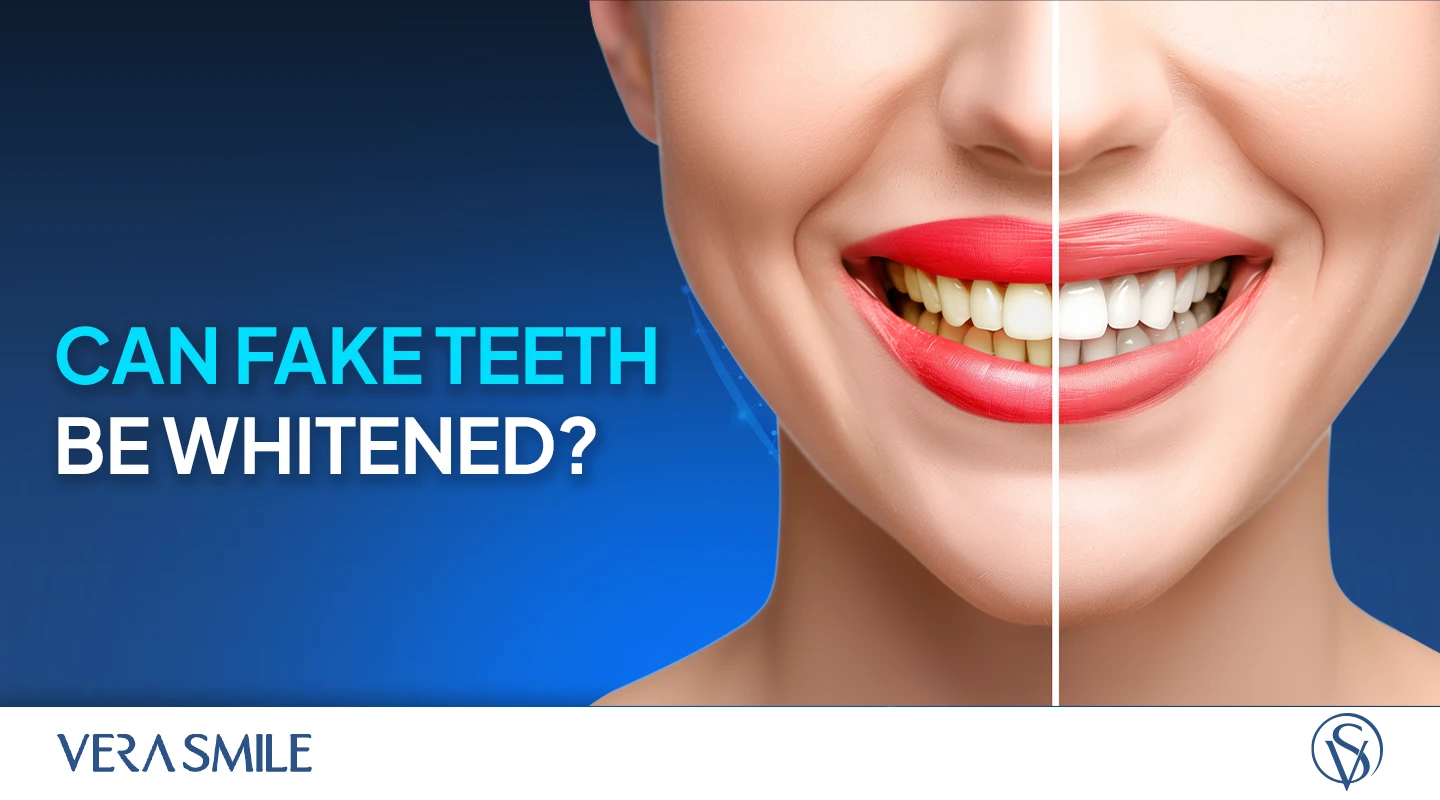
Fake teeth may look spotless when you first get them, but keeping them that way is where the questions start piling up.
Can you whiten fake teeth?
The answer is: no, not in the traditional sense. Unlike natural teeth, which respond to bleaching agents, fake teeth are made from non-porous materials that resist these treatments entirely.
But don’t lose hope (or your smile) just yet. There are safe and effective ways to keep your fake teeth looking fresh and bright. Let’s dig into what works, what doesn’t, and how to strategically protect both your smile and your oral health.
What Are Fake Teeth Made Of? (And Why It Matters for Whitening)
Fake teeth aren’t one-size-fits-all, and neither are the materials used to create them. Each type comes with its quirks—and its whitening challenges.
Porcelain and Zirconia
Known for their durability and natural-looking shine, these materials are non-porous, which means they don’t absorb stains like natural teeth. Great for resisting coffee stains but terrible if you’re thinking about whitening treatments—those won’t penetrate their smooth surface.
Acrylic and Resin
Popular in dentures, these materials are more porous and prone to discoloration over time. Think of them as the “spill-prone” members of the fake teeth family, vulnerable to staining agents like tea and smoking.
Composites
Used in fillings or veneers, composites are a mix of resin and filler. They’re less stain-resistant than porcelain but still non-responsive to traditional whitening methods.
Here’s the deal: these materials don’t respond to whitening treatments because they lack the porous enamel structure that natural teeth have. Simply put, bleaching agents don’t stand a chance against fake teeth’s science-backed stain resistance—or their aging process.
Why Stains Happen on Fake Teeth
Fake teeth might not absorb stains the way natural ones do, but they’re no strangers to discoloration. Here’s why:
Surface Stains
Everyday culprits like coffee, tea, and tobacco leave their mark over time, clinging to the outer layer of your dentures, veneers, or crowns.
Intrinsic Discoloration
Materials like resin or acrylic can age, leading to dulling and yellowing that no amount of scrubbing will fix.
Can You Whiten Fake Teeth?
When it comes to whitening fake teeth, let’s set the record straight: over-the-counter whitening strips, gels, and toothpastes won’t do the trick. These products are designed for natural enamel, which absorbs and reacts to whitening agents. Fake teeth — whether dental implants, veneers, or dentures — are made from non-porous materials like porcelain, resin, or acrylic, which don’t respond to bleaching agents.
In fact, using these products can backfire by damaging the surface of fake teeth. Abrasive toothpaste or aggressive whitening solutions may cause micro-scratches, dulling their appearance over time.
So, what does work?
Professional polishing. Dentists use specialized tools to safely remove surface stains from fake teeth, maintaining their appearance without causing harm. This is particularly effective for removing stains from fake teeth caused by coffee, tea, or smoking. While it doesn’t “whiten” per se, it restores their natural luster.
The Role of Replacement
Sometimes, stains on fake teeth are more than skin deep. Materials like acrylic dentures can discolor over time due to aging or wear. In these cases, replacement might be the best option—not only for aesthetics but for maintaining white dental implants and overall oral health.
Your dentist can evaluate whether professional cleaning is sufficient or if replacement is necessary. Choosing the right solution ensures your smile stays as bright and functional as intended. After all, a strategic approach to oral health beats chasing unachievable results.
How to Keep Fake Teeth Bright: Prevention Is Key
Keeping fake teeth bright isn’t rocket science, but it does require a bit of discipline. Here’s what you need to do:
- Rinse after staining beverages like coffee, tea, or red wine. A quick swish with water helps wash away the culprits of discoloration before they settle in.
- Ditch smoking and cut back on highly pigmented foods. Nicotine and foods like berries or curry can leave your fake teeth looking less pearly and more…well, dull.
- Stick to a soft-bristled toothbrush paired with non-abrasive toothpaste. Scrubbing your teeth aggressively won’t make them whiter but might wear down their surface instead.
Regular Professional Maintenance
Even your best efforts can’t match the precision of professional cleaning for dentures or crowns. Here’s why:
- Regular dental cleanings remove stubborn surface stains that daily brushing can’t touch, keeping your smile polished and healthy.
- Polishing, especially for crowns and veneers, smooths out microabrasions and restores their original sheen—without damaging their surface. Trust your dentist; they’ve got the tools for the job.
Protective Coatings for Fake Teeth
Here’s a little-known trick: ask your dentist about protective sealants.
- These invisible coatings create a barrier that keeps stains at bay.
- By shielding the surface of dentures or crowns, sealants can extend their lifespan and reduce the need for frequent polishing.
Prevention is always easier than repair—and much kinder to your wallet and smile.
Oral Health Strategies for Fake Teeth Owners
Fake teeth might not be prone to cavities, but that doesn’t mean you can sideline your gums or natural teeth. Here’s the thing: healthy gums provide the foundation for fake teeth to stay secure and functional. Poor gum health is a fast track to discomfort, loosening, and even failure of your dental work.
Oral hygiene isn’t just about keeping things looking good—it’s about your overall health. Studies link gum disease to issues like heart disease and diabetes. Skimping on your daily oral care can have consequences far beyond your mouth.
Cleaning Tools That Actually Work
Regular floss may seem like the go-to, but for those with dental bridges, implants, or dentures, it’s like trying to sweep the ocean with a broom—inefficient and frustrating. Here are tools that get the job done:
- Water flossers: Perfect for cleaning around implants or removing food debris from under bridges.
- Interdental brushes: Excellent for getting between those hard-to-reach spots that traditional floss misses.
- Floss threaders: A must for working around bridges and dental implants, ensuring thorough cleaning without damaging your fake teeth.
Traditional toothbrushes can’t always tackle the unique challenges of cleaning fake teeth, especially when whitening dentures at home or exploring natural methods to whiten false teeth. Investing in these tools helps prevent buildup and stains while protecting your overall oral health.
Read more: Why Scaling and Root Planing is a Misunderstood Dental Procedure
What Do Dentists Say?
According to Dr. Mumin, keeping fake teeth stain-free is more about sticking to smart maintenance habits. Denture whitening pastes or solutions might sound appealing, but they often deliver less shine and more damage. Instead:
Stick to Professional Polishing
Only your dentist can safely and effectively remove surface stains without scratching or dulling the material.
Clean Daily, but Gently
Use non-abrasive toothpaste and a soft brush to avoid wearing down veneers, crowns, or dentures.
Know When to Replace
When stains settle deep into fake teeth, replacement might be the only way to bring back that sparkle.
A quick chat with your dentist about tailored cleaning tips can save you years of wear and tear—and some extra trips to the clinic.