
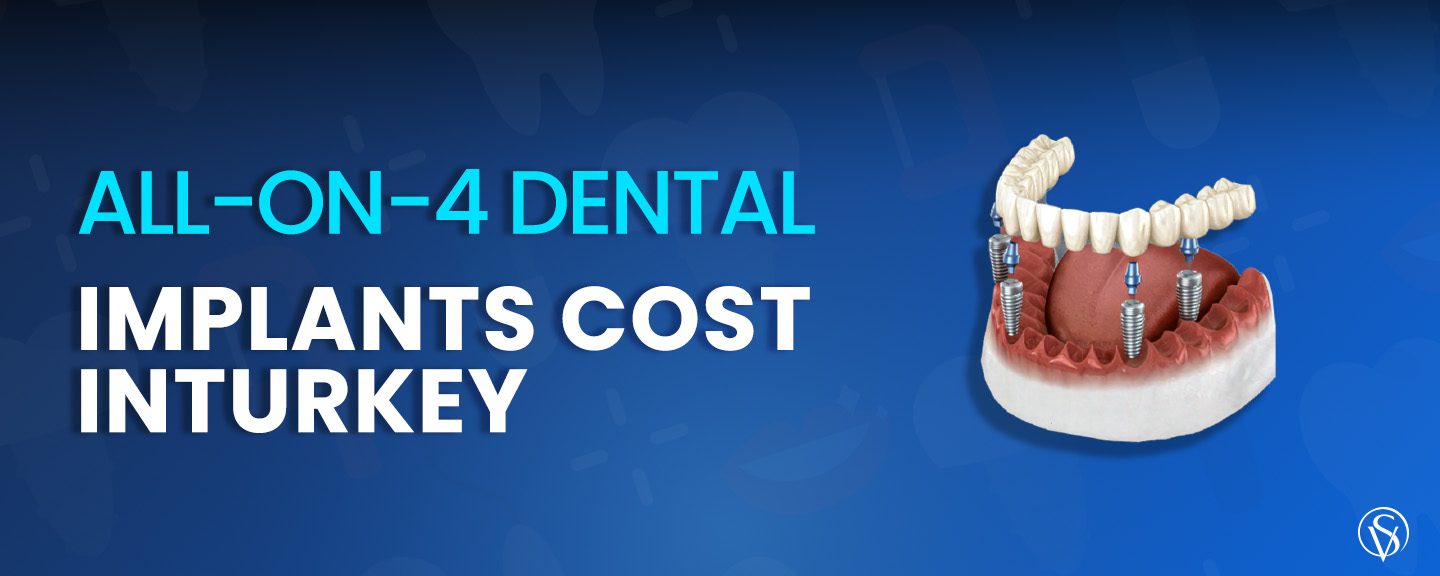
All-on-4 dental implants cost in Turkey range between €3,500 and €6,500 per jaw, depending on the implant system used, the clinic’s clinical standards, and whether the treatment is planned for the upper jaw, lower jaw, or both. For patients needing a full-mouth restoration (upper and lower jaw), the total cost falls between €7,000 and €12,000.
This price covers far more than the implants alone. In most reputable clinics, the All-on-4 treatment fee includes the initial dental examination, panoramic X-ray or 3D CBCT imaging, implant surgery, a fixed temporary prosthesis placed within 24–72 hours, and the final permanent bridge after healing. When compared with the UK or the US, where All-on-4 treatment commonly costs €18,000–€25,000 per jaw, Turkey offers an average saving of 60–70%, even after travel and accommodation expenses.
The main reason for this price difference is not material quality. Clinics in Turkey use internationally certified implant systems such as Straumann, Nobel Biocare, Hiossen, and Neodent, the same brands used in Western Europe and North America. Lower clinical operating costs, laboratory fees, and staffing expenses allow Turkish clinics to provide the same treatment protocols at a significantly lower total price.
For patients who have lost most or all of their teeth and want a fixed, non-removable solution, All-on-4 dental implants in Turkey provide a predictable and cost-efficient alternative to removable dentures, without sacrificing clinical safety or long-term stability.
What Is Included in All-Inclusive All-on-4 Dental Implant Packages in Turkey?
All-inclusive All-on-4 dental implant packages in Turkey are structured to cover the full treatment journey, not just the implant surgery itself. For international patients, the quoted price includes the initial dental examination, panoramic X-ray and 3D CBCT imaging, and detailed treatment planning to assess bone volume, nerve position, and implant angles. The surgical phase is part of the package and covers local anesthesia, placement of four implants per jaw using evidence-based protocols, and immediate loading with a fixed temporary bridge, within 24 to 72 hours. This allows patients to leave the clinic with functional, non-removable teeth during the healing phase.
Prosthetic and laboratory costs are included. Patients receive a temporary full-arch restoration followed by a permanent fixed bridge after the implants integrate with the bone. Depending on the clinic and treatment plan, the final prosthesis may be acrylic, hybrid, or zirconia-based, and all laboratory fabrication fees are built into the package price. Post-operative checkups, bite adjustments, and early maintenance guidance are commonly included to ensure proper healing and comfort.
Beyond clinical care, many Turkish clinics include non-medical services aimed at simplifying the treatment process for international patients. These cover airport transfers, hotel accommodation for several nights, transportation between the hotel and clinic, and the support of an English-speaking patient coordinator. By combining medical treatment and travel-related services into one clear price, all-inclusive All-on-4 packages in Turkey reduce uncertainty, prevent hidden costs, and make it easier for patients to plan both their dental care and their trip with confidence.
Why Do the Clinics in Turkey Offer Package Deals?
Clinics in Turkey offer All-on-4 package deals mainly to remove uncertainty for international patients and to simplify complex treatment planning. Patients traveling for full-arch implant treatment want to know the total cost upfront, without separate charges for imaging, surgery, temporary teeth, laboratory work, or follow-up visits. Package pricing answers this need by presenting one clear figure that covers all essential steps, which reduces stress and avoids last-minute financial surprises.
There is a practical clinical and operational reason. All-on-4 treatment follows a structured protocol with predictable stages, allowing clinics to plan chair time, surgical teams, and laboratory schedules efficiently. By working with high patient volumes and long-term laboratory partners, clinics control costs and reduce per-patient expenses. This efficiency allows them to offer lower prices without cutting corners on implant systems, sterilization standards, or prosthetic quality.
Package deals reflect the competitive nature of dental tourism in Turkey. Cities such as Istanbul, Antalya, and Izmir attract patients from the UK, Europe, and the Middle East, where transparent pricing is a key decision factor. Clinics that bundle treatment and travel services negotiate better rates with hotels and labs and pass those savings on to patients. The result is a pricing model that benefits both sides: patients receive clarity and value, while clinics maintain consistent workflows and clinical standards.
How Does All-on-4 Dental Implants Cost in Turkey Compare to the UK, USA, and Europe?
When patients compare All-on-4 dental implant costs internationally, the difference is clear. The same treatment protocol, using the same implant brands and similar prosthetic materials, is priced very differently depending on the country. The main drivers of this gap are clinic overhead, labor costs, and pricing structure, not differences in implant quality or surgical standards.
Below is a clear comparison of average prices charged by private clinics for one jaw (single arch) All-on-4 treatment.
| Country | Average All-on-4 Cost per Jaw |
| Turkey | €3,500 – €6,500 |
| United Kingdom | €17,000 – €29,000 |
| United States | €18,500 – €32,000 |
| Germany | €14,000 – €22,000 |
| France | €13,000 – €20,000 |
| Netherlands | €15,000 – €23,000 |
In the UK, USA, and much of Europe, services such as CBCT scans, temporary fixed teeth, anesthesia, and follow-up visits are billed separately. In Turkey, these elements are included in a single package price. This bundled approach, combined with lower operating costs, allows patients to save 60–70%, even after travel expenses, while receiving treatment with internationally certified implant systems such as Straumann, Nobel Biocare, Neodent, and Hiossen.
How Does All-on-4 Cost in Turkey Compare to the UK, USA, and Europe?
When patients compare All-on-4 dental implant costs across countries, the difference is clear and consistent. In Turkey, the average cost for All-on-4 dental implants ranges between €3,500 and €6,500 per jaw, depending on the implant system, prosthetic material, and clinic standards. A full-mouth treatment (upper and lower jaw) costs €7,000 to €12,000.
In the United Kingdom, private clinics charge €15,000 to €25,000 per jaw, in major cities. In the United States, prices are even higher, commonly starting at $20,000 per jaw and reaching $35,000 or more when premium implant brands and zirconia bridges are used. Across Western Europe, including countries such as Germany, France, and the Netherlands, All-on-4 treatment costs €14,000 to €22,000 per jaw, with consultations, temporary prosthetics, and follow-up visits billed separately.
The reason for this price gap is not lower treatment standards. Clinics in Turkey use the same internationally certified implant systems, such as Straumann, Nobel Biocare, Neodent, and Hiossen, and follow similar surgical and prosthetic protocols. The savings come from lower operating costs, reduced laboratory fees, and bundled pricing structures. In many UK, US, and European clinics, imaging, temporary teeth, anesthesia, and post-operative care are added as separate charges.
For patients paying privately, choosing Turkey for All-on-4 dental implants results in 60–70% savings, even after flights and accommodation. The key difference lies in pricing structure and overhead, not in implant quality or clinical safety.
How Does the Cost of All-on-4 Dental Implants in Turkey Compare to the United Kingdom?
The cost difference between Turkey and the United Kingdom for All-on-4 dental implants is substantial. In Turkey, All-on-4 treatment costs €3,500–€6,500 per jaw, while private clinics in the UK charge between €15,000 and €25,000 per jaw, in London and other large cities. For patients needing treatment on both jaws, total UK costs exceed €30,000, compared to €7,000–€12,000 in Turkey.
This gap is not due to differences in implant quality. Clinics in both countries commonly use internationally recognized implant systems such as Straumann, Nobel Biocare, Neodent, and Hiossen. The higher UK pricing reflects increased clinic overhead, dentist fees, insurance costs, and the practice of charging separately for CBCT scans, temporary fixed bridges, anesthesia, and follow-up visits. In Turkey, these services are bundled into one clear package price.
Another key difference is the treatment timeline. In the UK, All-on-4 treatment is spread over several months, with temporary solutions and multiple appointments. In Turkey, the same protocol is completed within a structured visit, with fixed temporary teeth placed within days. For private patients, this results in an average saving of 65–70%, even after travel and accommodation, while maintaining comparable clinical standards.
Why Is All-on-4 Dental Implants More Affordable in Turkey Without Lower Quality?
All-on-4 dental implants are more affordable in Turkey because of economic and structural factors, not because of lower clinical standards or cheaper materials. The implant systems used in Turkey, such as Straumann, Nobel Biocare, Neodent, and Hiossen, are the same internationally certified brands used in the UK, the USA, and Western Europe. These systems follow identical surgical protocols and quality controls worldwide, and the base cost of the implants themselves does not change significantly between countries.
Dental clinics in Turkey face lower expenses for rent, staffing, laboratory work, and administrative overhead. Compared to the UK and the US, these costs are 40–60% lower, which allows clinics to charge less while maintaining sterilization standards, digital imaging systems, and accredited dental laboratories. Dentists performing All-on-4 treatments in Turkey focus heavily on full-arch implant cases, completing a high volume each month. This level of specialization improves efficiency and reduces per-patient costs without compromising outcomes.
In many Western countries, All-on-4 treatment is broken into multiple charges, including consultations, CBCT scans, temporary prosthetics, anesthesia, and follow-up visits. In Turkey, these elements are commonly bundled into a single package price. This transparent pricing model lowers the final cost and removes hidden fees, while still following evidence-based implant placement and prosthetic protocols. For patients, the result is a predictable, fixed solution delivered at a lower price, without sacrificing implant quality, safety, or long-term stability.
How Does Case Complexity Increase All-on-4 Dental Implants Cost in Turkey?
All-on-4 dental implant costs in Turkey vary because each patient’s clinical condition is different. Case complexity directly affects the final price, even when the same implant system is used.
Bone graft requirements increase costs when the existing jawbone is not strong enough to support implants. While the All-on-4 technique, bone loss, still requires grafting or sinus-related procedures. These add surgical time, materials, and sometimes longer healing periods.
Gum treatments and preparatory procedures are another factor. Patients with gum disease, inflammation, or uneven soft tissue need periodontal treatment before implants are placed safely. Deep cleaning, laser gum therapy, or soft tissue correction are medical necessities and are priced separately.
This is why two patients rarely receive the same quote. Bone quality, gum health, bite force, previous dental work, and overall oral condition all influence the treatment plan. Reputable clinics in Turkey confirm pricing only after clinical examination and 3D imaging, rather than offering fixed prices that ignore long-term implant stability.
Do Clinic Standards and Technology Level Affect All-on-4 Dental Implants Cost in Turkey?
Yes, clinic standards and technology level directly affect the cost of All-on-4 dental implants in Turkey. Clinics using digital workflows generally charge more than those relying on traditional impressions and manual planning. Digital workflows reduce human error, improve implant positioning accuracy, and shorten treatment time, but they require significant investment in equipment and trained staff.
Advanced clinics use 3D CBCT imaging, intraoral scanners, CAD/CAM systems, and guided implant surgery to plan implant angles, bone contact, and bite forces before surgery begins. These systems allow dentists to place implants with higher precision and design temporary and final prosthetics that fit more accurately. Maintaining this technology involves ongoing software licenses, calibration, and specialized laboratory collaboration, which increases operating costs.
The higher price is justified when technology is used clinically, not for marketing. Proper digital planning lowers complication rates, reduces the need for adjustments, and improves long-term implant stability. Clinics that apply advanced technology correctly tend to have fewer remakes and post-treatment issues, making the higher upfront cost more cost-effective over time.
How Much Do Material Costs for All-on-4 Dental Implants in Turkey?
Material choice has a direct and measurable impact on the cost of All-on-4 dental implants in Turkey. Price differences are driven more by which implant system and prosthetic material are used than by the clinic’s location or the city where treatment takes place. Two patients treated in the same clinic receive different quotes simply because their cases require different material strength, load resistance, or long-term durability.
Material-based price differences are most visible in both the implant brand and the final full-arch bridge. Premium implant systems such as Straumann and Nobel Biocare cost more than mid-range systems like Neodent or Hiossen, not because of branding, but due to longer clinical data, surface technology, and documented long-term success rates. On the prosthetic side, acrylic temporary bridges are more affordable, while hybrid or full zirconia bridges increase the total cost due to milling precision, laboratory time, and material strength.
The key point overlooked is that the same materials cost nearly the same across countries. A Straumann implant or a zirconia block purchased in Turkey is priced very close to the same product purchased in the UK, Germany, or the USA. Global manufacturers control pricing tightly, and international price differences are limited to 10–15%. This means the large cost gap patients see between countries does not come from lower-cost materials, but from labor, laboratory fees, and clinic overhead.
In All-on-4 treatment, material matters more than location. A well-planned case using the right implant system and prosthetic material for the patient’s bite force, bone quality, and long-term expectations will perform better than a poorly selected material, regardless of country. Clinics that explain why a specific system is recommended are prioritizing outcome and longevity, not geography or marketing price points.
How Come All-on-4 Materials Are More Affordable in Turkey?
Many patients assume that lower All-on-4 costs in Turkey must be linked to lower-cost materials. In reality, most implant and prosthetic systems used in reputable Turkish clinics are imported from the USA or Europe and are priced very similarly worldwide. Implant brands such as Straumann, Nobel Biocare, Neodent, and Hiossen follow global pricing policies, which means an implant purchased in Turkey costs nearly the same as the same implant purchased in the UK or the United States.
The cost difference appears after the material arrives at the clinic. In countries like the USA, the final treatment price reflects higher dentist fees, laboratory labor costs, insurance overhead, and administrative expenses. In Turkey, these operational costs are significantly lower, which allows clinics to apply a smaller markup while still using the same certified materials and following the same surgical protocols.
Another factor is volume. Clinics in Turkey that focus on full-arch implant treatments perform a high number of All-on-4 cases each month. This consistent case flow allows them to work closely with specialized dental laboratories and negotiate lower fabrication costs per case. The result is not lower-grade materials, but more efficient use of the same materials.
In short, when All-on-4 materials are imported from the USA, the implants themselves are not less expensive. What changes is the surrounding cost structure. Lower operating expenses and high clinical volume make the overall treatment more affordable, without reducing material quality, safety, or long-term performance.
How Do Zirconia, Acrylic, and Hybrid Bridges Compare in All-on-4 Treatment?
In All-on-4 treatment, the type of full-arch bridge has a direct impact on the total cost. The price difference is driven by material strength, laboratory processing time, and fabrication method, not by aesthetics alone. In Turkey, clinics usually offer three main options: acrylic, hybrid, and full zirconia bridges.
| Bridge Type | Average Cost Impact in Turkey (per jaw) | Cost Driver |
| Acrylic Bridge | Lowest | Simple fabrication, shorter lab time |
| Hybrid Bridge (Acrylic + Metal) | Medium | Metal framework, additional lab stages |
| Full Zirconia Bridge | Highest | CAD/CAM milling, high-strength material |
Acrylic bridges are the most cost-accessible option and are commonly used as temporary restorations during healing. In some cases, they are chosen as a permanent solution for patients with lower bite force. Hybrid bridges sit in the mid-range, combining acrylic teeth with a metal framework for added strength and better long-term stability.
Full zirconia bridges represent the highest cost option in All-on-4 treatment. The higher price reflects advanced digital design, precision milling, and the durability of zirconia under strong bite forces. Although the upfront cost is higher, zirconia bridges result in lower long-term maintenance and fewer repairs.
In All-on-4 treatment, cost should be evaluated over time, not just at placement. Choosing the right bridge material for the patient’s bite, habits, and expectations determines the true value of the treatment.
How Do Implant and Prosthetic Brands Compare in All-on-4 Treatment?
In All-on-4 dental implant treatment, the brand of implant system and prosthetic material affects cost, long-term stability, and clinical predictability. Clinics in Turkey that focus on full-arch rehabilitation usually work with a limited set of internationally certified brands, rather than switching between low-cost alternatives. The differences between brands are not cosmetic; they relate to surface technology, research data, and manufacturing precision.
| Brand | System Type | Origin | Key Clinical Strengths | Cost Level in Turkey |
| Straumann | Implant system | Switzerland | Extensive long-term clinical data, high osseointegration rates, premium surface technology | High |
| Nobel Biocare | Implant system | Switzerland / USA | Pioneer of All-on-4 concept, strong prosthetic compatibility, predictable outcomes | High |
| Neodent | Implant system | Switzerland / Brazil | Good balance of cost and performance, widely used in full-arch cases | Medium |
| Hiossen | Implant system | USA | Proven clinical performance, commonly used in dental tourism cases | Medium |
| Ivoclar Zirconia | Prosthetic material | Europe / USA | High translucency, natural aesthetics, reliable milling consistency | Medium–High |
| Amann Girrbach | CAD/CAM zirconia systems | Austria | High fracture resistance, precise fit, long-term structural stability | Medium–High |
Premium brands such as Straumann and Nobel Biocare increase treatment cost because of their research background, implant surface design, and long-term success data, not branding alone. Mid-range systems like Neodent and Hiossen lower the overall cost while still meeting international safety and performance standards when used correctly.
Does a Higher Material Cost Always Mean Better Results in All-on-4 Dental Implants?
No. A higher material cost does not automatically mean better results in All-on-4 dental implants. Premium implants and full zirconia bridges offer advantages such as higher strength and wear resistance, but these benefits only matter when they suit the patient’s bone quality, bite force, and habits.
High-cost materials are most useful for patients with strong bite pressure or grinding habits. When used in the wrong case, expensive materials still lead to complications. Long-term success depends more on proper diagnosis, planning, and surgical execution than on material price alone.
In All-on-4 treatment, the best results come from choosing the right material for the right case, not simply the most expensive option.
What Factors Influence All-on-4 Dental Implants Cost in Turkey?
All-on-4 dental implant costs in Turkey are not based on a fixed price list. The final fee is shaped by clinical quality, experience, and the patient’s individual condition. Below are the main factors that influence pricing.
- Clinic: Clinic standards have a direct impact on cost. Clinics that follow strict sterilization protocols, work with certified implant systems, and collaborate with experienced dental laboratories charge more. The difference reflects infrastructure, quality control, and aftercare support, not location or marketing claims.
- Doctor: The dentist’s experience and specialization matter. Surgeons who regularly perform full-arch implant treatments and focus on All-on-4 cases tend to charge higher fees. This reflects advanced training, better treatment planning, and lower complication rates, especially in complex cases.
- Technology: Clinics using digital workflows, such as 3D CBCT imaging, intraoral scanners, CAD/CAM prosthetics, and guided surgery, incur higher operating costs. These technologies improve implant accuracy, prosthetic fit, and long-term stability, which is why they are reflected in the final price.
- Case Complexity: Each patient’s oral condition is different. Bone quality, gum health, bite force, existing restorations, and the need for preparatory treatments directly affect the treatment plan. This is why two patients requesting All-on-4 dental implants in Turkey rarely receive the same quote, even at the same clinic.
Is All-on-4 Dental Implants Treatment Covered by Insurance in Turkey?
In most cases, All-on-4 dental implants are not covered by insurance in Turkey. This is because insurance providers classify implant-supported full-arch restorations as a private or elective treatment, even when tooth loss affects daily function. This distinction between cosmetic and medical care is not unique to Turkey and applies in most countries.
In Turkey, the public health system does not reimburse dental implants used for full-arch rehabilitation. Private and international insurance plans follow similar rules and rarely cover implant surgery performed abroad. In some situations, insurance contributes to preparatory medical treatments, such as infection control or periodontal therapy, but the All-on-4 implants and fixed bridges themselves are almost always paid out of pocket.
This is an important expectation to set correctly. Patients choosing Turkey for All-on-4 treatment do so because of lower private treatment costs, transparent package pricing, and predictable expenses, not because of insurance reimbursement. Understanding this upfront helps patients plan realistically and avoid confusion when comparing treatment options across countries.
Are There Financing & Payment Options for All-on-4 Dental Implants in Turkey?
Yes, some clinics in Turkey offer flexible payment options for All-on-4 dental implants, especially for international patients. Most clinics accept cash and credit card payments, and many allow the total cost to be split into two or three payments during the treatment period rather than requiring full payment upfront.
For international patients, payments are commonly accepted in EUR, GBP, or USD, which helps avoid currency confusion. Long-term financing plans are uncommon, but short-term installment-style payments within the treatment timeline are sometimes available when paying by card, depending on the issuing bank and card type.
A deposit is required to confirm appointments and begin treatment planning. This deposit is 10–30% of the total cost and is used to secure surgical scheduling, laboratory work, and any included accommodation or transfers. The remaining balance is paid once treatment progresses or after temporary or final teeth are placed. This structure gives patients cost clarity while allowing clinics to plan resources responsibly.
Can International Patients Pay in Installments for All-on-4 Dental Implants in Turkey?
Yes, international patients can pay for All-on-4 dental implants in installments in Turkey, depending on the clinic and payment method. Installments are short-term and structured within the treatment period, not as long-term financing.
Most clinics require a deposit first, followed by one or two payments during treatment. Installment options are more common with credit card payments and are subject to bank approval.
Are Deposits Refundable for All-on-4 Dental Implants in Turkey?
Not always. For All-on-4 dental implants in Turkey, deposits may be refundable only if treatment planning and laboratory work have not started. If a patient cancels early, some clinics refund the deposit or deduct a small administrative fee.
Once digital planning, implant ordering, or prosthetic fabrication begins, deposits are non-refundable, as these costs are already incurred. Reputable clinics state refund terms clearly in writing before payment, and patients should confirm these conditions in advance.
What Are the Hidden Costs Patients Don’t Expect When Getting All-on-4 Dental Implants in Turkey?
Even when All-on-4 dental implant prices in Turkey are clearly quoted, some costs are overlooked during planning. Being aware of these helps patients budget accurately and avoid surprises.
- Flights: Flight prices vary widely depending on departure country, season, and booking time. Last-minute changes or return visits increase overall costs, especially for patients traveling from long distances.
- Extended Stays or Additional Visits: All-on-4 treatment is usually planned within a set timeline, but healing responses differ. Swelling, bite adjustments, or laboratory refinements require extra days or a second visit. Additional hotel nights, meals, and local transport add to the total expense.
- Revision or Adjustment Needs: Basic post-treatment adjustments are normally included, but more extensive revisions are not always covered. Changes requested after healing, prosthetic remakes, or issues linked to bite habits lead to extra laboratory or clinical fees.
- Aftercare Products: Post-treatment care is underestimated. Dentists recommend night guards, implant-safe toothpaste, water flossers, or special cleaning tools to protect the prosthesis. Individually these items are affordable, but together they contribute to the overall cost.
Is Traveling to Turkey for All-on-4 Dental Implants Really Worth the Cost?
Yes, for the right patient. All-on-4 dental implants in Turkey offer 60–70% lower overall costs compared to the UK, USA, and Western Europe. When paired with experienced surgeons and modern clinics, the value can be high.
The benefit is lower cost and faster treatment. The risk lies in choosing the wrong clinic, limited follow-up after returning home, or needing revisions. This option suits patients paying privately who can complete treatment abroad. It is less suitable for those needing frequent follow-ups or insurance coverage.
Real Questions Patients Ask About All-on-4 Dental Implants Cost in Turkey
Patients comparing All-on-4 dental implants cost in Turkey usually focus on practical concerns that affect results, not just price. These are the questions that come up most during consultations.
“Why do All-on-4 prices differ between patients?”
Because treatment is case-based. Bone density, gum condition, bite force, implant brand, and bridge material all influence the final cost, even at the same clinic.
“What support is available after I return home?”
Established clinics explain follow-up options clearly. Many provide written warranties and outline which issues can be managed locally and which require a return visit.
“Is it ever worth paying more for All-on-4 treatment in Turkey?”
Yes. Higher fees usually reflect experienced surgeons, advanced planning, premium materials, and lower risk of complications over time.
“How can I tell if an All-on-4 quote is reasonable?”
A reasonable quote is detailed and transparent. It explains what is included, which implant system is used, and why it fits your clinical needs.
“Can online prices be trusted?”
Online prices are starting points. Final costs are confirmed only after clinical assessment and imaging.
How to Get an All-on-4 Dental Implants Cost Quote in Turkey?
To receive a reliable All-on-4 dental implants cost quote in Turkey, clinics follow a case-based approach rather than offering fixed prices. Accurate pricing depends on clinical details that only be assessed through images and planning, which helps avoid surprises later.
- Photos and X-Rays: Clinics request clear mouth photos and, if available, a recent panoramic X-ray or CBCT scan. These help assess bone quality, gum health, and implant suitability before any pricing is discussed.
- Personalized Treatment Planning: A proper quote is based on individual clinical needs. The dentist decides the implant system, bridge type, and whether any preparatory treatment is required, avoiding unrealistic or changing prices.
- Transparent Pricing: A reliable quote clearly states what is included and excluded. Surgery, implants, temporary fixed teeth, final restoration, and follow-up care should be outlined upfront to prevent hidden costs and confusion.
Why Online Prices Are Only Estimates for Dental Tourism
Online prices for All-on-4 dental implants are starting points, not final costs. Clinics cannot confirm an exact price without reviewing clinical details such as bone quality, gum health, bite alignment, and previous dental work. These factors are not visible on websites but directly affect treatment planning.
Most online prices are based on ideal cases that require no preparatory treatment and use standard materials. Once photos or X-rays are reviewed, the treatment plan may change to ensure safety and long-term stability, which adjust the price.
For dental tourism, reliable clinics use online prices as guidance, not guarantees. Final costs are confirmed only after personalized assessment, helping patients avoid unexpected charges and unrealistic expectations.