
Front teeth play a vital role in both appearance and function. They shape your smile, support facial aesthetics, and are essential for clear speech and confident social interaction. When a front tooth is lost due to trauma, decay, or gum disease, replacing it requires a solution that restores natural appearance, stability, and long-term oral health.
Dental implants for front teeth are considered the most advanced and reliable option for replacing missing front teeth. Unlike traditional solutions such as dental bridges or removable dentures, implants replace both the tooth root and crown, creating a result that closely mimics a natural tooth in look, feel, and performance.
Thanks to modern implant dentistry, digital planning, and high-quality biocompatible materials, front tooth dental implants deliver highly aesthetic, long-lasting, and predictable results. This article explains how front tooth implants work, their benefits, potential risks, and what to expect from the treatment process, helping you make an informed decision about restoring your smile.
What Are Dental Implants for Front Teeth?
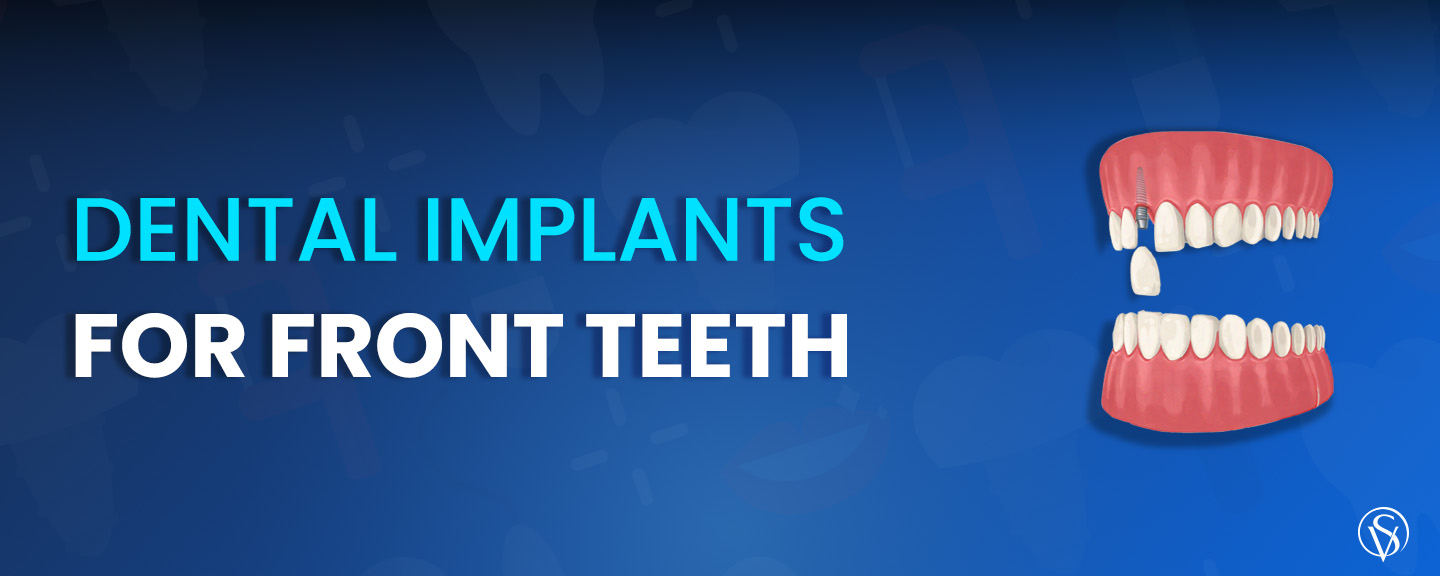
Dental implants for front teeth are modern tooth replacement solutions used to restore missing incisors or canines in the most visible area of the smile. A front tooth implant involves placing a small implant post, made from biocompatible titanium or zirconia, into the jawbone to replace the missing tooth root. After the implant integrates with the bone, a custom-designed dental crown is attached, recreating the appearance, strength, and function of a natural front tooth. This method allows the tooth to be replaced individually, without relying on or altering the surrounding healthy teeth.
Front tooth implants differ from back tooth implants mainly because of the high aesthetic demands of the front zone. While back teeth implants are primarily designed to withstand heavy chewing forces, front tooth implants must meet strict cosmetic requirements in addition to providing stability. The angle of placement, the shape of the crown, and the contour of the gums must all be carefully planned to ensure the implant blends naturally with adjacent teeth. Even small discrepancies in color or alignment are noticeable in the front of the mouth, making this area more technique-sensitive.
Aesthetic precision is essential in front tooth implant treatment because the front teeth influence smile symmetry, overall facial appearance, and speech clarity. Successful treatment requires careful attention to gum lines, tooth proportions, and natural translucency to achieve a harmonious result. Depending on the patient’s needs, dental implants are used to replace a single missing front tooth or multiple front teeth. A single-tooth implant is ideal when only one incisor or canine is missing, while multiple adjacent front teeth are restored using two or more implants or an implant-supported bridge, providing both stability and a natural-looking smile.
Why Are Dental Implants the Best Option for Front Teeth Replacement?
Dental implants are widely considered the best option for front teeth replacement because they offer unmatched functional performance and cosmetic results. Unlike traditional solutions, implants are designed to replicate both the root and crown of a natural tooth, allowing the replacement to look, feel, and function like a real front tooth. The implant-supported crown is carefully customized in terms of shape, color, and translucency, creating a natural-looking appearance that blends seamlessly with surrounding teeth and enhances overall smile aesthetics.
One of the most important advantages of dental implants is their ability to preserve the jawbone. When a front tooth is lost, the underlying bone begins to deteriorate due to lack of stimulation. Because implants are anchored directly into the jawbone, they help maintain bone volume and facial structure, preventing the sunken appearance that occurs over time with other tooth replacement options.
Dental implants protect adjacent healthy teeth, which is a major benefit compared to dental bridges. Bridges require the neighboring teeth to be reshaped to support the restoration, potentially weakening otherwise healthy teeth. A front tooth implant stands independently, leaving surrounding teeth untouched and structurally intact.
In addition to aesthetic and biological advantages, dental implants provide exceptional long-term stability. With proper oral hygiene and regular dental checkups, front tooth implants last for decades, making them a reliable and cost-effective solution in the long run. Their strength, durability, and natural integration with the jawbone make dental implants the most comprehensive solution for replacing missing front teeth.
How Does the Front Tooth Dental Implant Procedure Work?
The front tooth dental implant procedure follows a structured, step-by-step approach to ensure precision, stability, and natural aesthetics. Each stage plays a crucial role in achieving a successful and long-lasting result.
- Initial Consultation and Imaging: The process begins with a detailed dental examination and treatment planning. Advanced diagnostic tools, including CBCT scans, are used to evaluate jawbone density, gum health, and tooth positioning. Digital planning helps determine the ideal implant placement and ensures the final crown fits naturally within the smile.
- Implant Placement: During this stage, the implant post, made from biocompatible titanium, is surgically placed into the jawbone under local anesthesia. The implant is positioned at a precise angle to support both functional strength and aesthetic alignment, which is important for front teeth.
- Healing and Osseointegration: After placement, a healing period allows the implant to fuse with the surrounding bone through a process called osseointegration. This phase lasts several weeks to a few months and is essential for creating a stable, long-term foundation for the restoration.
- Abutment and Crown Placement: Once healing is complete, an abutment is attached to the implant to connect it with the visible tooth. A custom-made dental crown, carefully matched in color, shape, and translucency, is then placed. This final step restores full function and delivers a natural-looking front tooth that blends seamlessly with the rest of the smile.
Is the Implant Procedure Different for Front Teeth Compared to Back Teeth?
Yes, the implant procedure for front teeth is significantly different from that of back teeth due to higher precision requirements and greater cosmetic considerations. While back tooth implants are mainly focused on strength and the ability to withstand heavy chewing forces, front tooth implants must achieve an exact balance between function and aesthetics.
In the front of the mouth, implant positioning must be extremely precise to ensure proper tooth alignment, natural angulation, and a harmonious gum line. Even slight deviations affect the appearance of the smile or cause the implant crown to look artificial. The thickness and shape of the surrounding gum tissue play a critical role, as uneven gums or recession can be highly visible in the aesthetic zone.
Front tooth implants require customized crowns with careful attention to color matching, translucency, and surface texture to replicate natural enamel. Because front teeth influence smile symmetry and speech, dentists use advanced planning tools and soft tissue techniques to achieve a seamless result. These added cosmetic demands make front tooth implant treatment more technique-sensitive than implants placed in the back of the mouth.
What Materials Are Used in Front Tooth Dental Implants?
Front tooth dental implants are made from carefully selected materials to ensure biocompatibility, durability, and natural aesthetics. Both the implant body and the crown contribute to the overall success of the treatment.
Titanium Implants: Titanium implants are the most widely used option in implant dentistry. They are biocompatible, allergy-free, and extremely strong, allowing them to fuse reliably with the jawbone through osseointegration. Their long-term clinical success makes them a trusted choice for supporting front tooth restorations.
Zirconia Implants: Zirconia implants provide a metal-free alternative for patients who prefer non-metal materials or have aesthetic concerns. Zirconia is biocompatible and offers excellent strength. Its natural white colors are beneficial in the front zone, reducing the risk of dark shadows under the gums.
Porcelain or Zirconia Crowns: The visible tooth replacement is completed with a porcelain or zirconia crown. These crowns are custom-made to match the color, shape, and translucency of natural teeth, ensuring a seamless and lifelike appearance. When paired with high-quality implant materials, they help achieve a natural-looking and long-lasting front tooth restoration.
Are Dental Implants for Front Teeth Safe?
Yes, dental implants for front teeth are considered a safe and well-established treatment when performed by experienced dental professionals. Implant dentistry is supported by decades of clinical research and is widely used for both functional and aesthetic tooth replacement.
One of the key reasons implants are safe is that titanium is biocompatible, meaning it is fully accepted by the human body. Titanium bonds naturally with bone during the healing process and does not trigger harmful immune reactions. For patients seeking alternatives, materials such as zirconia are also designed to be biocompatible and allergy-free, making implants suitable even for individuals with material sensitivities.
Dental implants also have high success rates, imaging, and proper surgical techniques significantly reduce the risk of complications, especially in the front tooth area where precision is essential.
Dental implant materials are approved for long-term use and are intended to remain in the body for many years. With regular dental checkups and proper care, front tooth implants provide a safe, durable, and predictable solution for replacing missing front teeth.
What Are the Benefits of Dental Implants for Front Teeth?
Dental implants offer a wide range of functional and aesthetic benefits, making them an ideal solution for replacing missing front teeth. Some of the key advantages include:
- Natural smile aesthetics: Implant-supported crowns are custom-designed to match the color, shape, and translucency of natural teeth, allowing them to blend seamlessly into the smile.
- Improved speech clarity: Because implants are securely anchored in the jawbone, they provide stable tooth positioning that helps maintain clear and natural speech.
- Strong bite stability: Dental implants restore proper biting and chewing function, allowing front teeth to perform naturally without shifting or discomfort.
- Bone preservation: By stimulating the jawbone, implants help prevent bone loss that commonly occurs after tooth loss, supporting facial structure and long-term oral health.
- Long lifespan: With good oral hygiene and regular dental care, front tooth implants can last for decades, making them a durable and cost-effective solution.
Together, these benefits make dental implants the most comprehensive option for restoring both the appearance and function of front teeth.
What Are the Risks or Complications of Front Tooth Implants?
While front tooth dental implants are highly successful and safe, like any surgical procedure, they carry some potential risks. Being aware of these possibilities helps patients make informed decisions and highlights the importance of proper planning and aftercare.
One possible risk is infection, which occurs if bacteria enter the surgical site during healing. This risk is minimized through sterile techniques, good oral hygiene, and following post-treatment care instructions. Another concern specific to the front zone is gum recession, which can affect the appearance of the implant by exposing part of the crown or implant structure. Because the front teeth are highly visible, even minor gum changes impact aesthetics.
In rare cases, implant failure may occur, due to insufficient bone support, smoking, uncontrolled medical conditions, or poor oral hygiene. Although uncommon, early detection and professional intervention can usually address the issue effectively.
The risk of complications is significantly reduced when treatment is performed by experienced implant dentists who specialize in aesthetic implant placement. Advanced imaging, digital planning, and expertise in soft tissue management are essential for achieving predictable, long-lasting, and natural-looking results in the front tooth area.
Do Front Tooth Dental Implants Affect Speech?
Yes, front tooth dental implants cause temporary changes in speech immediately after treatment, but these effects are mild and short-lived. Front teeth play an important role in producing certain sounds, particularly “s,” “f,” and “v”, which is why patients may notice slight differences during the initial adaptation period.
As the tongue and lips adjust to the shape and position of the implant-supported crown, speech returns to normal within a few days or weeks. Because dental implants are securely fixed in the jawbone, they provide greater stability than removable options, helping maintain natural phonetics over time. Proper implant positioning and accurately designed crowns further ensure that speech remains clear and natural once adaptation is complete.
Can Gum Recession Affect the Appearance of Front Tooth Implants?
Yes, gum recession can affect the appearance of front tooth dental implants, especially because this area is part of the aesthetic zone. When the gum tissue recedes, it may expose the edge of the implant crown or create uneven gum lines, making the restoration more noticeable and less natural-looking.
Effective soft tissue management is essential to prevent this issue. During treatment planning, dentists carefully evaluate gum thickness, bone support, and implant positioning to support healthy, stable gum tissue. Techniques such as precise implant placement, customized abutments, and, when necessary, gum contouring or soft tissue grafting help maintain natural gum levels around the implant.
How Long Do Dental Implants for Front Teeth Last?
Dental implants for front teeth are designed to be a long-term and durable solution for tooth replacement. With proper care, the implant itself can last 20 years or longer, and in many cases, it remains functional for a lifetime. The longevity of the implant largely depends on successful osseointegration, healthy gum tissue, and consistent oral care.
While the implant post is intended to be permanent, the dental crown attached to it may need replacement over time due to normal wear. On average, front tooth crowns last 10 to 15 years, although high-quality materials and good maintenance can extend their lifespan. Replacing the crown does not require removing the implant, making the process relatively straightforward.
Maintaining excellent oral hygiene is essential for maximizing the lifespan of front tooth implants. Regular brushing, flossing, professional cleanings, and routine dental checkups help prevent gum disease and infection around the implant. With proper care and ongoing monitoring, dental implants provide a stable, reliable, and long-lasting solution for restoring front teeth.
Are Front Tooth Dental Implants Permanent?
Yes, front tooth dental implants are considered a permanent solution, but it is important to differentiate between the implant and the crown. The implant post, which is surgically placed into the jawbone, is designed to be permanent and can last for decades or even a lifetime once it has fully integrated with the bone.
The dental crown attached to the implant is not always permanent. Because the crown is exposed to daily use and natural wear, it needs to be replaced after 10 to 15 years. This replacement does not affect the implant itself and is typically a straightforward procedure. With proper oral hygiene and regular dental care, front tooth implants provide a stable and long-lasting tooth replacement solution.
How Natural Do Front Tooth Dental Implants Look?
Front tooth dental implants look exceptionally natural when they are planned and executed with a strong focus on aesthetics. Because front teeth are the most visible when smiling or speaking, modern implant dentistry places great emphasis on creating restorations that are virtually indistinguishable from natural teeth.
One of the key factors is the use of color-matching crowns, which are custom-designed to blend seamlessly with the surrounding teeth. The shade, translucency, and surface texture of the crown are carefully selected to mimic natural enamel under different lighting conditions. In addition, customized shaping ensures that the implant crown matches the size, proportions, and contours of neighboring teeth, maintaining harmony within the smile.
Equally important is the appearance of the gums around the implant. Techniques such as gum contouring and advanced soft tissue management help create smooth, symmetrical gum lines that support a natural-looking result. To further enhance precision, many clinics use smile design technology, which allows dentists to digitally plan the final outcome before treatment begins. By combining digital planning with high-quality materials and skilled execution, front tooth dental implants can deliver results that look and feel just like natural teeth.
How Much Do Dental Implants for Front Teeth Cost?
Front tooth dental implant costs are not fixed, as each treatment plan is tailored to the patient’s dental and aesthetic needs. To give a general idea of what to expect, the table below outlines common price ranges for front tooth dental implants.
| Treatment | Estimated Price Range (€) |
| Single Front Tooth Implant (implant + abutment + crown) | €400 – €900 |
| Single Implant (standard range) | €350 – €600 |
| Single Implant (premium materials / advanced systems) | €600 – €1,000 |
These prices include the implant post, abutment, and dental crown, which are essential components for a complete front tooth restoration.
The same treatment in many Western European countries can cost €2,500–€4,000 or more per implant, which is why many patients consider Turkey for high-quality yet more affordable dental implant treatment.
Is Bone Grafting Needed for Front Tooth Implants?
No, bone grafting is not always needed for front tooth implants. It is only required when there is insufficient jawbone to securely support the implant. Bone loss occurs after a tooth is lost, especially if treatment is delayed, as the jawbone gradually resorbs without stimulation from the tooth root.
In cases where an implant is placed immediately after tooth extraction, existing bone can be preserved, reducing the need for grafting. With delayed implant placement, bone loss is more likely, and grafting is necessary. Procedures such as socket preservation, performed at the time of extraction, help maintain bone volume and increase the chances of placing a front tooth implant without additional bone grafting.
Can Front Tooth Implants Be Placed Immediately After Tooth Extraction?
Yes, front tooth implants are placed immediately after tooth extraction, provided certain clinical conditions are met. Immediate implant placement means the implant is inserted into the jawbone during the same appointment in which the damaged or failing front tooth is removed.
This approach is possible when there is adequate bone volume, no active infection, and healthy surrounding gum tissue. Immediate placement helps preserve the jawbone, maintain natural gum contours, and reduce overall treatment time. It supports better aesthetic outcomes, especially in the front zone where gum shape and symmetry are critical.
How Do Dental Implants Compare to Bridges or Veneers for Front Teeth?
Choosing the right treatment for front teeth depends on whether the goal is to replace a missing tooth or improve the appearance of existing teeth. Dental implants, bridges, and veneers each serve different purposes, and understanding their differences helps determine the most appropriate option.
| Feature | Dental Implants | Dental Bridges | Dental Veneers |
| Purpose | Replace missing front teeth (root + crown) | Replace missing teeth using adjacent teeth for support | Improve appearance of existing teeth only |
| Tooth Preservation | Does not affect neighboring teeth | Requires reshaping adjacent teeth | Requires existing natural tooth |
| Bone Preservation | Yes, prevents jawbone loss | No, does not replace tooth root | No, purely cosmetic |
| Longevity | 20+ years with proper care | 10–15 years | 10–15 years |
| Aesthetic Results | Highly natural, custom-designed | Good, but depends on adjacent teeth | Excellent for cosmetic enhancement only |
| Suitability for Tooth Loss | Best solution | Alternative when implants are not possible | Not suitable for missing teeth |
Who Is a Good Candidate for Front Tooth Dental Implants?
Front tooth dental implants are suitable for many patients, but certain conditions increase the likelihood of successful, long-term results.
- Healthy Gums: Patients should have healthy gum tissue free from active gum disease, as strong gums are essential for supporting the implant and maintaining a natural appearance.
- Adequate Jawbone: Sufficient bone volume and density are needed to anchor the implant securely. If bone loss is present, procedures such as bone grafting may help restore eligibility.
- Non-Smokers or Controlled Smoking: Non-smokers or patients who smoke minimally have higher implant success rates. Smoking can interfere with healing and bone integration, so reducing or stopping smoking is strongly recommended.
- Good Overall Oral Health: Candidates should have good overall oral health, with no untreated infections, decay, or uncontrolled medical conditions that could affect healing or implant stability.
Can Multiple Front Teeth Be Replaced With Dental Implants?
Yes, multiple front teeth can be successfully replaced with dental implants, and the treatment approach is customized based on the number of missing teeth and the condition of the jawbone and gums. When several adjacent front teeth are missing, implants provide a stable and natural-looking solution without relying on removable appliances.
In some cases, individual implants can be placed for each missing front tooth, offering maximum stability and preserving jawbone structure in each area. This option is often used when there is sufficient bone volume and space for multiple implant posts.
Alternatively, implant-supported bridges may be recommended when several neighboring front teeth are missing. This approach uses two or more implants to support a bridge that replaces multiple teeth, reducing the number of implants needed while still delivering strong support and excellent aesthetics. Implant-supported bridges also help maintain bone levels and provide a fixed, natural-looking restoration.
Both options allow for precise aesthetic customization, ensuring proper tooth alignment, balanced gum contours, and a harmonious smile. A thorough evaluation and digital planning are essential to determine the most suitable solution for replacing multiple front teeth with dental implants.