What you eat after dental implant surgery directly influences wound stability, inflammation control, and bone integration around the implant. Post-surgical nutrition affects blood clot protection, soft tissue repair, and the early stages of osseointegration. A dental implant recovery diet focuses on food texture, chewing resistance, temperature, and nutrient composition rather than comfort or appetite.
Strategic food selection reduces mechanical stress on the implant site, supports collagen production, and stabilizes the healing environment during critical recovery phases. Soft food choices alone do not define a healing diet; nutrient density and inflammatory load play a central role in long-term implant stability.
Why Does Diet Directly Impact Dental Implant Healing?
Diet directly regulates the biological environment surrounding a newly placed dental implant. Food intake influences inflammatory response, cellular repair activity, and bone remodeling speed at the implant–bone interface. Nutrient quality affects how efficiently osteoblasts deposit new bone along the implant surface, which determines early stability and long-term fixation.
Food texture and chewing demand shape mechanical stress levels during healing. Excessive force disrupts tissue organization, while controlled dietary softness preserves structural alignment at the surgical site. At the same time, nutrient-dense foods support protein synthesis, vascular repair, and immune balance, all of which define implant healing quality rather than comfort alone.
How Does Osseointegration Respond to Nutrient Intake?
Osseointegration describes the biological process where bone tissue forms a direct structural bond with the dental implant. This process depends on cellular activity, mineral availability, and local tissue balance rather than time alone. Nutrient intake shapes the quality of bone formation, the strength of the implant interface, and the stability achieved during early healing stages.
- Protein synthesis and bone remodeling: Protein intake drives collagen production and structural protein assembly around the implant surface. Amino acids support osteoblast activity, which shapes bone remodeling and secures the implant within the jaw. Inadequate protein intake weakens connective structure and delays biological fixation.
- Calcium, vitamin D, and phosphorus regulation: Calcium forms the mineral backbone of new bone, while phosphorus strengthens crystal structure within the bone matrix. Vitamin D controls mineral absorption and cellular signaling pathways that guide bone formation. Balanced levels of these nutrients support dense, continuous bone growth along the implant interface.
- Inflammatory load from diet texture and acidity: Food hardness and acidity influence tissue stress and inflammatory response. High-resistance or acidic foods elevate irritation at the surgical site and disrupt tissue organization. Low-impact, neutral foods maintain local stability and support uninterrupted osseointegration.
How Does Chewing Force Influence Dental Implant Stability?
Implant stability during early healing depends on strict control of chewing force at the bone–implant interface. Excessive pressure creates micromovement within developing bone tissue, which disrupts osteoblast attachment and weakens structural alignment. Repeated mechanical stress interferes with organized bone deposition and delays the transition toward stable integration.
Food consistency shapes force transmission more than calorie content. Soft, nutrient-dense foods deliver energy and essential nutrients without increasing bite pressure, while hard or fibrous foods require stronger chewing effort regardless of nutritional value. Reduced resistance during eating preserves implant position and supports stable healing during early recovery stages.
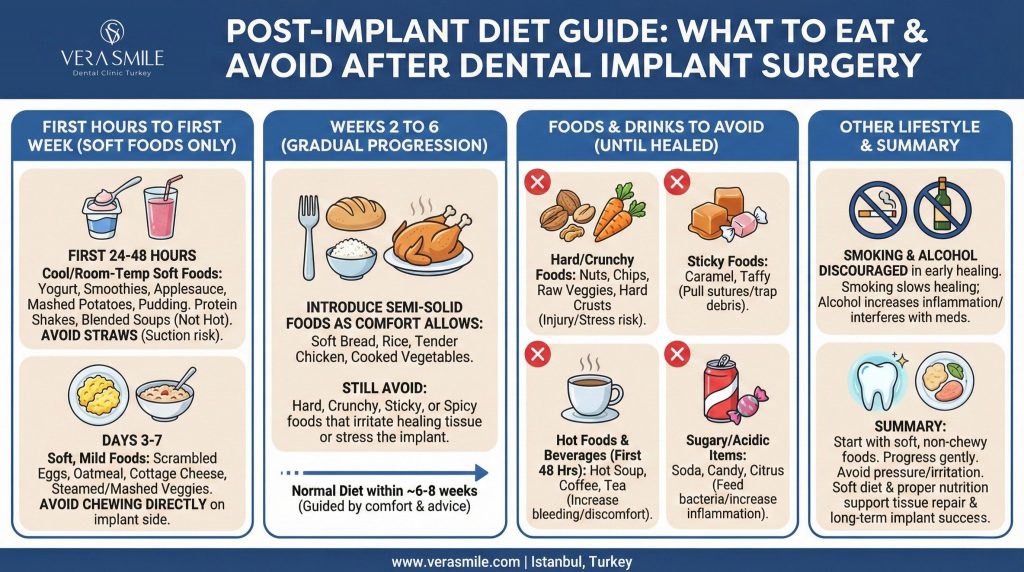
What Should You Eat in the First 24 Hours After Dental Implant Surgery?
The first day after dental implant surgery represents the most sensitive stage of recovery. Tissue sealing, blood clot formation, and early wound organization take place during this period. Food choices during the first 24 hours influence site stability, bleeding control, and the biological conditions required for proper healing.
- Surgical site protection: The first 24 hours focus on preserving blood clot stability and maintaining tissue alignment around the implant. Food intake during this phase influences bleeding control and early wound sealing. Smooth, low-resistance foods prevent disruption at the surgical area.
- Food texture and temperature control: Lukewarm, liquid, or puréed foods reduce mechanical stress and thermal irritation. Extreme temperatures interfere with tissue stability and delay early repair. Neutral textures support a stable healing environment.
- Nutrient priority during the first day: Protein availability supports cellular repair, while adequate hydration maintains circulation and oxygen delivery. Nutrient density matters more than portion size during this initial recovery stage.
Which Food Textures Support Blood Clot Stabilization After Implant Surgery?
During the blood clot stabilization phase, food texture determines whether the surgical site remains undisturbed. Puréd, smooth, and non-chewing foods protect the forming clot by eliminating pressure and friction near the implant area. These textures reduce movement within the wound and support early tissue sealing without mechanical interference.
Temperature neutrality plays a critical role in clot protection. Foods served at a lukewarm or room temperature preserve vascular balance and prevent clot breakdown. Extreme heat or cold disrupts local circulation and weakens clot structure, increasing the risk of delayed healing during the earliest recovery stage.
Which Foods Support Blood Clot Stability in the First 24 Hours?
During the first day after dental implant surgery, food selection focuses on protecting the blood clot and maintaining wound stability. Recommended foods combine soft texture, low acidity, and high nutrient value without requiring chewing or suction.
- Plain, Unsweetened Greek Yogurt: Provides high-quality protein in a smooth form that preserves clot integrity. Low acidity supports tissue balance and early healing.
- Blended Soups Served Lukewarm: Deliver hydration and micronutrients without mechanical pressure. Smooth consistency protects the surgical area from disruption.
- Protein Shakes Without Straws: Supply essential amino acids while avoiding suction forces that threaten clot stability. Slow, controlled intake supports early recovery.
- Mashed Avocado: Offers healthy fats and a soft texture that limits friction at the implant site. Nutrient density supports cellular repair without mechanical stress.
Which Foods Disrupt Early Healing After Dental Implant Surgery?
Certain foods and eating actions interfere with blood clot stability and tissue organization during the earliest healing stage. Avoiding these items protects the surgical site and preserves wound integrity.
- Hot Liquids: High temperatures increase local blood flow and disturb clot formation at the implant site. Heat weakens clot structure and raises bleeding risk during early recovery.
- Acidic Smoothies: Low pH beverages irritate healing tissue and elevate inflammatory response around the surgical area. Acid exposure disrupts surface stability and delays tissue sealing.
- Anything Requiring Suction: Suction forces created by straws or forceful sipping dislodge the blood clot and expose underlying tissue. Loss of clot protection interferes with proper wound closure and healing progress.
What Should You Eat During Days 2–7 After Dental Implant Placement?
During days two through seven, the recovery process shifts from clot protection to active tissue repair and early bone response. Swelling decreases, gum tissue gains strength, and the implant site begins to tolerate gentle function while remaining sensitive to pressure. Diet during this phase shapes healing efficiency, inflammatory balance, and implant stability.
Which Soft Foods Support Tissue Repair Without Pressure?
Soft foods during this phase provide nourishment while limiting chewing force and friction near the implant site.
- Scrambled eggs: Deliver complete protein in a soft texture that supports tissue repair and collagen formation without resistance.
- Soft fish: Provides high biological protein and natural omega-3 content with minimal chewing demand, supporting healing processes.
- Oatmeal with water or milk: Supplies low-resistance energy and fiber while maintaining a smooth consistency that protects the surgical area.
- Well-cooked vegetables: Offer vitamins and minerals in a softened form that reduces mechanical stress and supports cellular repair.
Which Anti-Inflammatory Foods Reduce Post-Surgical Swelling?
Controlling inflammation during this phase supports tissue organization and reduces discomfort around the implant.
- Omega-3 rich foods: Sources such as soft fish support inflammatory regulation and promote balanced healing response.
- Natural antioxidants: Foods rich in vitamins C and E reduce oxidative stress and support gum tissue recovery.
- Low-glycemic carbohydrates: Stable blood sugar levels reduce inflammatory signaling and support consistent healing without swelling spikes.
Why Do Processed Soft Foods Harm Dental Implant Healing?
Processed soft foods disrupt healing through metabolic stress rather than texture alone. Refined carbohydrates trigger insulin spikes, which increase systemic inflammation and interfere with tissue repair around the implant site. Elevated inflammatory activity weakens gum recovery and slows organized healing.
High sodium content contributes to fluid retention and localized swelling near the surgical area. Excess swelling increases tissue pressure, compromises circulation, and delays structural recovery around the implant.
Which Foods and Nutrients Support Bone Healing and Osseointegration After Dental Implants?
Bone healing after dental implant placement depends on nutrient availability, mineral regulation, and cellular coordination at the implant interface. Food choices during this stage influence bone density, structural strength, and the quality of osseointegration. A targeted diet supports biological integration rather than surface-level recovery.
- Complete proteins: Complete proteins supply essential amino acids required for collagen synthesis and osteoblast function. These proteins form the structural framework that anchors newly formed bone to the implant surface.
- Calcium and magnesium synergy: Calcium builds bone mass, while magnesium regulates calcium transport and incorporation into bone tissue. This interaction supports balanced mineralization and structural stability around the implant.
- Vitamin K2 for bone mineralization: Vitamin K2 directs calcium into bone tissue and supports proper mineral distribution. This mechanism strengthens bone architecture and improves implant fixation.
- Natural foods versus supplements: Whole foods deliver nutrients with cofactors that improve absorption efficiency and metabolic balance. Supplements support bone healing when dietary intake remains insufficient or deficiencies require clinical correction.
Which Foods Show Strong Clinical Links to Better Bone Integration After Dental Implants?
Certain foods demonstrate a direct relationship with bone formation quality and implant integration strength through their nutrient composition and bioavailability.
- Eggs: Eggs provide complete protein, vitamin D, and vitamin K2, which support collagen synthesis and mineral regulation within developing bone tissue. These nutrients strengthen the bone–implant interface.
- Bone broth: Bone broth supplies collagen, amino acids, and bioavailable minerals that support connective tissue structure and bone matrix formation around the implant site.
- Dairy versus non-dairy calcium sources: Dairy sources deliver highly absorbable calcium paired with proteins that support bone density. Non-dairy calcium sources provide mineral support when combined with adequate vitamin D and magnesium to ensure effective utilization.
Which Foods and Drinks Should You Avoid After Dental Implant Surgery?
Certain foods and drinks interfere with tissue repair, increase inflammation, and place mechanical stress on the implant site. Avoidance during recovery protects blood clot integrity, soft tissue healing, and early implant stability. Risk-focused dietary control reduces complications and supports predictable healing outcomes.
Foods that require forceful chewing, create suction, or irritate healing tissue disrupt recovery progress. Beverages that alter circulation or oral pH increase swelling and delay tissue organization. Eliminating these risks during the healing phase supports stable integration and long-term implant success.
Why Do Alcohol and Carbonated Drinks Delay Implant Healing?
Alcohol and carbonated beverages interfere with vascular control and tissue stability around the implant site. Alcohol causes vasodilation, which increases bleeding and swelling near the surgical area and disrupts blood clot integrity during healing. Elevated blood flow interferes with organized wound formation and delays tissue stabilization. Carbonated drinks disrupt the oral pH balance, creating an acidic environment that irritates healing tissue and compromises surface stability around the implant. Acid exposure increases tissue stress and slows the recovery process during critical healing stages.
How Long Should Dietary Restrictions Last After Dental Implant Surgery?
Dietary restrictions follow a staged timeline based on tissue healing and implant stability. During the short-term avoidance phase, hard, sticky, acidic, and carbonated foods require strict exclusion until soft tissue closure stabilizes and early wound organization completes. This period focuses on protecting the surgical site from mechanical stress and irritation. During the extended avoidance phase, alcohol, seeds, and high-resistance foods remain restricted until bone integration reaches a stable stage and clinical evaluation confirms implant security and functional readiness.
When Can You Return to a Normal Diet After Dental Implants?
Returning to a normal diet depends on biological healing rather than the number of days after surgery. Diet progression follows the condition of soft tissue attachment, bone response, and implant stability rather than comfort or appetite. Each healing stage determines how much functional load the implant tolerates without disruption.
As healing advances, the implant transitions from initial mechanical placement to biological fixation within the jawbone. Advancing food texture before tissue and bone reach defined stability thresholds increases mechanical stress, disrupts organized bone formation, and weakens the implant–bone interface. A structured, milestone-based dietary approach protects osseointegration, preserves implant positioning, and supports long-term functional success.
Which Healing Milestones Determine Diet Progression?
Diet progression after dental implant surgery follows biological readiness rather than a fixed timeline. Each healing milestone reflects a specific level of tissue strength and implant stability, which determines how much chewing force the implant site tolerates without disruption.
- Soft tissue closure: Gum tissue forms a protective seal around the implant and isolates the surgical site from bacteria, food particles, and mechanical irritation. As this seal strengthens, sensitivity decreases and surface stability improves. This milestone supports the transition from liquid and puréed foods to soft, low-resistance textures that require minimal chewing.
- Early bone stability: At this stage, bone tissue begins anchoring to the implant surface and resisting micromovement. Structural support improves beneath the gum line, reducing the risk of implant displacement during controlled function. Diet expansion during this phase focuses on soft solids that distribute pressure evenly and avoid concentrated bite force.
- Full osseointegration: Full osseointegration occurs when bone establishes continuous structural contact with the implant across its entire surface. Load-bearing capacity reaches functional levels, and the implant withstands normal chewing forces without instability. Completion of this milestone supports a return to unrestricted dietary textures under professional confirmation.
Which Signs Show Your Implant Is Ready for Firmer Foods?
Diet progression toward firmer foods depends on clear physical responses and clinical confirmation rather than subjective comfort alone. These indicators reflect tissue strength, inflammatory control, and implant stability under functional load.
- Absence of pain: A pain-free response during light chewing and daily oral function signals stabilized soft tissue and controlled inflammatory activity. Lack of discomfort indicates that healing structures tolerate functional movement without irritation or stress at the implant interface.
- Reduced inflammation: Decreased swelling, minimal redness, and normalized gum contour reflect organized tissue repair and improved vascular balance. Reduced inflammation indicates that the surgical site maintains structural integrity under mild mechanical demand.
- Clinical check indicators: Professional assessment verifies implant stability through physical examination and imaging where needed. Evaluation of gum attachment, bone response, and implant positioning confirms readiness for increased chewing force and dietary progression.