
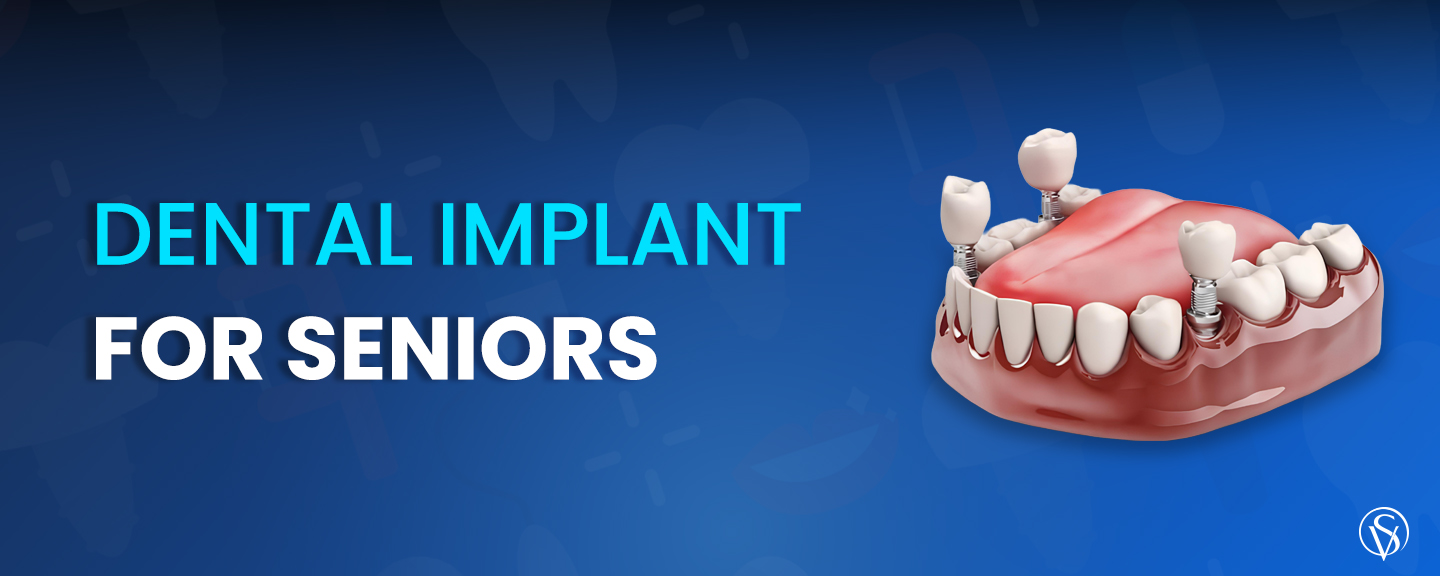
Losing teeth as we age can affect much more than appearance. It makes eating difficult, change how we speak, and even cause the face to look sunken over time. Many seniors think dental implants may be too risky or complicated because of age, bone loss, or health conditions. In reality, dental implants for seniors are planned specifically around these concerns.
Clinical eligibility for dental implants depends on bone quality, gum health, and medical stability rather than chronological age. Advances in implant surface technology, imaging, and surgical planning allow adults over 60 to receive fixed tooth replacement solutions that restore chewing efficiency and protect long-term oral structure. In our clinical Vera Smile’s data of 5 years drawn from senior implant cases, approximately 17% of dental implant patients are over 60, and among this group, 14% present with severe bone loss, making advanced solutions such as zygomatic implants more suitable. At the same time, 32% of senior patients qualify for Straumann implants due to their biocompatible materials and strong bone response, while 24% benefit from NDI implants, preferred by surgeons for their high primary stability and performance in softer bone.
With proper planning, dental implants help seniors eat comfortably, speak clearly, and protect their jawbone long term.
What Are Dental Implants for Seniors?
Dental implants for seniors are fixed tooth replacements chosen according to bone strength and overall health. As we age, bone loss can occur in the jaw, especially if teeth have been missing for many years. This means implant type and placement must be adapted to the existing bone.
For this reason, seniors are treated with All-on-X full-mouth implant systems or zygomatic implants. These options are selected based on bone condition, not age. They allow stable teeth even when jawbone volume is limited.
Dental implants act like artificial tooth roots. They are placed into the jawbone and made from materials such as titanium or zirconia, which are safe for the body. Once healed, they support crowns, bridges, or full-arch teeth that stay fixed in place and do not move like dentures.
How Do Dental Implants Work Inside the Jawbone for Seniors?
Dental implants bond with the jawbone through a natural healing process. Over time, the bone grows around the implant and holds it firmly in place. In seniors, this process needs extra care because the bone may be softer or thinner.
Special implant designs help solve this issue. NDI implants, for example, are often used in senior patients because they hold well even in soft bone. This strong initial stability is important for long-term success, especially when bone quality is reduced.
When the implant bonds properly with the bone, it can safely handle chewing forces and daily use. Healing depends on bone health and circulation, not age. Seniors with stable health usually heal just as predictably as younger patients.
Why Are Dental Implants a Good Option for Seniors Over 60?
Dental implants are commonly used in older adults because they solve problems that dentures cannot. Fixed teeth make eating easier, improve speech, and help seniors enjoy a normal diet again.
Unlike removable dentures, implants help protect the jawbone. Bone loss is more common with age, which is why solutions like zygomatic implants and NDI systems are frequently chosen for seniors. These implants work with the existing bone instead of requiring complex additional surgery.
This personalized approach is why dental implants remain a reliable and long-lasting option for people over 60.
Can Seniors With Bone Loss Receive Dental Implants?
Yes. Dental implants remain a viable and predictable solution for seniors experiencing bone loss when implant design and placement align with existing anatomy. Treatment planning focuses on bone density, width, and anatomical support zones rather than total bone volume alone.
Among senior implant patients, 34% experience severe bone loss, making graft-free solutions such as zygomatic implants or angled implant systems more appropriate. Additionally, 24% of cases favor NDI implants due to their ability to achieve strong fixation in soft bone, while Straumann implants are suitable for 32% of seniors because of their advanced surface technology and biocompatibility.
Through detailed imaging and load-focused planning, seniors with bone loss receive fixed restorations that support chewing, facial structure, and long-term oral stability.
Are Dental Implants Possible Without Bone Grafting in Seniors?
Yes. Several implant approaches allow fixed tooth replacement without bone grafting by using existing bone structures strategically:
- Zygomatic implants: Long implants anchored in the cheekbone, ideal for seniors with advanced upper jaw bone loss.
- Short implants: Reduced-length implants used where vertical bone height is limited.
- Angled implant systems (All-on-4 / All-on-X): Tilted implants engage denser bone zones to support full-arch restorations without grafting.
These techniques rely on precise diagnostic planning and anatomical evaluation to achieve stability while avoiding additional surgical procedures.
Why Are Dental Implants Better for Seniors Than Dentures or Bridges?
Dental implants replace the tooth root itself, not only the visible crown. This allows chewing forces to transfer directly into the jawbone, preserving bone density and maintaining facial structure.
Dentures and bridges rest on the gums or depend on adjacent teeth for support, which accelerates bone loss and places stress on surrounding structures. For seniors, implants protect remaining teeth, prevent jaw shrinkage, and provide consistent bite strength, contributing to better nutrition and speech clarity.
What Makes Dental Implants Safe for Seniors?
Dental implants present a strong safety profile for seniors when guided by medical diagnostics and controlled treatment protocols. Safety depends on bone metabolism, circulation, and systemic health rather than age.
Modern implant systems feature advanced thread geometry and sealing designs that limit bacterial penetration beneath the implant surface, protecting bone health. Straumann and NDI implants are particularly valued for these design features. Straumann’s own clinical outcomes demonstrate a 98.8% success rate, consistent with Straumann’s own long-term research, showing minimal complications related to bacterial infiltration.
Before implant placement, senior patients undergo blood testing to confirm suitability. A CTX value below 150 pg/mL indicates stable bone turnover and low risk of active bone loss, supporting safe implant placement.
Do Medical Factors Matter More than Age for Dental Implants?
Yes. Medical stability outweighs age in implant decision-making, especially for seniors. Comprehensive blood testing determines whether implant surgery is appropriate.
Required evaluations include:
- Blood glucose levels
- Complete blood count (CBC)
- Vitamin D levels
- Coagulation tests (INR, PT, aPTT)
- CRP (C-reactive protein)
- Kidney function (creatinine, urea)
- Liver enzymes (AST, ALT)
These values confirm healing capacity, infection control, and surgical safety. Seniors with controlled systemic conditions regularly qualify for implant treatment.
Are Dental Implant Success Rates Comparable in Seniors and Younger Adults?
Yes. Success rates in seniors match or exceed those of younger patients. Older adults demonstrate higher treatment compliance, better oral hygiene routines, and consistent follow-up attendance.
Lower exposure to risk factors such as smoking and irregular care further supports long-term implant stability. With proper planning, seniors achieve predictable, durable outcomes.
When Should Dental Implants Be Questioned for Seniors?
Implant treatment requires caution when specific medical or biological factors appear in diagnostic testing:
- Uncontrolled systemic disease affecting circulation or immune response
- Active periodontal infection
- Poorly managed diabetes or inflammatory markers (elevated CRP)
- CTX values indicating active bone resorption
- Severe coagulation abnormalities
These conditions influence healing reliability rather than age itself and must be addressed before implant planning.
Which Types of Dental Implants Are Best Suited for Seniors?
Implant selection for older adults focuses on stability, hygiene accessibility, and long-term maintenance. Full mouth dental implants for seniors are chosen based on bone condition and functional needs:
- All-on-X full-arch implant systems: Suitable for seniors needing complete restoration with adequate bone support; alternatives include zygomatic implants if bone is insufficient.
- Implant-supported overdentures: Recommended when fixed solutions are not possible; not suitable for patients seeking maximum stability.
- Zygomatic implants: Ideal for severe upper jaw bone loss; alternatives include grafting-based full-arch systems when anatomy allows.
Preferred brands include Straumann, NDI, Hiossen, and Neodent are known for performance in soft bone and senior patients.
What Is the Cost of Dental Implants for Seniors?
Dental implant costs reflect diagnostic complexity, bone condition, and surgical planning rather than age alone.
| Treatment Type | What the Cost Covers | Average Cost (Per Tooth / Arch) |
| Single Dental Implant | Implant post, abutment, standard crown | €1,000 – €3,000 |
| Implant With Bone Grafting | Implant surgery + graft material | €1,400 – €4,200 |
| Implant With Sinus Lift | Implant surgery + sinus augmentation | €1,800 – €4,800 |
| Two Implants With Bridge | Two implants supporting three teeth | €2,600 – €6,500 |
| Full Arch Implants (All-on-4) | Four implants + fixed prosthesis | €7,500 – €15,000 |
| Full Arch Implants (All-on-6) | Six implants + fixed prosthesis | €9,000 – €18,000 |
| Implant-Supported Overdenture | Two to four implants + removable denture | €4,500 – €9,500 |
How Is Recovery and Daily Life After Full Mouth Implants for Seniors?
Recovery after full mouth implants focuses on oral hygiene, functional adaptation, and tissue stability. Fixed restorations simplify daily care, improve speech clarity, and restore comfortable eating.
Implant-supported teeth maintain jawbone volume, preventing facial collapse and supporting long-term gum health. Mild postoperative discomfort resolves with standard pain management protocols. Once healing stabilizes, seniors experience consistent chewing ability, improved nutrition, and confident daily function without prosthetic movement.
Why Getting Dental Implants at Vera Clinic Makes Sense
Vera Clinic is a trusted dental clinic in Turkey offering implant solutions for different needs and budgets while working with globally respected brands.
Our surgeons have extensive experience with zygomatic implants, a treatment not every clinic can safely provide. We regularly use Straumann and NDI implants, which are especially suitable for seniors due to their performance in soft bone.
All treatments are supported by proven clinical outcomes. You can explore real patient results through our case studies.