
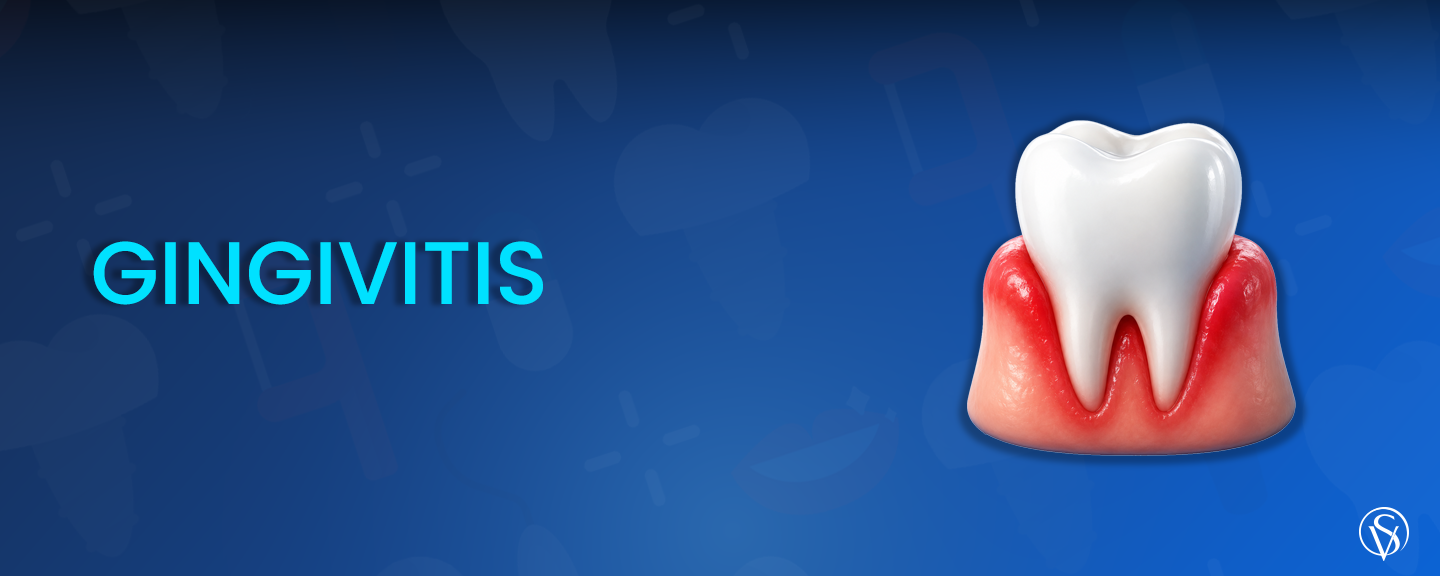
Gingivitis is the early, reversible stage of gum disease, caused by plaque that accumulates along the gumline and inflames the surrounding gum tissue. The most common signs are red, swollen gums that bleed during brushing or flossing. Because no bone or connective tissue has been lost at this stage, gingivitis can be fully resolved through professional cleaning and consistent home care. If plaque is not removed, the inflammation can advance to periodontitis, a more serious condition that causes permanent damage to the structures holding the teeth in place.
Treatment centres on removing plaque and hardened tartar, correcting brushing and flossing technique, and controlling contributing factors such as smoking or dry mouth. Prevention relies on daily plaque control and regular dental visits. Care begins with a professional cleaning and a review of home hygiene habits, and the cost depends on the extent of tartar buildup and the number of sessions needed.
Key Points
- Gingivitis is reversible: It is the early stage of gum disease caused by plaque along the gumline, and no bone loss has occurred yet.
- Bleeding is the first sign: Red, swollen gums that bleed during brushing or flossing are the most common symptom, and they are often painless.
- It can progress if untreated: Left unmanaged, gingivitis can advance to periodontitis, which causes permanent bone and connective tissue loss.
- Cleaning resolves it: Professional scaling combined with corrected home care heals the gums within one to two weeks once plaque and tartar are removed.
- Prevention is daily: Brushing twice a day, flossing once a day, and a professional cleaning every six months keep gingivitis from developing.
What Are the Signs and Symptoms of Gingivitis?
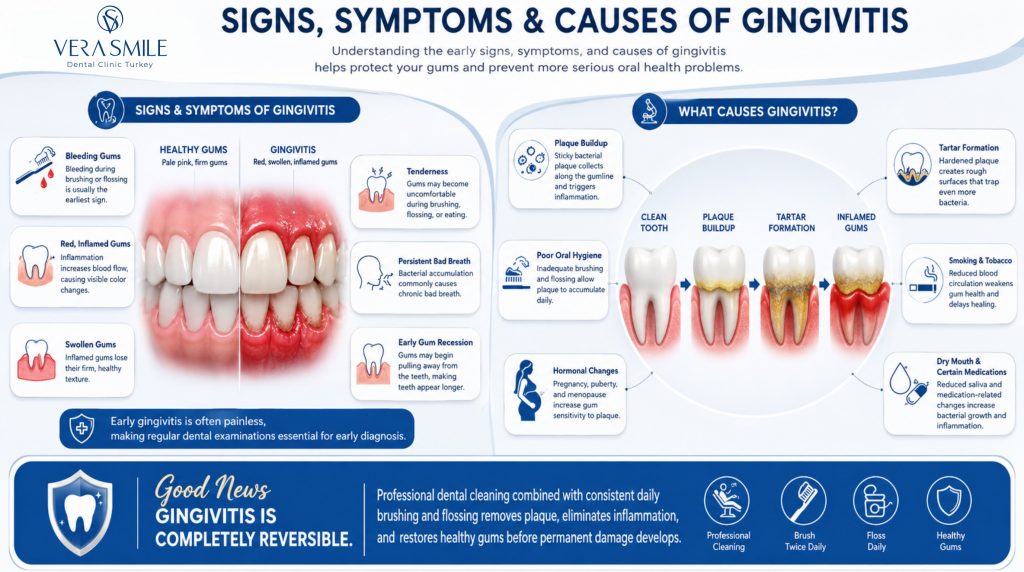
The signs of gingivitis are red, swollen gums that bleed easily, often accompanied by bad breath and tenderness along the gumline. These symptoms are often painless in the early stage, which is why gingivitis is frequently missed until a dental check-up. The common signs point to gum inflammation:
- Bleeding gums: Gums that bleed during brushing or flossing are the earliest and most common sign of gingivitis.
- Redness: Healthy gums are pale pink, while inflamed gums turn dark red or purple as blood flow to the area increases.
- Swelling: Inflamed gum tissue becomes puffy and loses its firm, stippled surface.
- Tenderness: The gums may feel sore or sensitive, particularly when pressure is applied during eating or cleaning.
- Bad breath: Persistent halitosis develops from bacteria and trapped food along the inflamed gumline.
- Early gum recession: The gums may begin to pull away slightly from the teeth, making the teeth appear longer.
Any combination of these signs, especially bleeding that continues for more than a week, is a reason to arrange a dental examination.
What Causes Gingivitis?
Gingivitis is caused by the buildup of dental plaque, a sticky film of bacteria that forms on the teeth and irritates the gum tissue. When plaque is not removed every day, it hardens into tartar within about 24 to 72 hours, and tartar can only be removed by a dentist. The main causes and contributing factors are:
- Plaque accumulation: Bacterial plaque left along the gumline is the direct cause of gum inflammation in almost all cases.
- Tartar (calculus): Hardened plaque creates a rough surface that traps more bacteria and keeps the gums inflamed.
- Inadequate oral hygiene: Infrequent or incorrect brushing and flossing allows plaque to build undisturbed.
- Smoking and tobacco use: Tobacco reduces blood flow to the gums, masks bleeding, and slows healing.
- Hormonal changes: Pregnancy, puberty, and menopause increase gum sensitivity to plaque.
- Dry mouth: Reduced saliva flow limits the mouth’s natural ability to wash away bacteria and food debris.
- Certain medications: Some drugs cause gum overgrowth or reduce saliva, both of which raise the risk of inflammation.
Removing the plaque source addresses the cause directly, which is why gingivitis resolves once the gums are cleaned and kept clean.
Who Is Most at Risk of Developing Gingivitis?
People with poorly controlled diabetes, pregnant women, smokers, and older adults face the highest risk of gingivitis. Reduced healing capacity, hormonal shifts, and long-term plaque exposure all raise susceptibility in these groups. The specific profiles carrying an elevated risk include:
- Diabetic Patients: High blood sugar levels weaken the body’s natural immune response to bacterial infection and significantly slow down gum tissue healing.
- Pregnant Women: Intense hormonal fluctuations increase blood flow to the oral tissues, triggering “pregnancy gingivitis,” which leaves the gums swollen, tender, and prone to bleeding easily.
- People Who Smoke: Chronic tobacco use stands as one of the strongest risk factors for periodontal disease; it actively impairs blood circulation, which dangerously masks early warning signs like bleeding gums.
- Older Adults: A lifetime of cumulative plaque exposure, often combined with age-related systemic changes or reduced physical dexterity for thorough cleaning, increases overall vulnerability.
- Individuals Using Certain Medications: Patients taking prescription drugs that cause dry mouth (reducing protective saliva) or trigger gingival overgrowth find bacterial plaque much harder to control mechanically.
Recognizing these elevated risk profiles allows individuals to take a more tailored and vigilant approach to their daily oral care. If you fall into any of these vulnerable categories, scheduling regular dental checkups and maintaining meticulous hygiene is essential to protect your gums. Prioritizing proactive preventive care ensures that early inflammation is intercepted before it can transition into more severe, irreversible periodontal disease.
What Is the Difference Between Gingivitis and Periodontitis?
The key difference is that gingivitis is reversible while periodontitis is not. Gingivitis affects only the gum tissue and can be fully healed, whereas periodontitis involves the loss of bone and connective tissue that anchor the teeth, which cannot be regrown.
| Aspect | Gingivitis | Periodontitis |
| Reversibility | Fully reversible with treatment | Irreversible; damage is permanent |
| Tissue affected | Gum tissue only | Gum, bone, and connective tissue |
| Bone loss | None | Present and progressive |
| Main symptoms | Redness, swelling, bleeding | Gum recession, loose teeth, deep pockets, pus |
| Probing depth | Under 3 mm | 4 mm and above |
| Treatment approach | Professional cleaning and improved hygiene | Scaling and root planing, and sometimes surgery |
Untreated gingivitis is the most common pathway to permanent gum damage. When inflammation reaches the supporting bone, the condition is classified as periodontitis and requires more intensive treatment, so resolving gingivitis early prevents this transition.
How Is Gingivitis Treated?
Gingivitis is treated by removing plaque and tartar through professional cleaning, then maintaining the result with corrected daily oral hygiene. Because no permanent damage has occurred, the gums heal once the source of inflammation is removed. Treatment involves:
- Professional cleaning (scaling): A dentist or hygienist removes plaque and hardened tartar from above and below the gumline.
- Home hygiene correction: Brushing and flossing technique is reviewed and adjusted to keep plaque from re-forming.
- Antimicrobial rinse: A chlorhexidine mouth rinse may be prescribed for a short period to reduce bacteria during healing.
- Managing contributing factors: Smoking cessation, blood sugar control, and treatment of dry mouth support faster recovery.
- Follow-up review: A re-examination confirms that the inflammation has resolved and that home care is effective.
A structured gingivitis treatment plan is matched to the amount of tartar present and the patient’s home care habits, which keeps the result stable after the initial cleaning.
How Much Does Gingivitis Treatment Cost?
Gingivitis treatment cost depends on the number of cleaning sessions and the extent of tartar buildup. A single professional cleaning is the most common treatment and sits at the lower end of dental pricing.
| Treatment | What It Includes | Price Range |
| Standard dental cleaning | Scaling and polishing in one session | €80 – €150 (approx. $80 – $160) |
| Deep cleaning across sessions | Scaling over multiple visits for heavy tartar | €150 – €400 (approx. $250 – $500) |
| Post-treatment review | Re-examination to confirm the gums have healed | Generally Free (If Included: €30 – €60) |
The final cost is confirmed after the initial examination, once the dentist has assessed how much tartar is present and how many sessions the case requires.
How to Prevent Gingivitis
Gingivitis is prevented by removing plaque every day and keeping regular dental appointments. Consistent brushing and flossing stop plaque from hardening into tartar, which is the main driver of gum inflammation. Following these steps to keep the gums healthy:
- Brush twice a day for two minutes with a soft-bristled toothbrush, angled toward the gumline.
- Floss once a day to remove plaque between the teeth that a brush cannot reach.
- Use an antibacterial or fluoride mouth rinse to reduce bacterial load.
- Schedule a professional cleaning every six months, or more often if advised by a dentist.
- Stop smoking, since tobacco both raises risk and hides the early signs of gum disease.
Consistent daily oral care is essential for long-term periodontal health. However, it must be combined with regular professional dental intervention to remove tartar that brushing alone cannot displace. Committing to these preventative measures today not only safeguards your natural smile but also ensures that mild, reversible inflammation never gets the chance to advance into chronic periodontal disease.
How Is Gingivitis Diagnosed at the Dentist?
Gingivitis is diagnosed through a visual dental examination combined with periodontal probing, which measures the depth of the space between the gum and the tooth. A probing depth under 3 millimetres with bleeding on probing points to gingivitis rather than periodontitis.
During the examination, the dentist checks the gums for redness, swelling, and how readily they bleed when the probe is applied. X-rays may be taken to confirm that no bone loss has occurred, since the absence of bone loss is what separates gingivitis from the later stage of gum disease. This distinction determines whether a simple cleaning is sufficient or whether deeper treatment is required.
When Should You See a Dentist for Gingivitis?
Understanding when to transition from standard at-home oral hygiene routines to professional clinical evaluation is vital for halting the silent progression of periodontal inflammation. Many individuals mistakenly dismiss early gum irritation as a temporary inconvenience, unaware that subgingival plaque accumulation continuously undermines the tissue long before severe pain sets in. Intercepting these subtle changes early ensures that a reversible condition does not evolve into a complex structural issue.
- Persistent Gingival Bleeding: Spontaneous bleeding during brushing, flossing, or consuming hard foods that continues for more than a consecutive week serves as an unambiguous indicator of an active tissue infection requiring immediate intervention.
- Chronic Edema and Erythema: Gums that remain consistently swollen, puffy, or deep red fail to shield the underlying structures properly and signal that your immune system is actively fighting off deep-seated bacterial toxins.
- Unyielding Halitosis: Persistent bad breath or a lingering unpleasant taste in the mouth that defies regular brushing points to the presence of volatile sulfur compounds produced by colonies of destructive bacteria nesting beneath the gumline.
- Gingival Recession: The visual pulling away of the gum tissue from the tooth structure creates deep periodontal pockets, exposing vulnerable root surfaces to thermal sensitivity and creating a haven for plaque.
- Deep Structural Complications: Prolonged neglect allows the inflammation to target the periodontal ligament, which can cause painful localized abscesses, chronic throbbing discomfort, and unexpected tooth mobility.
Seeking timely professional care allows a dental practitioner to perform thorough scaling and root planing to completely clear out the infection while the tissue can still fully recover. Waiting until severe pain or structural loosening develops often shifts the required treatment plan from a straightforward, non-invasive cleaning to complex surgical periodontal interventions and permanent bone loss management.
FAQ
Gingivitis rarely resolves on its own, because the plaque and tartar causing it remain on the teeth until they are cleaned away. Improved brushing and flossing can reverse mild cases, but hardened tartar requires professional removal.
Gingivitis itself is not contagious, but the bacteria that contribute to it can be passed between people through saliva, for example by sharing utensils or through kissing. Developing gingivitis still depends on each person’s own oral hygiene and risk factors.
Yes, gingivitis can be present without bleeding, particularly in smokers, whose reduced gum blood flow masks the bleeding response. Redness, swelling, and bad breath may be the only visible signs in these cases.
No, gingivitis does not always progress to periodontitis, and it can be fully reversed with treatment. Progression happens only when the inflammation is left untreated long enough to reach the bone and connective tissue.
Mouthwash alone cannot cure gingivitis, because it does not remove the plaque and tartar attached to the teeth. An antimicrobial rinse supports treatment but works only alongside professional cleaning and daily brushing and flossing.