
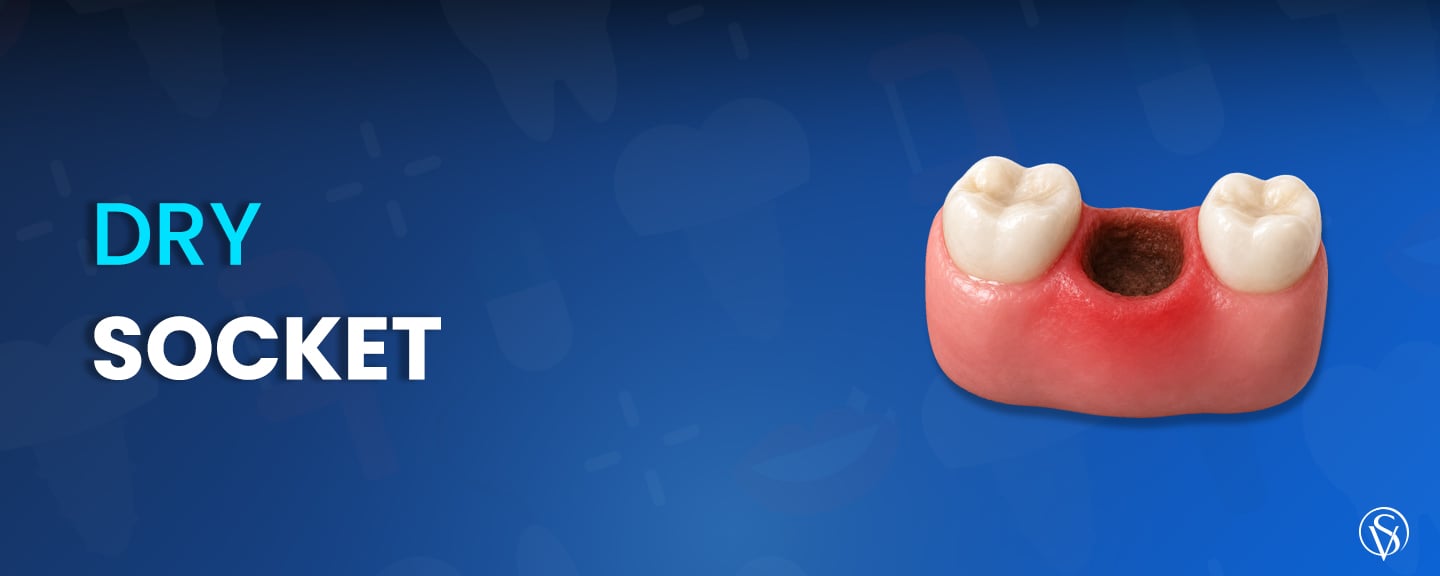
Dry socket is a painful complication that develops when the blood clot inside a tooth extraction site is lost or breaks down before the wound heals, leaving bone and nerve endings exposed. Dentists call this condition alveolar osteitis. Pain begins 2 to 4 days after the extraction, not on the day of surgery, and it most often follows removal of a lower wisdom tooth. The clearest signs are a throbbing pain that spreads toward the ear and jaw, a socket that looks empty, a bad taste, and bad breath.
Dry socket affects roughly 1 to 5% of routine extractions and up to 30% of impacted lower wisdom teeth. It is not an infection, and it responds quickly to treatment, where the dentist cleans the socket and places a medicated dressing that eases pain within about an hour. Most cases settle within 7 to 10 days, and the condition is largely preventable. A tooth extraction carries a lower risk when patients avoid smoking, straws, and vigorous rinsing during early healing.
Key Points
- Dry socket, known clinically as alveolar osteitis, is the loss or breakdown of the blood clot at a tooth extraction site, which leaves bone and nerve endings exposed.
- The defining symptom is a throbbing pain that begins 2 to 4 days after the extraction and spreads toward the ear and jaw.
- Dry socket affects about 1 to 5% of routine extractions and up to 30% of impacted lower wisdom teeth.
- Smoking more than triples the risk, and oral contraceptive use roughly doubles it.
- Dry socket is not an infection, and a dentist treats it with socket irrigation and a eugenol medicated dressing that relieves pain within 30 to 60 minutes.
- Most cases heal within 7 to 10 days, whether or not they are treated.
- Avoiding smoking, straws, and vigorous rinsing for the first 72 hours prevents most cases.
What Are the Symptoms of Dry Socket?
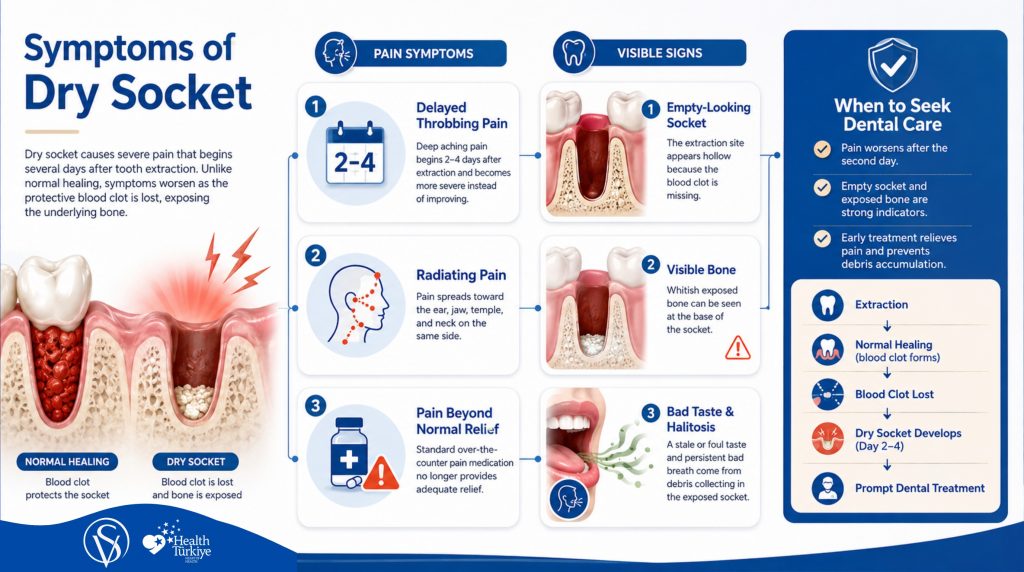
The main symptom of dry socket is a severe, throbbing pain that starts two to four days after an extraction and radiates toward the ear, temple, or neck on the same side. Unlike normal post-extraction soreness, which eases day by day, this pain intensifies after the clot is lost. Patients also notice a socket that looks empty and a persistent unpleasant taste. Recognising these signs early helps patients seek treatment before the pain peaks. Dry socket shows the following signs:
- Delayed Throbbing Pain: A deep, aching pain appears 2 to 4 days after the extraction and grows stronger instead of fading.
- Radiating Pain: The pain travels from the socket toward the ear, jaw, and temple on the same side of the face.
- Empty-Looking Socket: The site appears hollow because the protective blood clot is missing.
- Visible Bone: Whitish exposed bone can be seen at the base of the socket.
- Bad Taste: A stale or foul taste develops in the mouth and does not clear with brushing.
- Halitosis: Persistent bad breath comes from the exposed, debris-filled socket.
- Pain Beyond Normal Relief: Standard over-the-counter painkillers no longer control the discomfort.
The presence of exposed bone and pain that worsens after the second day separates dry socket from ordinary healing. A single symptom does not confirm the diagnosis, but the combination of an empty socket and rising pain is a strong indicator. Prompt attention shortens the painful phase and prevents debris from collecting in the wound.
Clinical Note: At Vera Smile, we treat pain that increases from the third day onward as dry socket until examination proves otherwise, because early dressing placement is the fastest route to relief.
Warning: Fever, spreading facial swelling, or discharge of pus point to infection rather than dry socket alone and need same-day dental care.
What Does a Dry Socket Look Like Compared to Normal Healing?
A healing socket holds a dark blood clot and grows less painful each day, while a dry socket looks empty and becomes more painful after day two. Knowing what each stage should look like helps patients judge whether recovery is on track. A normal socket also stops tasting and smelling unpleasant once the early oozing settles. The clearest differences between normal healing and dry socket are these:
| Feature | Normal Healing | Dry Socket |
| Socket appearance | Dark blood clot fills the socket | Empty socket, clot absent |
| Bone visibility | Bone covered by clot and tissue | Whitish bone visible at the base |
| Pain over time | Eases from day one onward | Worsens from day 2 to 4 |
| Taste and breath | Normal after early oozing stops | Foul taste and persistent bad breath |
| Response to painkillers | Controlled by over-the-counter relief | Poorly controlled by standard relief |
These differences are guides, not a formal diagnosis, and only a dentist can confirm dry socket on examination. A socket that still holds a firm clot and hurts a little less each day is almost always healing normally. When the picture matches the right-hand column, a dental review is the safe next step.
What Causes Dry Socket?
Dry socket is caused by the early loss or breakdown of the blood clot that should protect the extraction site while it heals. When this clot dislodges or dissolves, bone and nerve endings sit exposed to air, food, and fluids, which produces the sharp pain. The exact trigger differs between patients, and identifying it guides both treatment and prevention. The protective clot is lost in these ways:
- Clot Dislodgement: Suction from straws, spitting, or forceful rinsing pulls the clot out of the socket during early healing.
- Fibrinolysis: Enzymes break the clot down prematurely, a process linked to bacteria and to compounds in tobacco.
- Smoking: Nicotine narrows blood vessels and cuts the blood supply the socket needs to hold a stable clot.
- Bacterial Contamination: A pre-existing infection such as pericoronitis around a wisdom tooth raises the chance of clot breakdown.
- Traumatic or Difficult Extraction: Surgical removal of impacted teeth disturbs more bone and tissue, which reduces clot stability.
No single cause explains every case, and several of these factors often act together. The common thread is that the socket loses its clot before new tissue has formed underneath. Understanding this is what makes most of the prevention steps that follow effective.
Tip for patients: The first 24 hours decide the outcome, so protecting the fresh clot from suction and heat matters more than anything you do later in the week.
Who Is Most at Risk of Dry Socket?
Some patients carry a clearly higher risk of dry socket because of habits, hormones, or the type of tooth removed. Knowing these factors before an extraction allows the dentist to add preventive measures. The strongest risk factors are well documented in dental research. The patients most likely to develop dry socket are these:
- Smokers: Tobacco use more than triples the risk, with dry socket reported in about 13% of smokers against roughly 4% of non-smokers.
- Lower Wisdom Tooth Patients: Impacted wisdom teeth removal in the lower jaw carries the highest rate of any extraction, up to around 30%.
- People Using Oral Contraceptives: Oestrogen raises clot breakdown and roughly doubles the risk in women who take the pill.
- Patients With Poor Aftercare: Skipping post-operative instructions in the first days sharply increases clot loss.
- Previous Dry Socket: A history of the condition makes recurrence at future extractions more likely.
- Poor Oral Hygiene: Bacteria near the wound speed up breakdown of the clot.
A patient can carry more than one of these factors at once, which multiplies the risk. Many of them can be changed before surgery, and smoking is the clearest example. Flagging these points at the consultation lets the clinical team plan ahead (Kuśnierek et al., 2022, Smoking as a Risk Factor for Dry Socket: A Systematic Review, Dentistry Journal; Xu et al., 2015, Effect of Oral Contraceptive Use on the Incidence of Dry Socket Following Impacted Mandibular Third Molar Extraction: A Meta-Analysis, International Journal of Oral and Maxillofacial Surgery).
How Long Does Dry Socket Last?
Dry socket is a self-limiting condition that settles within 7 to 10 days, whether or not it is treated. Treatment does not shorten the biological healing time, but it controls the pain almost immediately and keeps the wound clean while new tissue forms. Without any care, the ache can persist for 1 to 2 weeks as the socket heals slowly from its edges. Pain that lasts beyond ten days, or that returns after improving, suggests a separate problem such as infection and needs re-examination. The healing clock effectively restarts once a fresh clot and new granulation tissue fill the exposed bone (Blum, 2002, Contemporary Views on Dry Socket (Alveolar Osteitis), International Journal of Oral and Maxillofacial Surgery).
How Is Dry Socket Treated?
Dry socket is treated at a dental appointment, where the dentist cleans the socket and places a medicated dressing that relieves pain within about 30 to 60 minutes. The goal is to cover the exposed bone, calm the pain, and protect the site while healing continues underneath. Treatment is straightforward, and most clinics see affected patients on the same day. Standard treatment involves these steps:
- Socket Irrigation: The dentist flushes the socket with saline or a chlorhexidine solution to remove food debris and bacteria.
- Gentle Curettage: Loose, dead tissue is cleared so a fresh blood clot can form.
- Medicated Dressing: A paste or gauze containing eugenol (clove oil), often combined with zinc oxide or iodoform, is packed into the socket to numb the exposed bone.
- Dressing Changes: The dressing is replaced every 1 to 3 days until new tissue begins to cover the bone.
- Pain Management: Over-the-counter pain relief such as ibuprofen or paracetamol supports the local dressing.
- Antibiotics When Indicated: Antibiotics are reserved for confirmed infection and are not part of routine dry socket care.
The medicated dressing does the most work by shielding the nerve endings and easing pain fast. Follow-up visits keep the socket clean and let the dentist confirm that healthy tissue is forming. Care ends once the bone is covered and the pain has resolved (Daly et al., 2022, Local Interventions for the Management of Alveolar Osteitis (Dry Socket), Cochrane Database of Systematic Reviews).
Clinical Note: We favour a eugenol-based dressing with staged changes rather than antibiotics, because dry socket is a wound-healing problem, not an infection, and unnecessary antibiotics add no benefit.
How Can You Relieve Dry Socket Pain at Home?
Home measures can ease dry socket pain between dental visits, but they do not replace professional treatment. Gentle care keeps the socket clean and takes the edge off the ache while the dressing does its work. These measures are safe for short-term relief. The steps that help most between visits are these:
- Saltwater Rinse: Rinse gently with warm salt water after the first 24 hours to keep the socket clean without disturbing it.
- Over-the-Counter Pain Relief: Ibuprofen or paracetamol reduces the pain when taken as directed.
- Cold Compress: A cold pack on the cheek eases discomfort and swelling in the first days.
- Avoid Smoking: Staying off tobacco removes the single biggest obstacle to healing.
Home care manages symptoms, and it does not clear the exposed bone the way a medicated dressing does. Anyone using these steps should still book a dental review. Relief at home is a bridge to treatment, not a substitute for it.
How to Prevent Dry Socket
Preventing dry socket depends on protecting the blood clot during the first days after an extraction. Most cases trace back to actions that dislodge the clot or cut the socket’s blood supply, and both are within the patient’s control. Following the aftercare plan closely is the most reliable safeguard. The most effective prevention steps, in order of impact, are these:
- Stop Smoking Before and After: Avoid tobacco for at least 72 hours after surgery, and longer where possible, since smoking is the leading modifiable risk.
- Skip Straws and Suction: Do not drink through a straw, spit forcefully, or suck on the wound during the first few days.
- Eat Soft Foods: Choose soft, cool foods and chew on the opposite side while the socket settles.
- Rinse Gently: Wait 24 hours, then use gentle warm salt-water rinses instead of vigorous swishing.
- Keep the Area Clean: Brush carefully around the site to control bacteria without touching the clot.
- Follow Post-Operative Instructions: Complete every step your dentist gives, including any prescribed rinse.
Research supports adding a chlorhexidine 0.2% gel in the socket for higher-risk cases, and your dentist decides when this is appropriate (Daly et al., 2022, Cochrane Database of Systematic Reviews). Consistency in the first 72 hours does most of the work. Patients who follow these steps sharply reduce their chance of ever developing the condition.
Tip for patient: If you smoke, treating your extraction as a reason to pause for three days is the single most effective thing you can do to avoid dry socket.
What Should You Do If Dry Socket Happens After Tooth Extraction?
If dry socket develops after an extraction, contact the clinic that performed the procedure and arrange a dressing as soon as possible. The condition is treatable, and a prompt visit brings fast relief, so it should not be left to settle on its own. Patients who have travelled for treatment and returned home have clear options too. The right response involves these steps:
- Contact Your Clinic First: Report the pain to the dentist who performed the extraction for tailored advice.
- Arrange Urgent Care: Book a same-day or next-day appointment for irrigation and a medicated dressing.
- Use Home Relief Meanwhile: Apply gentle salt-water rinses and over-the-counter pain relief until you are seen.
- See a Local Dentist If Away: Any qualified dentist can clean the socket and place a dressing if you cannot reach your original clinic.
For patients who receive dental care in Turkey and fly home during recovery, remote follow-up support matters, and a good clinic stays reachable for post-operative questions. Vera Smile provides written aftercare instructions and remains in contact after patients return home, so a complication like dry socket can be managed with clear guidance and, where needed, a local dressing. Acting early keeps the episode short wherever the patient is.
When Should You See a Dentist for Dry Socket?
You should see a dentist as soon as extraction pain worsens after the second day or standard painkillers stop working. Early treatment shortens the painful phase and prevents debris from collecting in the open socket. A dentist can confirm the diagnosis, clean the site, and place a dressing in a single short visit. Waiting rarely helps, because the exposed bone will keep causing pain until it is covered.
Warning: Do not ignore worsening pain in the hope it will pass, because an untreated socket stays painful for up to two weeks and can trap debris that delays healing.
Why Choose Vera Smile for Dental Treatment?
Vera Smile is a dental clinic in Istanbul that combines experienced clinicians, digital dentistry, and structured aftercare to deliver predictable results for international and local patients. Extractions, complication management, and follow-up are handled with the same attention as major restorative work, so patients are supported from the first consultation to full recovery. The clinic’s focus on clear post-operative guidance keeps complication rates low and patient confidence high. Its core strengths for extraction care and recovery are these:
- Experienced Clinical Team: Skilled dentists and surgeons manage routine and complex extractions with careful technique that protects healing.
- Digital Dentistry: 3D imaging and modern planning support precise, lower-trauma procedures.
- Structured Aftercare: Every patient receives detailed instructions and reachable follow-up support.
- International Patient Care: Remote guidance keeps patients supported after they return home.
- Patient Satisfaction: A strong record of positive outcomes and reviews reflects the clinic’s standards.
Choosing an experienced dental clinic in turkey reduces both the risk of complications and the stress of managing them. Vera Smile pairs advanced treatment with the aftercare that makes results last. Patients can book a consultation to discuss any procedure and its recovery plan.
FAQ
Yes. Dry socket is self-limiting and heals within 7 to 10 days on its own, but the pain can persist for up to two weeks without care. A dental dressing does not speed the underlying healing, though it controls the pain almost immediately and keeps the socket clean. Most patients choose treatment for the fast relief it brings.
The bad taste and breath come from food debris and bacteria collecting in an open socket that has lost its protective clot. It is a sign that the wound is exposed rather than healing under a clot. A dentist can clean the socket and place a dressing to resolve both the taste and the pain.
Yes. Dry socket can follow any extraction, though it is far more common after lower wisdom teeth. Routine extractions carry a risk of roughly 1 to 5%, while impacted lower wisdom teeth reach up to 30%. The same prevention steps apply to every extraction.
No, not a life-threatening emergency, but it is a painful condition that deserves prompt dental care. Early treatment shortens the painful phase and prevents debris building up in the socket. Fever or spreading swelling, however, signals possible infection and needs urgent attention.
No, an untreated dry socket is not itself an infection, but the exposed bone and trapped debris can raise the risk of one developing. Signs such as fever, pus, or spreading swelling suggest infection and require a dental visit. Timely cleaning and dressing lower this risk.
Dry socket most often appears 2 to 4 days after the extraction, once the early clot is lost. Pain that grows stronger rather than easing in this window is the classic pattern. Discomfort on the day of surgery is normal healing rather than dry socket.
Blum, I. R. (2002). Contemporary views on dry socket (alveolar osteitis): A clinical appraisal of standardization, aetiopathogenesis and management: A critical review. International Journal of Oral and Maxillofacial Surgery, 31(3), 309–317.
Daly, B. J. M., Sharif, M. O., Jones, K., Worthington, H. V., & Beattie, A. (2022). Local interventions for the management of alveolar osteitis (dry socket). Cochrane Database of Systematic Reviews, 2022(9), CD006968. https://doi.org/10.1002/14651858.CD006968.pub3
Kuśnierek, W., Brzezińska, K., Nijakowski, K., & Surdacka, A. (2022). Smoking as a risk factor for dry socket: A systematic review. Dentistry Journal, 10(7), 121. https://doi.org/10.3390/dj10070121
Xu, J. L., Sun, L., Liu, C., et al. (2015). Effect of oral contraceptive use on the incidence of dry socket in females following impacted mandibular third molar extraction: A meta-analysis. International Journal of Oral and Maxillofacial Surgery, 44, 1160–1165.
Clinic-specific details on Vera Smile’s dressing protocol and remote follow-up policy are to be confirmed with the medical team before publication.