
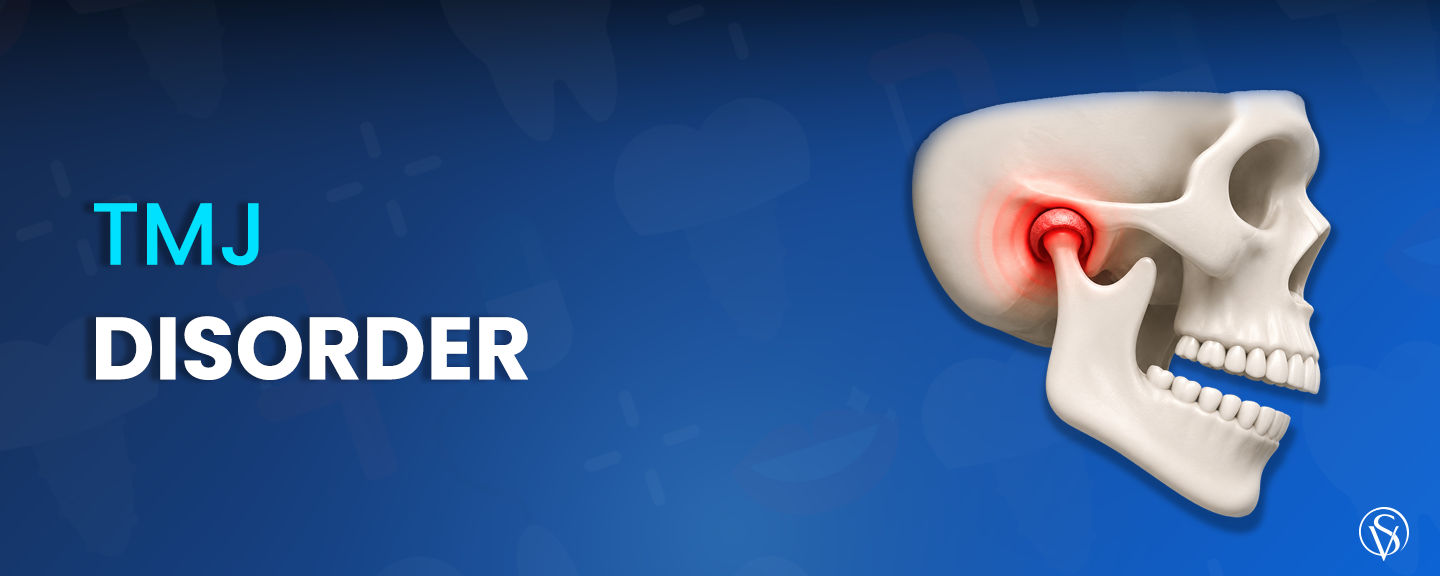
A TMJ disorder is a condition affecting the temporomandibular joint and the muscles that move the jaw, producing pain, restricted movement, and joint sounds. It develops when the joint that connects the lower jaw to the skull, along with the surrounding chewing muscles, becomes strained, misaligned, or inflamed. Signs range from jaw pain and clicking to headaches, ear pain, and difficulty opening the mouth. Causes include teeth grinding, jaw injury, arthritis, bite problems, and stress, though the exact trigger is often unclear.
Diagnosis combines a clinical jaw examination with imaging, using CBCT for bone and MRI for the joint disc. Most cases respond to conservative, reversible care such as splints, physical therapy, medication, and self-management, and surgery is reserved for structural damage that does not improve. Recovery spans weeks for mild cases to several months for chronic ones.
Key Points
- A TMJ disorder affects both the jaw joint and the chewing muscles, not the joint alone.
- The most common signs are jaw pain, clicking or popping, limited mouth opening, and headaches.
- Most cases improve with conservative, reversible care, and surgery is a last resort.
- Peer-reviewed reviews report that TMJ disorders are more common in women aged 20 to 40.
- Around one-third of people have painless jaw clicking without a disorder, according to The TMJ Association.
- Diagnosis relies on a clinical exam plus MRI for the disc and CBCT for bone.
What Is TMJ Disorder?
A TMJ disorder, also called a temporomandibular disorder (TMD), is dysfunction of the temporomandibular joint and the muscles that control jaw movement. The temporomandibular joint connects the lower jaw (mandible) to the temporal bone of the skull and acts as a sliding hinge on each side of the head. A small cartilage disc sits inside the joint and cushions movement as the jaw opens, closes, and shifts sideways. When the disc slips, the muscles overwork, or the joint surfaces wear, the result is pain, limited motion, and the clicking or grinding sounds that define the condition. Because the joint, the disc, and the chewing muscles can each be involved separately or together, no two cases present the same way.
What Is the Difference Between TMJ and TMD?
TMJ refers to the joint itself, while TMD refers to the disorder affecting it. The temporomandibular joint (TMJ) is an anatomical structure everyone has, whereas a temporomandibular disorder (TMD) is the clinical problem that develops when that joint or its muscles stop working correctly. In everyday use the term “TMJ” is often applied to the disorder, but the precise clinical label for the condition is TMD.
What Are the Symptoms of TMJ Disorder?
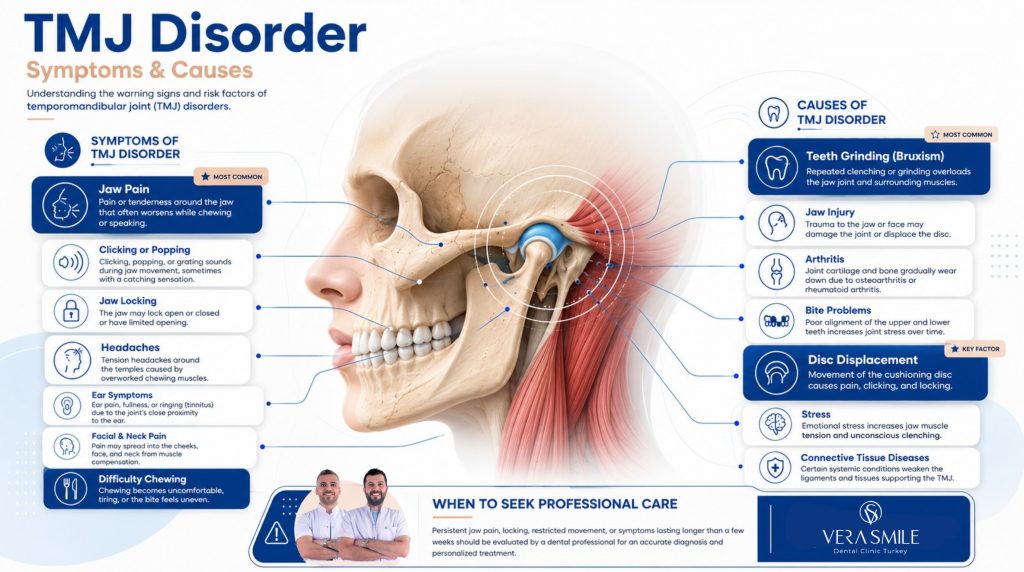
The most common symptoms of a TMJ disorder are jaw pain, joint sounds, restricted mouth opening, and headaches. Signs vary in intensity from mild and occasional to constant and disabling, and they can affect one or both sides of the jaw. The signs patients report most often are:
- Jaw pain: Aching or tenderness in the jaw joint or the chewing muscles is the leading symptom and often worsens with eating or talking.
- Clicking or popping: A click, pop, or grating sound (crepitus) occurs as the jaw moves, sometimes with a catching sensation.
- Jaw locking: The jaw can lock open or closed, or open only part of the way, limiting how wide the mouth moves.
- Headaches: Tension-type headaches around the temples are common because the chewing muscles attach near the temple.
- Ear symptoms: Earache, a feeling of fullness, or ringing (tinnitus) can occur because the joint sits directly in front of the ear.
- Facial and neck pain: Pain can radiate into the face, cheek, and neck as the surrounding muscles compensate.
- Difficulty chewing: Chewing can feel tiring or uncomfortable, and the bite may feel as though the teeth no longer meet correctly.
Any combination of these signs that lasts beyond a few weeks warrants a professional jaw assessment.
What Causes TMJ Disorder?
TMJ disorders develop from a combination of joint, muscle, and lifestyle factors, and in many cases the exact cause cannot be identified. The condition is multifactorial, which means several contributors often act together rather than a single trigger. The main contributors are:
- Teeth grinding: Bruxism, the grinding or clenching of teeth during sleep or stress, places repeated load on the joint and muscles. Patients with bruxism, who grind their teeth, can address the underlying habit through dedicated treatment for teeth grinding before the joint is damaged further.
- Jaw injury: A blow to the jaw, face, or head can displace the disc or damage the joint surfaces.
- Arthritis: Osteoarthritis and rheumatoid arthritis degrade the cartilage and bone inside the joint.
- Bite problems: Malocclusion, an uneven meeting of the upper and lower teeth, can strain the joint over time.
- Disc displacement: The cushioning disc can slip out of position, producing clicking, locking, and pain.
- Stress: Emotional stress increases muscle tension and clenching, which loads the joint.
- Connective-tissue disease: Some systemic conditions affect the ligaments and tissues that support the joint.
Identifying which of these factors apply guides the treatment plan for each patient.
Who Is Most at Risk of TMJ Disorder?
TMJ disorders are more common in women and in adults between 20 and 40 years of age. Peer-reviewed reviews of temporomandibular disorders report a clear predominance in women within this age band, though the condition occurs across all ages and both sexes. Risk rises with the following factors:
- Being female and aged 20 to 40, the group with the highest reported incidence in the clinical literature.
- A habit of teeth grinding or jaw clenching.
- A history of arthritis affecting other joints.
- High or sustained psychological stress.
- A previous jaw or facial injury.
These factors raise risk but do not guarantee the condition will develop.
What Are the Types of TMJ Disorders?
Temporomandibular disorders are grouped into three main categories that can occur alone or together. Clinical classification helps target treatment, because muscle-driven pain is managed differently from a displaced disc or a degenerating joint. The three categories are:
- Myofascial pain: The most common type, involving pain and tightness in the muscles that control chewing, often linked to clenching and stress.
- Internal derangement: A structural problem inside the joint, such as a displaced disc, a dislocated jaw, or injury to the condyle, producing clicking and locking.
- Degenerative joint disease: Arthritic breakdown of the joint cartilage and bone, including osteoarthritis and rheumatoid arthritis, leading to grinding sounds and stiffness.
A single patient can have more than one type at the same time, which is why diagnosis precedes any treatment decision.
How Is TMJ Disorder Diagnosed?
TMJ disorder is diagnosed through a clinical jaw examination supported by imaging when the joint structure needs to be assessed. No single test confirms the condition, so the diagnosis is built from history, physical findings, and, where indicated, imaging. The steps of the process:
- Clinical examination: The clinician measures how far the jaw opens, listens for joint sounds, and palpates the joint and chewing muscles for tenderness.
- Medical history: Questions cover pain patterns, grinding habits, stress, prior injury, and how symptoms affect eating and sleep.
- Panoramic X-ray: A wide dental X-ray gives an overview of the teeth, jaw, and joint and helps rule out other dental causes.
- CBCT: Cone-beam computed tomography provides detailed 3D imaging of the bony joint surfaces to identify erosion or arthritic change.
- MRI: Magnetic resonance imaging is the reference standard for viewing the position of the cartilage disc and soft tissue inside the joint.
An accurate diagnosis separates muscle-driven pain from structural joint damage and determines whether conservative care alone is sufficient or not.
When Should You See a Dentist for TMJ Disorder?
You should see a dentist when jaw pain, locking, or restricted opening lasts beyond two to three weeks or interferes with eating and sleep. Occasional, painless clicking rarely needs treatment, but persistent pain, a jaw that locks, a sudden change in how the teeth meet, or symptoms that do not improve with home care all warrant a professional jaw assessment. Early evaluation separates simple muscle strain from structural joint damage and helps avoid the tooth wear, chronic pain, and joint changes that can follow untreated disease.
How Is TMJ Disorder Treated?
TMJ disorder treatment starts with the most conservative, reversible options and escalates only when they fail. The National Institutes of Health recommends beginning with treatments that do not permanently change the jaw or teeth, because most jaw and muscle problems are temporary and improve without invasive care. Surgery is considered a last resort.
What Are the Non-Surgical Treatments for TMJ Disorder?
Non-surgical treatments manage most TMJ disorders and form the first stage of care. They aim to relieve pain, reduce joint load, and restore normal jaw movement without altering the joint permanently. The main options are:
- Occlusal splint: A custom splint worn over the teeth reduces clenching load and protects against grinding, and a fitted mouth guard is often the first appliance prescribed.
- Physical therapy: Guided jaw exercises, stretching, and manual techniques improve range of motion and ease muscle pain.
- Medications: Anti-inflammatory drugs and short-term muscle relaxants reduce pain and muscle spasm.
- Corticosteroid injection: An injection into the joint space lowers acute inflammation during a flare-up.
- Botox: Neuromodulator injections relax the overactive chewing muscles that drive clenching and pain.
- Arthrocentesis: A minimally invasive flushing of the joint space removes inflammatory fluid and frees a restricted disc.
Conservative care is often combined, for example a splint alongside physical therapy and self-management, and reviewed over several weeks.
When Is Surgery Needed for TMJ Disorder?
Surgery is needed only when structural joint damage does not respond to conservative treatment. It is reserved for a small share of patients with confirmed internal damage, such as a severely displaced disc, joint fusion, or advanced arthritis. Care escalates in stages, from arthrocentesis to arthroscopy, and finally to open joint surgery or joint replacement for the most severe structural cases. Because open surgery permanently alters the joint and long-term evidence remains limited, it follows only after reversible options have been exhausted.
How Long Does It Take to Recover from TMJ Disorder?
Recovery from a TMJ disorder ranges from a few weeks for mild, muscle-related cases to several months for chronic or surgical cases. The TMJ Association reports that most people have mild or periodic symptoms that improve within weeks or months using simple home therapy. Muscle-driven pain tends to settle fastest once clenching and load are reduced, while a displaced disc or arthritic joint takes longer and can need ongoing management. Recovery speed depends on the underlying cause, how early treatment begins, consistency with splint and exercise routines, and whether grinding or stress continues. Surgical cases involve a longer course, with weeks of a soft diet and months of physical therapy before full jaw function returns.
How to Manage TMJ Disorder at Home
Home management reduces jaw load and eases symptoms while professional treatment takes effect. These self-care steps support, but do not replace, a clinical treatment plan. Follow the steps during a flare-up and as ongoing habits.
- Eat soft foods and cut meals into small pieces to reduce chewing effort.
- Avoid chewing gum, hard foods, and wide yawning that overextend the joint.
- Apply a warm compress to relax muscles, or a cold pack to reduce sharp inflammation.
- Perform gentle jaw-relaxation and stretching exercises as guided by a clinician.
- Manage stress through relaxation techniques to lower unconscious clenching.
- Keep an upright head and neck posture, especially at a desk, to reduce jaw strain.
- Stop habits such as nail biting and pen chewing that load the joint.
If symptoms persist despite these measures, professional assessment is the next step.
How Much Does TMJ Disorder Treatment Cost?
TMJ disorder treatment costs range from under one hundred euros for a first consultation to tens of thousands for complex surgery, and it differs sharply between countries. The table compares private, self-pay averages across Turkey, Germany, the United Kingdom, and the United States, all converted to euros. Figures are approximate market averages drawn from published pricing sources, are not clinic-specific, and move with case severity, insurance, and currency rates.
| Treatment | Turkey | Germany | United Kingdom | United States |
| Initial consultation | €40 to €100 | €100 to €200 | €210 to €350 | €90 to €350 |
| Diagnostic imaging (X-ray, MRI, or CBCT) | €100 to €300 | €150 to €600 | €175 to €470 | €90 to €1,760 |
| Occlusal splint / night guard | €150 to €400 | €300 to €800 | €175 to €940 | €265 to €700 |
| Physical therapy (full course) | €150 to €500 | €300 to €1,000 | €300 to €1,000 | €265 to €1,760 |
| Corticosteroid injection (per session) | €100 to €300 | €150 to €400 | €175 to €470 | €130 to €440 |
| Botox (per session) | €150 to €350 | €300 to €600 | €295 to €530 | €265 to €1,320 |
| Arthrocentesis | €300 to €1,000 | €500 to €1,500 | from €585 | €880 to €2,200 |
| Surgery (arthroscopy to open joint) | €1,300 to €3,500 | approx €7,000 to €15,000 | €17,600 to €21,100 | €4,400 to €8,800 |
Conservative care sits at the low end in every country, and Turkey’s specialist clinics report totals well below Western European and North American rates, which is one reason international patients travel for TMJ treatment. Surgical and German figures are the least standardised in public sources and should be read as broad estimates.
FAQ
Many mild TMJ disorders improve on their own within weeks or months with simple self-care. The TMJ Association reports that most cases are mild or periodic and settle with soft foods, rest, and reduced jaw load. Symptoms that persist, worsen, or include locking do not resolve without treatment and need a professional assessment.
Most TMJ disorders are not permanent and respond to conservative treatment. Muscle-driven cases often resolve once clenching and load are controlled, while arthritis-related joint damage can be long-term and managed rather than cured. Early treatment lowers the chance of lasting joint change.
Yes, a TMJ disorder can cause ear ringing, fullness, or earache because the joint sits directly in front of the ear canal. These ear symptoms occur without any infection and often ease as the jaw condition is treated. An ear that feels blocked alongside normal hearing tests is a common presentation.
Yes, a TMJ disorder can affect one side or both. One-sided pain is common when a single joint has a displaced disc or when chewing favours one side. The unaffected side can later become symptomatic if the jaw compensates by overloading it.
At some point, yes. TMJ disorders can trigger or worsen headaches, including migraine-type pain, because the chewing muscles attach near the temples. Clenching and muscle tension refer pain to the head, and treating the jaw often reduces headache frequency. Persistent or severe headaches should also be evaluated by a physician.
A dentist, often one with training in orofacial pain or oral and maxillofacial surgery, is the primary specialist for TMJ disorders. Dentists diagnose the condition, fit splints, and manage conservative care, while complex structural cases can involve an oral and maxillofacial surgeon. Physicians are consulted when symptoms overlap with neurological or ear conditions.