
Tooth pain is discomfort in or around a tooth that most often comes from inflammation of the inner pulp or the surrounding gum and bone. The most common cause is tooth decay, but pain can also start from an abscess, a cracked tooth, gum disease, a worn filling, or an exposed root near the gum line. The way the pain feels is a useful clue, because sharp pain when biting often points to a crack, lingering sensitivity to hot and cold points to exposed dentin, and steady throbbing points to infection.
Some toothaches ease with home measures such as salt-water rinses and over-the-counter pain relief, but these steps calm symptoms without treating the cause. Others are urgent, and tooth pain with facial swelling, fever, or trouble breathing or swallowing needs emergency care. Treatment depends on the cause and ranges from a filling to root canal, gum treatment, or extraction, with early care keeping the fix smaller and more likely to save the tooth.
Key Points
- Tooth pain, also called a toothache, is discomfort in or around a tooth that most often comes from inflammation of the inner pulp or the surrounding gum and bone.
- The most common cause is tooth decay, which the Global Burden of Disease 2021 analysis ranks among the most widespread health conditions worldwide, with roughly 2.24 billion cases in permanent teeth.
- Pain can also come from an abscess, a cracked tooth, gum disease, a worn filling, or an exposed tooth root.
- The character of the pain hints at its cause, since sharp pain on biting often signals a crack while constant throbbing often signals infection.
- Tooth pain with facial swelling, fever, or difficulty breathing or swallowing is a dental emergency that needs urgent care.
- Treatment depends on the cause and ranges from a simple filling to root canal, gum treatment, or extraction, and early care keeps the procedure simpler and more likely to save the tooth.
What Is Tooth Pain?
Tooth pain is any ache, throb, or sensitivity felt in a tooth or the tissues that hold it in place. Dentists call pain that starts in the tooth itself odontogenic pain, and it often begins in the dental pulp, the soft core of nerves and blood vessels, or in the dentin layer beneath the enamel. Not every ache in the mouth comes from a tooth, though. Referred pain from a sinus infection, a jaw joint problem, or certain nerve conditions can feel like a toothache while the teeth are healthy. Because the pulp senses only pain and cannot report what kind of damage is happening, a small cavity and a serious infection can both feel like the same dull ache in their early stages.
What Are the Different Types of Tooth Pain?
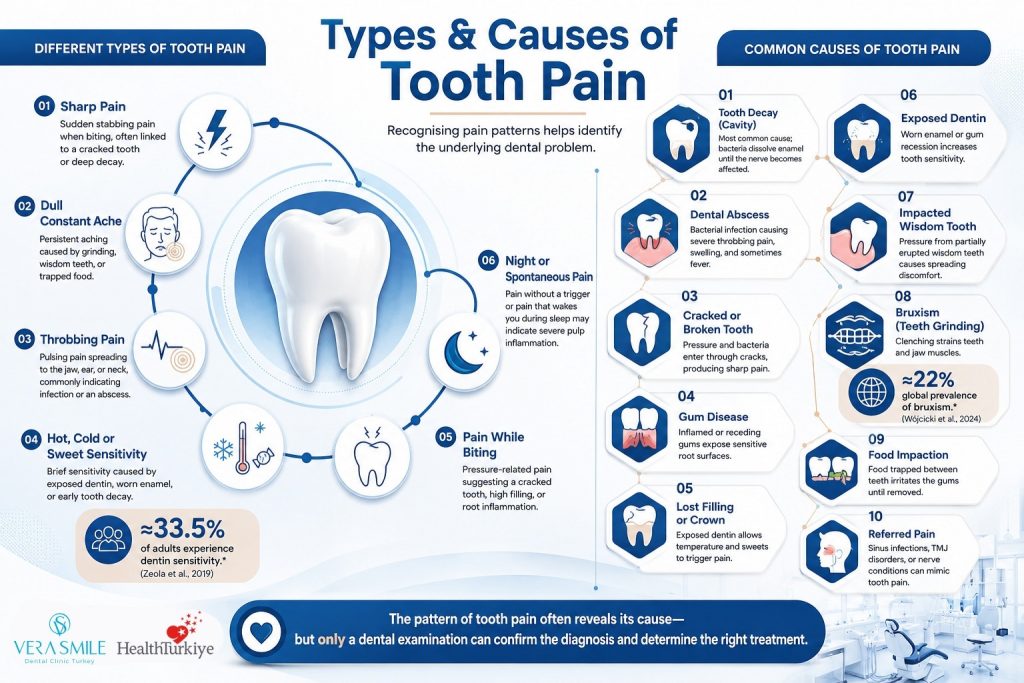
Tooth pain shows up in a few recognisable patterns, and each pattern hints at a different cause. Paying attention to how the pain behaves helps a dentist narrow down the problem before any X-ray is taken. These are the most common patterns:
- Sharp pain: A sudden, jabbing pain, often when biting down, points to a cracked tooth or decay that has reached the nerve.
- Dull, constant ache: A low, steady ache can come from grinding, a wisdom tooth pushing through, or food packed between teeth.
- Throbbing pain: A pulsing pain that may spread to the ear, jaw, or neck often signals infection or an abscess.
- Sensitivity to hot, cold, or sweet: A short twinge from temperature or sugar suggests exposed dentin, worn enamel, or early decay, and this kind of sensitivity affects a large share of adults, with pooled studies averaging about 33.5% (Zeola et al., 2019).
- Pain when biting or chewing: Pain that appears only under pressure suggests a cracked tooth, a high filling, or inflammation at the root tip.
- Night or spontaneous pain: Pain that wakes you or starts with no trigger is a warning sign that the pulp may be inflamed or dying.
Because the same tooth can produce more than one of these patterns as a problem worsens, a change in how the pain feels is worth noting and reporting.
Clinic note: Pain that throbs, lingers after hot or cold, or flares when you bite should be checked within a few days rather than left to settle, because these patterns are linked to the pulp and the root.
What Causes Tooth Pain?
Most tooth pain comes from a problem inside the tooth or in the gum and bone around it. Tooth decay is the single most common source, and it ranks among the most widespread health conditions in the world, with the Global Burden of Disease 2021 analysis estimating about 2.24 billion cases of decay in permanent teeth (GBD 2021 Oral Disorders Collaborators, 2025). The main causes of tooth pain are:
- Tooth decay (cavity): Acid from bacteria dissolves enamel and reaches the dentin, causing sensitivity that turns into pain as it nears the nerve.
- Dental abscess: A pocket of pus from a bacterial infection at the root tip or in the gum causes severe, throbbing pain and sometimes swelling and fever.
- Cracked or broken tooth: A crack lets pressure and bacteria reach the inner tooth, producing sharp pain on biting.
- Gum disease: Inflamed, receding gums expose sensitive root surfaces and can ache or throb, and advanced cases are managed by periodontics to control the infection.
- Worn or lost filling or crown: A failed restoration leaves the tooth exposed, so hot, cold, and sweet triggers reach the dentin again.
- Exposed dentin and receding gums: When enamel wears or gums pull back, the tubules in the dentin let temperature and touch reach the nerve.
- Impacted wisdom tooth: A molar that cannot erupt fully presses on nearby teeth and gum, causing pressure and a dull, spreading ache.
- Teeth grinding (bruxism): Clenching and grinding strain teeth and muscles, and grinding is common, with a global review putting overall bruxism at about 22% and awake grinding at roughly one in four people (Wójcicki et al., 2024).
- Food impaction: Food wedged between teeth pushes on the gum and mimics a toothache until it is removed.
- Non-dental (referred) pain: Sinus infection, jaw joint disorders, and some nerve conditions can send pain to the teeth even when the teeth are sound.
Identifying which of these is behind the pain is the first job of any dental visit, because the treatment is different for each one.
Tips for patients: Note when the pain started, what triggers it, and how long each episode lasts, because this short history helps the dentist localise the cause faster and may reduce the number of tests needed.
When Is Tooth Pain a Dental Emergency?
Tooth pain becomes a dental emergency when it is joined by signs of spreading infection or serious injury. Most aches can wait a day or two for an appointment, but certain warning signs mean you should be seen the same day or go to an emergency room. Seek urgent care in these situations:
- Facial or jaw swelling with fever: Swelling and a raised temperature suggest an infection that is moving beyond the tooth.
- Throbbing pain spreading to the ear, jaw, or neck: Pain that radiates can signal an abscess that needs prompt drainage.
- Trouble breathing or swallowing: These are red-flag signs that an infection may be affecting the airway and need emergency treatment.
- A knocked-out or loosened tooth: Fast action after an injury gives the best chance of saving the tooth.
- Bleeding that will not stop: Ongoing bleeding after trauma or an extraction needs professional attention.
- Severe pain that suddenly disappears: When constant pain stops on its own, the nerve may have died while the infection keeps spreading silently.
Ignoring these signs allows a local problem to become a body-wide one, so timing matters as much as the pain itself.
Warning: Tooth pain with facial swelling and fever, or any difficulty breathing or swallowing, needs emergency care straight away, because a dental infection can spread to the jaw, neck, and bloodstream.
How Can You Relieve Tooth Pain at Home?
Home measures can ease tooth pain for a short time, but they calm the symptom without treating the cause. Use them to stay comfortable until you can see a dentist, not as a replacement for treatment. These steps can help in the meantime.
- Rinse with warm salt water: Mix half a teaspoon of salt into a glass of warm water and swish gently to clean the area and reduce irritation.
- Apply a cold compress: Hold a cold pack against the cheek for 15 to 20 minutes to numb the area and limit swelling.
- Take over-the-counter pain relief: Use an appropriate pain reliever at the recommended dose to control pain and inflammation.
- Avoid trigger foods: Skip very hot, cold, hard, or sugary foods that set the pain off.
- Keep your head elevated: Prop your head up at night so blood does not pool and increase the throbbing.
- Dab clove oil on the spot: A small amount of clove oil on the sore area can give brief numbing relief.
If pain keeps coming back after these steps, the cause is still active and needs a dental exam.
Warning: Never place an aspirin tablet directly against the gum or tooth, because it can burn the soft tissue and cause an ulcer. Home remedies relieve symptoms only and do not cure the underlying problem.
Tips for patients: If you are reaching for painkillers more than a day or two, book an appointment instead of repeating doses, since masking the pain lets the cause progress.
How Is Tooth Pain Treated?
Treatment for tooth pain depends entirely on the cause, so the dentist first finds the source and then matches the fix to it. Options range from a quick preventive step to surgery, and catching the problem early keeps the treatment simpler. The main treatments are:
- Fluoride or a filling: Early decay can be strengthened with fluoride, while a cavity that has formed a hole is cleaned and restored, often with one of the tooth fillings used in general dentistry.
- Root canal: When infection reaches the pulp, root canal treatment removes the damaged tissue, disinfects the canals, and seals the tooth so it can stay in place.
- Extraction: A tooth that cannot be saved is removed by tooth extraction, which stops the pain and prevents the infection from spreading.
- Crown: A cracked or heavily damaged tooth is often protected with a crown that holds it together and restores biting strength.
- Scaling and gum treatment: Pain from gum disease is treated with teeth scaling and polishing and deeper cleaning to remove the bacteria driving the inflammation.
- Night guard: Pain from grinding is eased with a custom night guard that protects the teeth and relaxes the jaw muscles.
- Wisdom tooth removal: A painful impacted molar is resolved with wisdom teeth removal when it cannot erupt properly.
An abscess may also need antibiotics alongside drainage, and when the drainage is done through the tooth it is part of root canal treatment. Because each cause has its own fix, an accurate diagnosis is what makes treatment work.
How Do Dentists Find the Cause of Tooth Pain?
Dentists find the cause of tooth pain by combining a clinical exam with imaging and a few simple tests. A visit to a dental clinic in Turkey starts with questions about the pain and moves to a hands-on assessment that pinpoints the tooth and the tissue involved. The main diagnostic steps are:
- Clinical examination: The dentist checks each tooth, the gums, and existing fillings or crowns for damage.
- Dental X-ray: An image shows decay between teeth, bone loss, and infection at the root that the eye cannot see.
- Percussion and bite test: Tapping and controlled biting reveal cracks and inflammation around the root.
- Cold or vitality test: A cold stimulus checks whether the pulp is healthy, inflamed, or no longer alive.
Together these findings confirm the cause so the right treatment can begin at the same visit where possible.
Clinic note: Bring a list of your current medications and note when the pain began, since an X-ray combined with this history often confirms whether the pulp or the surrounding bone is involved.
What Do Real Cases of Tooth Pain Look Like?
The pattern behind a toothache is clearer with real examples. The sample cases illustrate how similar symptoms can lead to different diagnoses and treatments.
Doctor’s Notes
A.K., Female, 34:
The patient presented with sharp pain when drinking cold beverages and occasional discomfort while eating sweets. Clinical examination, cold pulp testing, and bitewing X-rays identified early enamel decay affecting the dentin. A composite filling was placed after removing the decayed tissue. The sensitivity resolved immediately after treatment and remained absent at the follow-up visit.
“I assumed I just had sensitive teeth, but the pain gradually became more frequent. The treatment was much quicker than I expected, and the cold sensitivity disappeared almost immediately. I wish I had come in sooner.”
M.D., Male, 47:
The patient reported severe throbbing pain that worsened at night and was accompanied by mild facial swelling. Percussion testing and periapical X-rays revealed an infected pulp with a periapical abscess. Root canal treatment was performed, followed by placement of a permanent crown after healing. The infection resolved completely, and the tooth was preserved.
“The pain became unbearable within a couple of days. I thought the tooth would need to be removed, but the root canal saved it. I was able to return to daily rush the next day.”
S.Y., Female, 52:
The patient experienced intermittent pain while chewing despite no obvious cavity being visible. Clinical examination, bite testing, and magnification revealed a cracked molar extending through the cusp. The tooth was restored with a full-coverage ceramic crown to prevent further fracture. Chewing discomfort resolved after treatment.
“I couldn’t understand why the pain came and went because the tooth looked completely normal. Once the crack was found, everything finally made sense. The crown feels natural, and I can eat comfortably again.”
No two toothaches are exactly alike, even when the symptoms seem similar. Identifying the source of the pain early can often mean a simpler procedure, a faster recovery, and a greater chance of preserving the natural tooth. If you experience ongoing sensitivity, pain while biting, swelling, or spontaneous tooth pain, a comprehensive dental examination is the most reliable way to determine the underlying cause and begin the appropriate treatment before the condition progresses.
How Can You Prevent Tooth Pain?
Most tooth pain is preventable with steady oral care and regular dental visits. Because the leading causes are decay and gum disease, the same habits that protect against both also prevent the pain they create. These are the most effective steps:
- Brush twice a day with fluoride: Fluoride toothpaste strengthens enamel and reverses the earliest decay before a hole forms.
- Floss daily: Cleaning between teeth removes the plaque and food that brushing misses and that drives decay and gum disease.
- Limit sugar and acidic drinks: Cutting back on sugar and acid reduces the acid attacks that wear down enamel.
- Keep regular check-ups and cleanings: Professional cleaning and a six-month exam catch problems while they are still painless.
- Wear a night guard if you grind: A guard protects teeth from the wear and cracks that grinding causes.
- Treat small cavities early: Fixing a cavity while it is small stops it from reaching the nerve and causing severe pain.
Building these habits into a routine is the most reliable way to avoid a toothache and the treatment it would otherwise need.
Tips for patients: A six-month check-up finds decay while it is still painless and inexpensive to fix, long before it can reach the nerve.
FAQ
No. Tooth pain may ease for a while, but the cause behind it, such as decay, a crack, or infection, does not heal without treatment and often returns worse. Even when pain from an abscess stops because the nerve has died, the infection keeps spreading, so a pain-free tooth is not always a healthy one.
Tooth pain often feels worse at night because lying down sends more blood to the head, which raises pressure on an inflamed pulp. There are also fewer distractions at night, so the brain notices the pain more. Night pain that wakes you is a sign the pulp may be inflamed and should be checked.
Sensitivity to hot and cold is caused by exposed dentin, the layer beneath the enamel that contains tiny tubules leading to the nerve. Worn enamel, receding gums, a cracked tooth, decay, or a lost filling can all uncover the dentin. Short twinges are common, but sensitivity that lingers after the trigger is removed may point to pulp damage.
Yes. Pain from the teeth and jaw shares nerve pathways with the head and ear, so an infected or impacted tooth can be felt as a headache or earache. Grinding-related tooth pain is also linked to tension headaches. Because the reverse also happens, a dentist can help confirm whether the source is a tooth.
A toothache should not be left untreated, because most causes get worse rather than better with time. A small cavity can reach the nerve within weeks to months, turning a simple filling into a root canal or an extraction. Any pain lasting more than a day or two, or joined by swelling or fever, needs a dental appointment.
Flying with tooth pain can make it worse, because changes in cabin pressure expand trapped air in a decayed or infected tooth and increase the ache. Anyone planning to travel, including patients coming to Turkey for dental care, should have active pain assessed before flying so it does not flare mid-journey.