
A bright smile is one of the strongest confidence boosters, and teeth whitening remains the most popular cosmetic dental treatment worldwide. From in-office systems to at-home trays, whitening strips, LED kits, or natural remedies, each method offers different levels of effectiveness, sensitivity, and cost.
However, despite its simplicity, teeth whitening is a procedure that requires careful attention. The process involves using bleaching agents that penetrate and dissolve surface stains by breaking down enamel molecules (the very layer that protects your teeth from damage). When done without professional supervision, this can lead to enamel erosion, tooth sensitivity, and gum irritation.
That’s why professional whitening is not just about achieving a whiter shade, it’s about doing so safely, under the expertise of a qualified dentist who understands how to balance brightness with long-term dental health. Home kits might offer convenience, but they can’t match the precision, safety, or lasting results of professional treatments.
Understanding what teeth whitening truly involves, beyond the cosmetic aspect, helps you make safer choices and maintain both your smile’s beauty and strength. and clear aftercare, you leave not only with a dazzling smile but with the knowledge and support to keep it.
What Is Teeth Whitening?
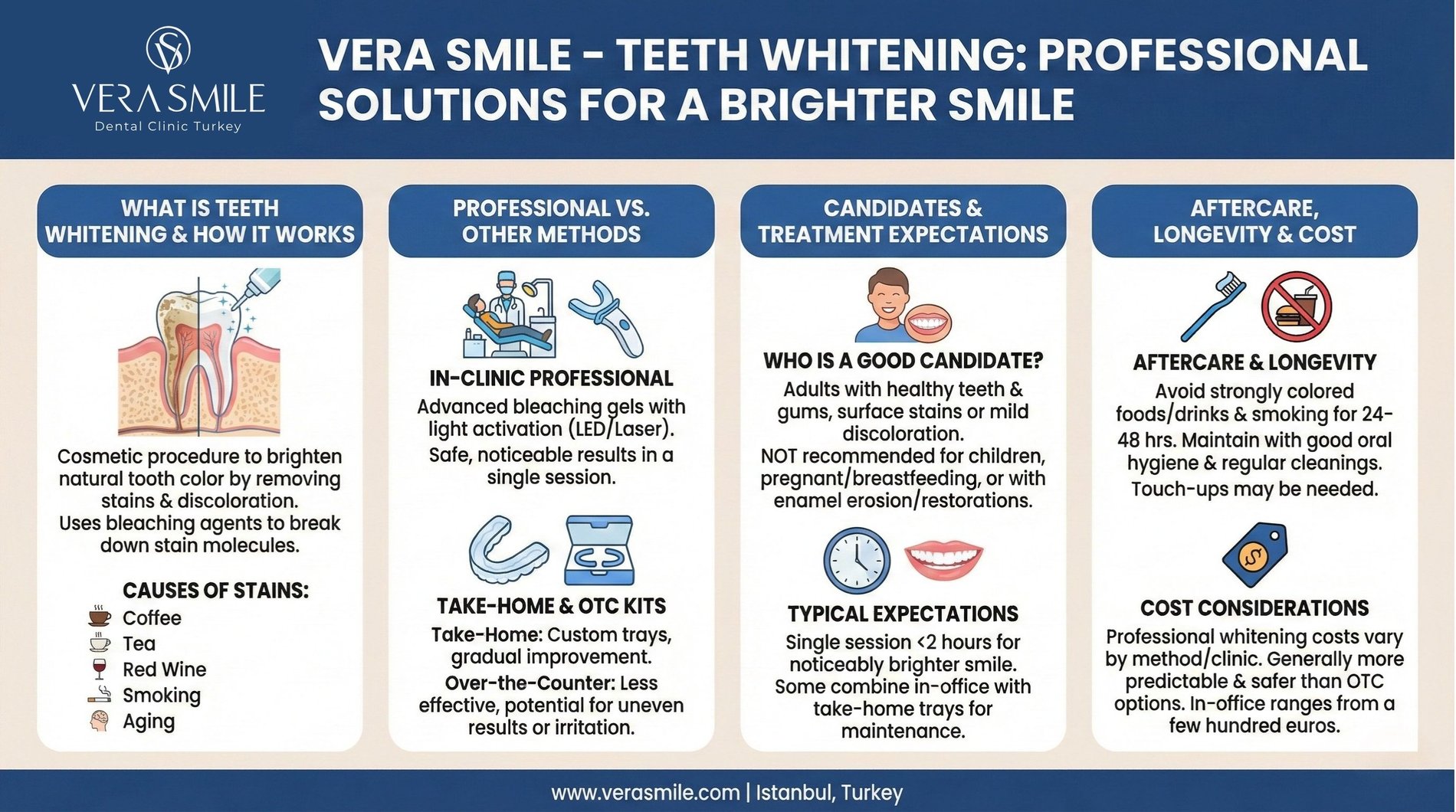
Teeth whitening, sometimes referred to as teeth bleaching, is a cosmetic dental procedure designed to remove surface stains and lighten deep discoloration. Unlike regular cleaning or polishing, which focuses on removing plaque and tartar, whitening targets the pigments trapped within the tooth structure.
The process relies on bleaching agents such as hydrogen peroxide and carbamide peroxide, which break down stain molecules and restore brightness to the enamel. While everyday dental cleaning improves hygiene and appearance, whitening treatments go further by altering the tooth color itself.
It’s important to note the distinction between whitening and bleaching. Whitening generally refers to restoring the tooth to its natural shade by eliminating external stains, whereas bleaching uses chemical agents to achieve a shade lighter than the natural color of enamel.
When Is Teeth Whitening Needed?
Teeth whitening is recommended when natural enamel has become discolored or stained to the point that daily brushing and professional cleaning no longer restore its brightness. This includes visible surface stains from foods, drinks, or smoking, as well as mild intrinsic discoloration due to aging or lifestyle factors. Whitening is most effective when applied to otherwise healthy teeth, helping patients enhance their smile safely without addressing structural or restorative dental issues.
What Are the Types of Teeth Whitening?
There are several types of teeth whitening, and the best whitening methods depend on your goals, sensitivity levels, and budget. From fast in-office treatments to over-the-counter products and natural remedies, each option offers different benefits and limitations.
- In-Office Professional Whitening: Performed by a dentist using professional-grade bleaching agents and blue light technology. It delivers noticeable results in a single session while minimizing the risk of enamel damage.
- At-Home Whitening Kits: These dentist-prescribed kits provide gradual whitening through repeated use. While convenient, they are generally less powerful than in-office treatments and require consistency to maintain results.
- Over-the-Counter Whitening Products: Whitening strips, gels, and toothpaste may slightly brighten teeth that are already fairly white, but they rarely address deeper stains effectively.
- Natural Remedies: Options like baking soda or oil pulling are gentle and safe for oral health, yet they cannot replace the effectiveness of professional whitening treatments.
1. In-Office Professional Whitening
Professional teeth whitening, often called dentist teeth whitening, delivers the most powerful and immediate results. Systems such as Zoom Teeth Whitening, Snow Teeth Whitening, and Laser Teeth Whitening use high-strength peroxide gels activated with LED or laser light. These stronger agents penetrate deeply into the enamel, breaking down stains quickly and effectively. Most patients see a dramatic improvement after just one session, making this the go-to choice for anyone seeking instant results.
2. At-Home Whitening Kits
Dentist-supervised take-home options such as custom trays and gels provide gradual whitening over one to two weeks. These treatments typically contain carbamide peroxide in lower concentrations compared to in-office whitening, which helps reduce sensitivity while still delivering noticeable results. Patients often pair these systems with enamel-strengthening products to maintain results. For convenience, many people explore alternatives such as the Teeth Whitening Kit, which is used at home with professional guidance.
3. Over-the-Counter Whitening Products
Whitening strips, pens, and ready-made trays are widely available as OTC whitening options. Newer LED kits promise enhanced results at home, though they use lower concentrations of bleaching agents compared to dentist treatments. These products are more affordable but take longer to show results, and the outcome is often limited to lighter surface stains. Popular choices include Teeth Whitening Strips, Best Teeth Whitening Kit, Best Teeth Whitening Toothpaste, Moon Teeth Whitening, and Lumineux Teeth Whitening Strips.
4. Natural Remedies
Many people look for natural teeth whitening methods such as activated charcoal, coconut oil pulling, or baking soda teeth whitening. While these remedies are popular, they often lack scientific evidence and may be abrasive to enamel if used excessively. Dentists generally advise caution, as these approaches are unlikely to provide long-term whitening and could harm the protective surface of the teeth.
What’s the Difference Between LED Teeth Whitening vs Regular Whitening?
LED whitening, often marketed as blue light teeth whitening, has become one of the most popular in-office and at-home methods. Many patients assume the light itself whitens teeth, but in reality, the science is more nuanced.
The light activation myths vs science debate comes down to this: the LED or laser light does not bleach teeth on its own. Instead, it accelerates the chemical reaction of the whitening gel, hydrogen peroxide or carbamide peroxide,helping it break down stains faster. What actually matters most for results is the percentage of peroxide and how long it stays in contact with enamel, not the light itself.
Brands like Zoom whitening and Philips use LED or laser systems to boost efficiency and shorten treatment times. Compared to regular whitening methods without light activation, LED-assisted treatments produce noticeable improvements in a single session. However, both approaches rely on the same active ingredients, and results ultimately depend on gel strength, application method, and the patient’s individual enamel.
Is Teeth Whitening Safe?
When performed under professional supervision or with FDA-approved products, whitening is generally considered safe. Safety depends on the method used, the frequency of treatment, and the individual condition of the teeth and gums.
The main concern is teeth whitening enamel damage. Overusing high-strength bleaching agents, especially without guidance, weaken enamel and increase the risk of erosion over time. Dentists carefully control peroxide concentration and treatment duration to protect tooth structure while still achieving visible results.
Tooth sensitivity is another common side effect. Some patients experience temporary discomfort when consuming hot or cold foods after whitening. Using remineralizing gel or fluoride-based toothpaste often helps manage sensitivity and strengthen enamel.
There are differences in safety between treatment settings. In-office professional whitening is safest because it is performed by trained dentists who protect the gums and adjust strength based on individual needs. At-home whitening kits and whitening strips are generally safe if used as directed, but misuse causes gum irritation, especially when gel trays or strips overlap onto soft tissue.
Overall, the key to safety is choosing regulated, FDA-approved products and following dental advice. Patients with cavities, gum disease, or worn enamel should always consult a dentist before beginning whitening to avoid complications.
Are “Natural” Whitening Products Safe?
The rise of natural whitening trends has made products like activated charcoal and baking soda popular alternatives to professional whitening. However, their safety and effectiveness remain controversial.
Charcoal teeth whitening products are marketed as natural stain removers, but research shows they are abrasive. Frequent use may scratch enamel, making teeth more prone to future staining and sensitivity. Similarly, baking soda teeth whitening erode enamel if applied too often or in high concentrations.
The problem lies in the balance between cosmetic improvement and long-term oral health. While these products may remove some surface discoloration, they do not change the internal shade of teeth the way peroxide-based treatments do. In other words, the results are limited, and the risks outweigh the benefits if overused.
Dentists generally recommend safer alternatives, such as professional whitening systems or dentist-approved take-home kits. These provide predictable results while protecting enamel.
What’s the Best Whitening Method for Sensitive Teeth?
For patients prone to sensitivity, choosing the best whitening for sensitivity requires balancing results with comfort which can be achieved in in-office methods. Dentists customize the gel strength and duration based on individual needs. This ensures visible results while protecting enamel and gum tissue from unnecessary stress.
Dentists recommend formulas with lower concentrations, such as 5–10% carbamide peroxide, which gradually brighten teeth without overwhelming the enamel. Using gels for shorter wear times, for example, 30–60 minutes instead of overnight, helps minimize irritation.
Traditional whitening gels sometimes cause temporary discomfort, but several enamel-safe whitening approaches make treatment easier and safer.
Some whitening products are specifically designed for sensitive teeth and include potassium nitrate or fluoride, which calm tooth nerves and strengthen enamel. When combined with remineralizing gels, these treatments provide whitening while reducing the risk of long-lasting sensitivity.
How Much Does Teeth Whitening Cost?
Teeth whitening costs vary depending on the dental office and the country. Prices range from €150 to €1,000, depending on the whitening method, materials, and dentist expertise. Different techniques require different levels of precision and technology, which directly affect cost.
| Treatment Type | Turkey | USA | UK | India | Mexico |
| In-Office Whitening (Zoom/Philips/Laser) | €150–€500 | €800–€1,200 | €700 – €1,000 | €150–€250 | €300–€550 |
| At-Home Whitening Trays | €120–€200 | €300–€500 | €250–€400 | €80–€150 | €100–€180 |
| OTC Whitening Kits (Strips/Pens/LED) | €20–€50 | €40–€100 | €30–€80 | €15–€40 | €20–€50 |
It’s wiser to choose a clinic and a country based on quality standards, dentist experience, and reliability, rather than teeth whitening cost alone.
While affordable treatment can be appealing, cheap does not always mean equal quality. Teeth whitening requires precision to protect the enamel, and the materials used play a critical role in ensuring safe and lasting results. Before committing to any clinic, ask what products and whitening systems they use, this simple step helps protect both your teeth and your investment.
What to Expect Before and After Teeth Whitening
Looking at teeth whitening before and after examples helps set realistic expectations. Most patients notice their teeth becoming several shades lighter, often described as “two to eight shades” depending on the whitening method used. In dentistry, this refers to a standardized shade guide where each step represents a visible improvement in brightness.
Professional treatments such as Zoom, Philips, or laser whitening can deliver dramatic results in a single session, while at-home kits and over-the-counter products achieve more gradual improvements over one to two weeks. Natural remedies typically show little to no measurable shade change.
Timelines vary: in-office whitening provides immediate results, take-home kits usually require 10–14 days, and whitening strips or pens take several weeks. The outcome depends on individual factors such as enamel thickness, the type of discoloration (extrinsic vs intrinsic), age, and lifestyle habits like smoking or drinking coffee.
It’s important to maintain realistic expectations. Whitening can brighten your natural tooth shade but cannot change the color of existing crowns, veneers, or fillings. For patients with mixed restorations, dentists recommend a combined approach, whitening the natural teeth first, then updating restorations to match.
How Long Do Teeth Whitening Results Last?
On average, professional whitening results last between 6 and 12 months, though outcomes vary depending on lifestyle and oral care.
Diet plays a major role, frequent consumption of coffee, tea, red wine, or dark-colored foods cause new stains to develop more quickly. Smoking and poor oral hygiene shorten the longevity of results. Patients who brush their teeth with fluoride toothpaste, attend regular cleanings, and limit staining foods enjoy brighter smiles for longer.
Some clinics provide touch-up kits or recommend at-home whitening trays for occasional maintenance, allowing patients to refresh their smile every few months without undergoing another full in-office session.
To prolong effects, dentists often advise avoiding tobacco, rinsing with water after meals, and using a straw for dark beverages. Combined with consistent oral hygiene and periodic professional check-ups, these habits help extend whitening results and maintain a naturally bright smile.
How Often Should You Whiten Your Teeth?
The frequency of teeth whitening depends on what kind of whitening material is used.
- In-Office Whitening: Usually once a year is sufficient. High-concentration peroxide delivers dramatic results in a single session, so repeating too often isn’t necessary.
- At-Home Whitening Kits: Maintenance can be done every 6–12 months under dentist guidance. Touch-up trays may be used every few months if needed to maintain results.
- Avoid Over-Whitening: Whitening more frequently than recommended can erode enamel, irritate gums, and create uneven, unnatural results.
Only whiten your teeth when necessary, following your dentist’s timeline. Avoid repeating treatments unless new discoloration appears.
How to Maintain a White Smile After Treatment
Following a whitening procedure, proper post-whitening care is essential to preserve results. There are different rules for immediately after teeth whitening care, and for long-term care.
Immediately After Whitening:
The first 24–48 hours are crucial because the enamel becomes slightly porous after whitening.
- Avoid staining foods and drinks: Skip coffee, tea, red wine, berries, and dark sauces during this period.
- Quit or reduce smoking: Nicotine quickly re-stains freshly whitened enamel.
- Rinse with water frequently: If you consume anything acidic or pigmented, rinse your mouth to neutralize surface reactions.
- Use a soft toothbrush and non-abrasive toothpaste: This prevents irritation and protects the enamel’s new surface.
Long-Term Maintenance:
To keep your smile bright for months after treatment, adopt these habits:
- Limit daily stain sources: Reduce coffee, tea, and red wine intake or drink them through a straw.
- Brush twice daily with a fluoride-based whitening toothpaste: Helps prevent new surface stains and strengthens enamel.
- Schedule regular professional cleanings: Visiting your dentist every six months removes tartar and plaque that dull brightness.
- Use touch-up trays periodically: For those with professional whitening, touch-ups every few months can maintain shade without full re-treatment.
- Stay hydrated: Drinking plenty of water helps wash away pigments before they bond to enamel.
Who Is a Good Candidate for Teeth Whitening?
Teeth whitening is most effective for adults with healthy enamel and no untreated dental problems. People who maintain good oral hygiene and have surface stains caused by food, drinks, or smoking usually see the best results.
Whitening is not recommended for pregnant women or children, since their teeth and gums are more sensitive and still developing.
For those with sensitive teeth, whitening is still possible, but it requires a tailored approach. Whitening for sensitive teeth often involves lower-strength products, shorter application times, and supportive treatments like remineralizing gels or fluoride to protect enamel.
Patients who underwent permanent cosmetic dental treatments such as veneers or crowns, cannot whiten their teeth as only natural enamel responds to bleaching agents.
Does Whitening Work on All Types of Teeth?
Teeth whitening treatments are effective for many patients, but not all tooth types or conditions respond the same way. The success of whitening depends on whether the discoloration is extrinsic (surface stains) or intrinsic (deep within the tooth).
Does Whitening Work on Crowns or Veneers?
Whitening agents only affect natural enamel. Crowns, veneers, and fillings do not whiten, which means existing restorations will remain the same color. If these are visible in your smile line, dentists often recommend whitening the natural teeth first and then replacing or adjusting restorations to match the new shade.
Can I Whiten Dead Teeth or Root Canal-Treated Teeth?
Teeth that have undergone root canal treatment or are considered “dead” can develop deep internal discoloration. Standard whitening gels are often less effective in these cases. Dentists may recommend internal bleaching techniques (whitening from inside the tooth) or restoring the tooth with a crown or veneer for a consistent color match.
Can I Whiten Fluorosis-Stained or Tetracycline Teeth?
Discoloration caused by fluorosis (excess fluoride during development) or tetracycline antibiotics is more resistant to whitening. While professional whitening may lighten these stains to some degree, results are often limited. Many patients with these conditions achieve better outcomes through veneers, crowns, or combined cosmetic treatments that mask discoloration rather than attempting to bleach it away.
Can I Whiten My Teeth If I Have Braces or Aligners?
For patients with metal braces, whitening during treatment is generally not recommended. The bleaching agents cannot reach the enamel covered by brackets, which can lead to uneven results or “spotting” once the braces are removed. Most dentists advise waiting until after braces are taken off before starting professional whitening.
With clear aligners, whitening is more flexible. Some systems allow a whitening gel to be placed inside the aligner trays, whitening teeth while simultaneously straightening them. This approach is convenient, but only if recommended and monitored by a dentist to avoid gum irritation or sensitivity.
What Are the Side Effects of Teeth Whitening?
Teeth whitening is generally safe under professional supervision, but it has some side effects and limitations that patients should know before treatment.
- Tooth Sensitivity: Temporary discomfort with hot or cold foods is common. Usually resolves within a few days and can be managed with fluoride or remineralizing gels.
- Gum Irritation: Whitening trays or strips that touch soft tissue can cause irritation. Proper tray fitting and dentist guidance reduce this risk.
- Enamel Thinning: Overuse or improper application of strong bleaching agents can weaken enamel, increasing sensitivity and susceptibility to future stains.
Understanding these risks helps you make informed decisions. Following your dentist’s instructions and choosing professional treatments ensures effective whitening while protecting enamel and overall oral health.
What Is the Difference Between Teeth Whitening vs Veneers vs Deep Cleaning?
While all three improve the appearance of teeth, they target different issues, come with different costs, and last for different lengths of time.
- Whitening lightens natural enamel using peroxide gels to remove stains and discoloration.
- Veneers are thin porcelain or composite shells that cover the front surface of teeth, changing not only color but shape and alignment.
- Professional cleaning focuses on removing plaque, tartar, and minor surface stains to improve oral health and polish the smile.
Why Choose Turkey for Teeth Whitening?
With the rise of dental tourism for teeth whitening, more patients are exploring treatment options abroad to access high-quality care at a lower cost.
Turkey has become one of the most popular destinations for affordable teeth whitening treatment abroad. Clinics in Istanbul, Antalya, and Izmir combine modern technology like Zoom and laser whitening with internationally certified materials. Patients benefit from transparent pricing, English-speaking staff, and dentist-led protocols that prioritize safety and comfort.
Compared to the USA or UK, where in-office whitening costs up to €1,200, teeth whitening in Turkey costs €150–€500 for the same quality. India and Mexico attract international patients with competitive pricing, but Turkey leads in popularity for aesthetic dentistry, thanks to its combination of affordability, clinic quality, and patient experience.
This balance of price and professional care makes Turkey one of the most trusted hubs for international patients seeking both cosmetic and restorative dental treatments.