
Dentures are removable or implant-supported prosthetic teeth designed to replace missing natural teeth and restore chewing ability, speech clarity, and facial balance. Tooth loss affects nearly 20 percent of adults over the age of 60 worldwide, making dentures a critical solution for maintaining quality of life (“The Global Burden of Edentulism,” Journal of Prosthodontics).
Modern options, ranging from traditional removable full dentures to implant-supported permanent dentures, offer patients improved comfort, natural aesthetics, and long-term stability. Advances in digital dentistry and CAD/CAM fabrication further enhance precision and fit, reducing common complaints like sore spots and poor retention (“Accuracy of CAD/CAM Complete Dentures,” Goodacre et al., Journal of Prosthodontics).
Dentures are not only a functional restoration but a life-quality treatment. Affordable dentures make smile restoration accessible, while implant-retained or permanent dentures provide enhanced stability for those seeking a fixed solution. Whether partial dentures for a few missing teeth or full-arch prosthetics, selecting the right type depends on oral health, bone support, and patient goals. This guide explores the types, costs, procedures, and care practices that ensure predictable and durable outcomes.
What Are Dentures?
Dentures, often called false teeth, are a removable dental prosthesis designed to replace missing teeth and surrounding tissues. They restore chewing function, speech clarity, and facial structure when natural teeth are lost. Dentures have evolved from rudimentary ivory and wooden replacements in the 16th–18th centuries to modern prosthetics made of acrylic resins, porcelain, and high-strength polymers. The shift to scientifically designed dentures improved comfort, retention, and long-term durability (“A Brief History of Complete Dentures,” Journal of Oral Rehabilitation).
The evolution of dentures accelerated in the 20th century with the introduction of PMMA (polymethyl methacrylate) resins for denture bases and CAD/CAM workflows for precision fabrication. Today’s prostheses achieve a more natural appearance and a closer anatomical fit, reducing common complications such as sore spots or instability (“Digital Denture Fabrication: An Overview,” International Journal of Prosthodontics).
Dentures differ significantly from other restorative options. Dental bridges are fixed prostheses anchored to adjacent natural teeth, while dental implants are surgically placed fixtures that integrate with the jawbone to support crowns or full-arch prostheses. Dentures, in contrast, are removable and supported by the soft tissues and bone of the jaws. Patients often compare their suitability when considering long-term treatment options.
For patients seeking high-quality, cost-effective solutions, Dentures in Turkey provide access to internationally accredited clinics, advanced digital workflows, and transparent pricing, making them a leading choice in global dental tourism.
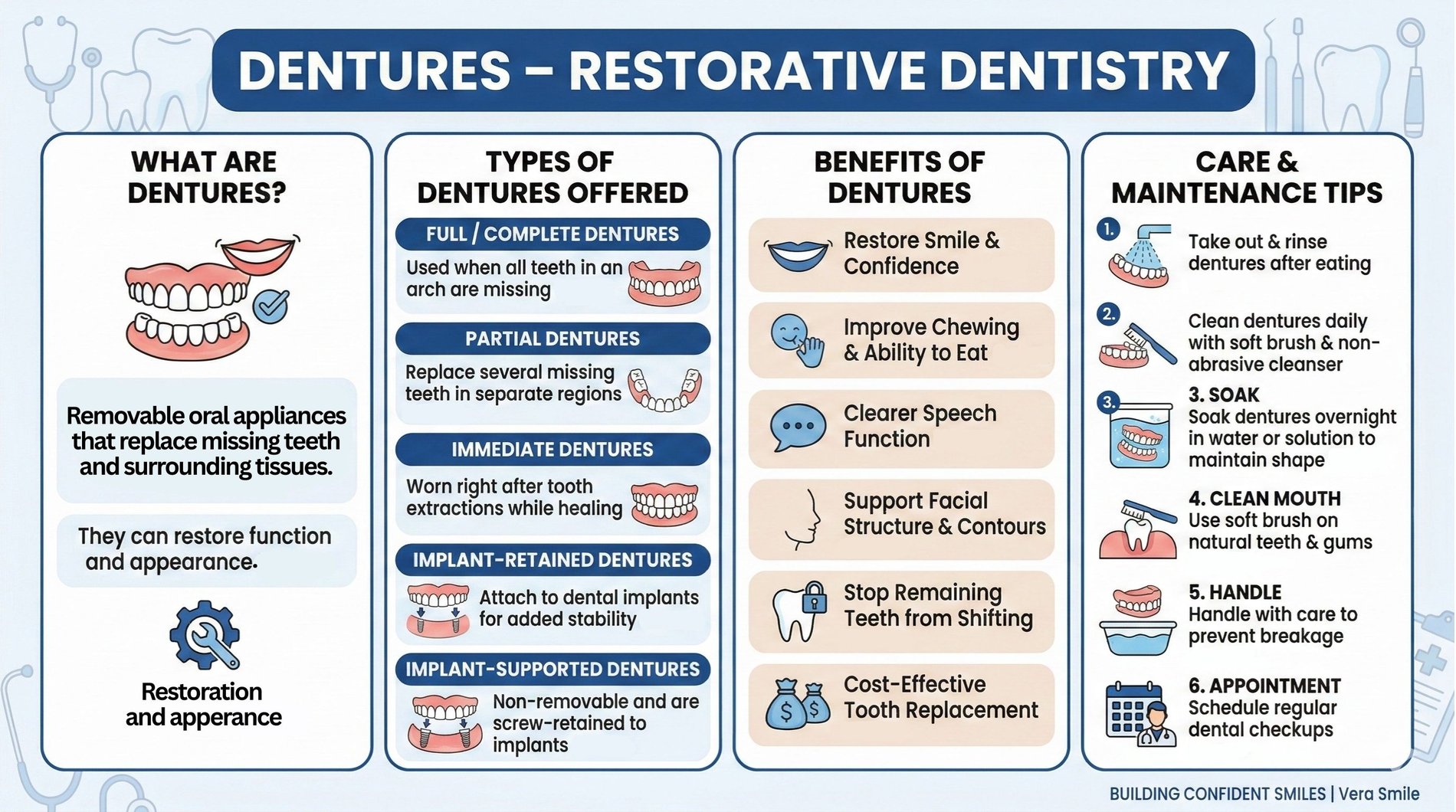
How Dentures Work
Dentures function as custom-made prosthetic appliances designed to replace missing teeth and restore both appearance and oral function. They are carefully molded to fit the contours of the gums and jawbone, creating a secure and comfortable base for speaking, chewing, and smiling.
Complete dentures replace all teeth in an arch, resting directly on the gums, while partial dentures fill gaps between remaining natural teeth and are anchored with precision clasps or attachments. Modern dentures often use lightweight acrylic or flexible materials for a natural look and improved comfort.
In advanced cases, implant-supported dentures provide added stability by securing the denture to titanium implants placed in the jawbone. This prevents slipping, enhances chewing efficiency, and helps preserve bone structure, offering a more permanent and lifelike alternative to traditional removable designs.
What Are the Types of Dentures?
Modern dentures come in various forms, each designed to address different degrees of tooth loss, comfort preferences, and budget levels. From removable partials to fully implant-supported systems, each type offers unique benefits for restoring both function and aesthetics.
- Complete (Full) Dentures: Replace all teeth in the upper or lower arch and rest directly on the gums and underlying bone. Modern CAD/CAM and 3D-printed versions improve precision, retention, and natural esthetics. Typically require relines or replacements every 5–7 years due to bone resorption.
- Partial Dentures: Replace multiple missing teeth while using remaining natural teeth for support. Secured with clasps or precision attachments to prevent adjacent tooth movement. Ideal for patients who are not suitable candidates for implants or bridges.
- Immediate / Same-Day Dentures: Placed immediately after extractions to maintain appearance and chewing ability during healing. Serve as temporary solutions until the gums and bone stabilize for final dentures. Require periodic relines or adjustments.
- Permanent Dentures: Long-term, stable prostheses supported by implants or advanced attachment systems. Provide superior chewing efficiency, comfort, and natural feel. Help minimize bone loss and eliminate the need for adhesives.
- Flexible Dentures: Lightweight and bendable alternatives to rigid acrylic dentures, offering enhanced comfort and aesthetics. Ideal for patients with acrylic allergies. Require careful hygiene to prevent staining and bacterial buildup.
- Silicone Dentures: Feature a soft silicone lining that cushions the gums and distributes pressure evenly. Excellent for patients with sensitive oral tissues or thin ridges. Regular liner replacement is needed for comfort and hygiene. Safe at-home cleansers include non-abrasive denture solutions specifically formulated for soft liners; avoid alcohol- or bleach-based products that degrade elasticity.
- Implant-Supported Dentures: Combine the stability of dental implants with the affordability of removable dentures. Usually supported by two to six implants per arch, offering strong retention, improved function, and natural aesthetics. Recommended as the first-choice solution for complete edentulism.
Each option tailored to your clinical condition and lifestyle, with implant-retained and flexible systems offering the most advanced comfort and functionality in modern restorative dentistry.
What Are the Different Materials of Dentures?
Dentures are made from various materials, each offering a distinct balance of durability, comfort, aesthetics, and cost. The table below summarizes the most common denture materials and their key characteristics:
| Type | Durability | Comfort | Aesthetics | Maintenance | Cost (avg. Europe/Turkey) |
| Complete Dentures | 5–7 yrs | Medium | Natural look with skilled lab work | Relines every 2–3 yrs | €500–€1,200 per arch |
| Partial Dentures | 5–8 yrs | Medium–High | Blends with natural teeth | Cleaning + clasp checks | €400–€900 |
| Immediate Dentures | Short-term | Medium | Maintains smile after extraction | Frequent relines | €600–€1,000 |
| Permanent Dentures | 10+ yrs | Very High | Closest to natural teeth | Professional care | €3,000–€8,000 |
| Flexible Dentures | 5–7 yrs | High | No visible metal clasps | Careful cleaning | €600–€1,200 |
| Silicone Dentures | 4–6 yrs | High for sensitive gums | Natural look with soft liner | Liner replacement | €700–€1,500 |
| Implant-Supported Dentures | 10–15 yrs | Very High | Most natural aesthetics | Implant hygiene | €4,000–€10,000 |
What Alternative Denture Base Materials Can Be Used for Allergic Patients?
For patients with allergies or sensitivities to traditional acrylic (polymethyl methacrylate, PMMA) denture bases, several hypoallergenic alternatives are available that provide both comfort and safety:
- Flexible Thermoplastic Resins (Nylon-Based): Materials such as Valplast or Flexite are metal-free, monomer-free, and biocompatible, making them ideal for patients allergic to acrylic or metal components. They also offer excellent flexibility, reducing irritation and pressure points.
- Polycarbonate Resins: These lightweight, durable materials are resistant to fracture and chemical reactions, making them suitable for patients sensitive to methyl methacrylate monomer or traditional denture adhesives.
- Titanium Denture Bases: Titanium is hypoallergenic, corrosion-resistant, and biocompatible, often used in implant-supported dentures or frameworks for patients with severe material sensitivities.
- Acetal Resin (Polyoxymethylene): A rigid, metal-free alternative to acrylic, acetal resin offers good strength and esthetics without triggering common acrylic allergies. It is particularly effective for partial denture frameworks.
- Silicone-Based Liners and Soft Linings: Used to cushion denture bases for patients with sensitive mucosa or thin ridges. Medical-grade silicones are non-allergenic and improve comfort when combined with hypoallergenic base materials.
These alternative materials ensure that even patients with chemical sensitivities can enjoy stable, comfortable, and aesthetically pleasing dentures tailored to their specific clinical and biological needs.
How Does Choosing Acrylic vs Composite vs Ceramic Denture Teeth Change Chewing Noise and Long-Term Wear Patterns?
The choice between acrylic, composite, and ceramic denture teeth directly affects both the chewing sound and the long-term wear characteristics of the prosthesis. Acrylic teeth, made from polymethyl methacrylate (PMMA), are lightweight and soft, producing the least chewing noise and a more natural, cushioned bite. They wear down more quickly and may require replacement after several years.
Composite denture teeth offer a balanced solution , they are reinforced with microfillers or hybrid polymers, providing greater durability than acrylic while still maintaining quiet, smooth chewing performance. They minimize clicking sounds and resist surface wear effectively.
Ceramic (porcelain) denture teeth are the most durable and maintain their gloss and shape for many years, but their hardness can generate a distinct clicking sound during chewing and may gradually wear down opposing teeth. Acrylic provides maximum comfort and quietness but less longevity, ceramic offers superior durability with more sound, and composite teeth deliver an optimal balance between noise control, comfort, and long-term wear resistance.
What Is the Denture Procedure Process Like?
The denture procedure involves several structured stages to ensure the final prosthesis is functional, stable, and natural in appearance. Depending on the patient’s condition, the process may follow a traditional sequence or an accelerated same-day denture approach.
- Initial Consultation & Dental Impressions: The process begins with a detailed examination of the mouth, including bone structure, gum health, and bite alignment. Diagnostic imaging and impressions are taken to design a custom prosthesis. Accurate impressions improve denture retention and comfort, helping determine whether the patient needs complete, partial, or implant-supported dentures.
- Tooth Extractions and Healing: Non-restorable teeth are extracted before denture fitting. Healing generally takes 6–12 weeks, allowing the gums and bone to remodel for optimal fit. The total cost of dentures with extractions depends on the number of teeth removed and the complexity of the case. Proper healing enhances the long-term stability and comfort of the prosthesis.
- Trial Denture Fitting: A trial denture made of wax or resin is used to assess the look, fit, and bite before the final version is produced. The dentist and patient work together to refine tooth alignment, size, and aesthetics. This step minimizes post-delivery adjustments and ensures patient satisfaction with the final design.
- Final Denture Fabrication: Once the trial denture is approved, the definitive prosthesis is fabricated using heat-cured acrylics, porcelain, or digital CAD/CAM systems. Digital workflows enhance precision and reduce the need for future adjustments. Patients receive detailed guidance on insertion, cleaning, and adaptation to ensure comfort and longevity.
- Same-Day Denture Process: For patients seeking faster results, same-day (immediate) dentures are created before tooth extraction and placed directly after removal. This allows patients to maintain function and aesthetics throughout healing. Frequent relines are required as the gums adjust, but this approach restores confidence and comfort without long waiting periods.
Many patients now choose affordable digital dentures and implant-supported options in Turkey, where modern CAD/CAM technologies, transparent pricing, and European-standard protocols make full-mouth restoration efficient, aesthetic, and cost-effective.
How to Use Denture Adhesives and Comfort Solutions
Denture adhesives play an important role in improving stability, minimizing movement, and enhancing comfort for patients wearing removable dentures. They act as a cushion between the denture base and the gums, helping prevent irritation and improving confidence while eating or speaking.
To use adhesive correctly, start with a clean, dry denture and apply small, evenly spaced dots or strips of adhesive to the fitting surface, avoiding excessive amounts. Insert the denture and press firmly into place for several seconds to ensure a secure seal. Most products provide reliable hold for 8–12 hours. At night, dentures should be removed, and all adhesive residue cleaned from both the denture and gums.
Comfort solutions also include soft liners, relines, and moisturizing gels that reduce friction and enhance fit, especially for patients with sensitive gums or thin ridges. Clinical research confirms that denture adhesives significantly improve retention and chewing efficiency, particularly in individuals with advanced bone resorption or long-term denture wear.Used correctly and under professional supervision, denture adhesives offer a safe, effective way to enhance comfort, function, and overall satisfaction with removable prostheses.
Which Adhesives Are Safe?
Safe denture adhesives are zinc-free, clinically tested, and approved for daily oral use by dental professionals and regulatory authorities. Modern formulations rely on cellulose-based or polyvinyl ether ingredients that provide strong adhesion without toxic or irritant effects.
- Zinc-Free Formulas: Choose adhesives labeled zinc-free to avoid potential health issues linked to excessive zinc intake from long-term use.
- Hypoallergenic Options: Products such as Fixodent Original (zinc-free), Corega Ultra, and Secure Denture Adhesive Cream are widely regarded as safe, biocompatible choices.
- Water-Soluble or Silicone-Based Adhesives: Easier to clean and less likely to cause gum irritation or buildup over time.
- ADA- or CE-Approved Products: Always check for certification from the American Dental Association (ADA) or European CE mark, which indicates product safety and quality compliance.
Patients should avoid home-made or unapproved adhesive mixtures and consult their dentist if experiencing persistent gum soreness or reduced denture stability. Using a professional-grade, zinc-free adhesive in moderation ensures long-term comfort and safety for daily denture wear.
How to Put On Denture Adhesives
Applying denture adhesive correctly ensures maximum comfort, stability, and hygiene throughout the day. Follow these simple, dentist-approved steps:
- Clean and Dry the Denture: Thoroughly brush your dentures with a non-abrasive cleaner and rinse with water. Make sure the surface is completely dry before applying adhesive; moisture can reduce bonding strength.
- Apply a Small Amount of Adhesive: Use small dots or thin strips of adhesive on the inner fitting surface (the side that contacts the gums). Avoid spreading it too close to the edges to prevent overflow.
- Insert and Press Firmly: Position the denture correctly in your mouth and press it down gently but firmly for several seconds to secure the seal. Hold in place until it feels stable.
- Wait Before Eating or Drinking: Allow about 5–10 minutes after insertion before consuming food or beverages to ensure the adhesive sets properly.
- Remove and Clean Daily: At the end of the day, remove the denture carefully, rinse your mouth, and clean off all adhesive residue using warm water and a soft brush.
Using too much adhesive won’t improve grip, it may cause leakage or discomfort. Always follow the manufacturer’s guidelines and consult your dentist if frequent reapplication is needed, as it could indicate a poor fit or the need for a denture reline.
Do Salivary Substitutes or Gels Interfere with Denture Adhesives
Yes, salivary substitutes and moisturizing gels can sometimes interfere with denture adhesives, since they contain lubricants such as glycerin or carboxymethylcellulose that increase surface moisture and reduce bonding strength between the denture and gum tissue. To avoid this, patients should apply salivary substitutes at separate times, ideally before bedtime or several hours after adhesive application, and choose water-based gels labeled as compatible with adhesives. Those with chronic dry mouth (xerostomia) benefit from soft liners or saliva-stimulating treatments that improve comfort without weakening retention.
Bruxism (tooth grinding or clenching) influences adhesive performance and denture stability. The constant grinding forces cause microfractures, loosening, and accelerated wear of the prosthesis, especially in acrylic bases. Management typically includes custom night guards, reinforced denture materials, and occlusal adjustments to balance pressure. In severe cases, botulinum toxin therapy or behavioral treatment may be recommended to protect both the dentures and oral tissues.
What Are the Types of Denture Adhesives?
Denture adhesives come in several formulations, each designed to improve retention, comfort, and ease of use for different types of prostheses. Choosing the right one depends on personal preference, denture fit, and saliva flow.
1. Cream Adhesives: The most common type, providing a strong and cushioned hold. They spread easily on the denture base and create a secure seal against food particles. Suitable for daily use and ideal for patients with normal saliva levels.
2. Powder Adhesives: Applied as a light dusting on a moist denture surface, these offer a thinner, less bulky layer of adhesion. They’re preferred by users who want a clean feel without excess residue and work well for close-fitting dentures.
3. Strips or Pads: Pre-cut adhesive films placed directly onto the denture base. They are mess-free, easy to apply, and ideal for beginners or travel use. The adhesive activates with moisture and provides consistent hold throughout the day.
4. Gel or Cushion Adhesives: Designed to provide both adhesion and cushioning, these products help relieve pressure points and sore spots, making them especially beneficial for patients with sensitive gums or thin ridges.
5. Zinc-Free Formulations: Available in all types (cream, powder, strips), these are recommended for long-term users to avoid potential zinc overexposure. They are biocompatible, safe, and preferred for patients with sensitivities or those using adhesives daily.Each adhesive type serves a specific need, creams for maximum hold, powders for a clean feel, and strips for convenience, ensuring a comfortable, confident fit tailored to individual lifestyles and oral conditions.
Choosing the Best Denture Adhesive for You
The best denture adhesive depends on oral anatomy, denture design, and patient expectations. For patients seeking maximum hold during meals, pastes are more effective. Those preferring light, all-day use often choose powders, while individuals with sensitive gums benefit from cushion grip formulations. Dentists emphasize that adhesives should support, not substitute, proper denture fit. Long-term reliance on adhesives without professional evaluation hide underlying issues like bone resorption or ill-fitting bases.
Get a Free Consultation
How to Apply and Remove Adhesive Safely
Safe use of adhesive paste for dentures ensures comfort without compromising oral health. The denture should be cleaned and dried thoroughly before applying small dots or thin strips of adhesive, avoiding excess amounts. Once applied, the denture is inserted and pressed firmly to secure it in place. Removal involves rinsing the mouth with warm water, gently rocking the denture to lift it out, and cleaning away any remaining adhesive with a soft brush and non-abrasive cleanser. Patients who followed recommended application amounts experienced fewer sore spots and longer adhesive effectiveness (“Clinical Guidelines for Denture Adhesive Use,” Journal of Prosthetic Dentistry).
What Are the Advantages of Dentures?
Dentures remain one of the most versatile and cost-effective tooth replacement options in modern dentistry. Designed to restore both function and aesthetics, they help patients regain confidence, improve chewing ability, and maintain facial harmony after tooth loss. Whether full, partial, flexible, or implant-supported, dentures offer personalized solutions that fit different clinical needs and budgets. Their non-surgical nature, quick fabrication process, and natural-looking results make them especially appealing for patients seeking a reliable and accessible restorative option.
- Affordability: Dentures are one of the most cost-effective tooth replacement solutions, making them accessible to a wide range of patients. The cost is significantly lower than dental implants or fixed bridges, which makes dentures an attractive option for those seeking affordable dentures without compromising on restoring appearance and function.
- Non-surgical treatment: Unlike implants, dentures do not require surgical placement. This makes them suitable for patients with medical conditions, insufficient bone density, or those who prefer a non-invasive approach. It means that treatment carries fewer medical risks and has a shorter recovery time.
- Quick restoration of appearance and function: Dentures fabricated and delivered in a matter of weeks. Immediate dentures provide teeth on the same day as extractions, helping patients avoid the psychological and functional impact of being without teeth.
- Versatility in design: Available as complete, partial, flexible, or implant-supported, dentures offer solutions for patients with varying levels of tooth loss. This makes them adaptable to individual needs and budgets.
- Improved aesthetics and confidence: Modern dentures use natural-looking materials that closely mimic the shade and translucency of real teeth. This enhances facial appearance, restores smile harmony, and improves self-esteem.
- Functional improvement: Dentures restore basic chewing and speech functions, helping patients maintain a varied diet and clearer pronunciation, which are often compromised with missing teeth.
What Are the Disadvantages of Dentures?
While dentures are an effective and affordable solution for replacing missing teeth, they also come with certain limitations and maintenance requirements. Understanding these disadvantages helps patients set realistic expectations and choose the most suitable restorative option for their needs.
- Frequent relines or replacements: Gum and bone resorption naturally occur after tooth loss, altering the fit of dentures over time. To maintain stability and comfort, dentures must be relined every 2–3 years and replaced approximately every 5–7 years.
- Bone resorption: Because dentures rest on the gums without stimulating the jawbone, they do not prevent bone loss. Over time, bone resorption changes facial structure, leading to a sunken appearance and reducing long-term stability.
- Possible discomfort: Even well-made dentures cause sore spots, irritation, or difficulty adapting, particularly with lower dentures. Adhesives are often required to enhance stability, but overuse indicates an improper fit.
- Reduced chewing efficiency: While dentures restore function, they are not as strong or stable as implants. Hard or sticky foods are difficult to chew, and patients need to adjust their diets.
- Adaptation period: New denture wearers often need time to adjust to speaking and eating. Initial discomfort and altered taste perception are common before adaptation.
- Maintenance requirements: Daily cleaning, overnight soaking, and careful storage are necessary to prevent infections such as denture stomatitis and to maintain prosthesis longevity. Compared to natural teeth or implants, dentures demand a stricter hygiene routine.
- Fragility: Dropping or mishandling dentures causes fractures or chips, requiring repair or replacement. This fragility makes careful storage and handling essential.
How to Fix Denture Problems
Even with advancements in digital fabrication and high-quality materials, some patients may experience common denture issues such as looseness, irritation, or fractures over time. Recognizing these problems early and applying the right solutions helps maintain comfort, function, and the long-term durability of the prosthesis.
- Loose Dentures and How to Fix Them: Dentures may loosen as the jawbone and gum tissues gradually shrink following tooth loss, altering the fit. This can cause movement, clicking, or difficulty chewing. The best long-term solution is a denture reline, where the internal surface is reshaped to fit the new contours of the mouth. For severe bone resorption, implant-supported dentures provide exceptional stability and prevent further bone loss. While adhesives can offer temporary improvement, a professional adjustment is essential to restore secure, comfortable fit.
- Pain or Sore Spots from Dentures: Soreness occurs when dentures rub against the gums or exert uneven pressure. Common causes include ill-fitting bases, bone irregularities, or insufficient post-extraction adjustments. Relief options include professional realignment, soft liners, or cushion grips that reduce friction. Persistent pain, swelling, or ulcers may indicate infection or irritation and should be promptly evaluated by a dentist.
- Broken or Cracked Dentures: Dentures crack or fracture due to impact (such as dropping them) or biting hard foods. Minor surface breaks can be temporarily managed with at-home denture repair kits, but these are not long-term fixes. Professional repair or replacement is recommended to restore proper alignment, bite accuracy, and durability. For severe or repeated fractures, creating a new or reinforced prosthesis, potentially with a metal or high-impact acrylic base, ensures a longer lifespan and better performance.
How Much Do Dentures Cost?
Affordable dentures provide patients with an accessible solution for restoring function, comfort, and aesthetics after tooth loss. While the desire for affordability is universal, dentures cost varies significantly depending on the type of prosthesis, the materials used, and the treatment location. Patients often compare dentures cost in Turkey with prices in the UK, US, and EU, since Turkey offers internationally accredited clinics at far lower rates while maintaining advanced technology and global hygiene standards.
| Region | Complete Dentures (per arch) | Partial Dentures | Immediate Dentures | Implant-Supported Dentures | Cost of Full Dentures with Extractions |
| Turkey | €500–€1,200 | €400–€900 | €600–€1,000 | €4,000–€6,000 | €700–€1,500 |
| UK | €1,200–€2,500 | €900–€1,800 | €1,200–€2,000 | €7,000–€12,000 | €1,800–€3,500 |
| US | €1,500–€3,500 | €1,200–€2,500 | €1,500–€2,800 | €8,000–€15,000 | €2,500–€4,500 |
| EU (Germany/France) | €1,000–€2,200 | €800–€1,600 | €1,000–€1,800 | €6,000–€10,000 | €1,600–€3,000 |
| India | €300–€800 | €250–€600 | €400–€700 | €2,500–€5,000 | €500–€1,000 |
What Factors Affect the Price of Dentures?
The total cost of dentures varies depending on several clinical and practical factors that influence materials, design, and treatment complexity.
- Type of Denture: Complete, partial, flexible, and implant-supported dentures differ significantly in cost. Implant-based and permanent dentures are the most expensive due to surgical components and higher material quality.
- Materials Used: High-grade acrylics, composites, or ceramics enhance aesthetics and longevity but come at a higher price. Flexible or silicone-lined dentures also increase cost due to specialized materials.
- Fabrication Technology: CAD/CAM digital design and 3D printing improve precision and comfort but raise laboratory expenses compared to conventional fabrication.
- Number of Teeth or Arches Replaced: Replacing one arch costs less than a full set. The more extensive the restoration, the higher the overall cost.
- Dentist’s Expertise and Clinic Standards: Clinics with AACD-certified dentists, modern equipment, and in-house digital labs charge more but deliver superior fit, aesthetics, and durability.
- Location and Country: Treatment costs differ greatly between regions. For instance, dentures in Turkey cost 60–80% less than in Western Europe or the USA, while maintaining European-level quality.
- Additional Procedures: Tooth extractions, bone smoothing, soft liners, or relines add to the total fee but are often necessary for long-term comfort and stability.
What Are the Financing Options for Dentures?
Dentures are an important investment in both function and aesthetics, and several financing options are available to make treatment more accessible and budget-friendly. Patients can choose from payment plans, dental credit programs, or health savings accounts to manage the cost over time without compromising on quality.
- In-House Payment Plans: Many dental clinics, especially in Turkey and Europe, offer interest-free installment options that allow patients to pay in monthly segments directly to the clinic. These are ideal for patients seeking flexible budgeting without third-party approval.
- Dental Credit Cards: Specialized healthcare financing services such as CareCredit or Sunbit provide credit lines exclusively for dental treatments. They offer short-term interest-free periods or extended repayment options, depending on the treatment cost.
- Personal or Medical Loans: Some patients prefer using unsecured dental loans from banks or financing companies like LendingClub, which provide fixed-rate monthly payments over 6–84 months.
- Health Savings Accounts (HSA) and Flexible Spending Accounts (FSA): In countries that support these programs, funds from HSAs or FSAs can be used tax-free to pay for dentures and related procedures.
- Dental Tourism Packages: In destinations like Turkey, many clinics include accommodation, transfers, and treatment in transparent all-inclusive packages, reducing total out-of-pocket expenses compared to Western pricing.
Before choosing a financing option, patients should review interest rates, payment duration, and eligibility criteria to find a plan that aligns with their financial comfort and long-term oral health goals.
How Much Do Different Types of Dentures Cost?
The cost of dentures depends on their type, material, design, and fabrication method. While traditional removable dentures are the most affordable, advanced options such as flexible or implant-supported dentures provide greater comfort and realism at a higher cost. Below is a general guide to the average price range for different types of dentures:
| Type of Denture | Average Lifespan | Features | Estimated Cost (Europe / Turkey) |
| Complete (Full) Denture – per arch | 5–7 years | Replaces all teeth in one jaw; conventional or digital fabrication | €500–€1,000 |
| Partial Denture | 5–8 years | Replaces several missing teeth; metal or flexible base options | €400–€900 |
| Immediate / Same-Day Denture | Short-term | Placed right after extraction to maintain appearance | €600–€1,000 |
| Flexible Denture | 5–7 years | Lightweight, comfortable, no metal clasps; great aesthetics | €600–€1,200 |
| Silicone Denture | 4–6 years | Soft lining for sensitive gums; pressure-distributing design | €700–€1,500 |
| Permanent Denture (Implant-Retained) | 10+ years | Fixed or removable prosthesis anchored by implants | €3,000–€8,000 |
| Implant-Supported Denture (Full Arch) | 10–15+ years | Most stable and natural-looking option; supported by 4–6 implants | €4,000–€10,000 |
How to Care for and Maintain Dentures After Treatment
Proper denture aftercare and maintenance are essential for ensuring long-term comfort, hygiene, and durability. Since dentures rest directly on the gums, consistent cleaning, correct handling, and periodic adjustments help prevent infections, irritation, and fit-related problems. Below are the key steps and best practices for effective denture care:
- Daily Cleaning Routine: Clean dentures every day to remove food debris, plaque, and stains. Use a soft denture brush and non-abrasive denture cleaner, never regular toothpaste, as it can scratch the surface.
- Relining and Adjustments: Over time, gum and bone resorption can alter how dentures fit. A professional reline adjusts the inner surface for a secure, comfortable fit. While at-home reline kits offer short-term relief, clinical relining ensures long-term stability, improved chewing, and reduced irritation.
- Repairing Dentures at Home vs. Dentist: Small cracks or broken clasps can occur from wear or accidental drops. DIY repair kits may help temporarily, but adhesives not designed for oral use can cause toxicity or damage. Always seek professional repair from a prosthodontist to maintain correct bite alignment and strength.
- Storage and Handling: Keep dentures moist at all times when not in use to prevent warping. Store them in cool water or denture-soaking solution overnight. Avoid hot water, which distorts acrylic bases. Handle them carefully, preferably over a soft towel or basin, to prevent accidental breakage.
How Do Dentures Affect Speech and How to Practice Correct Pronunciation?
It’s common for new denture wearers to experience temporary speech changes as their mouth adapts to the new prosthesis. Because dentures slightly alter the shape of the oral cavity and tongue position, certain sounds, especially “s,” “sh,” “t,” “f,” and “th”, initially sound unclear or slurred. This adjustment phase lasts a few days to a few weeks, depending on the individual’s muscle coordination and denture fit.
How Dentures Affect Speech:
- Altered Tongue Position: The tongue must adjust to new spatial boundaries created by the denture.
- Changes in Airflow: The denture base and teeth can modify airflow, influencing sibilant sounds like “s” and “sh.”
- Movement or Clicking: Ill-fitting dentures can shift slightly during speech, creating clicking noises or minor lisping.
How to Practice and Improve Pronunciation:
- Read Aloud Daily: Practice reading aloud for 10–15 minutes a day to retrain tongue movement and muscle coordination.
- Focus on Problem Sounds: Repeatedly pronounce “s,” “sh,” and “t” sounds in short sentences (e.g., “she sells seashells”) to refine airflow control.
- Speak Slowly and Clearly: Slow, deliberate speech helps stabilize the denture and improve word precision.
- Practice in Front of a Mirror: Visual feedback enhances awareness of tongue and lip placement.
- Use Denture Adhesive (if needed): Improves denture stability during the adaptation period, reducing clicking or movement.
With consistent practice and proper fit, most patients regain clear, confident speech within one to two weeks. If speech difficulties persist, a minor adjustment or reline by the dentist often resolves the issue completely.
What’s the Safest Way to Disinfect and Clean Dentures?
The safest and most effective way to disinfect dentures is through a daily cleaning routine that removes food debris, stains, and microorganisms without damaging the material. Proper disinfection prevents infections such as denture stomatitis and ensures long-term comfort and hygiene.
- Rinse After Every Meal: Gently rinse dentures with lukewarm water to wash away food particles. Avoid hot water, which can warp the acrylic base.
- Brush Gently with a Denture Brush: Use a soft-bristled denture brush and non-abrasive denture cleanser. Regular toothpaste is too abrasive and can scratch the surface, making it easier for bacteria and stains to adhere.
- Use Denture Cleaning Tablets for Disinfection: Soak dentures daily in an effervescent cleansing solution made from denture tablets. These contain safe disinfectants such as sodium perborate or sodium bicarbonate, which remove plaque and kill bacteria and fungi without harming the prosthesis.
- Avoid Household Cleaners and Bleach: Never use bleach, vinegar, or regular mouthwash (especially those containing alcohol) on dentures, as these can discolor or weaken the acrylic.
- Rinse Thoroughly Before Wearing: After soaking, rinse dentures thoroughly with clean water to remove any chemical residue from the cleansing solution.
- Keep Dentures Moist When Not in Use: Store dentures in clean water or a soaking solution overnight to prevent warping and bacterial buildup.
What to Eat During the First Month After Getting Dentures
During the first month with new dentures, your mouth is still adjusting to the shape, pressure, and movement of the prosthesis. To promote healing and ensure comfort, it’s important to progress your diet gradually, starting with very soft foods and slowly reintroducing more texture as your gums adapt.
- Week 1: Stick to soft, easy-to-chew foods such as mashed potatoes, yogurt, scrambled eggs, pureed soups, smoothies, oatmeal, and soft fruits like bananas or avocados. Avoid hot, spicy, or hard foods that may irritate tender tissues.
- Week 2: As soreness decreases, introduce soft-cooked vegetables, pasta, rice, and finely ground meats such as chicken or fish. Continue cutting food into small pieces and chew slowly using both sides of your mouth to prevent denture movement.
- Week 3: Begin testing slightly firmer foods like omelets, steamed vegetables, and soft sandwiches. Avoid sticky or crunchy foods (nuts, caramel, crusty bread) that could loosen or damage the denture.
- Week 4: Most patients can return to a more varied diet by the end of the first month. Continue focusing on balanced nutrition, lean proteins, cooked grains, and fruits, and drink plenty of water to support saliva flow and comfort.
What’s the Difference Between Dentures and Dental Implants?
When deciding between dentures vs implants, patients weigh factors such as durability, comfort, cost, and long-term effects on oral health. Both options restore chewing and aesthetics, yet their mechanisms differ. Dentures rest on the gums and are removable, while dental implants integrate into the jawbone and provide a fixed foundation for crowns, bridges, or implant-supported dentures.
| Feature | Dentures | Dental Implants |
| Durability | 5–7 years before relining or replacement needed | 15–25 years with proper care, often lifelong |
| Comfort | Relies on gum support; adhesives sometimes required | Feels closest to natural teeth; stable chewing and speaking |
| Cost | €500–€1,200 per arch (Turkey); higher in UK/US/EU | €800–€1,500 per implant in Turkey; €2,000–€4,000 in UK/US/EU |
| Bone Health | Does not prevent bone resorption; gums shrink over time | Preserves jawbone through osseointegration, preventing bone loss |
| Maintenance | Daily cleaning, soaking, relining every few years | Regular brushing/flossing, dental check-ups; no adhesives required |
Why Are Dentures in Turkey So Popular?
Dentures in Turkey have become one of the most sought-after dental tourism treatments due to the country’s combination of affordability, advanced clinical standards, and patient-centered care. Patients from the UK, US, and EU increasingly travel abroad to Turkey to access high-quality prosthetic dentistry at significantly lower prices while enjoying internationally recognized safety protocols.
Turkey’s popularity stems from several factors. The first is affordability. Dentures and implant-supported prostheses cost a fraction of Western prices, even when travel and accommodation are included. For example, complete dentures in Turkey start around €500 per arch, compared to €1,500–€3,500 in the US or €1,200–€2,500 in the UK. The second factor is the presence of experienced dentists and prosthodontists, many of whom are internationally trained and specialize in digital prosthodontics, CAD/CAM fabrication, and implant-supported solutions.
The country offers all-inclusive packages that streamline treatment by covering airport transfers, hotel stays, and clinical appointments, making the process more convenient for international patients.
How Have Dentures Evolved Throughout History and What Are the Modern Innovations?
The history of dentures spans centuries, reflecting continuous advancements in dental science and material technology. Early dentures were crude replacements carved from wood, bone, or ivory, used as far back as the 16th century in Japan. By the 18th century, dentures made of human or animal teeth were mounted on gold or metal bases, offering improved stability but poor hygiene and limited comfort. A major breakthrough came in the 19th century with the introduction of vulcanite rubber and later acrylic resins, which provided a durable and affordable base for prosthetic teeth. These developments laid the foundation for the widespread use of complete and partial dentures in modern dentistry (“The Evolution of Dentures: From Ivory to Acrylic,” Journal of Dental History).
In the 20th century, the transition to porcelain and acrylic artificial teeth allowed dentures to mimic natural enamel in both color and translucency. The rise of prosthodontics as a specialty brought more scientific design to occlusion and fit, improving chewing efficiency and reducing sore spots. By the late 20th century, digital workflows began transforming denture fabrication.
Modern innovations in dentures focus on precision, comfort, and aesthetics. CAD/CAM milling and 3D printing have revolutionized denture design, producing highly accurate bases with fewer appointments and adjustments. Flexible nylon dentures eliminate visible metal clasps and provide enhanced comfort. Silicone liners and soft materials reduce sore spots for patients with thin ridges. Implant technology has given rise to implant-supported dentures, dramatically increasing stability and patient satisfaction. Niche developments such as Qatteeey dentures, designed to combine advanced comfort solutions with high-strength polymers, highlight the trend toward patient-specific customization. These innovations aim to make dentures more functional, durable, and lifelike than ever before (“Advances in Digital Denture Fabrication,” Journal of Prosthodontics).