
A dental bridge is a reliable and natural-looking solution for people who have missing teeth and want to restore comfort, confidence, and balance to their smile. Tooth loss affects daily life, chewing becomes difficult, speech changes, and the overall harmony of the smile is lost. Dental bridges restore these functions by replacing missing teeth with fixed, stable restorations that look and feel natural.
Modern bridges not only improve appearance and function but help stimulate the underlying bone and support neighboring teeth, preventing further shifting or bite changes. Treatment design depends on the number of missing teeth and the patient’s oral condition, ranging from traditional fixed bridges to implant-supported systems that offer higher stability and durability.
A wide range of materials, including porcelain-fused-to-metal, zirconia, and all-ceramic, allows patients to match strength, aesthetics, and budget. Costs vary based on the material, bridge length, and whether implants are included, but all options aim to deliver lasting function and a confident, natural smile.
What Is a Dental Bridge?
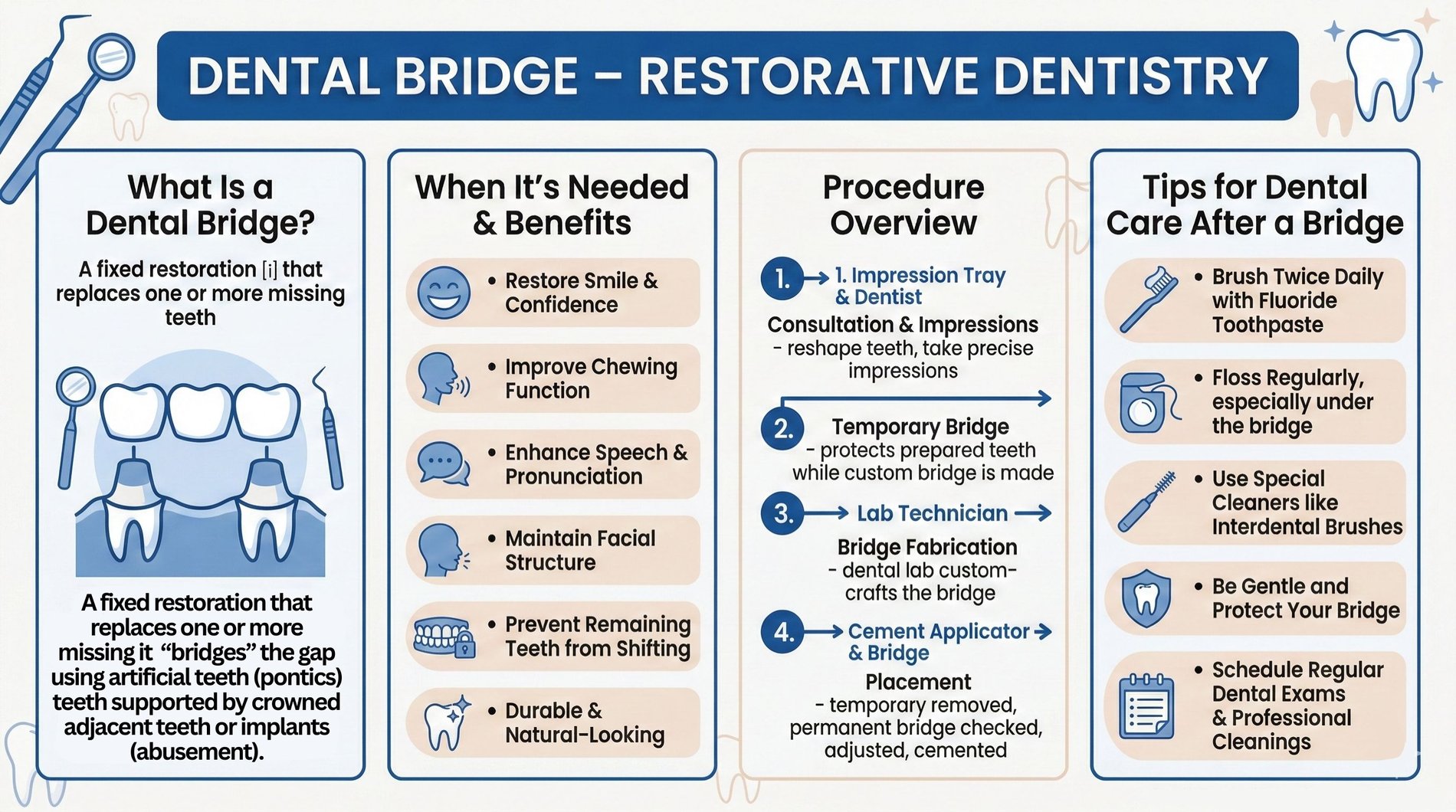
A dental bridge is a permanent prosthetic restoration that replaces one or more missing teeth. It consists of a pontic (artificial tooth) anchored to adjacent teeth or dental implants, called abutment teeth, forming a stable and natural-looking replacement. Unlike removable dentures, a bridge stays fixed in place, providing continuous comfort and function, though a temporary bridge may be placed during treatment preparation.
Beyond aesthetics, dental bridges restore bite alignment, support clear speech, and prevent neighboring teeth from shifting into empty spaces. While both bridges and implants replace missing teeth, the main difference lies in their structure: bridges rely on support from nearby teeth, whereas implants are anchored directly into the jawbone, providing independent support and stimulating bone health.
Although a bridge does not fuse to the bone like an implant, it helps maintain functional pressure on the jaw, reducing bone resorption in the treated area. When combined with good oral hygiene and regular dental care, bridges deliver long-term stability, natural appearance, and renewed confidence in everyday function.
How Do Dental Bridges Work?
Dental bridges function by creating a stable connection between the pontic and the surrounding support structures. They are anchored to adjacent teeth that are reshaped and fitted with crowns, or in some cases, supported by dental implants.
By restoring the gap left by missing teeth, a bridge re-establishes proper bite alignment, making chewing and speaking more efficient. It protects oral health by preventing neighboring teeth from shifting into the empty space, which reduces the risk of misalignment or jaw strain. From an aesthetic standpoint, bridges return a natural-looking smile, blending seamlessly with surrounding teeth and maintaining facial balance.
What Are the Types of Dental Bridges?
Several types of dental bridges exist to restore missing teeth, and the right choice depends on durability, tooth preparation, and placement needs. Each bridge design functions differently, offering unique strengths in terms of comfort, stability, and aesthetics.
- Traditional Fixed Bridge: The most common bridge type, anchored by two crowns on the natural teeth beside the gap. The pontic (false tooth) sits between them, restoring full function and natural appearance. It provides excellent stability and strength but requires reshaping the supporting teeth. Ideal for replacing one or two teeth in a row.
- Cantilever Bridge: Supported by only one abutment tooth. It preserves more natural tooth structure but places greater force on a single anchor, making it unsuitable for molars. Best used for front teeth or areas with lighter biting pressure.
- Maryland Bridge (Resin-Bonded Bridge): Uses metal or porcelain wings bonded to the back of adjacent teeth rather than full crowns. Minimal preparation preserves healthy enamel, though it offers less strength. Suitable for front teeth where aesthetics are critical and biting forces are lower.
- Implant-Supported Bridge: Anchored to dental implants surgically placed in the jawbone, offering maximum stability and longevity. No natural teeth are reshaped, and bone stimulation helps maintain jaw health. Ideal for multiple missing teeth in a row or full-arch restoration.
- Temporary Bridge: A short-term acrylic or resin bridge used while waiting for the permanent restoration. It protects prepared teeth, maintains spacing, and supports normal function during healing or lab fabrication.
Each bridge type serves a specific purpose within restorative dentistry, allowing the dentist to tailor treatment for both functional strength and natural smile aesthetics.
What Is the Dental Bridge Procedure?
The dental bridge process follows a structured series of steps designed to restore missing teeth with precision and long-lasting results. Each stage ensures proper preparation, accurate design, and a secure final placement.
- Consultation & X-Rays: The process begins with a dental examination and X-rays to assess gum health, bite alignment, and the condition of adjacent teeth or implants. These images confirm whether the mouth can support a bridge and identify strong abutment points.
- Tooth Preparation: Once suitability is confirmed, the abutment teeth are reshaped to accommodate crowns. This creates a secure base for the bridge and ensures precise fit and comfort. Local anesthesia keeps the procedure pain-free.
- Impressions and Lab Fabrication: An impression of the teeth is taken to capture the exact bite and contour. This model is sent to a dental laboratory, where technicians craft a custom bridge that matches the patient’s natural color, shape, and function.
- Temporary Bridge Placement: A temporary bridge protects the prepared teeth and maintains normal chewing and appearance while the permanent bridge is being fabricated.
- Final Fitting and Bonding: Once the permanent bridge is ready, the temporary one is removed. The new bridge is positioned, checked for bite accuracy and color match, then permanently cemented with dental adhesive to ensure long-term strength and stability.
How Much Do Dental Bridges Cost?
The dental bridge cost depends on the type of bridge, material, and treatment country. Clinics in Turkey, India, and Mexico provide more affordable options, while prices in the USA, UK, and Australia are significantly higher.
| Country | Traditional Bridge | Maryland Bridge | Implant-Supported Bridge | Temporary Bridge |
| Turkey | €300 – €600 | €250 – €500 | €900 – €2,000 | €100 – €250 |
| USA | €1,800 – €3,500 | €1,500 – €2,800 | €4,000 – €7,000 | €200 – €500 |
| UK | €1,500 – €3,000 | €1,200 – €2,200 | €3,500 – €6,000 | €180 – €400 |
| India | €250 – €500 | €200 – €400 | €800 – €1,800 | €80 – €200 |
| Australia | €1,500 – €3,200 | €1,200 – €2,400 | €3,500 – €6,500 | €150 – €350 |
| Mexico | €350 – €700 | €250 – €500 | €1,000 – €2,200 | €120 – €300 |
Dental bridge cost differences does not show quality depending on how higher or lower it is. The clinic quality, the materials, brand of the materials, and experience of the dentist is critical when deciding on how affordable the dental bridges are.
How Much Do Different Types of Dental Bridges Cost?
The cost of a dental bridge depends on its design, material, and support method. The table below compares the main bridge types, their indications, and average 2025 prices:
| Type | Tooth Prep Required | Ideal For | Average Cost (€) | Durability (Years) |
| Traditional Fixed Bridge | Two abutment crowns on adjacent teeth | One or more missing teeth in a row | €500 – €1,500 per tooth | 10–15 |
| Cantilever Bridge | One abutment tooth only | Small gaps, front teeth | €500 – €1,200 per tooth | 5–10 |
| Maryland Bridge | Minimal prep, bonded wings | Single missing front tooth | €600 – €1,200 per tooth | 5–10 |
| Implant-Supported Bridge | Requires implant placement | Multiple missing teeth in a row | €2,000 – €5,000 total | 15+ |
| Temporary Bridge | Minimal prep, acrylic/resin | Short-term replacement | €150 – €400 | Weeks–Months |
What Financing and Payment Options Are Available for Dental Bridges?
Most clinics offer flexible financing plans to make dental bridge treatment more accessible and manageable.
- In-House Installments: Interest-free monthly payment plans spread treatment costs over several months.
- Dental Tourism Savings: Patients choosing destinations like Turkey or India save up to 70–80% compared with Western countries, even after travel and accommodation costs.
- All-Inclusive Packages: Some clinics include consultation, X-rays, and temporary bridges in fixed-price packages with transparent, upfront costs.
These flexible payment options make high-quality restorative dentistry accessible without compromising materials, technology, or results.
Does Insurance Cover Dental Bridges?
Some dental insurance plans cover a percentage of the cost for traditional or Maryland bridges since they are considered restorative treatments. Implant-supported bridges often have limited or no coverage, as insurers classify them as elective. Patients are encouraged to review their dental insurance for crowns and bridges before treatment to understand the reimbursement rates.
How Long Do Dental Bridges Last?
The average dental bridge lifespan ranges from 5 to 15 years, depending on the material and the level of oral hygiene maintained. High-quality options such as zirconia or porcelain bridges often last longer, while metal or resin-based versions show faster wear. Placement plays a role as well: bridges in the front teeth experience less chewing pressure compared to those in the molars, leading to greater longevity. With consistent brushing, flossing, and dental check-ups, bridges frequently serve effectively for over a decade. Once damage or looseness occurs, replacement becomes necessary to maintain bite function and aesthetics.
Can a Bridge Be Repaired or Reused?
Yes, a dental bridge can be repaired or reused in certain cases. If the problem involves loose cement, minor porcelain chipping, or slight misalignment, a dentist can adjust or recement the same bridge once the supporting teeth are confirmed healthy. However, a bridge cannot be reused when there is extensive damage, decay under the abutments, or fracture of the framework. In those cases, a full replacement is required. Choosing durable materials such as zirconia or porcelain-fused-to-metal can reduce future repair needs and extend the bridge’s lifespan.
How to Care for a Dental Bridge
Proper aftercare ensures that a dental bridge remains functional, stable, and aesthetically pleasing for many years. Consistent hygiene and regular maintenance protect both the bridge and the supporting teeth.
- Daily Brushing and Flossing: Use a soft-bristled toothbrush with fluoride toothpaste to clean all surfaces. Bridge flossers, superfloss, or interdental brushes help clean under the pontic and around the abutments, preventing plaque buildup and protecting surrounding gums.
- Avoid Hard or Sticky Foods: Limit hard nuts, ice, and sticky candies, which can loosen or crack the bridge and strain the cement seal. Choose softer foods that maintain stability and protect both natural and restored teeth.
- Regular Dental Check-Ups: Visit your dentist every six months for examination and professional cleaning. The dentist checks bite alignment, monitors gum health, and detects early decay or cement wear before it causes complications.
- Maintain Gum and Tooth Strength: Healthy supporting teeth and gums are essential for bridge longevity. Use antibacterial mouthwash, high-fluoride gels, and eat a balanced diet rich in vitamins and minerals to reinforce tissue health.
- Protect the Abutment Teeth: Abutment teeth bear extra load; keeping them clean and strong prevents loosening or bridge failure. Night guards may be recommended for patients who grind their teeth.
Is a Dental Bridge Painful?
No. A dental bridge is not painful when properly fitted and placed under local anesthesia. Some patients experience temporary discomfort or mild sensitivity as the gums and abutment teeth adjust, but this subsides within a few days. Persistent pain or chewing difficulty is not normal and indicates an issue such as poor bite alignment, decay, or infection, conditions that require prompt dental evaluation and correction.
What Are the Benefits of Dental Bridges?
Dental bridges restore both function and appearance after tooth loss, providing a stable, natural-looking replacement without surgery. They help maintain bite balance, improve confidence, and protect long-term oral health.
- Natural Appearance: Porcelain or zirconia bridges blend seamlessly with natural teeth, creating a lifelike smile that preserves facial harmony and aesthetics.
- Restored Function: By replacing missing teeth, bridges restore full chewing ability and clear speech, eliminating discomfort and pronunciation issues.
- Prevention of Tooth Shifting: Bridges fill empty gaps and keep neighboring teeth from drifting out of position, maintaining proper bite alignment and jaw stability.
- Quick and Cost-Effective Treatment: Compared to dental implants, bridges provide faster results at a lower cost, without requiring surgical healing periods or bone integration.
What Are the Risks or Drawbacks?
While dental bridges are reliable and widely used, they have certain limitations that should be considered before treatment. Understanding these helps patients make informed, long-term decisions.
- Tooth Reduction Required: The procedure involves reshaping healthy abutment teeth to fit crowns, making it more invasive than implant-based restorations.
- Risk of Decay in Abutment Teeth: If plaque builds up around the crown margins, decay can develop under the bridge, threatening its stability.
- Limited Lifespan: Most bridges last 5–10 years before requiring replacement, depending on oral hygiene, materials, and bite forces.
- Not Suitable for Large Gaps: Bridges work best for one to three missing teeth; wider gaps need implant-supported bridges for lasting strength and function.
Proper care, hygiene, and regular dental supervision minimize these risks and help maintain bridge stability for many years.
What Happens if a Dental Bridge Breaks?
A broken dental bridge disrupts chewing and aesthetics, and it usually requires immediate dental attention. Depending on the damage, the dentist may rebond a loose crown, repair minor chips with composite, or recommend replacing the entire bridge. Delaying treatment increases the risk of decay, gum irritation, and shifting of surrounding teeth, so quick action ensures the best outcome.
Dental Bridges vs Other Tooth Replacement Options
Dental bridges are one of the most common solutions for missing teeth, but they are not the only option. Comparing them with implants, dentures, and crowns highlights key differences in durability, cost, and invasiveness.
| Option | Durability | Cost (Average) | Surgery Required | Invasiveness |
| Dental Bridge | 5–15 years | €400 – €1,500 per unit | No (unless implant-supported) | Moderate (tooth shaving needed) |
| Dental Implant | 15–25+ years | €1,000 – €3,000 per implant | Yes | High (surgical placement) |
| Partial Denture | 5–10 years | €300 – €800 | No | Low (removable, no tooth prep) |
| Dental Crown | 10–20 years (on natural tooth) | €200 – €800 | No | Moderate (tooth reduction needed) |
What Is the Difference Between a Dental Bridge and a Dental Implant?
Bridges restore gaps faster and usually at a lower cost, while implants provide superior durability and prevent bone loss. Implants require surgery and a longer healing process, making bridges a more immediate but less permanent solution.
What Is the Difference Between a Dental Bridge vs Denture?
A partial denture is removable and less invasive, but it feels less stable and natural compared to a fixed bridge. Bridges offer better aesthetics and chewing comfort, although they demand more preparation of adjacent teeth.
What Is the Difference Between a Dental Bridge vs Crown?
A crown restores a damaged tooth by covering it, while a bridge replaces one or more missing teeth by attaching to neighboring teeth. When only tooth structure is broken, a crown is sufficient; when a tooth is missing, a bridge becomes the right choice.
Who Is a Good Candidate for a Dental Bridge
TThe suitability for a dental bridge depends on overall oral health, tooth stability, and gum condition. Ideal candidates share several key characteristics that ensure the bridge functions effectively and lasts long term.
- Missing 1–3 Teeth in a Row: Best suited for patients who need to replace a small section of missing teeth in one area of the mouth.
- Strong Adjacent Teeth: Requires healthy neighboring teeth (abutments) to anchor and support the bridge securely.
- Healthy Gums: Candidates should have gums free of active periodontal disease to ensure stable, long-lasting results.
- No Severe Decay or Weakness in Abutment Teeth: Supporting teeth must be structurally sound and capable of holding the dental crowns that anchor the bridge.
- Suitable for All Ages: Dental bridges are effective for both younger and older patients, making them a versatile restorative option.
Before treatment, dentists perform detailed X-rays and oral examinations to confirm whether a dental bridge, implant, or denture offers the most suitable outcome. In many cases, dental bridges for seniors remain a practical and reliable choice to restore function and aesthetics.
Can I Get a Bridge After Tooth Extraction?
Yes, you can get a dental bridge after a tooth extraction, but only once the gum and bone have healed properly. Dentists usually recommend waiting a few weeks to several months for the extraction site to stabilize. This healing period ensures that the bridge can fit securely, distribute pressure evenly, and avoid unnecessary strain on the abutment teeth. In some cases, a temporary bridge can be placed during healing to maintain appearance and function until the permanent restoration is ready.
For patients seeking a faster solution, a temporary bridge is often placed immediately after extraction to fill the gap until the permanent restoration is ready. Once healing is complete, the permanent bridge provides a stable, long-lasting replacement that restores function and appearance.
Why Choose Turkey for Dental Bridges?
Dental bridge treatment in Turkey has become a popular choice due to its affordability and high-quality care. Clinics often provide experienced dentists, modern technology, and lower prices compared to the US, UK, or Australia. A traditional dental bridge in Turkey typically ranges from €200 to €600 per tooth, while implant-supported bridges are higher but still cost significantly less than in Western countries.
Many clinics offer all-inclusive dental tourism packages, covering procedure, consultations, airport transfers, hotel stays, and translation services. This makes treatment convenient for international patients who prefer combining their dental care with travel.
In countries like the US, UK, and Australia, dental bridge prices are considerably higher, averaging $1,500–$5,000 per tooth depending on the type of bridge and materials used. India provides another affordable option, comparable to Turkey, although Turkey stands out for its tourism infrastructure and specialized dental centers.