
All-on-4 Dental Implants represent a breakthrough solution for patients who have lost most or all of their teeth and seek a fixed, natural-looking smile. Instead of placing a separate implant for every missing tooth, the All-on-4 concept strategically uses just four implants per jaw to support a full-arch prosthesis. The back implants are tilted to maximize bone contact, often avoiding the need for complex procedures such as sinus lift or extensive grafting. This makes it especially suitable for those with bone loss, edentulous patients, and individuals who want to transition from dentures to a permanent solution.
This method is highly popular in Turkey, not only because of its clinical success but also due to the country’s internationally accredited dental clinics, expert surgeons, and transparent pricing systems. Many patients from the UK, EU, and US travel for treatment as the Dental Implants in Turkey combine advanced digital workflows with affordable costs. All-on-4 is one of several approaches within dental implants, covering solutions from single units to full mouth restorations.
When performed with premium systems and supported by an all on 4 titanium bar, this approach delivers excellent long-term stability and aesthetics. As a result, All-on-4 has become one of the most requested solutions among international patients looking for reliable, life-changing treatment.
What Are All-on-4 Dental Implants?
All-on-4 Dental Implants describe a treatment concept where a complete arch of prosthetic teeth is secured onto just four implants. Two implants are placed vertically at the front, while two are tilted at the back to maximize contact with existing bone and bypass anatomical structures such as sinuses or nerves. This design provides the stability needed to support a fixed full-arch prosthesis, often reinforced with an all on 4 titanium bar for long-term strength.
Compared with conventional protocols that often require six to eight implants per arch, bone grafting, or sinus lift procedures, All-on-4 dental implants achieves comparable survival rates with fewer fixtures and less invasive surgery. A long-term clinical evaluation reported prosthesis survival of nearly 99% and implant survival above 93% over 10–18 years (A longitudinal study with 10 to 18 years of follow-up, Maló et al., 2019).
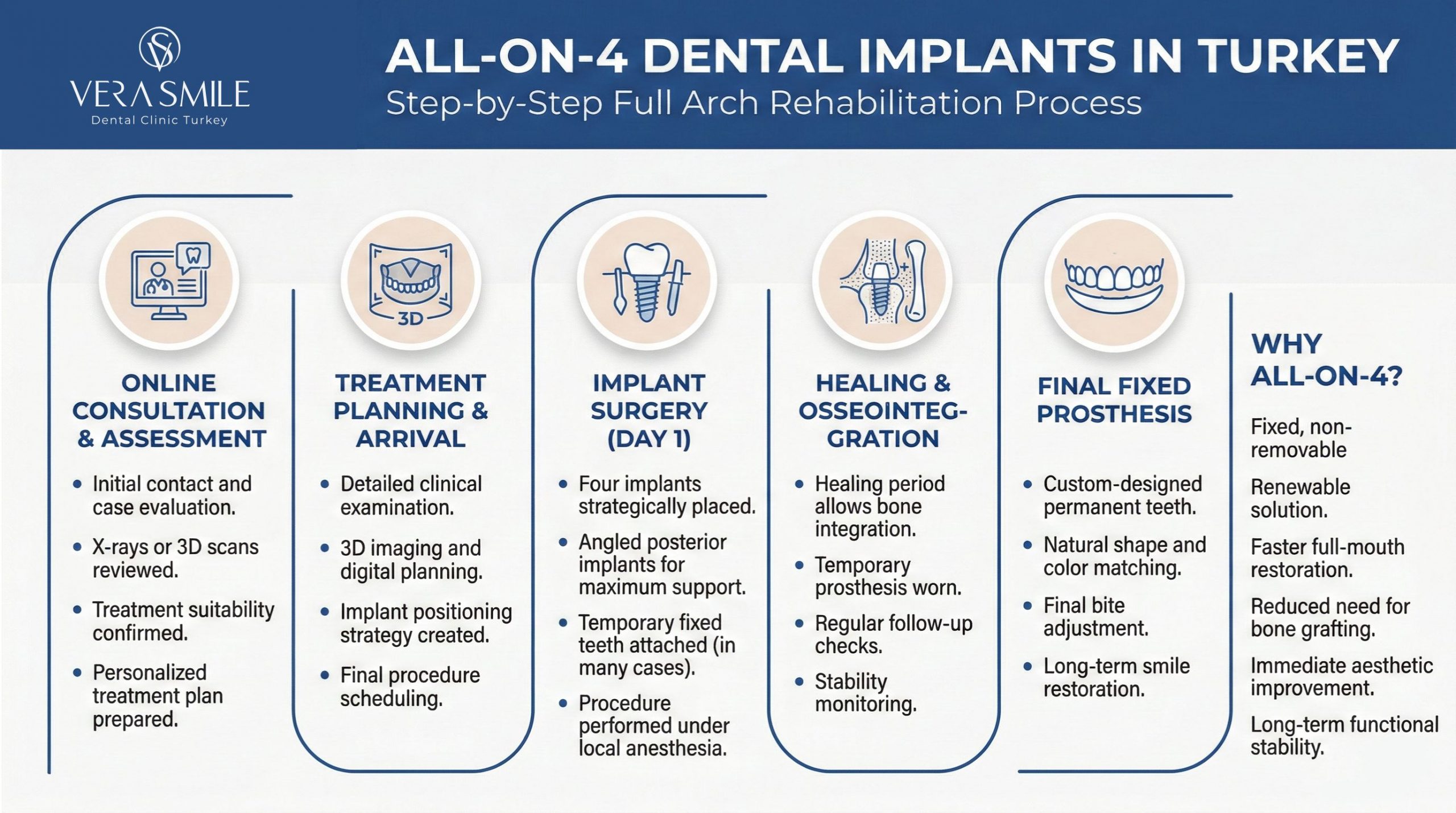
How Does the All-on-4 Procedure Work?
The All-on-4 treatment is carefully planned to restore a full smile in predictable stages. Each step is designed to ensure stability, comfort, and long-term success.
- Examination and Diagnosis: The process begins with a comprehensive consultation, clinical examination, and 3D imaging. These assessments determine bone density, identify anatomical structures, and confirm whether additional procedures such as Dental Bone Graft or sinus evaluation are needed.
- Treatment Planning: Digital planning with CAD/CAM technology establishes the precise position of each implant. The design accounts for aesthetics, bite function, and the placement of the all on 4 titanium bar that will support the final prosthesis.
- Implant Placement: Four implants are inserted into the jaw, two vertically at the front and two angled at the back to maximize bone contact. This approach avoids the need for sinus lift surgery while providing a strong foundation.
- Temporary Prosthesis: A fixed provisional bridge is attached either on the same day or within a short period, allowing patients to leave with functional teeth while healing progresses. This phase improves immediate confidence and function.
- Healing and Final Prosthesis: Over the following months, osseointegration occurs as the titanium implants fuse with the bone. Once healing is complete, a final prosthesis, made of zirconia or acrylic, is secured, offering long-term durability and natural esthetics.
If One Implant Fails, Does the Entire Bridge Become Unstable?
In most All-on-4 cases, a single implant failure does not automatically destabilize the entire bridge. The remaining three implants can maintain enough support to keep the provisional prosthesis functional while the situation is reassessed. However, the failed implant needs to be removed, and your surgeon may recommend bone grafting, implant replacement, or in some cases, switching to an All-on-6 configuration for added stability. Early detection is key, regular follow-up visits and prompt management help preserve the integrity of the full-arch restoration and prevent further complications.
Are All-on-4 Implants Painful?
The All-on-4 procedure is performed under local anesthesia or sedation, which ensures that patients do not feel pain during implant placement. Advanced surgical protocols and digital planning further minimize tissue trauma. Post-operative discomfort such as mild swelling, tenderness, or pressure is expected in the first few days, but these symptoms are usually well managed with prescribed medication and cold compresses.
Most patients describe the recovery as less painful than anticipated, especially when compared to tooth extractions or extensive bone grafting. Clinical studies confirm that patient-reported discomfort after implant surgery is generally mild to moderate and subsides within a week (Assessment of pain and quality of life in patients after implant placement: A prospective study, Al-Khabbaz et al., 2007).Good dental implants aftercare, including soft diet, oral hygiene, and scheduled check-ups, helps reduce discomfort and promotes faster healing. With proper management, the All-on-4 treatment is a comfortable and safe experience.
What Are the Types of All-on-4 Implants?
All-on-4 dental implants offer a reliable solution for patients who need a full-arch restoration but want a fixed, natural-looking alternative to dentures. The system combines carefully placed implants with durable prosthetic materials to restore function, aesthetics, and long-term oral health. The types of All-on-4 implants vary based on implant material, prosthetic options, and advanced technology, allowing customization to meet each patient’s needs.
- Titanium Implants: The implants themselves are made of titanium, a highly biocompatible material that fuses securely with the jawbone. Most All-on-4 systems use titanium fixtures paired with a titanium bar to ensure maximum stability and support for the full-arch prosthesis.
- Prosthetic Bridges: The bridge or arch that sits on the implants can be crafted from acrylic, composite, or zirconia. Zirconia bridges are particularly popular due to their strength, stain resistance, and lifelike appearance, providing a long-lasting and aesthetically pleasing solution.
- CAD/CAM Technology: Modern All-on-4 protocols utilize digital impressions and computer-aided milling (CAD/CAM) to create highly precise frameworks and prosthetic designs. CAD/CAM-fabricated zirconia frameworks reduce mechanical failure risks and improve fit compared to traditional cast structures, as demonstrated in the study CAD/CAM-fabricated implant-supported frameworks for full-arch prostheses: A 10-year retrospective study (Silva et al., 2019).
All-on-4 vs Traditional Dentures
All-on-4 provides a fixed full-arch solution, while conventional dentures remain removable and rest directly on the gums. This fundamental difference impacts comfort, stability, and long-term patient satisfaction. Implant-supported full-arch restorations have been shown to significantly improve chewing efficiency and overall quality of life compared to removable prostheses. This outcome was highlighted in Implant-supported fixed versus removable prostheses for edentulous patients: a systematic review (Pjetursson et al., 2005).
All-on-4 vs Single Dental Implants
All-on-4 and Single Dental Implants serve different purposes depending on the number of missing teeth. A single implant replaces one tooth with an implant fixture and a crown, restoring function without affecting neighboring teeth. This approach is ideal for Dental Implants for Front Teeth or single posterior replacements where aesthetics and chewing efficiency must be preserved.
All-on-4, on the other hand, is designed for patients missing an entire arch. Four implants support a full prosthesis, often reinforced with an all on 4 titanium bar to ensure strength and durability. This solution avoids the need to place one implant for every missing tooth, making it more efficient and cost-effective for edentulous or near-edentulous patients.
Single implants deliver survival rates above 95% over 10 years, while All-on-4 achieves similarly high long-term outcomes for full-arch cases. Both methods offer predictable results within their indications, but treatment choice depends on the extent of tooth loss.
What Are the Materials Used for All-on-4 Dental Implants
The durability and success of an All-on-4 Dental Implants treatment depend greatly on the materials used for both the implant fixtures and the prosthetic arch. Each component, whether titanium screws, zirconia bridges, or CAD/CAM-milled frameworks, plays a role in stability, function, and long-term aesthetics. By understanding these materials, patients gain clearer insight into why All-on-4 achieves reliable outcomes and how different choices affect comfort, strength, and appearance.
- Implant Fixtures (Screws): Most All-on-4 protocols use titanium implants, which are highly biocompatible and integrate reliably with bone. Titanium alloys resist corrosion and withstand strong chewing forces, making them the standard choice for long-term stability.
- Frameworks: The prosthetic arch is reinforced with an all on 4 titanium bar that distributes occlusal forces evenly across the implants. This ensures rigidity and minimizes the risk of mechanical complications.
- Prosthetic Teeth: Patients choose between acrylic/composite prostheses or high-strength zirconia bridges. Zirconia is valued for aesthetics, durability, and resistance to staining, which is why it is widely selected in full-arch treatments.
- Digital Technology: Advanced CAD/CAM systems allow precise design and milling of both titanium and zirconia frameworks. This digital accuracy improves fit, reduces long-term wear, and enhances patient comfort.
How Long Do All-on-4 Implants Last?
All-on-4 Dental Implants are designed as a permanent solution, with studies showing survival rates above 90% even after more than a decade of function. With proper dental implants aftercare, including daily hygiene and regular professional maintenance, the average lifespan of the implants themselves exceeds 15–20 years. The prosthetic bridge may require replacement or repair after 10–15 years depending on the material, acrylic typically wears sooner, while zirconia frameworks provide longer durability.
Implant survival above 93% and prosthesis survival close to 99% were reported over 10–18 years in A longitudinal study with 10 to 18 years of follow-up (Maló et al., 2019). These results underline that, when maintained correctly, All-on-4 delivers stable and lasting results comparable to conventional Full Mouth Dental Implants.
What Are the Benefits of All-on-4 Dental Implants?
The All-on-4 Dental Implants approach offers more than just fixed teeth, it restores confidence, function, and oral health in ways traditional dentures cannot achieve. By combining four strategically placed implants with a full-arch prosthesis, patients experience both immediate improvements and long-term advantages.
- Stability and Function: All-on-4 provides a fixed, secure solution that eliminates the movement, discomfort, and adhesives associated with removable dentures. Chewing efficiency approaches that of natural teeth, allowing patients to enjoy a wider range of foods. Implant-supported full-arch prostheses improve stability and chewing ability significantly more than removable dentures (Implant-supported fixed versus removable prostheses for edentulous patients: a systematic review, Pjetursson et al., 2005).
- Aesthetics: With customized zirconia or acrylic bridges, All-on-4 restores a natural smile line, facial support, and proper lip frame. This enhances overall appearance while preventing the “sunken face” look common with long-term denture wearers.
- Preservation of Bone: Implants stimulate the jawbone through osseointegration, helping to prevent bone resorption that follows tooth loss. This maintains facial structure and ensures long-term prosthetic stability.
- Cost Advantage: By using only four implants per arch, treatment is more cost-effective than placing individual implants for each missing tooth. Patients achieve a full-mouth restoration at a fraction of the cost of multiple single implants or extensive grafting procedures.
What Are the Possible Risks of All-on-4 Dental Implants?
While All-on-4 Dental Implants achieve high long-term success rates, every surgical procedure involves certain risks. Understanding these possibilities helps patients feel prepared and reassured, especially when treatment is carried out in accredited clinics with experienced surgeons.
- Infection: As with any implant surgery, infection occurs at the surgical site. Strict sterilization, precise surgical protocols, and proper dental implants aftercare routines reduce this risk to a minimum.
- Implant Loss: A small percentage of implants fail to integrate with the bone, especially in patients with uncontrolled health conditions or heavy smoking habits. Implant survival rates above 93%, confirming predictable outcomes, as shown in A longitudinal study with 10 to 18 years of follow-up (Maló et al., 2019).
- Prosthetic Issues: Chipping of acrylic or ceramic veneers, screw loosening, or wear of prosthetic components are among the most common dental implant complications. These issues are manageable through simple chairside repairs or adjustments, without affecting the stability of the implants themselves.
- Reassurance for Patients: When performed by qualified specialists using premium systems, All-on-4 delivers safe, stable, and long-lasting results. Regular maintenance visits and daily hygiene routines play a key role in minimizing complications and ensuring the prosthesis continues to function as intended.
How Much Do All-on-4 Dental Implants Cost?
The All-on-4 Dental Implants cost varies depending on the country, the implant brand, and the type of prosthetic material used. Turkey has become one of the leading destinations for this treatment because it combines international standards with more affordable pricing compared to the UK or the USA.
| Country / Region | Average Cost (Per Arch) | Key Notes |
| Turkey | €3,250 – €8,000 | Transparent pricing, premium implant brands, advanced technology |
| UK | €14,000 – €18,000 | Higher clinical and laboratory fees, limited insurance coverage |
| USA | €11,000 – €25,000 | Wide cost range depending on materials and clinic location |
| Europe (General) | €10,000 – €18,000 | Western Europe higher; Eastern Europe more affordable |
| India | €3,000 – €6,000 | Low treatment costs, experienced surgeons, variable clinic standards |
| Mexico | €4,000 – €8,000 | Affordable dental tourism hub for North American patients |
Patients who want a broader breakdown of dental implant cost structures, including country comparisons and treatment variables, often analyze factors such as materials, laboratory fees, and surgeon expertise before making a decision. For those specifically evaluating dental implant cost in Turkey, pricing advantages are primarily related to lower operational expenses rather than reduced clinical quality. Many leading clinics also use best dental implant brands such as Straumann and Nobel Biocare, which contribute to long-term stability and predictable outcomes.
Who Is a Candidate for All-on-4?
The All-on-4 Dental Implants concept is designed for patients who have lost most or all of their teeth and want a fixed, natural-looking solution. It offers an alternative to removable dentures and helps restore both function and appearance in a predictable way.
- Completely edentulous patients seeking a permanent alternative to traditional dentures.
- Individuals with significant bone loss, where tilted implants often reduce the need for complex bone grafting or sinus lift procedures.
- Patients who feel dissatisfied with removable prostheses and want the stability and confidence of fixed teeth.
- Seniors searching for a reliable dental implant for seniors option that improves chewing ability and daily comfort.
Not everyone is an ideal candidate. Patients with uncontrolled systemic diseases (such as poorly managed diabetes), heavy smokers, or those undergoing treatments like chemotherapy face higher risks of dental implant complications. Active gum infections or untreated periodontal disease must be addressed before surgery. Elective implants are generally postponed for those who are pregnant, since guidelines advise delaying procedures until after delivery.
When case selection is done carefully, All-on-4 achieves survival rates similar to conventional full-mouth approaches (The all-on-four treatment concept: Systematic review, Soto-Peñaloza et al., 2017).
Can Smokers Get All-on-4 Dental Implants?
Smokers are not automatically excluded from receiving All-on-4 Dental Implants, but tobacco use is considered a significant risk factor. Nicotine reduces blood flow in the gums and slows bone healing, which increases the likelihood of dental implant complications such as infection, poor osseointegration, and long-term implant loss.
Research shows that smokers experience higher rates of marginal bone loss and peri-implantitis compared to non-smokers. Smoking is strongly associated with reduced implant survival and increased biological complications over time (Impact of smoking on dental implant survival: A systematic review and meta-analysis, Chrcanovic et al., 2015).
Patients who smoke are strongly advised to reduce or quit before and after surgery to improve outcomes. Even partial cessation during the healing phase significantly lowers the risk of implant failure. Clinics emphasize that adherence to strict dental implants aftercare protocols is especially critical for smokers undergoing All-on-4 treatment.
Can Patients With Hepatitis B Safely Receive All-on-4 Dental Implants?
Yes, patients with controlled Hepatitis B can often safely receive All-on-4 dental implants. Clinics conduct thorough medical evaluations, including liver function tests, and follow strict infection control protocols to ensure both patient and staff safety. Coordination with your physician is essential for monitoring overall health before, during, and after the procedure.
Can People Who Grind Their Teeth (Bruxism) Get All-on-4 Implants?
Yes, people with bruxism can receive All-on-4 implants, but additional precautions are necessary. Protective measures, such as custom night guards or reinforced prosthetic materials, help prevent excessive wear and ensure long-term stability of the implants. Your dentist will evaluate bite forces and design the restoration to minimize risks.
Are There Metal-Free Options for Patients With Titanium Allergies?
Yes, for patients with titanium allergies, zirconia implants are a metal-free alternative. Zirconia provides a strong, biocompatible option for full-arch restorations or single implants, maintaining durability and aesthetics while eliminating potential allergic reactions to metal components.
How Should Patients Prepare For All-on-4 or Zygomatic Implant Surgery?
Proper preparation is essential for a safe and successful dental implant procedure. Patients are carefully evaluated to ensure overall health, oral condition, and treatment readiness. Pre-surgical planning includes clinical exams, imaging, and discussion of medications or medical conditions that could affect healing.
- Medical Assessment: Review of systemic health conditions such as diabetes, hypertension, or heart disease.
- Oral Health Evaluation: Treatment of gum disease, tooth infections, or other oral issues prior to implant placement.
- Medication Management: Certain medications, including blood thinners, may need adjustment before surgery.
- Lifestyle Preparation: Guidelines for smoking, alcohol consumption, and diet leading up to the procedure.
- Mental and Logistical Preparation: Patients are informed about anesthesia options, recovery timelines, and follow-up visits.
How Are Blood-Thinner Medications (Warfarin, DOACs) Managed Before Implant Surgery?
Patients taking blood-thinner medications such as warfarin or DOACs require careful planning. Surgeons coordinate with the patient’s prescribing physician to adjust or temporarily pause the medication if necessary, balancing the risk of bleeding with the risk of thrombosis. This ensures the surgery is safe while minimizing complications during and after implant placement.
What is the Recovery Process for All-on-4 Dental Implants?
Healing after All-on-4 Dental Implants is typically faster than many patients expect, thanks to minimally invasive surgical techniques and immediate function protocols. With proper dental implant aftercare, the recovery phase is smooth, and long-term success is highly predictable.
- Early Recovery: In the first few days, patients may experience mild swelling or tenderness. Prescribed pain management and cold compresses help minimize discomfort. Most patients return to daily activities within a few days.
- Diet: A soft diet is recommended during the initial healing phase. Foods like soups, mashed vegetables, and smoothies protect the implants while osseointegration takes place. Gradually, firmer foods are reintroduced once the implants stabilize.
- Oral Hygiene: Meticulous cleaning is essential to prevent dental implant complications. Patients are advised to use interdental brushes, superfloss, and water irrigators to clean around the bridge. This replaces traditional flossing methods and keeps the area free of plaque.
- Follow-Up Visits: Regular check-ups are scheduled to monitor implant stability and gum health. These visits allow the dental team to make minor adjustments, tighten screws if necessary, and provide professional cleanings.
- Long-Term Aftercare: Commitment to strict daily hygiene and professional maintenance ensures that All-on-4 implants last for decades. Consistent aftercare reduces the chance of peri-implantitis and protects against long-term issues like dental implant failure.
How Soon Can I Eat After All-on-4 Dental Implants Procedure?
With All-on-4 Dental Implants, patients leave the clinic with a temporary fixed prosthesis, which means they do not stay toothless during healing. In the first days after surgery, only soft foods such as soups, mashed vegetables, yogurt, and smoothies are recommended to protect the implants and reduce the risk of early dental implant complications. As healing progresses, semi-soft options like pasta, fish, and cooked vegetables are introduced, while hard or crunchy foods should be avoided until the dentist confirms stability. Once osseointegration is complete and the final prosthesis is attached, patients regain full chewing function and return to a normal diet, provided they follow strict dental implants aftercare routines and attend scheduled check-ups.
Why Choose Vera Clinic for All-on-4 Dental Implants?
At Vera Clinic, part of the internationally awarded Vera Clinic group, All-on-4 treatments are carried out with doctor-led protocols, advanced 3D scanning and CAD/CAM technology, and a patient-first approach that prioritizes both safety and comfort. As a proud member of the Slow Dentistry Global Network, the clinic follows strict European standards to ensure every procedure is performed with precision and care.
Vera Clinic uses only the world’s best dental implant brands, including Straumann, and Nobel Biocare, both recognized for their long-term durability, biocompatibility, and innovation in implantology. These premium systems provide the strongest foundation for All-on-4 restorations, ensuring that patients enjoy natural function and aesthetics for decades.
International patients benefit from a seamless treatment journey with English-speaking coordinators, VIP airport transfers, and ongoing aftercare support even after returning home. With transparent per-treatment pricing and no hidden “tourist packages,” Vera Clinic has become the trusted choice for patients seeking a reliable, world-class All-on-4 solution in Turkey.
Are Turkish Implant Warranties Valid Internationally, and What Do They Cover?
Yes, Turkish implant warranties are valid internationally and provide coverage for both the implant fixtures and prosthetic components. These warranties ensure that any material defects or issues related to the implants are addressed, often including repair or replacement options. Many clinics honor the warranty even if patients return to their home country after treatment, giving added peace of mind. By offering internationally recognized warranties, Turkish clinics help patients feel confident that their investment in dental implants is protected and reliable.