
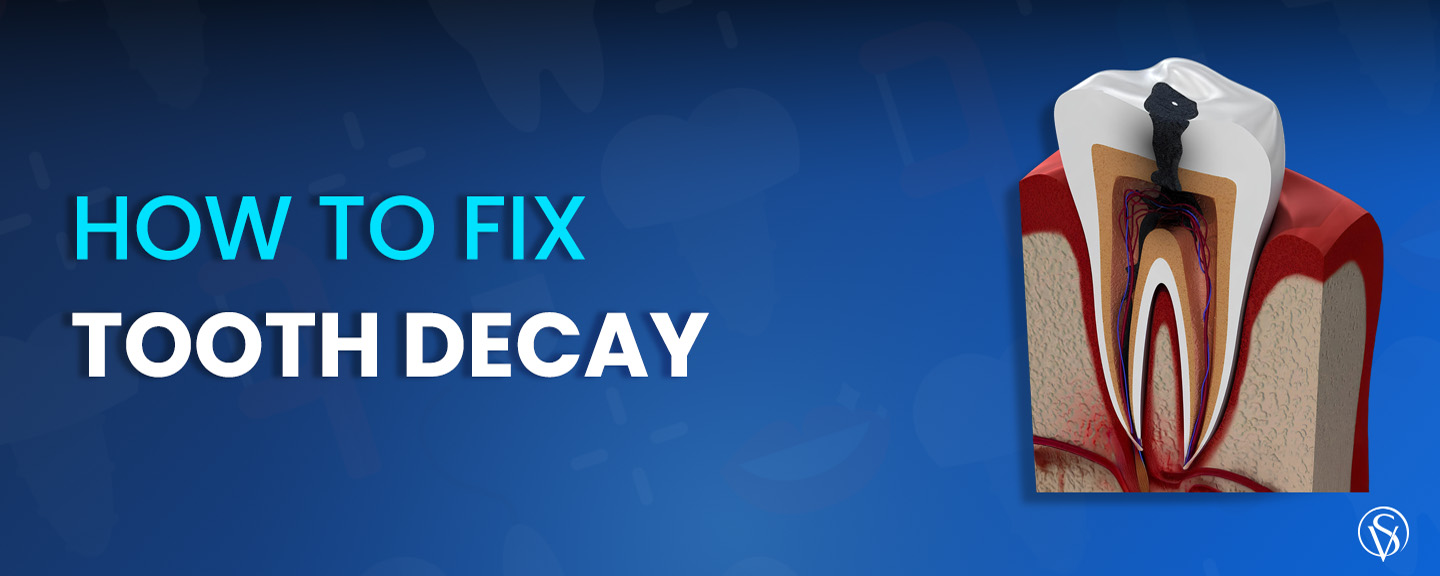
Dentists fix tooth decay by matching the treatment to how deep the damage goes, which tooth layers are affected, and how much healthy structure remains. There is no single procedure that works for every cavity. Early enamel changes require a very different approach than decay that has reached dentin or the nerve.
Many people search for self-care solutions or ways to reverse tooth decay at home. That confusion is understandable. Tooth decay develops in stages, and only the earliest stage responds to remineralization strategies. Once the enamel surface breaks or bacteria move deeper into the tooth, professional dental treatment becomes the only way to stop progression and restore strength.
The goal of dental treatment is not just to remove decay. Dentists aim to preserve natural tooth structure, eliminate bacteria, restore function, and prevent recurrence. By identifying the exact stage of decay, dentists choose the least invasive method that delivers long-term stability rather than temporary relief.
What Is Tooth Decay?
Tooth decay is a progressive breakdown of tooth structure caused by bacterial acids. These acids form when oral bacteria feed on sugars and starches left on the teeth. The process begins at the enamel surface and advances inward when mineral loss exceeds natural repair.
Healthy enamel contains calcium and phosphate that protect the tooth. Acid exposure strips these minerals away, weakening the surface. When this damage remains untreated, the enamel collapses and exposes the softer dentin underneath. Dentin breaks down faster, which accelerates decay and increases sensitivity.
Tooth decay is not a sudden event. It develops in clearly defined biological stages, each requiring a different dental response. Early detection limits damage. Delayed care leads to deeper infection, structural loss, and more complex treatment.
Is Tooth Decay the Same as a Cavity?
No. Tooth decay refers to the disease process that weakens tooth structure through acid-driven mineral loss. It begins within the enamel at a microscopic level and progresses inward as minerals dissolve.
A cavity refers to the structural damage caused by untreated decay. It appears as a hole where the enamel surface has collapsed, leaving the tooth physically compromised.
Decay develops before a cavity forms. Mineral loss softens enamel first, without visible damage. Once the surface breaks, the condition changes from chemical weakening to structural failure, which requires restorative dental treatment.
What Does Tooth Decay Look Like?
Tooth decay appears through progressive visual changes that reflect enamel and dentin damage. Each sign corresponds to a different stage of structural breakdown.
- White spots on teeth: Chalky, opaque areas on the enamel surface indicate early mineral loss. The tooth remains intact, but the enamel strength is reduced.
- Brown discoloration: Darkened areas form as decay penetrates deeper into enamel. Stains become embedded within weakened tooth structure and resist surface cleaning.
- Visible holes: Clear openings in the tooth mark established cavities. Enamel collapse exposes softer layers and creates a structural defect.
- Dark shadow under enamel: A gray or black shadow beneath the surface signals internal decay spreading under intact enamel, requiring professional evaluation.
What Causes Tooth Decay?
Tooth decay results from a biological imbalance where destructive factors outweigh protective mechanisms. The following causes drive this process.
- Bacterial acid production: Oral bacteria metabolize sugars and starches into acids that attack enamel minerals and weaken tooth structure.
- Frequent sugar exposure: Repeated intake of fermentable carbohydrates maintains an acidic environment that accelerates enamel breakdown.
- Enamel mineral loss: Acid exposure removes calcium and phosphate from enamel, reducing hardness and resistance to damage.
- Reduced saliva protection: Low saliva flow limits acid neutralization and mineral replacement, allowing decay to progress into deeper tooth layers.
Why Does Tooth Decay Develop Faster in Certain People?
Some individuals experience tooth decay at a faster rate due to biological, structural, or environmental factors that weaken natural tooth defenses. These factors do not create decay on their own, but they reduce resistance to acid damage and bacterial activity, allowing progression to accelerate.
- Dry mouth: Low saliva levels reduce acid neutralization and limit mineral delivery to enamel, which speeds up demineralization.
- Orthodontic appliances: Brackets and wires trap food debris and plaque, increasing bacterial acid exposure along tooth surfaces.
- Existing crowns and fillings: Restorations create margins where bacteria infiltrate and initiate decay beneath or around treated areas.
- Childhood enamel formation issues: Weakened enamel formed during early development lacks optimal mineral density, which lowers resistance to acid damage.
What Are the Symptoms of Tooth Decay?
Tooth decay presents through stage-specific symptoms that intensify as damage advances into deeper tooth layers.
- Early enamel changes: Chalky white spots appear on tooth surfaces without pain or sensitivity.
- Temperature sensitivity: Discomfort occurs when consuming hot, cold, or sweet foods as decay reaches dentin.
- Persistent toothache: Ongoing pain signals deeper bacterial invasion and internal inflammation.
- Pain during chewing: Pressure sensitivity indicates weakened tooth structure or nerve involvement.
- Bad taste or odor: Bacterial activity within the tooth produces an unpleasant taste or smell.
- Gum swelling near the tooth: Localized inflammation suggests advanced decay spreading toward surrounding tissues.
What Are the Tooth Decay Stages Dentists Use for Treatment Decisions?
Dentists classify tooth decay into five clinical stages to select the most effective and least invasive treatment. Each stage reflects how far bacterial damage has progressed through the tooth structure.
- Stage 1 – Enamel demineralization: Mineral loss affects the enamel surface without structural breakdown. No drilling is required. Treatment focuses on remineralization through fluoride therapy and oral hygiene correction.
- Stage 2 – Enamel cavity formation: A small portion of enamel collapses and creates a surface defect. Structural loss remains limited. Dentists restore the area using a conservative filling approach.
- Stage 3 – Dentin decay: Bacteria penetrate beneath enamel into dentin. Damage spreads faster due to dentin softness. Sensitivity and pain develop as decay advances.
- Stage 4 – Pulp infection: Decay reaches the nerve tissue inside the tooth. Inflammation and infection occur. Root canal treatment becomes necessary to preserve the tooth.
- Stage 5 – Severe tooth decay: Extensive destruction compromises tooth stability. Structural collapse limits restoration options. Treatment involves extraction or crown-supported solutions based on remaining structure.
How Do Dentists Treat Deep Tooth Decay?
Deep tooth decay affects dentin and approaches the pulp, which requires protective and structural treatment planning rather than simple restoration.
- Pulp protection: Dentists remove infected tissue while preserving healthy dentin near the nerve. Protective liners seal the pulp and reduce bacterial irritation.
- Partial crown coverage: Onlays or partial crowns reinforce weakened tooth walls. This coverage restores strength without removing unnecessary healthy structure.
- Long-term tooth preservation strategy: Treatment aims to stabilize the tooth, distribute bite forces evenly, and prevent fracture. Follow-up evaluations confirm healing and structural integrity.
How Do Dentists Treat Infected Tooth Decay?
When tooth decay reaches the inner pulp, infection develops within the nerve and blood supply. At this stage, surface treatments no longer control bacterial spread. Dentists focus on eliminating infection, preserving the tooth structure, and restoring long-term function through internal treatment.
- Root canal treatment: Dentists remove infected nerve tissue from inside the tooth to stop bacterial spread and relieve pain.
- Internal disinfection: The root canal system is cleaned and sealed to eliminate remaining bacteria and prevent reinfection.
- Permanent crown placement: A full-coverage crown restores strength, protects the treated tooth, and supports normal chewing forces.
How Do Dentists Handle Teeth Beyond Repair?
When tooth decay destroys essential tooth structure, restorative treatment no longer provides long-term stability. Dentists assess remaining enamel, dentin, root integrity, infection spread, and bone support to determine whether preservation is possible. Extraction becomes necessary when structural loss, deep infection, or fracture risk prevents safe reinforcement. After removal, dentists plan tooth replacement to restore function and bite balance. Dental implants replace the missing root within the jawbone, while dental bridges restore the space by anchoring to adjacent teeth.
Can Tooth Decay Be Reversed?
Tooth decay reversal depends entirely on the stage of damage. Early enamel mineral loss responds to targeted preventive care, while structural breakdown requires clinical treatment.
Reversal applies only before enamel integrity fails. Once a cavity forms, lost tooth structure does not regenerate. Dentists focus on stopping progression, restoring strength, and preventing further damage rather than reversing existing defects.
How Does Tooth Decay Self-Care Compare With Professional Treatment?
Tooth decay self-care and professional treatment serve different roles in decay control. Self-care focuses on slowing mineral loss and supporting enamel strength, while professional treatment removes damaged tissue and restores structure.
Self-care applies only during early enamel changes. Professional treatment addresses structural damage, bacterial invasion, and functional loss. Understanding this distinction prevents delays that increase tooth destruction and treatment complexity.
Can You Remove Tooth Decay Yourself?
No. Tooth decay involves internal bacterial damage and mineral loss that cannot be eliminated through home methods. Brushing, rinses, and dietary changes reduce surface bacteria but do not remove infected tooth tissue.
Once decay penetrates enamel or dentin, professional instruments are required to remove damaged structure and seal the tooth. Attempting self-removal delays proper care and allows decay to advance deeper into the tooth.
What Tooth Decay Treatments Do Dentists Use Today?
Dentists select treatments based on how much tooth structure remains and whether infection is present. Each option addresses a specific stage of decay and restores function through controlled clinical intervention.
- Dental fillings: Composite fillings repair small to moderate cavities while preserving surrounding enamel. Ceramic fillings provide enhanced strength and stain resistance. Longevity depends on cavity size, bite forces, and oral hygiene quality.
- Dental crowns: Full or partial coverage becomes necessary when decay weakens large portions of the tooth. Crowns protect remaining structure after deep decay treatment and restore chewing stability.
- Root canal treatment: This procedure eliminates internal infection and preserves the natural tooth. Removal of infected pulp stops bacterial spread and maintains bite alignment.
- Tooth extraction and replacement: Extraction serves as a final-stage solution when structural loss prevents reinforcement. Dentists plan implants or bridges to replace missing teeth and restore oral function.
How Does Tooth Decay Affect Children and Toddlers?
Tooth decay progresses faster in children and toddlers due to developing enamel, feeding patterns, and oral hygiene challenges. Primary teeth contain thinner enamel, which allows bacteria to penetrate deeper layers in a shorter time.
Early childhood decay impacts chewing, speech development, and long-term oral health. Prompt diagnosis and age-appropriate treatment protect both primary and developing permanent teeth.
Why Does Tooth Decay Progress Faster in Children?
Tooth decay progresses faster in children because primary teeth contain thinner enamel and dentin, which reduces the distance between surface damage and deeper infection. This limited structural barrier allows acids and bacteria to penetrate tooth layers in a shorter time. Feeding patterns during early childhood, including frequent milk, juice, or carbohydrate exposure, sustain acid production on the teeth for extended periods. Combined with developing oral hygiene habits, these factors accelerate mineral loss and increase the risk of rapid cavity formation.
How Do Dentists Treat Tooth Decay in Children?
Dentists treat tooth decay in children with age-appropriate and structure-preserving methods that protect developing teeth and support oral growth.
- Minimally invasive care: Dentists remove infected tissue while preserving as much natural tooth structure as possible. Techniques focus on comfort, precision, and long-term stability for primary teeth.
- Preventive sealants: Protective coatings seal deep grooves on chewing surfaces, blocking bacteria and reducing future decay risk in both primary and permanent teeth.
How Does Tooth Decay Develop Under Crowns and Fillings?
Tooth decay develops under crowns and fillings when bacteria infiltrate restoration margins or weakened tooth structure. The outer restoration may appear intact while decay progresses beneath the surface.
This hidden decay threatens the remaining tooth and compromises restoration stability. Early detection through clinical examination and imaging prevents extensive structural damage and repeat treatment.
How Do Dentists Detect Hidden Tooth Decay?
Dentists detect hidden tooth decay by combining radiographic analysis with detailed clinical evaluation. X-rays expose areas of mineral loss beneath crowns or fillings where bacteria progress without visible surface changes. During examination, dentists assess margins for staining, gaps, or tenderness and evaluate bite response. These findings reveal decay developing beneath restorations before major structural failure occurs.
How Is Tooth Decay Under a Crown Fixed?
Dentists begin treatment by removing the existing crown to gain direct access to the affected tooth. Infected and weakened tissue is then removed to restore a stable internal structure. Once the tooth regains integrity, a new crown is fabricated and placed to seal the area, protect against further bacterial entry, and restore chewing strength.
How Do You Stop Tooth Decay From Coming Back?
Long-term decay prevention relies on bacterial control, enamel protection, and routine assessment after treatment.
- Plaque management: Thorough brushing and interdental cleaning remove bacterial buildup that triggers acid production.
- Enamel reinforcement: Fluoride-based care strengthens enamel and restores mineral balance after decay treatment.
- Dietary control: Reduced sugar exposure limits acid formation on tooth surfaces throughout the day.
- Regular dental monitoring: Scheduled examinations identify early changes before structural damage returns.
What Changes Before and After Tooth Decay Treatment?
Tooth decay treatment produces clear functional and biological improvements that extend beyond symptom control.
- Pain relief: Treatment removes infected tissue and pressure sources, which resolves discomfort and sensitivity.
- Structural stability: Restorations rebuild lost tooth structure and protect weakened areas from fracture.
- Bite restoration: Correct tooth shape and contact points return balanced chewing forces across the jaw.
- Long-term oral health: Elimination of active decay reduces bacterial load and supports lasting tooth preservation.
When Should You See a Dentist for Tooth Decay?
You should see a dentist at the first sign of surface changes or sensitivity, even when pain is absent. Early tooth decay develops silently while enamel damage remains limited, which allows treatment without drilling or extensive restoration. Delayed evaluation permits deeper bacterial invasion, leading to complex procedures, higher costs, and greater structural loss.