
Porcelain veneers are thin ceramic restorations bonded to the front surface of teeth to improve their colour, shape, and overall symmetry. In cosmetic dentistry, they are widely used to correct aesthetic concerns such as deep staining, chipped enamel, uneven tooth edges, and small gaps between teeth. Because porcelain closely mimics the translucency of natural enamel, veneers create a natural-looking smile while preserving the structure of the underlying tooth.
Each veneer is custom-made in a dental laboratory to match the patient’s facial features, tooth proportions, and desired shade. Once bonded to the enamel using specialised dental adhesives, the veneer becomes a durable outer layer that enhances both the appearance and surface strength of the treated tooth.
Porcelain veneers are often used as part of a smile makeover, allowing dentists to reshape multiple teeth while preserving most of the natural tooth structure. Compared with dental crowns, veneers require less enamel removal, making them a more conservative cosmetic treatment for suitable patients.
This guide explains how porcelain veneers work, the different types of porcelain materials, the step-by-step veneer procedure, typical treatment costs, and the aftercare practices that help maintain long-term results.
What Are Porcelain Veneers?
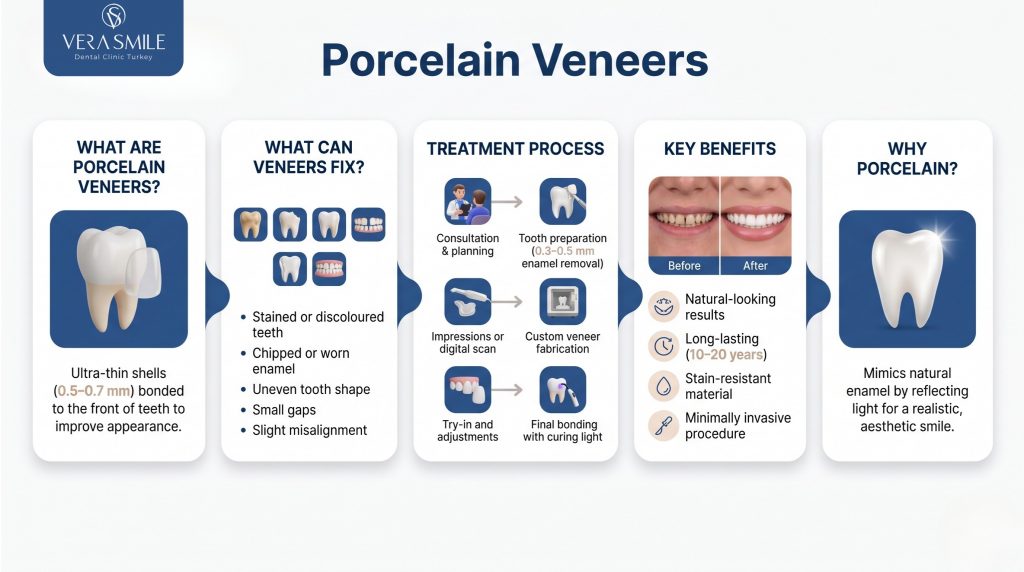
Porcelain veneers are custom-made, ultra-thin shells,0.5 to 0.7 mm thick, crafted from dental-grade porcelain or ceramic. They are bonded permanently to the front surface of your natural teeth to correct a wide range of cosmetic concerns, including:
- Discoloured or stained teeth that don’t respond to whitening
- Chipped, cracked, or worn enamel
- Uneven or irregularly shaped teeth
- Minor gaps or spacing between teeth
- Slightly misaligned or crooked teeth
Because they are made from high-quality porcelain, veneers closely mimic the light-reflecting properties of natural tooth enamel. The result is a smile that looks completely natural, just better.
How Do Porcelain Veneers Work?
Porcelain veneers improve the visible surface of teeth through a thin ceramic layer bonded to the front enamel. Each veneer is shaped and colour-matched to blend with surrounding teeth, creating a more uniform appearance.
The process begins with minimal enamel preparation. A thin layer of enamel is removed to create space for the veneer and to allow proper bonding. This preparation ensures that the veneer sits flush with the natural tooth and maintains a natural contour along the gumline.
After preparation, the dentist places the veneer using a specialised dental adhesive designed for strong enamel bonding. A curing light activates the adhesive and secures the veneer to the tooth surface.
Once bonded, the porcelain layer functions as a durable outer shell that improves tooth colour, shape, and alignment while maintaining the natural structure of the tooth underneath.
What Are The Types of Porcelain Veneers?
Different porcelain veneer types vary in ceramic composition and preparation technique. Dentists select the veneer type based on tooth condition, aesthetic goals, and enamel thickness.
- Feldspathic Porcelain Veneers: Traditional laminate veneers created through layered porcelain application in a dental laboratory. This technique produces high translucency and detailed surface texture that closely resembles natural enamel.
- Lithium Disilicate Veneers (E-max): Pressed glass-ceramic veneers known for strong fracture resistance and reliable enamel bonding. Lithium disilicate provides a balance between durability and natural aesthetics in cosmetic smile treatments.
How Do Porcelain Veneer Materials Compare?
Different porcelain veneer materials vary in strength, translucency, and preparation requirements. The material choice influences the aesthetic result, structural durability, and overall treatment approach.
| Veneer Material | Durability | Aesthetic Quality | Cost Level | Tooth Preparation |
| Feldspathic Porcelain | Moderate | Excellent translucency | High | Minimal |
| Lithium Disilicate (E-max) | High | Excellent balance of strength and aesthetics | High | Moderate |
| Minimal Prep Porcelain | High | Natural enamel-like appearance | Moderate–High | Very limited |
| No-Prep Porcelain | Moderate | Good aesthetic integration | Moderate | None or extremely limited |
Each material supports different cosmetic goals. Feldspathic porcelain emphasizes aesthetic detail, while lithium disilicate focuses on structural strength alongside natural appearance. Minimal-prep and no-prep veneers focus on preserving natural enamel during treatment.
What Steps Are Involved in the Porcelain Veneer Procedure?
Porcelain veneer treatment requires a sequence of clinical and laboratory stages across two or three dental visits.
- Initial Consultation and Diagnosis: The dentist evaluates oral health, reviews aesthetic goals, and records dental images or impressions. This stage determines the number of veneers and the overall treatment plan.
- Tooth Preparation: A thin enamel layer, about 0.3–0.5 mm, is removed from the front tooth surface. This preparation creates space for the veneer and supports a natural contour along the gumline. Temporary veneers protect the prepared teeth during the laboratory phase.
- Dental Impressions: Digital scans or traditional impressions capture the shape of the prepared teeth. These records guide the fabrication of the custom veneers in the dental laboratory.
- Veneer Fabrication: Dental technicians produce the veneers through porcelain layering or pressed ceramic techniques. The laboratory process requires precise shaping and shade matching.
- Veneer Try-In: During the fitting session, the dentist evaluates veneer shape, colour match, and bite alignment. Small adjustments ensure proper fit before bonding.
- Final Bonding: The dentist cleans and etches the tooth surface, then applies a specialised veneer adhesive. A curing light activates the bonding material and secures the veneer to the enamel.
Which Dental Problems Do Porcelain Veneers Fix?
Porcelain veneers address several cosmetic dental concerns by covering the visible enamel surface with a thin ceramic layer. This restoration improves tooth colour, shape, and alignment while preserving most of the natural tooth structure. Dentists recommend porcelain veneers for patients seeking aesthetic improvement in the front teeth.
- Tooth Discoloration: Porcelain veneers cover stains that resist whitening treatments, including discoloration linked to enamel damage, medication exposure, or aging.
- Chipped or Broken Teeth: Veneers restore the shape and surface of teeth affected by small fractures or edge damage.
- Worn-Down Teeth: Porcelain veneers rebuild teeth affected by enamel wear caused by grinding or erosion.
- Uneven Tooth Shape: Veneers correct irregular tooth proportions and create a more balanced smile line.
- Small Gaps Between Teeth: Porcelain veneers close minor spacing issues between adjacent teeth without orthodontic treatment.
- Mild Tooth Misalignment: Veneers improve the visual alignment of teeth with small rotations or slight crowding.
What Are the Benefits of Porcelain Veneers?
Porcelain veneers provide several aesthetic and structural advantages in cosmetic dentistry. The ceramic material improves tooth appearance while maintaining the underlying tooth structure.
- Natural Appearance: Porcelain ceramics reflect light in a way that closely resembles natural enamel, which creates a balanced and lifelike smile.
- Long-Lasting Results: Most porcelain veneers remain functional for 10–20 years when supported by consistent oral hygiene and regular dental examinations.
- Stain Resistance: High-quality dental ceramics resist stains from beverages such as coffee, tea, and red wine.
- Conservative Tooth Preparation: Compared with dental crowns, porcelain veneers require less enamel removal, which preserves more of the natural tooth structure.
What Are the Disadvantages of Porcelain Veneers?
Despite their aesthetic advantages, porcelain veneers involve certain limitations that patients should understand before treatment.
- Irreversible Enamel Removal: The veneer procedure requires removal of a thin enamel layer. Enamel does not regenerate, which makes the treatment permanent.
- Higher Treatment Cost: Porcelain veneers involve laboratory fabrication and advanced ceramic materials, which leads to higher costs compared with composite restorations.
- Risk of Chipping or Fracture: Porcelain provides strong durability, yet excessive biting pressure or hard impacts lead to surface damage.
- Limited Correction for Severe Misalignment: Veneers improve the visual alignment of teeth in mild cases. Significant crowding or bite problems require orthodontic treatment.
- Replacement After Long-Term Use: Porcelain veneers maintain function for many years, though replacement becomes necessary after long-term wear.
How Much Do Porcelain Veneers Cost?
The cost of porcelain veneers depends on factors such as location, dentist experience, and the ceramic material used. Treatment prices vary significantly between countries due to laboratory costs, clinic standards, and overall healthcare pricing.
| Country | Approximate Cost (€) |
| USA | €1850 |
| UK | €1000 |
| Australia | €1380 |
| Ireland | €1100 |
| Dubai | €1290 |
| Thailand | €650 |
| Mexico | €510 |
| Turkey | €320 |
| India | €280 |
| Philippines | €420 |
Prices vary depending on clinic reputation, laboratory materials, and treatment complexity.
Does Insurance Cover Porcelain Veneers?
No. Most dental insurance plans classify porcelain veneers as cosmetic treatment rather than medically necessary care. Because of this classification, insurance providers do not include veneers in standard coverage policies.
Patients cover veneer treatment through private payment or financing options. Many dental clinics offer payment plans or package pricing for cases involving multiple veneers as part of a smile restoration treatment.
Who Is a Good Candidate for Porcelain Veneers?
Not every patient qualifies for porcelain veneers. Dentists evaluate oral health, enamel condition, and the type of cosmetic concern before recommending veneer treatment. Suitable candidates show stable dental health and tooth structure that supports strong adhesive bonding.
- Healthy Teeth and Gums: Candidates should have stable oral health without untreated cavities or active gum disease.
- Sufficient Enamel: Porcelain veneers require enough natural enamel for secure adhesive bonding.
- Mild Cosmetic Concerns: Veneers address aesthetic issues such as discoloration, chipped edges, uneven tooth shape, or small gaps.
- Stable Bite and Tooth Alignment: Patients with severe crowding or bite problems require orthodontic treatment before veneer placement.
- Commitment to Oral Hygiene: Daily brushing, flossing, and regular dental check-ups support long-term veneer durability.
Are Porcelain Veneers Suitable for Seniors?
Yes. Older adults qualify for porcelain veneers when teeth and gum tissues remain structurally healthy. Adequate enamel, stable gum support, and controlled oral health conditions allow successful veneer placement. Dentists evaluate existing restorations, enamel wear, and bite stability before treatment.
Are Porcelain Veneers Suitable for Small Teeth?
Yes. Patients with short or undersized teeth benefit from porcelain veneers because the restoration improves tooth length, shape, and overall proportion. Veneers extend the visible tooth surface and create a more balanced smile line without removing large amounts of natural tooth structure.
Can Porcelain Veneers Correct a Gummy Smile?
Yes. Porcelain veneers improve tooth shape and proportion in cases involving a gummy smile. Dentists evaluate gum position and tooth length before treatment. Some cases require gum contouring to reduce excessive gum display and create balanced tooth exposure before veneer placement.
What Is the Difference Between Porcelain Veneers and Composite Veneers?
Porcelain veneers and composite veneers differ in material composition, durability, aesthetic quality, and treatment process.
| Feature | Porcelain Veneers | Composite Veneers |
| Material | Dental ceramic | Resin composite |
| Lifespan | 10–20 years | 5–7 years |
| Stain Resistance | High | Moderate |
| Procedure | Multiple visits | Single visit |
| Cost | Higher | Lower |
How Should Porcelain Veneers Be Maintained After Treatment?
Porcelain veneer aftercare plays a key role in preserving veneer appearance and structural integrity. Consistent oral hygiene and protective habits support long-term veneer performance.
- Oral Hygiene: Daily brushing with a soft toothbrush and non-abrasive toothpaste removes plaque and protects the veneer margins. Regular flossing supports gum health around veneered teeth.
- Routine Dental Check-Ups: Professional dental examinations allow early detection of bite pressure, bonding changes, or gum issues affecting veneers.
- Foods and Habits to Avoid: Hard foods, nail biting, or using teeth as tools place excessive pressure on veneers and increase fracture risk.
- Night Guard Protection: Patients with teeth grinding benefit from a custom night guard, which reduces pressure on veneers during sleep.
Can Porcelain Veneers Be Whitened?
No. Porcelain veneers do not respond to teeth whitening treatments. Their colour remains fixed during laboratory fabrication. Dentists select the veneer shade before placement to match the desired smile appearance.
How Long Do Porcelain Veneers Last?
Most porcelain veneers last 10–20 years when supported by consistent oral hygiene and regular dental examinations. Veneer lifespan depends on factors such as bite pressure, enamel bonding quality, and daily oral care habits.
Are Porcelain Veneers Permanent?
Yes. Porcelain veneers are considered permanent restorations because the procedure involves removal of a thin enamel layer during tooth preparation. Enamel does not regenerate, which means the treated tooth requires a restoration after veneer placement.
Can Porcelain Veneers Be Replaced?
Yes. Dentists replace damaged or worn porcelain veneers through a process similar to the original placement. The existing veneer is removed, the tooth surface is prepared again, and a new custom veneer is bonded to the enamel.