
Mouthwash, also known as oral rinse or mouth rinse, is a liquid solution used to rinse the mouth, teeth, and gums. It is basically swished around the mouth for 30 to 60 seconds and then spat out.
As part of a daily oral hygiene routine, mouthwash can help reduce bacteria, freshen breath, and deliver protective ingredients to areas that a toothbrush and floss may struggle to reach. However, it is important to understand from the outset: mouthwash supports good oral hygiene but does not replace brushing and flossing.
Not all mouthwashes are created equal. Some are designed purely for cosmetic purposes, such as freshening breath temporarily, while others contain clinically active ingredients that target specific oral health conditions. Knowing which type suits your needs and best for your dental hygiene makes a significant difference to your overall dental health.
What Is the Role of Mouthwash in Your Daily Routine?
Mouthwash works as a complementary step in your oral hygiene routine. After you brush and floss, rinsing with the right mouthwash can reach bacteria along the gumline, between teeth, and at the back of the mouth that mechanical cleaning sometimes misses. Depending on the formulation, it may help reduce plaque-causing bacteria, strengthen enamel, or soothe inflamed gums.
What Problems Can Mouthwash Help Prevent?
When used consistently and correctly, mouthwash may help manage or prevent several common oral health issues:
- Bad breath (halitosis): Antibacterial ingredients kill the odour-producing bacteria that live on the tongue, gumline, and between teeth.
- Plaque buildup: Certain rinses reduce the accumulation of bacterial plaque on tooth surfaces, particularly in hard-to-reach spots.
- Gingivitis: Therapeutic mouthwashes containing antibacterial agents can reduce gum inflammation when used alongside brushing and flossing.
- Cavities: Fluoride mouthwashes strengthen tooth enamel and help protect against acid erosion and decay.
- Dry mouth: Specific alcohol-free formulations are designed to moisturise oral tissues and temporarily relieve the discomfort of dry mouth (xerostomia).
It is worth noting that mouthwash alone cannot resolve these conditions if the underlying habits (brushing twice daily and flossing) are not in place.
Is Mouthwash Necessary If You Already Brush and Floss?
For many people who brush thoroughly twice a day and floss daily, mouthwash is a helpful addition rather than a strict necessity. That said, some patients benefit more from regular rinsing than others.
People with a history of gum disease, recurrent cavities, chronic bad breath, or dry mouth often see meaningful improvements when a dentist-recommended mouthwash is added to their routine. Those with braces, dental implants, or other restorations may also benefit from the additional bacterial control a rinse can provide.
The most reliable guidance will always come from your own dentist, who can assess your individual oral health and recommend whether mouthwash is appropriate, and if so, which formulation best suits your needs.
Which Type and Ingredients Are Right For You?
Choosing the right mouthwash depends on understanding what different products are actually designed to do. The broadest distinction is between cosmetic and therapeutic formulations. Cosmetic mouthwash freshens breath and leaves a clean sensation, but it masks odour rather than addressing its bacterial cause, and offers little protective benefit for teeth or gums. Therapeutic mouthwash, by contrast, contains clinically active ingredients formulated to target specific conditions; such as gum disease, cavities, or plaque, and is either available over the counter or on prescription. Regarding your needs, make sure these ingredients are included in your mouthwash:
- Fluoride: Strengthens enamel and protects against decay; ideal for those prone to cavities.
- Chlorhexidine: A powerful antibacterial agent for gum disease management; basically prescription-only due to side effects with prolonged use.
- Cetylpyridinium chloride (CPC): A common antiseptic that targets plaque and the bacteria behind bad breath.
- Hydrogen peroxide: Used in whitening rinses to lift surface stains; effective in low concentrations but not for frequent use.
- Xylitol: Inhibits bacterial growth and supports saliva production; well suited to dry mouth formulations.
- Essential oils (eucalyptol, menthol, thymol): Clinically shown to reduce plaque and gingivitis; found in many popular antiseptic rinses.
No single formulation does everything, which is why the best starting point is identifying your primary concern, whether that is cavity prevention, gum health, bad breath, or dry mouth, and matching it to the ingredient best suited to address it.
Should You Choose Alcohol-Free Mouthwash?
Many traditional mouthwashes contain alcohol (usually ethanol), which contributes to their antibacterial effect but can also cause dryness and irritation, particularly with frequent use. For most people, occasional use of an alcohol-based rinse is not problematic. However, alcohol-free mouthwash is often the better choice for:
- People who experience dry mouth, as alcohol can worsen dehydration of oral tissues.
- Those with sensitive gums or mucous membranes who find alcohol irritating.
- Children, as alcohol-containing rinses are not appropriate for younger users.
- Patients recovering from oral surgery or with oral ulcers.
Alcohol-free options can be just as effective as their alcohol-containing counterparts when formulated with appropriate active ingredients. Look for clinical evidence of efficacy rather than assuming that alcohol-free means less effective.
How Should You Use Mouthwash?
Using mouthwash correctly ensures you get the full benefit of the product’s active ingredients, while avoiding common mistakes that reduce its effectiveness.
- Pour the recommended amount (generally 15–20 ml) into a cup. Avoid drinking directly from the bottle.
- Swish the solution vigorously around your mouth for the time specified on the label, usually 30 to 60 seconds. Make sure the liquid reaches between teeth and along the gumline.
- Spit it out completely. Mouthwash is not designed to be swallowed.
- Avoid eating, drinking, or rinsing with water for at least 30 minutes after use, especially important with fluoride rinses, so the active ingredient has time to work.
- Follow the frequency recommendations on the label or as advised by your dentist. More is not always better.
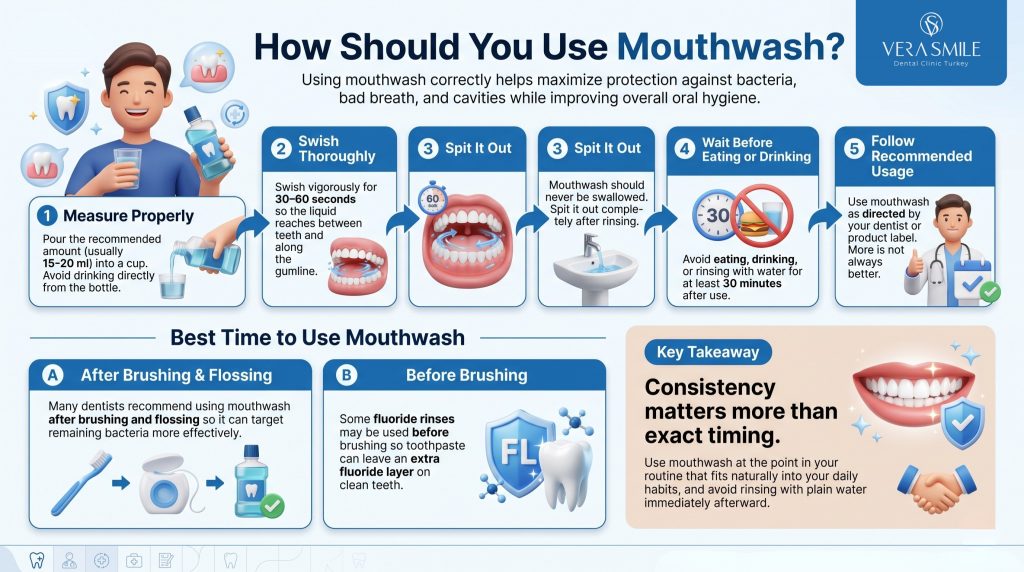
The most common recommendation is to use mouthwash after teeth brushing and flossing, so that debris and plaque are removed first and the rinse can work more effectively on remaining bacteria. Some dentists, however, advise rinsing before brushing, particularly with fluoride products, so that toothpaste then deposits a fresh layer of fluoride onto clean teeth. In practice, the timing matters less than consistency. Use it at whichever point fits naturally into your routine, and avoid rinsing with plain water immediately afterward, so the active ingredients have time to work.
What Are the Common Mistakes and Potential Side Effects?
Mouthwash can be a valuable addition to your oral hygiene routine, but misuse or overuse can cause problems. Understanding the most common mistakes helps you avoid them.
- Using mouthwash as a substitute for brushing: Rinsing alone cannot physically remove plaque biofilm or food debris. It should always be used alongside, not instead of, brushing and flossing.
- Overusing prescription or antibacterial rinses: Strong formulations like chlorhexidine are designed for short-term or directed use. Prolonged daily use beyond what is recommended can lead to staining, altered taste perception, and disruption of the oral microbiome.
- Using children’s products for adults, or vice versa: Concentration levels and formulations vary. Always use an age-appropriate product.
- Swallowing mouthwash: Most products contain ingredients, including fluoride or antiseptics, that can cause nausea or more serious effects if swallowed in significant quantities.
Can Mouthwash Affect the Oral Microbiome or Cause Dry Mouth?
Your mouth is home to hundreds of bacterial species, many of which are beneficial. Antibacterial mouthwashes, particularly potent, broad-spectrum rinses, can disrupt this balance if used excessively, reducing helpful bacteria alongside harmful ones. Alcohol-based formulas add a further concern: they can dry out oral tissues, and since saliva is critical for neutralising acids and protecting enamel, persistent dryness can indirectly raise the risk of cavities and gum disease. Occasional use of either type is unlikely to cause lasting harm, but if you notice dryness or irritation, switching to an alcohol-free formula is a sensible first step, and worth mentioning to your dentist.
Is It Safe for Children, Pregnant Women, and Older Adults?
Mouthwash is safe for most people, but certain groups need to take a little more care when choosing a product, or decide whether to use one at all.
Mouthwash is generally not recommended for children under six due to the risk of swallowing. Once a child can reliably spit, around age six, an alcohol-free, age-appropriate formulation used under adult supervision is perfectly suitable. Always check the label for the manufacturer’s recommended age guidance before introducing any rinse.
For pregnant women, most over-the-counter mouthwashes are considered safe, but products containing alcohol or high concentrations of strong antiseptics are best avoided. As with any new product during pregnancy, checking with your dentist or midwife before adding a rinse to your routine is the simplest and safest approach.
Older adults most commonly need to watch for dry mouth, which is frequently a side effect of medication. Alcohol-based rinses can worsen this, so alcohol-free, moisturising formulas or fluoride rinses tend to be the better fit. Those with limited dexterity may also find mouthwash a particularly useful addition to their routine, providing extra bacterial control when thorough brushing is physically difficult.
When in doubt, a quick conversation with your dentist is all it takes to confirm whether a particular product is appropriate for your situation.
What Natural or DIY Options Are Actually Effective?
Interest in natural oral care has grown considerably, and a few home-made rinses do offer genuine (if limited) benefits:
- Saltwater rinse: Soothes inflamed gums and irritated tissue; particularly useful after minor dental procedures or during mouth ulcer flare-ups.
- Herbal rinses (aloe vera, neem, tea tree oil, green tea extract): Modest antibacterial and anti-inflammatory properties, though clinical evidence remains limited.
- Baking soda solution: Temporarily neutralises mouth acids and may ease mild bad breath; safe for occasional use.
None of these provide the sustained protection of a clinically tested therapeutic mouthwash. If you are managing a specific condition such as gingivitis or recurring cavities, a validated formulation will deliver more reliable results.
Natural rinses, such as oil pulling, can complement good oral hygiene habits, but they should not replace clinically tested therapeutic mouthwashes when treatment of an oral health condition is the goal.
What Do Dentists Recommend for Long-Term Oral Health?
When asked about mouthwash, most dental professionals emphasise the same core principle: it is a complement to a complete oral hygiene routine, not a shortcut or replacement. The foundation of long-term oral health remains consistent brushing twice daily with a fluoride toothpaste, regular flossing, and routine dental check-ups. Mouthwash, when chosen appropriately, adds a meaningful layer of protection, particularly for those with elevated risk factors such as gum disease, dry mouth, or a history of cavities.
In practice, dentists advise choosing a mouthwash based on individual oral health needs rather than marketing or flavour, following usage instructions without exceeding the recommended frequency, and opting for alcohol-free formulas if dryness or sensitivity is a concern. Fluoride rinses are generally preferred when cavity prevention is the priority, while prescription-strength products such as chlorhexidine should only be used under professional guidance. It is also worth remembering that no rinse; however powerful, can remove calculus; that requires a professional cleaning.
Ultimately, the best mouthwash is the one that fits your specific oral health profile and is used consistently as part of a broader routine. A conversation with your dentist remains the most reliable way to determine what is right for you.
Frequently Asked Questions
Some mouthwashes contain low concentrations of hydrogen peroxide and are marketed for whitening. They may help reduce surface staining with regular use, but the effect is modest compared to professional whitening treatments. If tooth discolouration is a concern, a dentist can recommend the most appropriate and effective teeth whitening option for your situation.
Mouthwash cannot physically remove plaque biofilm the way brushing and flossing can. However, antiseptic rinses can inhibit bacterial growth and reduce the rate at which new plaque forms. This is why mouthwash is considered a complement to mechanical cleaning, not a replacement.
For most people, daily use of an appropriate over-the-counter mouthwash is perfectly safe when used as directed. Prescription-strength or high-concentration antibacterial rinses, however, are recommended for short-term use only. If in doubt, discuss frequency with your dentist.
Swallowing a small amount accidentally is unlikely to cause serious harm in adults, but it is not intended for ingestion. Larger quantities can cause nausea, vomiting, or, particularly in children, more significant effects due to ingredients such as fluoride or alcohol. Keep mouthwash out of reach of young children and seek medical advice if a child swallows more than a mouthful.
No. Mouthwash (even prescription-strength antiseptic rinses) cannot cure gum disease on its own. It can be a useful adjunct to professional treatment (such as scaling and root planing) and consistent home care, but established gum disease requires clinical intervention. If you notice bleeding gums, persistent bad breath, or gum recession, a dental assessment is the essential first step.