
Oil pulling is an ancient Ayurvedic oral hygiene practice that involves swishing edible oil around the mouth for 15 to 20 minutes to reduce bacteria, support gum health, and freshen breath. In function, it is comparable to using an alcohol-free mouthwash, and like mouthwash, it works best at the start of your oral care routine rather than as a final step.
Dentist opinions on it are divided; some do not endorse it due to limited clinical evidence, while others recognise its antibacterial properties as a reasonable complement to conventional oral care. It is not a replacement for brushing, flossing, or professional dental treatment, and the evidence behind it is still developing. The main barrier for most people is practical, holding and swishing oil for 15 minutes takes commitment.
What Is Oil Pulling?
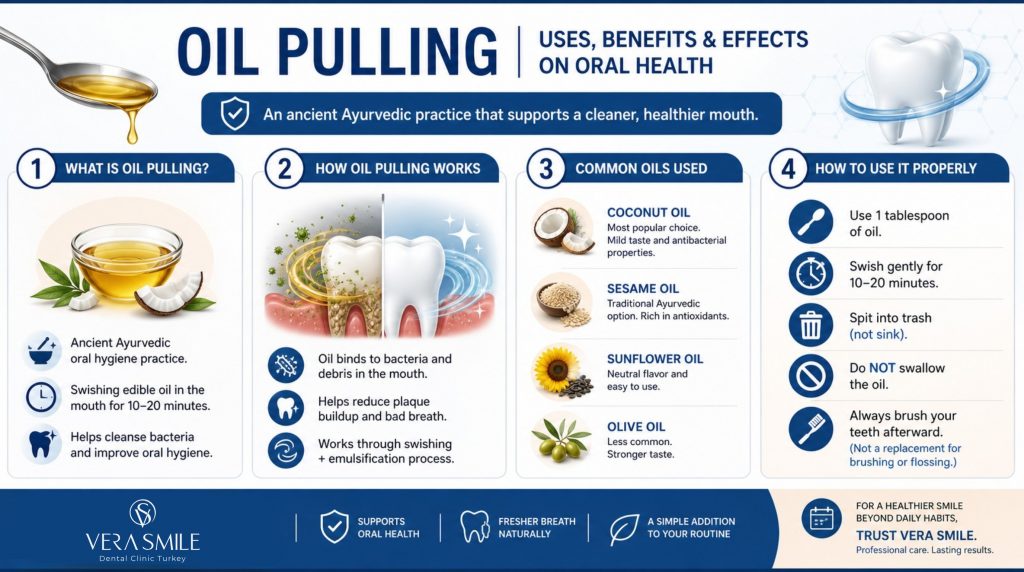
Oil pulling is the practice of swishing a tablespoon of edible oil in the mouth for an extended period, between 10 to 20 minutes, and then spitting it out. The name comes from the idea that the oil “pulls” bacteria, debris, and toxins away from the surfaces of the teeth and gums.
The practice originates from Ayurveda, the traditional Indian system of medicine, where it was known as “Kavala” or “Gandusha.” Ayurvedic texts credited it with benefits ranging from stronger teeth to improved digestion. In the early 2000s, and again more prominently in the 2010s, oil pulling re-entered Western health discourse, driven largely by anecdotal testimonials and growing consumer interest in natural, preventive dental care.
Oil pulling as easy as it requires no specialized equipment, uses affordable household ingredients, and fits neatly into morning wellness routines. Whether or not the science fully backs every claim made about it, oil pulling has become a fixture in conversations about oral hygiene.
Which Oils Are Commonly Used for Oil Pulling?
The most commonly chosen options for oil pulling share a mild flavor profile and are known to contain compounds with antibacterial or anti-inflammatory potential.
- Coconut oil: The most popular choice; high in lauric acid, a compound with demonstrated antimicrobial properties. Its mild, slightly sweet taste makes it the most beginner-friendly option.
- Sesame oil: The original Ayurvedic choice, still widely used across South and Southeast Asia. Rich in sesamin and sesamol, two compounds with antioxidant properties.
- Sunflower oil: Flavourless and neutral, making it the easiest to tolerate for those sensitive to stronger-tasting oils. Included in early clinical studies comparing oil pulling to standard mouthwashes.
- Olive oil: Rich in anti-inflammatory polyphenols, but its strong, herbaceous taste makes it difficult to swish for 15 to 20 minutes; the least practical option despite its general health reputation. which is the main reason it remains a less popular choice despite its general health reputation.
Regardless of which oil is chosen, the mechanism proposed for oil pulling remains largely the same: physical removal and sequestration of bacteria through the act of swishing.
How Does Oil Pulling Work?
Oil pulling works by creating a mechanical and chemical interaction between the oil and the oral environment. As the oil is swished around the mouth, it is thought to interact with bacterial cell membranes, physically dislodge biofilm from tooth surfaces, and reduce the overall bacterial load in saliva.
- Bacteria interaction: The proposed mechanism is saponification: oil mixed with saliva emulsifies and binds to the lipid membranes of bacteria, pulling them away from teeth and soft tissues. When the oil is spat out, the bacteria go with it.
- Plaque reduction: Dental plaque forms continuously on tooth surfaces and, if left unchecked, leads to cavities and gum disease. Some studies have shown that regular oil pulling can reduce plaque scores, though the evidence is not yet strong enough to consider it a primary method of plaque control.
- Bad breath: Halitosis is caused by volatile sulfur compounds produced by anaerobic bacteria along the gumline and between teeth. Small clinical trials have found oil pulling comparable to chlorhexidine mouthwash in reducing these bacteria, though the studies have notable limitations.
Taken together, these mechanisms suggest that oil pulling has a plausible biological basis, even if the science is still catching up to the practice. The effects are modest and indirect, but for a simple habit requiring nothing more than a spoonful of oil, they are not insignificant either.
How Can You Adapte Oil Pulling in Your Oral Health Routine?
Oil pulling is simple to incorporate into a daily routine. Take one tablespoon of oil, swish it gently around the mouth for 10 to 20 minutes, spit it into a trash bin, rinse with water, and then brush your teeth. That is the entire process.
The best time to do it is first thing in the morning, before eating, drinking, or brushing. Bacteria accumulate in the mouth overnight, so pulling before breakfast gives the oil the best opportunity to interact with a high bacterial load. It also fits naturally into a pre-breakfast routine, which makes it easier to stay consistent.
A few practical points worth noting: start with just 5 minutes if 20 minutes feels too long and build up gradually. Swish gently rather than vigorously to avoid jaw fatigue. The oil will increase in volume as it mixes with saliva, which is normal. Always spit into a bin rather than the sink, as oils like coconut oil can solidify in pipes and cause blockages. Never swallow the oil after pulling; by the end of the session it contains the bacteria and debris it has collected from the mouth.
Oil pulling does not replace teeth brushing or flossing. It is a supplementary step in an existing oral hygiene routine, not a standalone practice.
What Mistakes Should You Avoid During Oil Pulling?
Many people begin oil pulling without knowing the common errors that can reduce its effectiveness or cause discomfort.
- Using too much oil: One tablespoon is the standard amount. Using more makes swishing uncomfortable and harder to sustain for the full duration, especially for beginners.
- Swishing too aggressively: A gentle, steady motion is all that is needed. Vigorous swishing puts unnecessary strain on the jaw muscles and can cause pain and fatigue before the session is complete.
- Not pulling for long enough: Cutting the session short limits the oil’s opportunity to interact with bacteria. Aim for at least 10 minutes, with 15 to 20 minutes being the traditional and most commonly recommended target.
- Spitting into the sink: Oils like coconut oil solidify at cool temperatures and will clog pipes over time. Always spit into a lined bin instead.
- Swallowing the oil: This is the most important mistake to avoid. By the end of a pulling session, the oil contains the bacteria and debris it has collected from the mouth and should never be ingested.
- Skipping brushing and flossing afterward: Oil pulling is a complement to your existing oral hygiene routine, not a replacement for it. Brushing and flossing remain essential steps and should always follow, not be skipped in favor of, oil pulling.
Avoiding these mistakes from the outset makes oil pulling safer, more comfortable, and more consistent as a habit. Most of them are easy to correct once you know what to watch for.
Does Oil Pulling Whiten Teeth?
No. Oil pulling does not whiten teeth. It has no chemical mechanism capable of bleaching or lightening tooth enamel, and no clinical evidence supports it as an effective whitening method.
Any perceived brightness after oil pulling is most likely the result of removing surface debris and biofilm, giving teeth a cleaner appearance rather than an actually lighter shade. This is a surface-level effect, not teeth whitening in any meaningful dental sense.
While it may support a cleaner oral environment through its antibacterial properties, oil pulling cannot interact with the chromogens embedded within enamel that cause discolouration; that requires hydrogen peroxide or carbamide peroxide to penetrate the enamel surface at a molecular level. It also has no effect on crowns, bridges, or veneers, as these restorations have a fixed shade that no topical method can alter. For visible, lasting results, professional treatment is the only evidence-based option.
Is Oil Pulling Scientifically Proven to Benefit Teeth and Gums?
Not conclusively, but the early evidence is encouraging. Current research suggests oil pulling may reduce oral bacteria, lower plaque scores, and improve gum health, but it is not yet a clinically validated treatment.
Several peer-reviewed studies support its potential. A 2009 study in the Indian Journal of Dental Research found sesame oil pulling significantly reduced Streptococcus mutans counts and plaque scores. A 2011 study in the Journal of the Indian Society of Pedodontics and Preventive Dentistry reported that oil pulling was as effective as chlorhexidine mouthwash in reducing bad breath and the bacteria that cause it. A 2015 study in the Nigerian Medical Journal found coconut oil pulling reduced plaque and signs of gingivitis after 30 days.
The evidence does not support the idea that oil pulling can treat cavities, reverse gum disease, or deliver any benefit beyond the mouth. It works best as a complement to brushing twice daily with fluoride toothpaste, flossing, and attending regular dental check-ups; not as a substitute for any of them.
What Are the Most Common Misconceptions About Oil Pulling?
Following the popularity it gained on social media, oil pulling has also been accompanied by some exaggerated and unsubstantiated claims regarding its use and results.
- Oil pulling can whiten teeth: Oil pulling has no chemical mechanism capable of bleaching tooth enamel; any perceived brightness is most likely the result of removing surface debris.
- Oil pulling detoxifies the body or treats systemic diseases: These claims go well beyond anything the current scientific literature supports. Oil pulling is an oral care practice, and its effects are confined to the mouth. There is no credible clinical evidence linking it to organ function, hormonal balance, or systemic disease prevention.
- Oil pulling can replace brushing and flossing: This is inaccurate and potentially harmful. Brushing removes plaque through physical abrasion that oil cannot replicate. Flossing cleans between teeth where no oil or toothbrush can reach. Neither step can be skipped in favor of oil pulling.
- More swishing time means more benefit: Pulling beyond 20 minutes has not been shown to improve outcomes and often leads to jaw soreness and fatigue. The 10 to 20 minute window is sufficient; exceeding it adds discomfort, not results.
At Vera Smile, 34,4% of patients coming in for professional teeth whitening report having tried oil pulling first, though it does not produce lasting whitening results and offers no benefit for patients with crowns.
Separating these myths from what the research supports makes it easier to approach oil pulling with accurate expectations. It can be a useful addition to your routine, but no supplementary habit replaces the basics as known as brushing twice daily, flossing, and regular dental check-ups are still the foundation of long-term oral health.
Are There Any Risks or Side Effects of Oil Pulling?
Oil pulling is generally considered safe for most healthy adults when practiced correctly and in moderation. However, certain side effects have been reported, and it is worth knowing them before starting. The most commonly noted risks include:
- Jaw soreness or fatigue
- Nausea
- Lipoid pneumonia (rare, caused by accidentally inhaling oil)
- Gag reflex
- Allergic reactions to specific oils
Most of these are avoidable with proper technique: swishing gently, using the right amount of oil, and never swallowing or inhaling it during the session.
There is also a practical concern that some people may become so focused on oil pulling as a wellness ritual that they deprioritize evidence-based dental hygiene steps. If oil pulling leads someone to skip brushing or avoid dental appointments, it becomes counterproductive.
Who Should Avoid Oil Pulling or Consult a Dentist First?
Oil pulling is not appropriate for everyone. The following groups should speak with a dental professional before trying it:
- Children and young people who cannot safely control swishing risk accidentally swallowing or inhaling the oil.
- People with dental restorations such as crowns, bridges, veneers, or fillings should consult their dentist first; oil pulling offers no benefit to these surfaces and its effect on certain restoration materials has not been studied.
- Individuals with oil allergies or sensitivities should carefully review the composition of any oil before use.
- Those with temporomandibular joint disorders (TMJ) disorders or chronic jaw pain may aggravate their condition through extended swishing.
- Patients undergoing active dental treatment for gum disease or tooth decay should follow their dentist’s prescribed plan without adding unverified supplementary practices.
- Pregnant individuals should consult their healthcare provider before beginning any new oral or wellness routine.
If any of these apply to you, a quick conversation with your dentist is the right first step before adding oil pulling to your routine.
FAQ
Yes, it can. Swishing oil around the mouth and throat area can stimulate mucus drainage, particularly in the nasal passages and throat. This is a natural response to the mechanical action of swishing and is generally considered harmless.
No. Oil pulling has antibacterial properties but is not strong enough to treat or reverse a tooth infection. A dental infection requires professional treatment, antibiotics or a root canal procedure, and attempting to manage it with oil pulling alone can allow the infection to worsen significantly.
The oil turns white because it emulsifies with saliva during swishing. As the oil mixes with saliva and the bacteria and debris it collects, it becomes a thicker, milky white liquid. This is a normal part of the process and is one of the visual signs that the oil has interacted with the oral environment as intended.
Most people who notice any difference report changes within two to four weeks of daily practice. Studies showing reductions in plaque and bacteria run over a 30-day period. Results vary depending on consistency, technique, and individual oral health baseline.
For most healthy adults, daily oil pulling is safe and may gradually support reduced bacterial load, fresher breath, and improved gum health over time. It should always be done alongside, not instead of, brushing and flossing. If any discomfort such as jaw soreness or nausea develops, reducing frequency is advisable.