
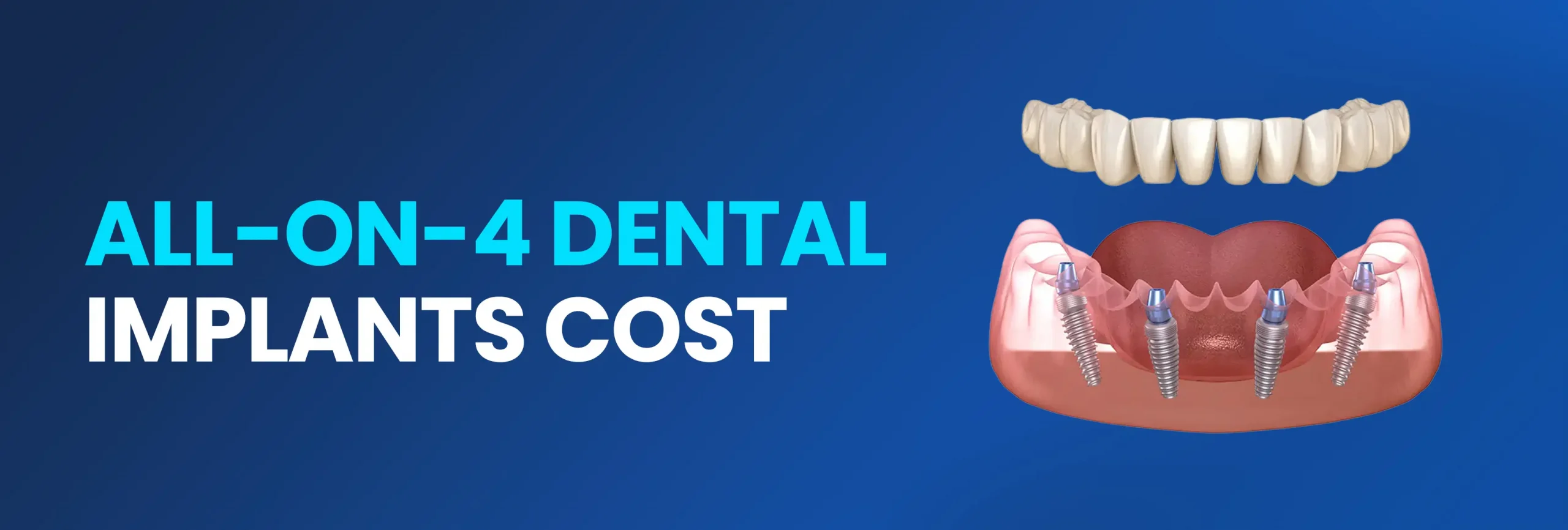
All-on-4 dental implants are a full-arch tooth replacement solution that restores an entire set of teeth using four strategically placed implants. In 2026, the cost of All-on-4 treatment reflects the complexity of the procedure, the materials used for the prosthesis, and the level of technology involved. Prices for All-on-4 dental implants generally range from €7,000 to €17,000 per arch, with higher totals for cases requiring premium prosthetic materials such as hybrid or zirconia restorations.
The overall cost includes advanced diagnostics, implant placement, and a same-day temporary arch, while final prosthetic materials and optional sedation can increase the total investment. Differences in clinic location, surgeon expertise, and laboratory processes contribute to the wide variation in pricing seen across countries and treatment providers.
What Are All-on-4 Dental Implants?
All-on-4 dental implants replace an entire arch of teeth using exactly four implants per jaw. Two implants are placed vertically in the front of the mouth, where bone density remains strongest even after long-term tooth loss. The remaining two implants are positioned at a 30–45-degree angle in the back of the jaw, allowing surgeons to avoid the sinuses and major nerves while maximising contact with existing bone. A fixed prosthetic bridge, containing 10–14 teeth, is attached to these implants within hours of surgery.
Traditional full-arch implant treatment required 6–8 implants per jaw, frequent bone grafting, and a 6–9 month waiting period before teeth could be fitted. The All-on-4 concept was developed in the 1990s by Dr Paulo Malo to remove these limitations. The angled implant technique allows surgeons to use available bone effectively, eliminating the need for grafting in around 80% of patients.
The treatment provides immediate function. Patients leave surgery with temporary fixed teeth on the same day, resume eating soft foods within 48 hours, and receive their final prosthesis after 3–6 months of healing. Unlike traditional dentures, which sit on the gums, move during eating, and accelerate bone loss, All-on-4 dental implants stimulate the jawbone like natural tooth roots, helping preserve facial structure and bone volume over time.
Candidacy depends on specific clinical factors. Patients need adequate bone density in key areas, healthy gum tissue, and no active oral infections. Heavy smoking significantly increases failure risk, with rates reaching around 15%, compared to approximately 5% in non-smokers. Uncontrolled diabetes, active cancer treatment, and certain autoimmune conditions limit eligibility until medical stability is achieved.
How Much Do All-on-4 Dental Implants Cost in 2026?
In 2026, All-on-4 dental implant costs range from €7,000 to €17,000 per arch, depending on the clinic, materials, and level of technology used. The surgical phase accounts for around 40–50% of the total cost and covers implant placement, surgeon expertise, and operating time. The remaining 50–60% relates to prosthetics, including both temporary and final teeth.
Most packages include temporary acrylic teeth, which are fitted on the same day and last 3–6 months during healing. The final prosthesis is the largest cost variable: acrylic options cost €1,500–4,000, hybrid prostheses €3,500–8,000, and full zirconia bridges €8,000–16,000. Prices vary widely because some clinics exclude diagnostics, scans, or anaesthesia from advertised rates, making it essential to confirm exactly what is included before treatment.
What Does the All-on-4 Dental Implant Cost Include?
The cost of All-on-4 dental implants covers both the surgical phase and the prosthetic phase, but the exact inclusions vary by clinic. In a comprehensive package, the price typically includes the initial consultation, advanced diagnostics such as CBCT scans and digital treatment planning, implant placement surgery, and a same-day temporary fixed bridge. These elements form the core of the treatment and account for most of the cost.
In many clinics, the quoted price includes post-surgical follow-up visits, basic aftercare, and adjustments to the temporary teeth during the healing period. The final prosthesis (acrylic, hybrid, or zirconia), sedation or general anaesthesia, prescription medications, and long-term maintenance are sometimes priced separately. Because inclusions differ widely, patients should always request an itemised cost breakdown to confirm exactly what is included and avoid unexpected additional charges.
How Has the Cost of All-on-4 Changed Over Time?
The cost of All-on-4 dental implants has generally increased over the past decade, driven by several key trends in dental technology, clinical standards, and global healthcare economics:
- Advanced Technology and Digital Workflows: As digital imaging, 3D planning, and guided surgery become standard practice, clinics invest in expensive hardware and software. While these technologies improve precision and outcomes, they also contribute to higher treatment costs compared with a decade ago.
- Higher Material Standards and Prosthetic Options: Early All-on-4 treatments used basic acrylic bridges. Today’s markets increasingly offer hybrid prostheses and full zirconia restorations, which have significantly higher manufacturing costs but longer lifespans and better aesthetics, influencing what patients pay for final teeth.
- Rising Clinical and Operating Expenses: General inflation in healthcare, rising lab fees, and increased staff training all raise baseline costs for dental providers. These factors have pushed average All-on-4 pricing upward in many regions.
- Global Market Variation and Dental Tourism Trends: While prices in high-cost countries (e.g., the USA, UK, Germany) have continued to rise, competitive dental tourism markets (such as Turkey, Poland, and Mexico) have kept their pricing more accessible. This has widened the range of price options available to patients over time.
- Patient Expectations and Premium Services: Greater demand for sedation options, aesthetic customisation, and personalised treatment planning also increases total cost compared with earlier years when fewer options were offered.
Why Does All-on-4 Cost Vary So Much Between Clinics?
All-on-4 costs vary widely between clinics because treatment pricing reflects differences in clinical expertise, materials, technology, and business overhead. Clinics with highly experienced full-arch surgeons, advanced diagnostic systems, and in-house laboratories carry higher operating costs, which increases treatment fees. The choice of implant brand and prosthetic material has a major impact, as premium systems and long-lasting restorations cost more to source and fabricate.
Pricing differences come from what is included in the quoted fee. Some clinics advertise low headline prices while excluding essentials such as CBCT scans, temporary teeth, sedation, or final prosthetics. Once these items are added, the total cost matches or exceeds higher but more transparent quotes. Geographic location plays a role as well, since rent, staff wages, and laboratory costs vary significantly between cities and countries.
Clinic volume and workflow efficiency influence pricing. High-volume specialist centres offer more competitive rates without cutting quality, while low-cost providers reduce prices by limiting diagnostics, rushing procedures, or using lower-grade materials. Understanding these factors helps explain why All-on-4 prices differ so dramatically between clinics.
What Factors Influence All-on-4 Implant Costs?
All-on-4 pricing varies because each treatment plan is shaped by clinical needs, material choices, and provider expertise. The number of arches treated, the type of prosthesis selected, bone condition, diagnostic technology, and the surgeon’s experience all play a direct role in the final cost. Understanding these core factors makes it easier to compare quotes and identify where price differences come from.
- Number of arches treated: Treating one jaw involves fewer implants, less surgical time, and a simpler prosthetic design than restoring both jaws in the same procedure.
- Prosthesis material: The choice between acrylic, hybrid, or zirconia restorations affects durability, aesthetics, weight, and long-term performance, which influences overall cost.
- Bone quality and preparatory procedures: Bone density, existing infections, and the condition of remaining teeth determine whether additional procedures are required before or during implant placement.
- Diagnostic methods and technology: Advanced imaging, digital planning, and guided surgery improve precision and outcomes but increase procedural complexity.
- Surgeon experience and clinic location: Specialist expertise, case volume, and regional operating costs play a major role in pricing differences between clinics.
This structure keeps the focus on what drives cost differences, without referencing specific price ranges.
How Much Do All-on-4 Implants Cost in Different Countries?
All-on-4 dental implant costs vary significantly worldwide due to differences in healthcare economics, operating expenses, and market structure. Patients compare international prices to balance affordability with clinical quality, especially when considering dental tourism.
| Country | All-on-4 Cost per Arch (€) |
| Turkey | €5,000 – €12,000 |
| USA | €20,000 – €40,000 |
| UK | €15,000 – €30,000 |
| Germany | €18,000 – €35,000 |
| Canada | €14,000 – €28,000 |
| Australia | €14,000 – €26,000 |
| Mexico | €6,000 – €14,000 |
| India | €3,500 – €10,000 |
| Poland | €6,000 – €13,000 |
| Spain | €9,000 – €18,000 |
How Does All-on-4 Compare With Other Full-Arch Tooth Replacement Options?
All-on-4 uses four implants to support a fixed full-arch prosthesis, while All-on-6 relies on six implants to distribute chewing forces more evenly. The additional implants in All-on-6 increase stability and long-term durability, making it suitable for patients with strong posterior bone and high bite forces. All-on-6 requires more available bone and involves grafting in some cases, whereas All-on-4 is designed to avoid grafting through angled implant placement.
Implant-supported dentures offer a lower-cost alternative but provide reduced function and permanence. These removable prosthetics attach to a small number of implants and must be taken out daily for cleaning. While more stable than traditional dentures, they do not match the biting strength, comfort, or fixed feel of All-on-4 restorations and are chosen when fixed solutions are not feasible.
Individual implants with separate crowns deliver the most natural tooth-by-tooth replacement but represent the most complex and time-consuming approach. Replacing an entire arch requires many implants, multiple surgical stages, and extended treatment time. This option is rarely selected for full-arch restoration and is reserved for cases involving only a few missing teeth rather than complete tooth loss.
Is a Fixed All-on-4 More Cost-Effective Than Removable Implants?
Yes, a fixed All-on-4 solution is more cost-effective in the long term compared to removable implant-supported dentures, even though the initial investment is higher.
- Lower Long-Term Replacement Costs: Removable implant dentures require more frequent relines, attachment replacements, and periodic remakes. Over time, these recurring costs add up and can narrow or exceed the initial price difference.
- Greater Durability and Longevity: A fixed All-on-4 bridge is designed for long-term use and provides a stable, non-removable solution. With proper care, the implants last for decades, reducing the need for repeated prosthetic replacements.
- Reduced Maintenance and Adjustment Needs: Fixed All-on-4 restorations require fewer mechanical components than removable systems, which lowers ongoing maintenance expenses.
- Improved Function and Efficiency: Fixed teeth restore stronger chewing ability, supporting a normal diet and reducing the indirect costs associated with dietary limitations or nutritional supplements sometimes needed with removable options.
- Predictable Long-Term Planning: All-on-4 treatment follows a clear surgical and prosthetic pathway, making future costs more predictable compared to removable systems, which involve ongoing attachment wear.
While removable implant-supported dentures have a lower upfront cost, a fixed All-on-4 solution offers better long-term financial value, stability, and convenience for patients seeking a permanent tooth replacement option.
Are All-on-4 Dental Implants Covered by Insurance?
In most cases, no. Dental insurance providers classify All-on-4 dental implants as cosmetic or elective treatment, which means they are not covered under standard policies. In the UK, the NHS does not fund All-on-4 except in rare situations involving cancer, severe trauma, or congenital conditions. Private UK insurance offers partial reimbursement only when tooth loss is linked to accident or disease, and approval requires clear proof of medical necessity rather than aesthetic preference.
Across Europe, coverage rules are similar. Germany’s statutory insurance covers basic dentures but excludes implants unless there is significant functional impairment, while supplemental private policies contribute a limited amount after several years of continuous coverage. Spain’s public healthcare system does not cover dental implants at all, leaving patients responsible for the full cost.
Cases involving accidents or trauma are assessed differently. Tooth loss caused by car accidents, workplace injuries, or assaults qualify for coverage under medical insurance, but claims require extensive documentation and pre-authorisation. Coverage levels vary widely, and approval is not guaranteed.
Insurance does not extend to medical tourism complications. If All-on-4 treatment performed abroad requires corrective surgery at home, domestic insurance does not cover the revision. Some overseas clinics offer implant warranties, but these exclude travel costs and local surgical fees, which patients must cover themselves.
Why Doesn’t Dental Insurance Cover All-on-4 Costs?
Dental insurance does not cover All-on-4 dental implants because of how implant treatment is classified within most insurance systems.
- Considered an Advanced or Elective Treatment: All-on-4 is categorised as an advanced restorative procedure rather than basic dental care. Insurance policies are generally designed to cover routine treatments, not complex full-arch rehabilitation.
- High Treatment Cost Relative to Annual Coverage Limits: Most dental insurance plans have low annual maximums. The cost of All-on-4 treatment exceeds these limits, making full coverage impractical within standard policy structures.
- Focus on Basic Tooth Replacement Options: Insurance providers usually prioritise coverage for conventional dentures or simple restorations, which are seen as sufficient for basic function.
- Long-Term Investment Model: All-on-4 implants are designed to last for many years or decades. Insurance systems are structured around short-term treatment cycles rather than long-term, high-value solutions.
- Variation in Policy Rules Across Countries: Public and private insurance systems differ by country, but most follow similar principles that exclude implant-based full-arch solutions from routine coverage.
While dental insurance rarely covers the full cost of All-on-4 treatment, patients still receive limited support for diagnostics, extractions, or routine follow-up care, depending on their individual policy.
What Hidden or Additional Costs Should Patients Expect With All-on-4?
Beyond the core treatment fee, several additional expenses affect the total cost of All-on-4 dental implants.
- Prescription Medications: Post-surgical antibiotics, prescription pain relief, anti-inflammatory drugs, and anti-nausea medication are commonly required and are not included in surgical quotes.
- Dietary Adjustments: A soft-food diet is required during healing, which leads to extra spending on protein shakes, meal replacements, and easy-to-eat foods to maintain proper nutrition.
- Time Off Work: Recovery time varies by job type. Office-based roles require several days off, while physically demanding jobs need longer rest periods. Treatment abroad increases total downtime due to travel and follow-up appointments.
- Temporary Prosthesis Adjustments: As gums heal and shrink, temporary teeth may loosen. Relines or adjustments are sometimes charged separately if not included in the package, when multiple visits are needed before final teeth placement.
What Are the Maintenance and Long-Term Costs of All-on-4 Dental Implants?
All-on-4 dental implants involve ongoing maintenance costs, mainly related to professional care and prosthetic wear rather than the implants themselves.
- Professional Cleanings: Required every six months to control plaque and bacteria around implants. Special non-metal instruments are used to protect implant surfaces, and these visits are covered by standard dental insurance even when implant surgery is not.
- Prosthesis Replacement Over Time: The need for replacement depends on the material used. Acrylic prostheses wear faster, hybrid materials last longer, and zirconia offers the longest lifespan but requires higher replacement investment when the time comes.
- Minor Repairs and Adjustments: Chips, cracks, or wear occurs, especially with acrylic teeth. Small repairs are common and resolved quickly, while major damage require a full prosthesis remake.
- Implant Longevity: The titanium implants themselves require minimal maintenance once fully integrated. Long-term survival rates remain high, with most dental implant failures occurring early rather than years later. Proper hygiene and regular check-ups allow implants to remain stable for decades.
Overall, long-term costs focus on prosthetic upkeep, while the implants provide lifelong support when cared for correctly.
Are All-on-4 Dental Implants Worth the Cost?
Yes, when long-term value is considered. Traditional dentures cost less upfront but require frequent replacements, adjustments, and ongoing expenses, which narrow the cost gap over time. All-on-4 provides a fixed solution designed to last decades with only periodic prosthetic replacement.
All-on-4 implants restore far greater chewing efficiency than dentures, allowing patients to eat a wider range of foods and maintain better nutrition. They preserve jawbone and facial structure by stimulating the bone, preventing the collapse and premature aging linked to dentures.
Beyond function, fixed teeth eliminate concerns about slipping or embarrassment, offering a lasting improvement in comfort, confidence, and quality of life.
“I was worried about the cost at first, but when I compared it to years of denture repairs and replacements, All-on-4 made much more sense. The fixed teeth feel natural, stable, and worth the investment. Choosing treatment in Vera Smile allowed me to afford a solution I couldn’t access at home, without compromising on quality.” -Marco K.
“After years of struggling with removable dentures, I wanted a permanent solution but found the cost in my home country difficult to manage. The All-on-4 treatment gave me fixed teeth that feel secure and natural, and the overall experience was well organised from consultation to final teeth. The improvement in comfort, confidence, and everyday life made the investment worthwhile.” Michael R.
How Can Patients Choose the Right All-on-4 Option for Their Budget?
Patients make a confident, cost-effective decision by focusing on value, transparency, and long-term outcomes, not just the lowest advertised price.
- Prosthesis Material Selection: Match materials to age and expected lifespan. Acrylic suits short- to mid-term needs, while hybrid or zirconia offers better durability for long-term use.
- Itemised Cost Breakdown: Request a detailed quote covering diagnostics, surgery, temporary teeth, final prosthetics, and follow-ups to avoid hidden expenses.
- Implant Brand Verification: Confirm the use of best dental implant brands with proven clinical performance and global support networks.
- Surgeon Credentials and Experience: Choose specialists with focused full-arch training, strong case volume, and documented results.
- Clinic Comparison: Consult multiple providers and compare communication quality, technology, cleanliness, and transparency, not just pricing.
- Financing and Timing Strategies: Explore payment plans, off-season discounts, and advance booking options to manage costs more comfortably.
- International Treatment Checks: Visit overseas clinics in advance to verify facilities, meet the surgeon, and confirm standards match expectations.
- Professional Trust and Comfort: Select clinics that explain risks clearly, answer questions thoroughly, and avoid pressure or unrealistic promises.
This approach helps patients secure the best All-on-4 outcome for their budget, without sacrificing safety or long-term value.