
Pregnancy introduces complex physiological changes that directly influence how dental treatments are assessed, approved, or postponed. Increased blood volume, hormonal fluctuations, immune modulation, and altered bone metabolism reshape the body’s response to surgical intervention. Dental implant placement involves invasive surgery, advanced imaging, and a healing process that depends on stable bone conditions. For that reason, implant decisions during pregnancy require a higher medical threshold than standard dental procedures such as cleanings or fillings.
Concerns surrounding dental implants during pregnancy extend beyond oral health alone. Fetal development, maternal stress response, anesthesia exposure, and procedural positioning all factor into clinical judgment. Many patients search for clarity after encountering conflicting information online, where routine dental care and implant surgery are frequently grouped together. A medically grounded explanation of safety limits, trimester-based considerations, and non-surgical alternatives supports informed planning while protecting both maternal and fetal well-being.
Can You Get Dental Implants While Pregnant?
No. Dental implants while pregnant represent elective oral surgery rather than medically necessary dental treatment. Implant placement requires surgical bone preparation, advanced imaging, prolonged chair time, and a healing process dependent on stable physiological conditions. Pregnancy safety protocols prioritize fetal protection and maternal stability, which excludes elective implant procedures.
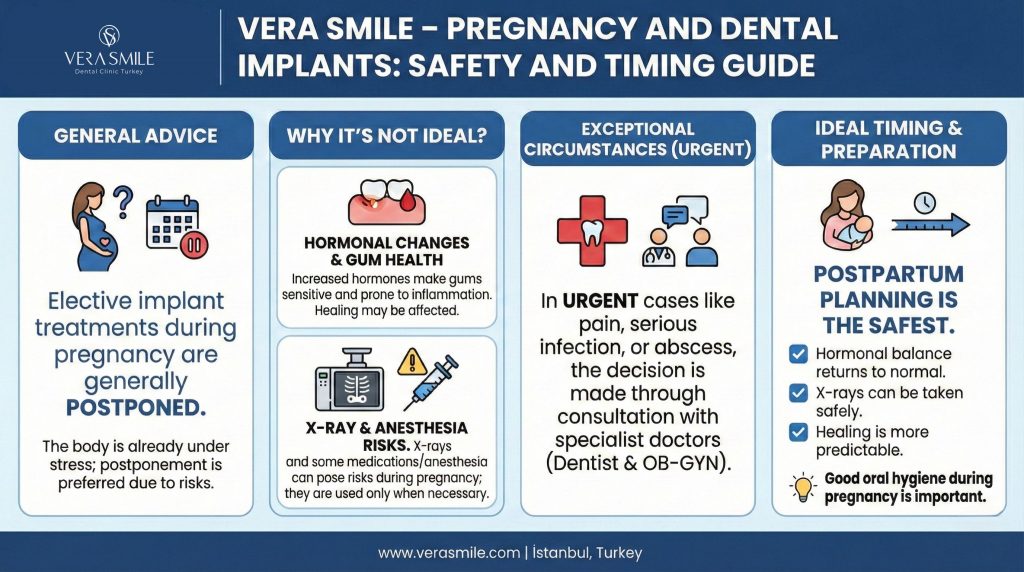
Elective surgical implant placement does not align with pregnancy care standards recognized across dental and obstetric practice. For that reason, professional guidance supports postponing implant surgery until after delivery, when surgical planning, anesthesia control, and bone healing predictability improve.
The clinical difference between dental necessity and elective reconstruction explains this recommendation. Necessary dental treatment targets infection control, pain relief, or acute pathology. Dental implants focus on long-term structural replacement rather than immediate medical need, which separates them from basic dental care permitted during pregnancy.
Why Are Dental Implants Classified as Elective During Pregnancy?
Dental implant treatment involves multiple biological and procedural factors that exceed the scope of routine dental care. During pregnancy, clinical decision-making focuses on minimizing systemic strain and avoiding interventions without direct medical necessity. Implant placement does not address acute disease or immediate health risk, which places it within the elective treatment category. The classification reflects procedural complexity, healing demands, and evidence limitations rather than implant materials themselves.
- Surgical Duration: Dental implant placement requires extended procedural time that includes incision, bone preparation, implant insertion, and suturing. Longer chair time increases cardiovascular demand, positional strain, and physiological fatigue during pregnancy.
- Bone Drilling and Osseointegration: Implant surgery involves drilling into the jawbone followed by a prolonged osseointegration phase. Successful integration depends on stable bone metabolism and controlled inflammatory response. Pregnancy-related hormonal shifts alter bone turnover, which reduces predictability during the healing phase.
- Physiological Stress Response: Invasive surgery activates systemic stress pathways involving hormonal release and immune modulation. During pregnancy, maternal physiology prioritizes fetal development, which raises sensitivity to surgical stress and increases overall physiological load.
- Lack of Pregnancy-Specific Clinical Evidence: Dental implants lack validated outcome data for pregnant patients. Ethical constraints limit surgical research during pregnancy, leaving implant safety and success rates unverified within maternal–fetal care models. In evidence-based care, procedures without confirmed safety profiles remain deferred.
What Medical Risks Are Associated With Dental Implant Surgery During Pregnancy?
Dental implant surgery presents a combination of systemic and localized risks that intersect with pregnancy-related physiological changes. These risks arise from surgical intervention, procedural duration, and biological healing demands rather than implant materials alone.
- Surgical Stress Load: Implant placement triggers a systemic stress response involving cardiovascular activation and hormonal release. Pregnancy increases sensitivity to physiological stress, which intensifies the body’s response to invasive procedures.
- Anesthesia Exposure: Implant surgery requires local anesthesia with adjunct agents to control pain and bleeding. Pregnancy safety protocols limit pharmacological exposure when no immediate medical necessity exists, which restricts implant-based interventions.
- Advanced Imaging Requirements: Accurate implant planning relies on three-dimensional imaging rather than basic dental radiographs. Pregnancy care standards avoid elective exposure to diagnostic imaging beyond urgent clinical need.
- Healing and Inflammatory Response: Successful implant integration depends on controlled inflammation and predictable tissue repair. Pregnancy alters immune signaling and bone remodeling patterns, which reduces healing predictability after surgical intervention.
- Procedural Positioning Risks: Implant surgery requires prolonged supine positioning. Pregnancy-related circulatory changes increase vulnerability to positional blood pressure shifts during extended dental procedures.
How Does Surgical Stress Interact With Maternal Physiological Changes?
Pregnancy reshapes multiple body systems, which alters how surgical stress is processed during invasive dental procedures. Dental implant surgery introduces physiological demands that intersect directly with these pregnancy-specific changes.
- Increased Blood Volume: Pregnancy increases circulating blood volume to support placental and fetal needs. Surgical intervention disrupts hemodynamic balance, which complicates blood pressure regulation during invasive dental procedures.
- Altered Immune Response: The immune system shifts toward tolerance during pregnancy to protect fetal development. Surgical trauma activates inflammatory pathways that challenge immune equilibrium and complicate post-operative tissue response.
- Reduced Stress Tolerance: Pregnancy places sustained demands on cardiovascular and endocrine systems. Exposure to surgical stress hormones places additional strain on maternal physiological reserves during invasive procedures.
- Supine Hypotensive Syndrome Risk: Prolonged supine positioning during dental surgery increases pressure on major blood vessels. This compression reduces venous return and blood flow, which elevates dizziness, hypotension, and fetal circulation concerns during long procedures.
How Safe Are Local Anesthesia and Sedation During Dental Implant Surgery in Pregnancy?
Dental implant surgery requires more than basic local anesthesia used for routine dental treatment. Bone drilling, flap elevation, and extended surgical manipulation demand sustained anesthetic depth and bleeding control throughout the procedure. Implant protocols rely on vasoconstrictor agents to prolong anesthetic effect and manage intraoperative bleeding, which influences systemic circulation. During pregnancy, changes in blood flow dynamics raise concern regarding uteroplacental circulation and fetal oxygen delivery under vasoconstrictor exposure.
Sedation-based implant workflows introduce additional pharmacological load and respiratory considerations. Pregnancy alters drug distribution and metabolism, which reduces anesthetic predictability during sedated procedures. In the absence of medical necessity, implant surgery involving sedation remains excluded from pregnancy-safe dental care planning. For a broader explanation of anesthetic principles in dentistry, see local anesthesia safety in dental procedures.
Are Dental X-Rays for Implant Planning Safe During Pregnancy?
No. Dental x-rays used for implant planning fall outside pregnancy-safe imaging thresholds. While modern digital dental x-rays operate at low radiation levels and use protective shielding, pregnancy care limits imaging to situations involving direct medical necessity rather than elective planning.
Dental implant planning requires cone beam computed tomography (CBCT) rather than standard periapical x-rays. CBCT delivers three-dimensional visualization of bone volume, nerve pathways, and anatomical structures essential for implant accuracy. Two-dimensional dental imaging does not provide sufficient spatial data for implant surgery.
CBCT avoidance during pregnancy reflects radiation exposure principles rather than technological limitations. Three-dimensional imaging exposes a broader anatomical field and produces higher cumulative radiation than routine dental radiographs. In pregnancy, imaging that supports elective reconstruction rather than urgent care remains deferred.
The clinical boundary between diagnostic necessity and elective imaging guides imaging decisions. Diagnostic imaging addresses active disease or infection requiring immediate management. Elective imaging supports long-term restorative planning without time-sensitive medical indication, which places implant-related imaging outside pregnancy-approved care.
Are Dental Implants Safer During Certain Pregnancy Trimesters?
No. Dental implant surgery does not reach safety approval during any pregnancy trimester. While clinical guidance differentiates dental care by trimester, this framework applies to urgent or necessary treatment rather than elective surgical reconstruction.
Each trimester presents distinct physiological demands that limit tolerance for implant surgery. Early pregnancy prioritizes fetal organ development, mid-pregnancy maintains heightened hormonal and circulatory activity, and late pregnancy introduces positional and cardiovascular strain. Across all stages, implant placement involves surgical stress, imaging exposure, and healing uncertainty that fall outside trimester-based dental safety allowances.
Why Does the Second Trimester Still Exclude Dental Implant Surgery?
The second trimester receives widespread recognition as the most stable phase for limited dental treatment during pregnancy. This designation leads many patients to question whether implant surgery fits within that window. Clinical evaluation draws a clear boundary between permitted dental care and elective surgical reconstruction.
- Misinterpretation of “Safest Dental Period”: The second trimester earns its reputation through improved maternal comfort and reduced early-pregnancy symptoms. Many explanations stop at this point, which leads to the incorrect assumption that all dental procedures fit within this window.
- Urgent Dental Care vs Elective Surgery: Second-trimester dental approval applies to urgent treatment that addresses infection or pain. Dental implant surgery involves invasive reconstruction, surgical drilling, and extended procedural exposure, which exceeds pregnancy-approved dental care boundaries.
- Bone Healing Unpredictability: Pregnancy maintains active hormonal influence on bone turnover and inflammatory regulation. Implant success depends on precise osseointegration and stable healing conditions, which remain unpredictable throughout pregnancy, including the second trimester.
Why Does the Third Trimester Increase Risks During Dental Implant Surgery?
The third trimester introduces significant positional and circulatory challenges that restrict tolerance for invasive dental procedures. As fetal size increases, maternal cardiovascular dynamics shift, which heightens sensitivity during prolonged surgical positioning.
- Supine Hypotension Risk: Extended supine positioning places pressure on major blood vessels, which reduces venous return and blood pressure. This response compromises maternal circulation and disrupts fetal blood flow during lengthy procedures.
- Reduced Procedural Tolerance: Late pregnancy places sustained demand on respiratory and cardiovascular systems. Prolonged dental surgery increases discomfort, fatigue, and physiological strain, which limits procedural feasibility.
- Emergency Interruption Risk: Advanced pregnancy raises the probability of sudden discomfort, circulatory instability, or fetal distress. Surgical procedures requiring uninterrupted focus face elevated interruption risk, which conflicts with safe implant placement standards.
What Temporary Tooth Replacement Options Are Used During Pregnancy?
Temporary solutions address functional and aesthetic concerns while avoiding surgical intervention during pregnancy. These options preserve spacing, support oral balance, and protect adjacent teeth until definitive treatment becomes appropriate.
- Removable Partial Dentures: Lightweight removable appliances replace missing teeth without surgical preparation. They support chewing function and prevent tooth migration while allowing easy adjustment throughout pregnancy.
- Essix Retainers: Clear Essix retainers hold space and provide discreet cosmetic coverage for a missing tooth. This option avoids gum contact pressure and integrates easily into daily oral care routines.
- Temporary Adhesive Bridges: Non-invasive adhesive bridges attach to adjacent teeth without drilling or anesthesia. These restorations restore appearance and basic function without introducing surgical stress.
How Is Infection or Tooth Loss Managed Without Dental Implants During Pregnancy?
Dental management during pregnancy prioritizes disease control and structural preservation rather than permanent reconstruction. When tooth loss or infection occurs, treatment strategies focus on maintaining oral health stability until implant placement becomes appropriate after delivery.
- Infection Control Protocols: Active infection requires prompt clinical intervention to protect maternal health. Treatment targets bacterial reduction, inflammation control, and pain relief through pregnancy-approved dental procedures rather than surgical reconstruction.
- Preserving Bone While Deferring Implant Placement: After tooth loss, clinicians focus on protecting the extraction site and surrounding bone. Gentle socket management and non-surgical stabilization support bone integrity without initiating implant-related healing demands.
- Use of Space Maintainers: Space maintainers prevent adjacent teeth from drifting into the empty area. Preserving alignment and spacing reduces future treatment complexity once definitive implant planning resumes postpartum.
When Is the Safest Time to Get Dental Implants After Pregnancy?
The safest timing for dental implant placement begins after pregnancy concludes and maternal physiology stabilizes. Postpartum recovery allows hormonal levels, bone metabolism, and immune response to return toward baseline, which supports predictable surgical planning and healing. Implant treatment following delivery removes fetal exposure concerns and restores full flexibility in imaging, anesthesia selection, and procedural positioning.
How Does Postpartum Healing Support Safer Dental Implant Placement?
Postpartum recovery marks a transition back toward physiological equilibrium after the demands of pregnancy. This phase provides conditions required for surgical precision, predictable healing, and long-term implant stability. Dental implant planning aligns with this recovery window to reduce biological uncertainty and procedural risk.
- Hormonal Normalization: After pregnancy, estrogen and progesterone levels decline toward baseline. This hormonal shift restores systemic balance across immune, vascular, and skeletal systems involved in surgical recovery.
- Bone Metabolism Stabilization: Postpartum physiology supports more predictable bone remodeling. Stable bone turnover improves implant anchorage and supports reliable osseointegration during healing.
- Reduced Inflammation Variability: As pregnancy-related immune modulation resolves, inflammatory response becomes more controlled. Consistent tissue repair around the implant site strengthens surgical outcomes and supports long-term implant stability.
Do Dental Implants Require Special Consideration During Breastfeeding?
Breastfeeding removes fetal exposure concerns, which changes how dental implant treatment is evaluated. Clinical planning focuses on medication transfer through breast milk, procedural timing, and postoperative care rather than pregnancy-related physiological limits.
- Local Anesthesia Compatibility: Local anesthetics used in implant surgery demonstrate limited transfer into breast milk. Short-acting agents support safe pain control without disrupting breastfeeding continuity.
- Antibiotic Considerations: Post-surgical infection prevention requires antibiotic selection aligned with lactation safety profiles. Prescribing decisions prioritize agents with minimal milk secretion and established neonatal tolerance.
- Timing Around Feeding Schedules: Implant procedures align with feeding intervals to reduce infant exposure to peak medication levels. Coordinated scheduling supports uninterrupted breastfeeding while maintaining surgical safety.
What Rare but Important Questions Should Be Considered About Dental Implants and Pregnancy?
This topic raises several less-discussed clinical questions that influence patient decision-making. These questions focus on biological interaction, treatment timing, and unintended scenarios rather than routine eligibility.
- Unplanned Implant Surgery Before Pregnancy Awareness: Concerns arise when implant placement occurs before pregnancy recognition. Clinical focus shifts toward monitoring healing response and maternal stability rather than surgical reversal.
- Hormonal Influence on Implant Integration: Pregnancy hormones interact with bone remodeling and inflammatory pathways. This interaction affects predictability during osseointegration and long-term implant stability.
- Implant Failure Risk During Pregnancy: Questions surrounding failure risk relate to altered healing dynamics rather than implant materials. Pregnancy physiology influences tissue response and recovery consistency.
- Impact on Fertility and Pregnancy Outcomes: Dental implants consist of biocompatible materials with no reproductive interaction. Risk assessment centers on surgical timing rather than fertility or pregnancy viability.
Does Dental Implant Surgery Before Pregnancy Awareness Create Immediate Risk?
No. Dental implant surgery completed before pregnancy recognition does not create automatic implant failure or direct maternal risk. Once placement concludes, the implant remains in situ without need for surgical reversal. Clinical management shifts toward observation rather than intervention.
Monitoring focuses on healing progression, tissue response, and overall maternal stability through non-invasive assessment. Attention centers on signs such as persistent pain, swelling, abnormal redness, discharge, or changes in implant stability. Systemic symptoms including fever or unexplained discomfort require prompt dental and obstetric evaluation to protect maternal health.
Do Pregnancy Hormones Influence Dental Implant Integration?
Yes. Pregnancy hormones influence biological processes essential to implant healing. Elevated estrogen and progesterone levels alter bone remodeling dynamics, vascular response, and inflammatory regulation within jawbone tissue.
Osseointegration depends on precise coordination between bone formation and resorption. Hormonal shifts during pregnancy disrupt this balance, which reduces predictability during implant integration. Uncertainty in osseointegration timing and stability undermines surgical planning and long-term implant success, which explains why implant placement remains deferred until hormonal conditions stabilize after pregnancy.
Does Pregnancy Increase the Risk of Dental Implant Failure?
No. Pregnancy does not create a direct mechanism that causes dental implant failure. Implant materials remain biologically inert and do not interact with pregnancy processes in a way that triggers mechanical loss.
Risk consideration centers on indirect factors. Pregnancy alters inflammatory response, immune regulation, and bone remodeling patterns. These changes influence healing consistency and tissue stability around the implant site. Variability in inflammation control and bone response increases uncertainty during osseointegration, which explains the elevated caution around implant placement during pregnancy rather than a proven failure pathway.
Do Dental Implants Affect Fertility or Pregnancy Outcomes?
No. Dental implants do not influence fertility or reproductive function. Implant materials consist of biocompatible substances that remain localized within jawbone tissue and do not interact with hormonal pathways or reproductive organs.
Clinical concern focuses on surgical timing rather than implant materials. Risk assessment relates to physiological stress, anesthesia exposure, and healing demands during pregnancy rather than any effect on conception or pregnancy outcomes. Implant placement outside pregnancy removes these considerations and restores full procedural safety margins.