
Strong teeth are more than just a cosmetic concern; they are essential for chewing, speaking clearly, and maintaining overall health. Every time you bite into food, your teeth absorb significant pressure, and only a well-mineralized, structurally sound tooth can handle that stress day after day without breaking down. Beyond the mouth itself, poor dental health has been linked to systemic conditions such as heart disease, diabetes, and respiratory infections, making tooth strength a genuine whole-body health priority.
Weak or damaged teeth can lead to pain, infection, and costly treatments that disrupt your daily life and confidence. Tooth decay, enamel erosion, and gum disease rarely appear overnight, they develop gradually as a result of habits, diet, and missed preventive care. Understanding the root causes early gives you the best chance of avoiding serious dental problems before they take hold.
The good news is that tooth strength is not entirely out of your control. While some factors like genetics do play a role, the everyday choices you make; what you eat, how you clean your teeth, and how often you visit a dentist, have a far greater impact on your long-term dental health. With the right habits and professional support, you can protect and meaningfully improve the condition of your teeth at any age.
What Does It Mean to Have Strong Teeth?
Strong teeth are teeth that resist decay, fractures, and sensitivity over time. At the core of tooth strength is enamel; the hard, mineralized outer layer that shields teeth from bacteria, acids, and physical wear. Teeth with dense, intact enamel are far less likely to develop cavities or break under pressure.
Long-term durability also depends on the health of the underlying dentin and the stability of the tooth root. A truly strong tooth holds up well against everyday biting and chewing forces, requires minimal dental intervention, and causes no persistent pain or sensitivity.
What Makes Teeth Strong or Weak?
Several interconnected factors determine whether your teeth stay strong or gradually weaken:
- Enamel quality is the single most important physical factor. Thicker, well-mineralized enamel provides a stronger barrier against acid attacks and bacterial damage.
- Oral hygiene directly controls the level of harmful bacteria and plaque in the mouth. Poor hygiene allows plaque to produce acids that erode enamel over time.
- Diet plays a major role. A diet high in sugar and acidic foods feeds cavity-causing bacteria and softens enamel. Conversely, a diet rich in calcium and vitamins actively supports tooth mineralization.
- Lifestyle habits such as smoking, teeth grinding, and frequent consumption of acidic beverages all place excessive stress on tooth structure, leading to gradual deterioration.
What is important to understand is that these factors rarely work in isolation. Poor diet weakens enamel, which makes inadequate hygiene more damaging, which in turn allows harmful habits to cause even greater harm. Tooth strength is the result of how well all of these areas are managed together, and improving even one of them can have a meaningful positive impact on the others.
Are Strong Teeth Genetic?
Genetics do influence certain aspects of dental health, including natural enamel thickness, saliva composition, and even the shape of your teeth. Some people are genetically predisposed to weaker enamel or a higher risk of decay, a condition known as amelogenesis imperfecta in its most severe form.
However, genetics are only one part of the picture. The vast majority of tooth problems stem from preventable lifestyle factors. Even individuals with a genetic predisposition to weaker teeth can maintain excellent dental health through consistent oral hygiene, a balanced diet, and regular professional care. Your daily habits have a far greater long-term impact than your DNA.
Which Nutrients Are Essential for Strong Teeth?
Tooth strength is built from the inside out, and what you eat plays a direct role in how well your teeth mineralise, repair, and hold up over time. Nutrients do not just support general health; specific vitamins and minerals are actively involved in forming and maintaining enamel, dentin, and the gum tissue that anchors your teeth in place. Making sure your diet consistently includes the following nutrients is one of the most effective long-term strategies for stronger teeth:
- Calcium is the primary mineral that makes up tooth enamel and dentin. It hardens tooth structure and helps protect against decay. Dairy products, leafy greens, and fortified plant-based milks are excellent sources.
- Vitamin D is essential because it allows the body to absorb and use calcium effectively. Without adequate vitamin D, calcium cannot do its job; making teeth softer and more vulnerable to damage. Sunlight exposure and fatty fish are key sources.
- Phosphorus works alongside calcium to build and maintain strong tooth enamel. It is found in protein-rich foods like meat, eggs, nuts, and legumes, and helps remineralize tooth surfaces after acid exposure.
- Fluoride is a naturally occurring mineral that directly strengthens enamel by incorporating into its crystal structure, making teeth more resistant to acid attacks. It is found in fluoridated water, toothpaste, and professional dental treatments.
- Vitamin C supports gum health by promoting the production of collagen, which holds the gum tissue and supporting structures around your teeth in place. Deficiency in vitamin C can lead to gum disease, which ultimately undermines tooth stability. Citrus fruits, bell peppers, and strawberries are rich sources.
No single nutrient is enough on its own. Calcium needs vitamin D to be absorbed, phosphorus needs calcium to work effectively, and healthy gums depend on vitamin C to support the teeth that rely on them. A balanced, varied diet that covers all of these nutrients consistently gives your teeth the best possible foundation, and reduces your reliance on dental treatments down the line.
What Is the Best Daily Routine for Strong Teeth?
Building strong teeth starts with the daily habits you commit to. A consistent, well-structured routine removes harmful bacteria, strengthens enamel, and prevents the early stages of decay from progressing. Here is what an effective daily routine looks like:
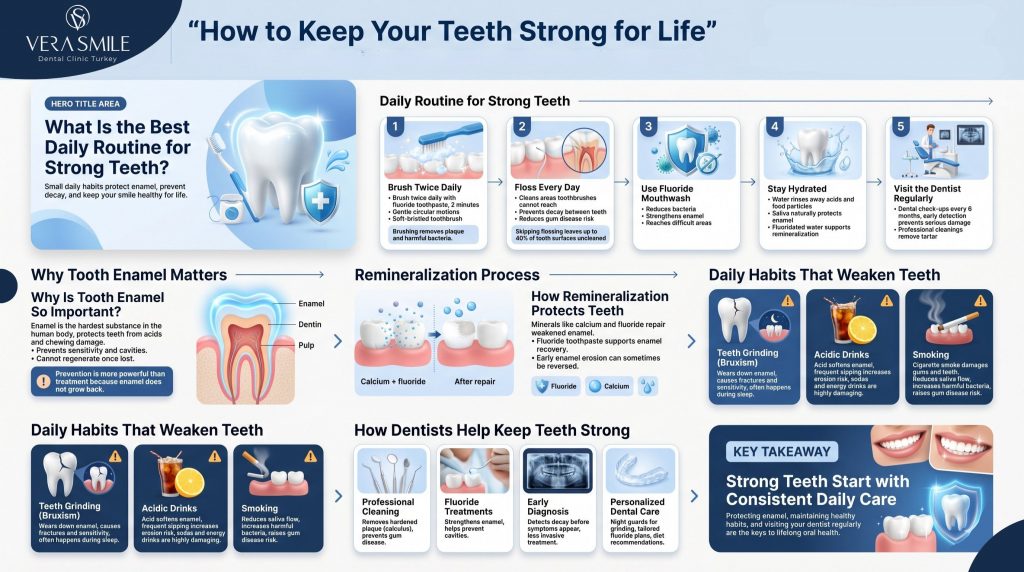
- Brushing twice daily with a fluoride toothpaste removes plaque and bacteria from tooth surfaces. Brush for at least two minutes each time, in the morning and before bed, using gentle circular motions.
- Flossing once a day cleans the spaces between teeth where a toothbrush cannot reach. Skipping flossing leaves up to 40% of tooth surfaces uncleaned, significantly increasing the risk of decay and gum disease.
- Using mouthwash with fluoride or antibacterial properties adds an extra layer of protection. It reaches areas that brushing and flossing may miss and helps reduce the overall bacterial load in the mouth.
- Staying hydrated by drinking water throughout the day, ideally fluoridated tap water, helps rinse away food particles and acids. Saliva, which is largely water, is also the mouth’s natural defense against decay, as it neutralizes acids and remineralizes enamel.
- Regular dental check-ups every six months allow your dentist to detect early signs of decay or enamel erosion before they become serious problems. Professional dental cleanings also remove hardened tartar that no toothbrush can eliminate.
Consistency matters more than perfection. It is also important to note that overbrushing, brushing too hard or too frequently, can actually damage enamel and cause gum recession. Always use a soft-bristled toothbrush and apply gentle pressure.
What Is Tooth Enamel Important for Strong Teeth?
Enamel is the foundation of tooth strength and understanding how it works makes it far easier to protect. As the hardest substance in the human body, enamel does a remarkable amount of work every single day, yet it is far more vulnerable than most people realise. Here is what you need to know:
- It is your teeth’s primary defense. Enamel forms the outermost layer of each tooth, acting as a protective shield against the acids produced by bacteria, the physical stress of chewing, and temperature extremes from hot and cold foods.
- Losing it exposes the layer beneath. Without healthy enamel, the softer dentin underneath becomes exposed. This leads to sensitivity, pain, and a dramatically increased risk of cavities that can progress quickly without treatment.
- Once it is gone, it cannot grow back. Unlike bone, enamel cannot regenerate once it is lost. The body has no cells capable of producing new enamel after a tooth has fully formed. This makes enamel loss permanent, and prevention far more powerful than any treatment.
- Early erosion can be partially reversed. Remineralization, the process by which minerals like calcium, phosphorus, and fluoride are deposited back into slightly weakened enamel, can reverse very early-stage erosion before it becomes permanent damage.
- Fluoride is enamel’s best ally. Fluoride in toothpaste and drinking water actively supports the remineralization process, making it one of the most accessible and evidence-backed tools in preventive dentistry.
The key takeaway is simple: enamel is irreplaceable, but it is also protectable. Every habit that reduces acid exposure, supports mineral intake, and maintains good oral hygiene is directly contributing to the long-term preservation of your enamel,and by extension, the strength of your teeth.
What Daily Habits Can Weaken Your Teeth?
Several common daily habits place significant and ongoing stress on tooth structure. Teeth grinding, known clinically as bruxism, is one of the most damaging; it wears down enamel over time and can cause fractures, sensitivity, and even tooth loss if left untreated. Many people grind their teeth at night without realizing it, making regular dental check-ups essential for early detection. Acidic drinks such as sodas, energy drinks, citrus juices, and sparkling water repeatedly expose teeth to acids that soften and erode enamel. Sipping these beverages throughout the day is especially harmful because the enamel never fully recovers between acid exposures. Smoking is equally destructive; it reduces saliva flow, creates an environment where harmful bacteria thrive, and significantly increases the risk of gum disease, which destabilizes the tissues and bone that hold teeth in place. Quitting smoking is one of the most impactful steps a person can take for both their dental and overall health.
How Can a Dentist Help Strengthen Your Teeth?
Professional dental care is not just for treating problems, it is a proactive strategy for keeping teeth strong for life. A dentist provides several evidence-based interventions that go beyond what home care alone can achieve.
Professional cleanings remove calculus (hardened plaque) that builds up even with excellent brushing and flossing. Left untreated, calculus leads to gum inflammation and the early stages of gum disease. Scheduling a dental cleaning regularly is one of the most effective preventive measures available.
Fluoride treatments applied in-office deliver a concentrated dose of fluoride directly to tooth surfaces, significantly boosting enamel remineralization and resistance to decay. These treatments are particularly beneficial for patients with early signs of erosion or a history of frequent cavities.
Early diagnosis through dental X-rays and clinical examination allows dentists to catch decay, enamel thinning, and structural issues in their earliest stages, long before symptoms appear. Treating tooth decay in its early stages is far less invasive and costly than addressing advanced damage.
Finally, a dentist can offer personalized care plans tailored to your specific risk factors. Whether you need a custom night guard for bruxism, dietary guidance, or a targeted fluoride protocol, professional support ensures your approach to stronger teeth is based on your individual needs rather than a one-size-fits-all solution.
Strong teeth are built through daily consistency, smart nutrition, and professional guidance. Start with the basics, protect your enamel, and make dental visits a non-negotiable part of your health routine.